
In my role as a lead engineer in this ambitious project, I was tasked with designing a modern foundry capable of producing 20,000 tons annually of high-quality machine tool castings, primarily bed components. The core objective was to leverage existing blast furnace infrastructure to establish a short-process, energy-efficient, and environmentally responsible production line. This design integrates hot metal charging from blast furnaces, medium frequency induction furnace melting, furan resin self-hardening sand molding and coremaking, and a complete sand regeneration system. The entire facility is tailored for the efficient production of medium to large machine tool castings, which are critical for industrial machinery. The keyword ‘machine tool casting’ is central to our operational focus, influencing every decision from metallurgy to layout.
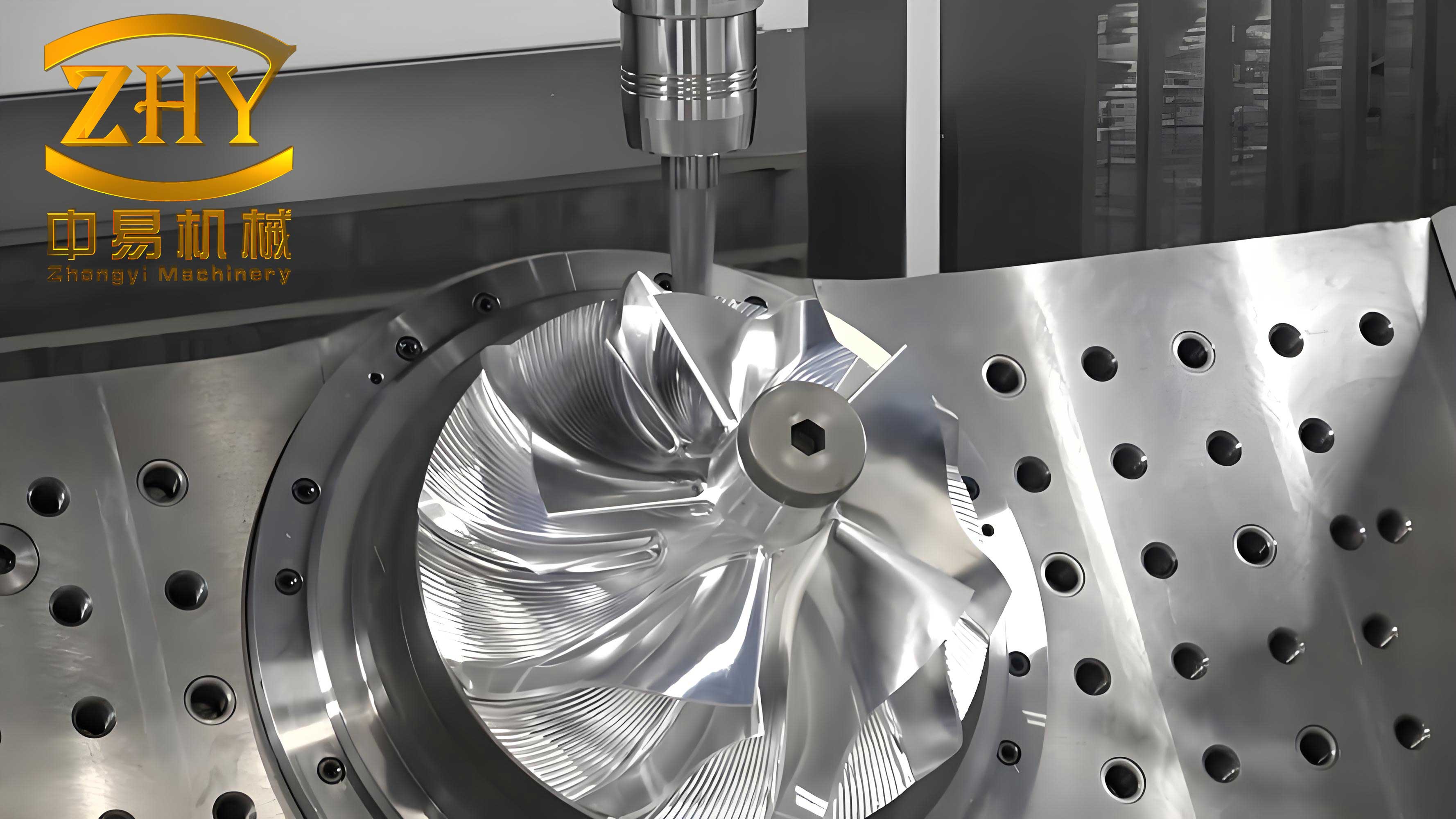
The production program is exclusively dedicated to machine tool casting, with an annual target of 20,000 metric tons of qualified castings. The product mix consists mainly of gray iron castings, supplemented by ductile iron and alloy iron variants. Typical parts include press bed frames with significant dimensions and weights, representing the challenging nature of machine tool casting. A summary of the key castings is presented below.
| Typical Casting (Press Bed) | Primary Dimensions (m) | Approximate Weight (t) |
|---|---|---|
| Large Bed | 3.5 × 2.5 × 1.0 | 8 |
| Medium Bed | 2.8 × 1.8 × 0.9 | 5 |
| Small Bed | 2.0 × 1.5 × 0.8 | 3 |
The heart of our short-process strategy is the melting department. We utilize hot metal tapped directly from the adjacent blast furnaces at approximately 1350°C. This liquid iron is transported via rail-bound transfer cars and charged into our dual 6-ton medium frequency induction furnaces. The furnace system is uniquely configured with a dual power supply and power distributor, allowing one furnace to melt while the other maintains temperature. This setup ensures a continuous supply of quality iron for machine tool casting. The target superheating temperature is 1550°C. The required melting capacity was calculated based on the production goal, factoring in yield and scrap rates.
The annual required molten metal volume is derived from the production target. Let $C$ be the annual production target (20,000 t of good castings), $Y$ be the casting yield (70%), and $R_g$ be the scrap rate of good castings (10%). The total molten metal needed, $Q_{melt}$, is calculated as:
$$ Q_{melt} = \frac{C}{Y \times (1 – R_g)} = \frac{20,000}{0.70 \times 0.90} \approx 31,746 \text{ t/year} $$
However, our furnace capacity is sized for a higher output to ensure reliability and account for the company’s blast furnace tapping schedule of 8 tons every 2 hours. With a 6-ton furnace and a one-hour melting cycle (including superheating), the theoretical annual capacity $Q_{furnace}$ is:
$$ Q_{furnace} = \left(\frac{6 \text{ t}}{\text{cycle}} \times \frac{20 \text{ cycles}}{\text{day}} \times 300 \text{ days}\right) = 36,000 \text{ t/year} $$
This provides a comfortable buffer and meets the machine tool casting demand. Key equipment in this section includes the 6-ton medium frequency furnace system (with 2400 kVA transformer and two 1350 kW power supplies), a 16-ton metallurgical crane for hot metal handling, a 5-ton charging crane with a 1-ton electromagnetic disk, and advanced quality control instruments like a thermal analysis unit and a direct-reading spectrometer.
The molding and coremaking process is based entirely on the furan resin self-hardening sand system, chosen for its precision, suitability for large casts like machine tool castings, and recyclability. We selected a range of continuous mixers to handle different mold sizes corresponding to our variety of machine tool casting components.
| Mixer Location/Purpose | Rated Capacity (t/h) | Type | Primary Use |
|---|---|---|---|
| Large Mold Area | 30 | Mobile | Molds for 5-8t machine tool castings |
| Main Molding Line | 20 | Fixed | General molding |
| Secondary Molding Line | 15 | Fixed | Medium/small molds |
| Core Making Area | 10 | Fixed | All core production |
The total sand requirement was a critical calculation. The average sand-to-metal ratio $S$ for resin sand processes in machine tool casting is typically 3:1. Considering a casting scrap rate $\alpha$ of 3%, a mold scrap rate $\beta$ of 2%, and a sand loss rate $\gamma$ of 5%, the annual new sand equivalent demand $Q_{sand}$ for 20,000 t of castings is:
$$ Q_{sand} = C \times S \times (1+\alpha) \times (1+\beta) \times (1+\gamma) $$
$$ Q_{sand} = 20,000 \times 3 \times (1+0.03) \times (1+0.02) \times (1+0.05) = 66,188 \text{ t/year} $$
Given an annual working time $T_a$ of 2850 hours (10 hours/day, 300 days, 95% availability), the average hourly sand requirement $P_h$ is:
$$ P_h = \frac{Q_{sand}}{T_a} = \frac{66,188}{2850} \approx 23.2 \text{ t/h} $$
Our total installed mixer capacity $P_m$ is 75 t/h, resulting in a comfortable load factor $\eta$:
$$ \eta = \frac{P_h}{P_m} = \frac{23.2}{75} \approx 31\% $$
This allows for operational flexibility, crucial when dealing with the large sand volumes needed for a single massive machine tool casting mold, where sand weight can exceed 12 tons.
A cornerstone of our sustainable design for machine tool casting is the complete sand reclamation system. We specified a 25 t/h capacity regeneration line to handle the used sand. The required regeneration capacity $P_{reg}$ is calculated from the annual sand use, a sand return ratio $\Psi$ of 95%, and an imbalance factor $K$ of 1.2:
$$ P_{reg} = \frac{Q_{sand} \times \Psi \times K}{T_a} = \frac{66,188 \times 0.95 \times 1.2}{2850} \approx 26.5 \text{ t/h} $$
A 25 t/h system was selected, representing a standard high-capacity unit. The process flow is: shakeout → vibrating conveyor → magnetic separation → primary elevator → storage → vibrating feeder → crusher → secondary elevator → fluidized bed cooler → tertiary elevator → magnetic separator → mechanical regeneration unit → final elevator → sand temperature regulator → silo → pneumatic transport to mixer hoppers. Key performance targets for reclaimed sand are: LOI ≤ 2.0%, dust content ≤ 0.3%, and temperature ≤ 35°C.
The cleaning and heat treatment department is designed to handle the rough cast machine tool components efficiently. We employ a combination of equipment: a 10-ton hook-type shot blasting machine for smaller or elongated parts, a 5-ton rotary table shot blaster for general parts, and space allocated for future through-type machines for very large beds. After shot blasting, all critical machine tool castings undergo stress relief annealing in a gas-fired furnace utilizing blast furnace gas, completing the integral heat treatment necessary for dimensional stability in final machine tool applications.
The overall foundry process flow is systematic and optimized for machine tool casting:
Blast Furnace Hot Metal (1350°C) → Transport to Foundry → Charging into 6t MF Furnace → Superheating & Adjustment (1550°C) → Pouring → Resin Sand Molding/Coremaking → Curing → Closing & Pouring → Shakeout → Casting Transfer to Cleaning → Core Knockout & Fettling → Shot Blasting → Stress Relief Annealing → Final Inspection & Finishing → Finished Machine Tool Casting Storage.
The foundry building is a single-story, light steel structure with color steel plate cladding. The layout comprises four main bays with a total length of 108.8 meters and a cumulative width of 69 meters (21.5m + 9.5m + 24m + 15m), resulting in a production floor area of approximately 6,014 m². The separation of molding/pouring bays from the cleaning/finishing bay aids in environmental control, a vital aspect for quality machine tool casting production. Crane capacities and bay functions are detailed below.
| Bay Number | Width (m) | Primary Function | Crane Configuration (Capacity) | Eave Height / Crane Rail Level |
|---|---|---|---|---|
| Bay 1 | 21.5 | Large Casting Molding, Coremaking, Pouring | 32t + 10t (Double Girder) + 10t (Single Girder) | 9.2 m |
| Bay 2 | 9.5 | Melting, Sand Preparation, Power Distribution | 16t + 5t (Metallurgical Cranes) | 9.2 m |
| Bay 3 | 24 | Medium/Small Casting Molding, Sand Regeneration | 10t (Double Girder) + 2×10t (Single Girder) | 9.2 m |
| Bay 4 | 15 | Cleaning, Shot Blasting, Heat Treatment, Finishing | 10t (Double Girder) | 9.2 m |
Utility design was integral to supporting the high-volume production of machine tool castings. The water supply system prioritizes recycling. The medium frequency furnace and sand cooler use closed-circuit cooling towers, drastically reducing fresh water consumption. The calculated total circulating water demand is about 300 m³/h, with a fresh water makeup of only around 10.8 m³/h. Domestic and firefighting water supplies are separately provisioned. Compressed air is supplied by a dedicated station with two screw compressors (total ~130 kW), providing 30 m³/min at ≥0.75 MPa for all pneumatic equipment, crucial for the resin sand system and controls.
The electrical load is significant, dominated by the melting and sand plant. We established a main substation with a dedicated 2400 kVA transformer for the twin medium frequency furnaces (2100 kW max). Other plant loads, totaling approximately 1088 kW installed, are served by two 560 kVA transformers. This segregated power scheme ensures stability for the sensitive melting process and the rest of the machine tool casting operations.
Energy conservation, environmental protection, and workplace safety were paramount throughout the design. For energy savings, we incorporated building insulation, roof skylights for natural lighting, high-efficiency enclosed cooling for furnaces, and the comprehensive sand reclamation system that reduces new sand consumption by over 90%. Every ton of machine tool casting produced thus has a lower embedded energy footprint.
Environmental controls are rigorous. The primary pollution sources—melting fumes, shakeout dust, and shot blasting particulates—are all captured at source. The medium frequency furnaces are equipped with movable hoods; shakeout stations and shot blasters have integrated enclosures. All exhaust streams are treated via high-efficiency baghouse dust collectors before emission, ensuring dust concentration is below 100 mg/m³. Noise from mechanical units like fans and vibratory equipment is mitigated with acoustic enclosures, anti-vibration mounts, and silencers, aiming to keep workshop noise levels under 85 dB(A).
Fire safety is addressed through the building’s steel structure with fire-resistant coatings, clear evacuation routes, and a comprehensive hydrant system fed by an elevated water reservoir. For worker health and safety, we designed local exhaust ventilation, mandated personal protective equipment (PPE) for hot metal operations, installed emergency stop buttons on all major machinery, provided safety guards on rotating parts, and incorporated guardrails on all elevated work platforms. The focus on a cleaner, safer environment directly contributes to the consistent quality of the machine tool casting output.
In conclusion, this design represents a holistic approach to modern, sustainable foundry operations specifically for machine tool casting. By synergizing short-process molten metal supply with advanced resin sand technology and full material recycling, the foundry achieves significant economic and environmental benefits. The successful trial operation confirmed the design’s robustness, meeting all key performance indicators for production rate, quality, and emissions. This project serves as a model for integrating traditional ironmaking with precision casting, elevating the entire value chain for machine tool manufacturing. The repeated emphasis on ‘machine tool casting’ throughout this narrative underscores its role as the defining product and driver of every technical and logistical decision in this comprehensive facility design.