
As a critical component in mechanical systems, shaft parts are responsible for transmitting motion, torque, or bending moments. Failures in such components, especially fracture, can lead to significant equipment downtime and safety hazards. This analysis investigates the root cause of a catastrophic failure in a large-diameter drive shaft manufactured from nodular cast iron (Grade QT700-2) used in a screw-type refrigeration compressor. The shaft, with dimensions of 150 mm in diameter and 2000 mm in length, fractured during service, leading to a complete operational halt. The objective of this first-person investigation is to systematically determine the failure mechanism through a multi-technique analytical approach and propose corrective measures to prevent recurrence.
The manufacturing process route for the nodular cast iron shaft was: Charge preparation -> Melting -> Nodularizing and Inoculation treatment -> Casting -> Demolding -> Grinding (cleaning) -> Normalizing (air cool) -> High-Temperature Tempering (air cool) -> Finish grinding/machining. Understanding each step is crucial for pinpointing where the microstructural anomalies leading to failure were introduced.
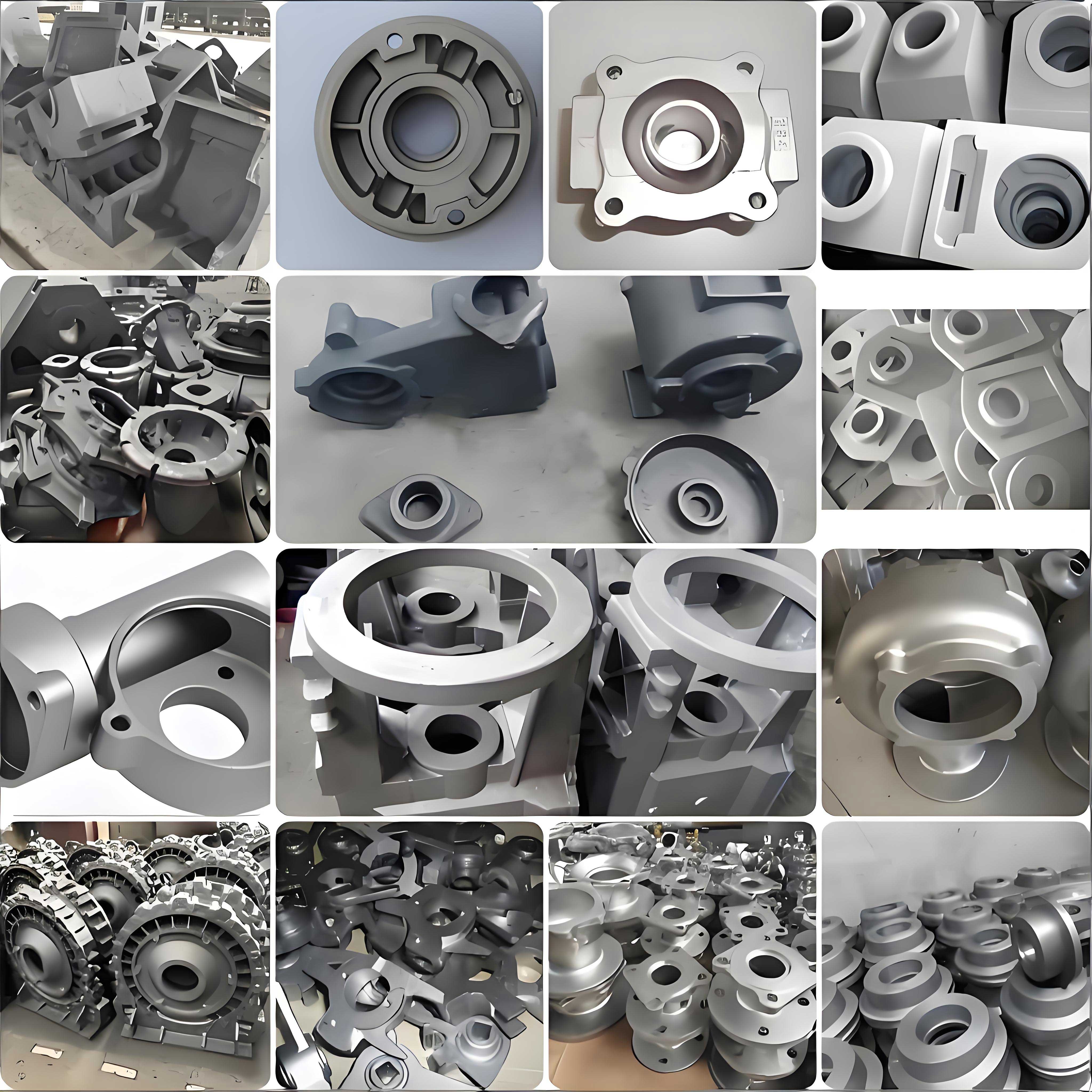
The importance of rigorous quality control in the production of heavy-section nodular cast iron castings cannot be overstated. Failures often originate from subtle deviations in process parameters that manifest as detrimental microstructural features, compromising the component’s integrity under cyclic loading conditions.
1. Experimental Procedures and Methodology
Samples for analysis were extracted from the fractured drive shaft using wire electrical discharge machining (EDM) to avoid altering the microstructure or introducing new damage. A comprehensive suite of analytical techniques was employed to characterize the material’s condition.
- Macrofractography: Initial examination of the fracture surface was conducted visually and with a low-magnification stereo microscope to identify fracture initiation zones, propagation patterns, and macroscopic features.
- Scanning Electron Microscopy (SEM): A VEGA II-XMH SEM was used for high-resolution examination of the fracture surface morphology. Energy Dispersive X-ray Spectroscopy (EDS) attached to the SEM provided local chemical composition analysis of specific features.
- Chemical Analysis: Bulk chemical composition was determined at both the near-surface region and the core of the shaft using a SPECTROMAXx-BT optical emission spectrometer.
- Metallographic Analysis: Samples were mounted, ground, polished, and etched with a 4% nital solution for 5 seconds. Microstructural evaluation was performed using optical microscopy to assess graphite morphology, matrix structure, and the distribution of phases.
- Mechanical Testing: Tensile test specimens were machined longitudinally from a location at one-quarter radius from the surface. Microhardness profiles were measured from the surface to the core using a Vickers indenter with a 2 N (approx. 200 gf) load.
2. Results and Discussion
2.1 Macroscopic Fracture Surface Examination
The fracture surface exhibited significant post-fracture damage and wear, likely from contact between the fractured halves during final rupture and subsequent handling. However, key features remained discernible. The fracture path was generally coarse and lacked macroscopic plastic deformation, indicating a brittle fracture mode. A distinct “chevron” or “herringbone” pattern was observed, pointing toward the fracture origin at the shaft’s outer surface. Furthermore, faint “beach marks” or arrest lines, characteristic of progressive crack advancement under cyclic loading, were visible. The combination of surface origin, beach marks, and a noted torsional component in the crack path leads to the primary conclusion: the drive shaft failed by torsional fatigue.
2.2 Chemical Composition
The results of the spectrometric chemical analysis are summarized in Table 1. Both the surface and core compositions fall within the typical acceptable ranges for nodular cast iron. The carbon and silicon contents are crucial for graphite formation and matrix structure. The low levels of phosphorus (P) and sulfur (S), which are detrimental to toughness and nodularization, are well-controlled. Therefore, the failure cannot be attributed to a gross deviation from the specified material chemistry.
| Sample Location | C (%) | Si (%) | Mn (%) | P (%) | S (%) |
|---|---|---|---|---|---|
| Outer Surface | 3.85 | 2.54 | 0.65 | 0.021 | 0.001 |
| Core | 3.84 | 2.63 | 0.69 | 0.018 | 0.001 |
| Typical Range for Nodular Cast Iron | 3.60-3.90 | 2.00-2.80 | 0.60-0.80 | <0.10 | <0.07 |
2.3 Microstructural and Microhardness Analysis
The microstructure in the crack initiation region, examined in the unetched condition, revealed the graphite morphology. While the bulk showed predominantly spheroidal (nodular) graphite with some vermicular/irregular forms, the critical observation was a severe depletion of graphite nodules in a layer at the outer surface. This is a classic defect known as a “chilled” or “carbidic” layer, caused by excessively rapid cooling of the casting surface in the mold.
Upon etching, the matrix structure was revealed, as shown in Figure 3 of the original manuscript. The microstructure consisted of a pearlitic matrix with nodular cast iron graphite. However, at the surface region, a continuous, intercellular network of white, brittle secondary cementite (Fe3C) was prominent. The formation of this network is directly linked to the graphite depletion: the carbon that failed to precipitate as graphite remained in solution in the austenite during cooling and subsequently formed cementite along the last-solidifying cell boundaries (eutectic cell boundaries). The relationship between cooling rate (v), carbon equivalent (CE), and the tendency to form carbides can be conceptually described by:
$$ \text{Chill Tendency} \propto \frac{v}{CE} $$
where a higher cooling rate (v) and/or lower Carbon Equivalent promotes carbide formation over graphite precipitation.
The microhardness data, presented in Table 2, quantitatively confirms the microstructural gradient. The surface region, hardened by the cementite network and carbon-saturated matrix, exhibited a significantly higher hardness (~423 HV) compared to the core (~397 HV). This brittle surface layer acts as a preferential site for crack initiation under cyclic torsional stress.
| Location | Hardness Measurements (HV2N) | Average Hardness (HV2N) |
|---|---|---|
| Outer Surface | 432, 423, 419, 421, 420 | 423 |
| Core / Interior | 389, 390, 399, 410, 397 | 397 |
2.4 Bulk Mechanical Properties
The tensile properties, derived from specimens taken from the shaft, are compared to the minimum requirements for QT700-2 grade nodular cast iron in Table 3. The tested material failed to meet the specification. The average tensile strength (Rm = 525 MPa) and yield strength (Rp0.2 = 379 MPa) were substantially below the required 700 MPa and 420 MPa, respectively. While elongation was above the minimum 2%, the deficient strength values indicate that the heat treatment (normalizing and tempering) was either insufficient or ineffective in developing the full pearlitic strength potential of this nodular cast iron. The stress-strain curve (Fig. 4 of the original) showed limited plastic deformation, consistent with the observed brittle fracture and the presence of brittle phases.
| Specimen | Tensile Strength, Rm (MPa) | Yield Strength, Rp0.2 (MPa) | Elongation, A (%) |
|---|---|---|---|
| 1 | 512 | 381 | 4.1 |
| 2 | 510 | 377 | 4.2 |
| 3 | 554 | 380 | 5.9 |
| Average (Tested) | 525 | 379 | 4.7 |
| QT700-2 Requirement (GB/T 1348) | ≥ 700 | ≥ 420 | ≥ 2.0 |
2.5 Scanning Electron Microscopy (SEM) Fractography
SEM examination of the fracture surface near the origin provided conclusive evidence of the failure mode. Despite surface damage, localized areas exhibited clear fatigue striations, which are microscopic markers of crack advance per loading cycle. The spacing of these striations can be related to the stress intensity factor range (ΔK) during crack growth, following the Paris law for fatigue crack propagation in materials:
$$ \frac{da}{dN} = C(\Delta K)^m $$
where \( da/dN \) is the crack growth rate per cycle, and C and m are material constants. Furthermore, areas of intergranular fracture were identified, corresponding to cracking along the brittle network of secondary cementite observed in the microstructure. EDS analysis on the matrix confirmed the base composition was primarily Fe with Si, with no significant harmful impurities like P or S segregations.
3. Root Cause Analysis and Failure Mechanism Synthesis
The convergence of evidence points to a classic fatigue failure initiated by severe microstructural defects. The root cause sequence is as follows:
- Casting Process Defect: During the initial casting of the nodular cast iron shaft, the outer surface cooled too rapidly. This high cooling rate suppressed the precipitation of carbon as graphite (nodules) and instead promoted the formation of a carbide-rich layer. The solidification modeling for such a thick section would need to account for this. The fraction of carbides (fcarbide) can be empirically related to local solidification time (tf):
$$ f_{carbide} \approx A \cdot \exp(-B \cdot t_f) $$
where A and B are constants dependent on composition and inoculation efficacy. A short tf at the surface leads to high fcarbide. - Formation of Brittle Surface Layer: This resulted in two critical issues at the shaft’s periphery: (a) a scarcity of graphite nodules, which act as natural crack arresters and stress concentrators, and (b) a continuous, brittle network of secondary cementite. This microstructure has low fracture toughness and high hardness.
- Crack Initiation: Under cyclic torsional service loads, the brittle cementite network provided an easy path for microcrack initiation. The high hardness and lack of ductility in this layer meant that even small stress concentrations (from inherent microstructure or minor machining marks) could exceed the local fracture strength.
- Fatigue Crack Propagation: Once initiated, the crack propagated inward through the shaft’s cross-section via a fatigue mechanism, as evidenced by the beach marks and striations. The sub-standard strength of the bulk material (due to inadequate heat treatment) likely accelerated the crack growth rate, reducing the total fatigue life.
- Final Fracture: The remaining ligament of material eventually could not withstand the applied load, resulting in sudden, final overload fracture.
The primary failure mode is thus high-cycle torsional fatigue. The fundamental cause was the presence of a defective surface microstructure (chilled layer with carbide network) in the nodular cast iron casting, compounded by sub-optimal bulk mechanical properties.
4. Recommended Corrective and Preventive Actions
To prevent recurrence, modifications to the manufacturing process chain for large-diameter nodular cast iron shafts are essential. The focus must be on eliminating the surface defect and optimizing the matrix properties.
| Process Stage | Identified Issue | Proposed Improvement | Expected Outcome |
|---|---|---|---|
| Casting | Excessive surface cooling causing carbide layer. | 1. Increase mold temperature or use insulating sleeves/chills strategically. 2. Optimize pouring temperature. 3. Enhance inoculation practice (type, amount, method) to improve graphite nucleation. |
Promote uniform cooling, eliminate the chilled layer, ensure a sound graphite structure up to the surface. |
| Casting Design/Machining | Potential for defective layer to remain after machining. | Increase the machining allowance on the final diameter. This ensures any subsurface microstructural gradient from casting is fully removed during finish machining. | Guarantees the final part surface is machined from sound, homogeneous material. |
| Heat Treatment (Normalizing) | Insufficient development of pearlitic strength; possible failure to dissolve surface carbides. | 1. Review and optimize normalizing temperature and holding time to ensure complete austenitization and dissolution of carbides. 2. Ensure controlled, uniform cooling (forced air) to achieve a fine, fully pearlitic matrix without re-forming a carbide network. |
Achieve specified tensile and yield strength (QT700-2). Eliminate carbide networks. |
| Heat Treatment (Tempering) & Final Processing | Brittle surface remaining a weak point even with improved microstructure. | Introduce a surface enhancement step after final machining, such as shot peening or deep rolling. This induces compressive residual stresses at the surface. | Compressive stresses counteract applied tensile stresses from torsion, significantly raising the fatigue strength and inhibiting crack initiation. The improvement in fatigue limit (Δσe) can be estimated via: $$ \Delta\sigma_e \propto \sigma_{res}^{comp} $$ where \( \sigma_{res}^{comp} \) is the induced compressive stress. |
| Quality Assurance | Lack of detection for subsurface defects. | Implement non-destructive testing (NDT) for critical shafts, such as ultrasonic testing (UT), to detect subsurface flaws or microstructural inconsistencies before putting into service. | Early detection and rejection of components with internal or near-surface defects. |
5. Conclusion
This detailed failure analysis conclusively determined that the fracture of the large nodular cast iron drive shaft was a torsional fatigue failure. The origin was traced to a severely compromised surface microstructure characterized by a lack of graphite nodules and a brittle, interconnected network of secondary cementite. This defective layer resulted from an excessively high cooling rate at the casting surface during solidification. Furthermore, the bulk material failed to meet the specified mechanical strength due to inadequate heat treatment, which contributed to a reduced fatigue life. The recommendations provided, focusing on casting process control, adequate machining allowance, optimized heat treatment, and the introduction of surface compressive stresses, form a comprehensive strategy to manufacture reliable, fatigue-resistant nodular cast iron shafts for demanding applications.
6. Future Perspectives
This case study highlights the sensitivity of heavy-section nodular cast iron castings to process parameters. Future work could involve computational modeling of the solidification and cooling process to predict and prevent carbide formation. Additionally, advanced characterization techniques like electron backscatter diffraction (EBSD) could be used to study the crystallographic relationship between the cementite network and the matrix, providing deeper insights into the crack propagation mechanism through these brittle phases. Finally, systematic fatigue testing of specimens with and without process improvements would quantitatively validate the effectiveness of the proposed corrective measures.