
The recent revision of the Chinese national standard GB/T 24733, pertaining to Austempered Ductile Iron (ADI) castings, marks a significant step in aligning domestic manufacturing practices with global advancements while addressing the evolving needs of modern industry. As a material, nodular cast iron subjected to an austempering heat treatment achieves an exceptional combination of high strength, ductility, wear resistance, and fatigue performance. The updated standard, GB/T 24733—2023, supersedes the 2009 version, integrating over a decade of technological progress, production experience, and harmonization with international norms, notably ISO 17804:2020. This article delves into the key changes, technical rationale, and expanded scope of the new standard from an industry practitioner’s perspective.
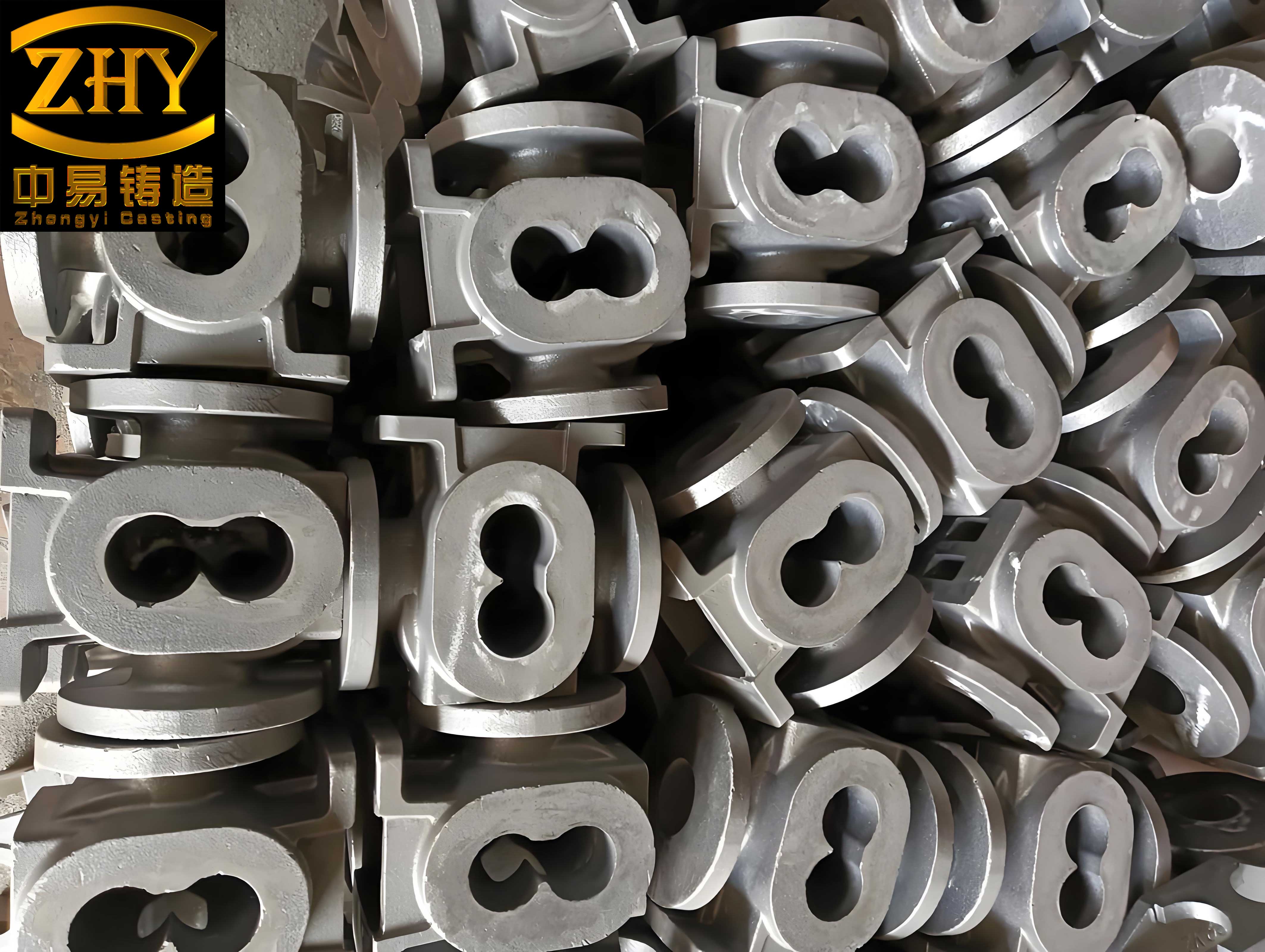
The fundamental advantage of nodular cast iron lies in its spherical graphite morphology, which imparts toughness by blunting crack propagation. Austempering transforms the matrix of this nodular cast iron into a unique microstructure known as ausferrite. Ausferrite is a fine, acicular mixture of ferrite and high-carbon, thermally stable austenite. This structure is responsible for the superior mechanical properties that distinguish ADI from conventional nodular cast iron grades or steels. The generic relationship for ultimate tensile strength in ADI can be conceptually linked to its microstructure and hardness, often approximated by:
$$ \sigma_u \approx k \cdot HB $$
where $\sigma_u$ is the ultimate tensile strength, $HB$ is the Brinell hardness, and $k$ is a material constant typically ranging between 3.0 and 3.5 for ADI, reflecting its high strength-to-hardness ratio compared to other ferrous alloys.
Major Revisions and Technical Enhancements in GB/T 24733—2023
The 2023 revision introduces substantial changes to the material classification, technical requirements, and quality assurance protocols. The most visible update is the expansion of the grade system.
| GB/T 24733—2009 Grades | Minimum Tensile Strength (MPa) | Minimum Yield Strength (MPa) | Minimum Elongation (%) |
|---|---|---|---|
| QTD 800-10 | 800 | 500 | 10 |
| QTD 900-8 | 900 | 600 | 8 |
| QTD 1050-6 | 1050 | 700 | 6 |
| QTD 1200-3 | 1200 | 850 | 3 |
| QTD 1400-1 | 1400 | 1100 | 1 |
| GB/T 24733—2023 Grades | Minimum Tensile Strength (MPa) | Minimum Yield Strength (MPa) | Minimum Elongation (%) |
|---|---|---|---|
| QTD 800-11 (R) | 800 | 550 (+50) | 11 (+1) |
| QTD 900-9 | 900 | 650 (+50) | 9 (+1) |
| QTD 1050-7 | 1050 | 750 (+50) | 7 (+1) |
| QTD 1200-4 | 1200 | 850 | 4 (+1) |
| QTD 1400-2 | 1400 | 1100 | 2 (+1) |
| QTD 1600-1 (New) | 1600 | 1300 | 1 |
Key revisions include:
- Enhanced Property Levels: For grades QTD 800, QTD 900, and QTD 1050, the minimum yield strength has been increased by 50 MPa, and the minimum elongation for all grades has been raised by 1 percentage point. This reflects consistent improvements in the quality of base nodular cast iron and more controlled austempering processes.
- Introduction of a New High-Strength Grade: The addition of QTD 1600-1 caters to applications demanding ultra-high strength, further pushing the performance envelope of nodular cast iron.
- Formal Inclusion of CADI: Carbidic Austempered Ductile Iron (CADI), characterized by intentional carbides in an ausferritic matrix for exceptional abrasion resistance, is now formally included in the standard body with grades QTD-HBW400 and QTD-HBW450, where hardness is the primary acceptance criterion.
The standard now formally adopts the term “ausferrite,” resolving earlier nomenclature debates. It emphasizes that the final mechanical properties are the primary acceptance criteria, while chemical composition serves as a reference for process control. This is crucial because the properties of this heat-treated nodular cast iron are achieved through a specific time-temperature transformation. The austempering process can be conceptually described by the isothermal transformation kinetics:
$$ X(t, T) = 1 – \exp(-k(T) \cdot t^n) $$
where $X$ is the transformed fraction of ausferrite, $t$ is the isothermal holding time, $T$ is the isothermal temperature, $k(T)$ is a temperature-dependent rate constant, and $n$ is the Avrami exponent. Optimal properties are achieved before the high-carbon austenite decomposes into brittle phases.
Harmonization with International Standards and Key Differences
GB/T 24733—2023 was developed with non-equivalent alignment to ISO 17804:2020. A significant adoption is the classification and definition of test coupons, including the new “side-by-side” test block for very heavy castings. This ensures that mechanical test specimens are more representative of the casting’s thermal history. While adopting international practices, the Chinese standard maintains more comprehensive technical content, covering not only material classification but also casting quality requirements such as geometrical tolerances, surface quality, and internal soundness.
| GB/T 24733—2023 | ISO 17804:2020 | ASTM A897M-16 | EN 1564:2011 |
|---|---|---|---|
| QTD 800-11R | JS/800-10RT | — | EN-GJS-800-10 |
| QTD 900-9 | JS/900-8 | 900/650/9 | EN-GJS-900-8 |
| QTD 1050-7 | JS/1050-6 | 1050/750/7 | EN-GJS-1050-6 |
| QTD 1200-4 | JS/1200-3 | 1200/850/4 | EN-GJS-1200-3 |
| QTD 1400-2 | JS/1400-1 | 1400/1100/2 | EN-GJS-1400-1 |
| QTD 1600-1 | — | 1600/1300/1 | — |
Technically, the minimum elongation values in GB/T 24733—2023 are generally higher than those in ISO 17804:2020 for equivalent strength grades. It is important to note that while ASTM A897M uses a proportional gauge length of $L_0 = 4d$, both ISO and GB/T use $L_0 = 5d$. Since measured elongation is influenced by gauge length, the higher percentage requirement in the Chinese standard, coupled with a longer gauge length, signifies a more demanding ductility specification for the nodular cast iron material. The yield strength values are comparable to or exceed those in other international standards.
Manufacturing Process and Quality Control Emphasis
The standard underscores that high-quality nodular cast iron castings are the essential prerequisite for successful ADI production. The foundation is a sound casting with a fully nodular graphite structure. Key parameters for the base nodular cast iron include:
- Graphite Nodularity: ≥ 85% (Type VI graphite predominant).
- Graphite Nodule Count: ≥ 100 nodules/mm². A higher nodule count refines the ausferrite matrix and improves dynamic properties like impact and fatigue.
- Recommended Chemistry: While not mandatory for acceptance, controlling composition is vital for hardenability and microstructural stability. Alloying elements like Ni, Mo, and Cu are often used to enhance the淬透性 of the nodular cast iron section.
The淬透性, or the ability to form ausferrite through the section, is critical. It can be estimated using the ideal critical diameter ($D_I$) concept adapted for nodular cast iron:
$$ D_I = f(\%C_{eq}, \%Mo, \%Ni, \%Cu, \ldots) $$
where $C_{eq}$ is the carbon equivalent for nodular cast iron. A sufficient $D_I$ ensures the required cooling rate can be achieved at the casting’s core to avoid pearlite formation.
| Element | Typical Range (%) | Primary Function |
|---|---|---|
| C | 3.4 – 3.8 | Graphite formation, austenite carbon enrichment |
| Si | 2.2 – 2.8 | Ferritizer, strengthens matrix |
| Mn | < 0.4 | Minimize segregation and intercellular carbides |
| Mo | 0 – 0.5 | Enhances hardenability, stabilizes austenite |
| Ni | 0 – 2.0 | Enhances hardenability, stabilizes austenite |
| Cu | 0 – 1.0 | Enhances hardenability |
The heat treatment cycle involves austenitizing (typically 850-950°C), followed by rapid quenching to an isothermal holding temperature (usually between 250°C and 400°C). The holding temperature ($T_{hold}$) directly dictates the final mechanical properties of the nodular cast iron component. A general empirical relationship exists:
$$ HB \approx A – B \cdot T_{hold} $$
$$ \delta \approx C + D \cdot T_{hold} $$
where $HB$ is hardness, $\delta$ is elongation, $T_{hold}$ is the isothermal temperature, and A, B, C, D are material-specific constants. Lower holding temperatures yield higher strength and hardness but lower ductility.
Testing, Inspection, and the Focus on Casting Integrity
The revised standard provides greater clarity on test specimen preparation, introducing rules for “side-by-side” test blocks and detailed steps for machining specimens from coupons. A major philosophical shift is the strong endorsement of casting本体 testing. While separately cast test bars are the default for material grade qualification, the standard encourages agreements between supplier and purchaser to use本体 samples taken from designated areas of the actual casting. This is vital because the properties of a complex nodular cast iron casting can vary with section thickness due to differences in solidification and cooling rates. Properties from a本体 sample may be lower than those from a separately cast coupon.
For CADI grades, hardness testing on the casting itself is the primary acceptance method. For all ADI grades, hardness provides a convenient non-destructive means for quality verification. The correlation between tensile strength and Brinell hardness for ADI is notably tight, allowing for reliable in-process checks. The standard also introduces the use of unnotched Charpy impact tests as an indirect method to assess the consistency of the ausferritic microstructure in heat-treated nodular cast iron.
Fatigue performance, a critical advantage of ADI, is extensively covered in an informative appendix. Bending fatigue limits ($\sigma_{fl}$) and contact fatigue limits can be estimated for design purposes. For example, the bending fatigue limit for machined and shot-peened ADI gears can be related to its tensile strength:
$$ \sigma_{fl} \approx 0.4 \cdot \sigma_u + \Delta \sigma_{sp} $$
where $\Delta \sigma_{sp}$ represents the significant improvement due to shot peening, a surface enhancement technique particularly effective on this type of nodular cast iron.
Application Scope and Future Outlook
The enhanced properties codified in GB/T 24733—2023 solidify ADI’s position as a premium engineering material. Its high specific strength (strength-to-density ratio) enables significant component lightweighting, replacing heavier forged or cast steels. Its exceptional wear resistance and damping capacity make it ideal for dynamic, loaded components. Major application sectors include:
- Automotive: Suspension components, control arms, steering knuckles, differential carriers, and increasingly, gears and crankshafts.
- Agriculture & Construction Machinery: Gears, sprockets, track shoes, and hydraulic components.
- Railway: Brake discs, bogie components.
- Industrial & Mining (CADI): Grinding balls, liner plates, slurry pump parts, crusher components.
The formal standardization of CADI within the main document is a pivotal development, expected to accelerate its adoption in the mining and cement industries. By providing unified, advanced, and internationally harmonized specifications, GB/T 24733—2023 serves as a crucial technical foundation. It guides designers in material selection, provides manufacturers with clear quality targets, and facilitates global trade of nodular cast iron components that leverage the unique benefits of the austempering process. The standard effectively bridges the gap between material science, manufacturing capability, and engineering application, promoting the innovative and efficient use of austempered nodular cast iron across industries.