
As a foundry engineer with extensive experience in the production of critical components, I have consistently encountered the challenge of porosity in casting, particularly when manufacturing aluminum alloy parts for internal combustion engines using sand molding processes. The presence of gas porosity defects is not merely a cosmetic issue; it severely compromises the mechanical integrity, pressure tightness, and fatigue life of castings, leading to significant scrap rates, production delays, and increased costs. This article synthesizes a systematic, first-principles approach to understanding, diagnosing, and preventing the root causes of porosity in casting. The goal is to move beyond anecdotal fixes and establish a robust, science-based methodology for quality assurance.
The fundamental issue underlying most gas-related defects in aluminum castings is the exceptional solubility of hydrogen in the liquid metal and its precipitous drop upon solidification. Aluminum melts can dissolve substantial volumes of hydrogen, while the solid metal holds almost none. During solidification, if the dissolved hydrogen cannot diffuse out of the freezing melt, it becomes supersaturated and precipitates to form pores. These pores manifest as either macroscopic blowholes or microscopic distributed pinholes, both classified under the broad defect of porosity in casting. The formation is governed by the solubility difference, expressed as:
$$ C_s = C_0 \cdot (1 – f_s)^{k-1} $$
where \( C_s \) is the hydrogen concentration in the remaining liquid, \( C_0 \) is the initial concentration, \( f_s \) is the solid fraction, and \( k \) is the partition coefficient (for hydrogen in Al, \( k \approx 0.05 \)). This equation shows how hydrogen concentrates in the liquid during solidification, quickly exceeding its solubility limit.
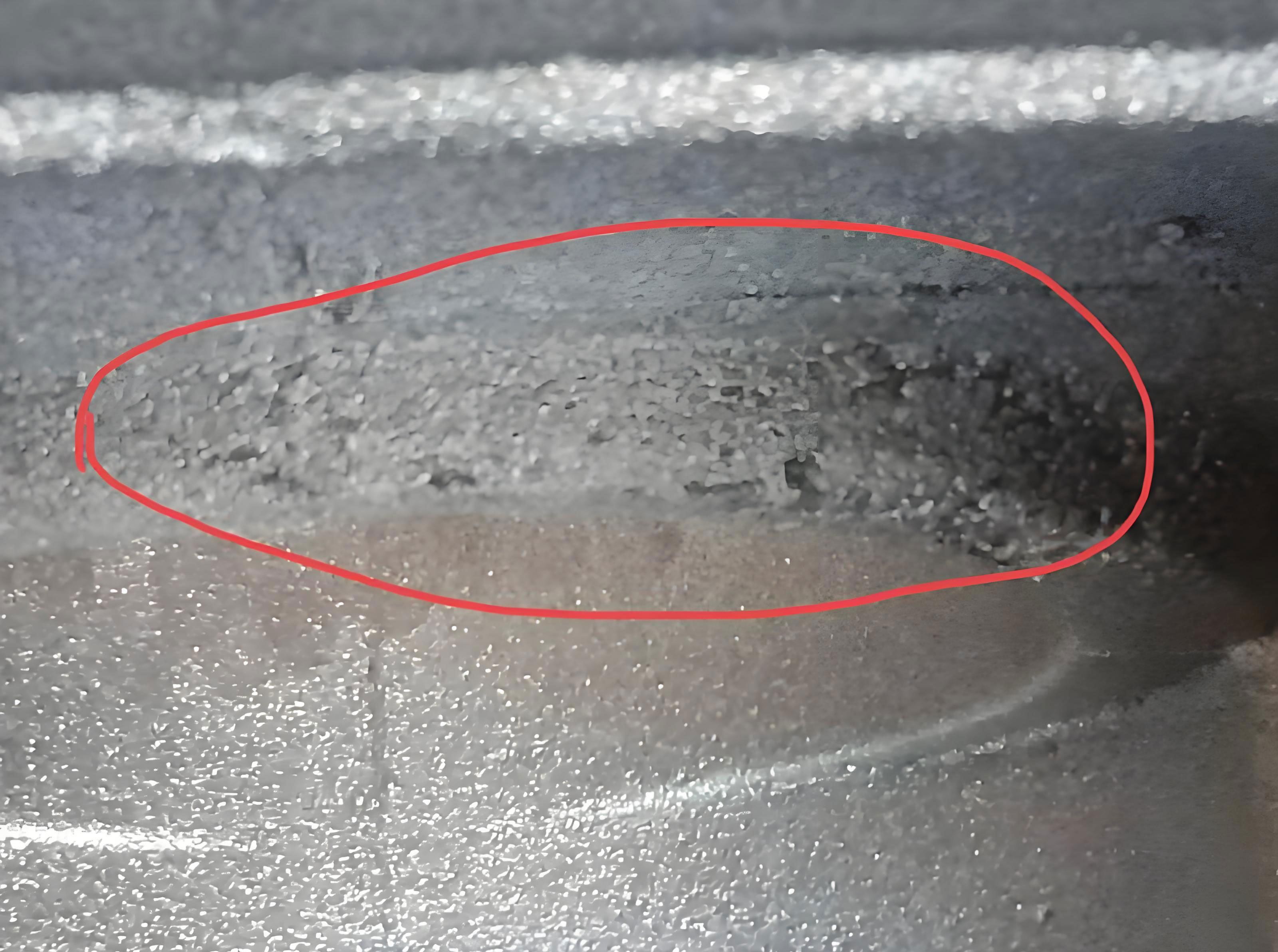
1. The Hydrogen Solubility Paradigm and Melt Control
The primary source of gas leading to porosity in casting is hydrogen, originating predominantly from the reaction of molten aluminum with water vapor. The governing reaction is:
$$ 2Al_{(l)} + 3H_2O_{(g)} \rightarrow Al_2O_{3(s)} + 6H_{(in Al)} $$
The solubility of hydrogen in aluminum follows Sieverts’ Law, where the concentration is proportional to the square root of the partial pressure of hydrogen in the surrounding atmosphere:
$$ S_H = K \cdot \sqrt{P_{H_2}} $$
Here, \( S_H \) is the solubility, \( K \) is the equilibrium constant (temperature-dependent), and \( P_{H_2} \) is the partial pressure of hydrogen. This relationship highlights why temperature control and atmospheric protection are critical. The table below summarizes key factors influencing hydrogen pickup and corresponding preventive melt practices.
| Factor Promoting Hydrogen Pickup | Mechanism | Preventive/Corrective Action | Target Parameter |
|---|---|---|---|
| High Melt Temperature | Increases solubility constant \( K \), exponentially raising hydrogen absorption rate. | Maintain melting and holding temperatures strictly below 750°C. Use calibrated pyrometers. | Melt Temp: 720-750°C |
| Humid/Dirty Charge Materials | Oxides, paints, lubricants, and moisture on ingots, returns, or chips decompose, releasing water vapor. | Pre-heat charge to 250-300°C. Use salt fluxes for chip melting. Implement rigorous charge inspection. | Charge Moisture < 0.1% |
| Inefficient Cover Flux | Exposes melt surface to furnace atmosphere containing water vapor from burners or ambient air. | Apply a molten-salt cover flux. A proven formulation: 45% NaCl, 40% NaF, 15% Na3AlF6 (Cryolite). | Flux Cover: 0.5-1.0% of charge weight |
| Inadequate Melt Degassing | Dissolved hydrogen is not removed prior to casting. | Implement rotary degassing with inert gas (Ar/N2) or use solid degassers like hexachloroethane (C2Cl6). | Target Hydrogen Level: < 0.10 ml/100g Al |
Effective degassing is non-negotiable. The kinetics of hydrogen removal using a purging gas is described by:
$$ \frac{dC}{dt} = -k \cdot A \cdot (C – C_e) $$
where \( dC/dt \) is the rate of concentration change, \( k \) is the mass transfer coefficient, \( A \) is the bubble surface area, \( C \) is the bulk hydrogen concentration, and \( C_e \) is the equilibrium concentration at the bubble surface (near zero). Rotary degassing, which creates a fine dispersion of bubbles, maximizes \( A \) and \( k \). Solid degassers like C2Cl6 decompose to form chlorine gas bubbles, which also scavenge hydrogen. A recommended procedure is to add 0.4-0.5% of tabletized C2Cl6 in two or three stages, plunging with a graphite bell. An alternative is using dehydrated ZnCl2 (0.15-0.20%), though it is less efficient.
2. The Sand Mold & Core Contribution to Porosity
Even with a perfectly degassed melt, porosity in casting can originate from the mold itself. Green sand molds and chemically bonded cores contain moisture, organic binders, and other compounds that decompose upon contact with hot metal, generating large volumes of gas. If the mold permeability is insufficient or venting is inadequate, this gas can be forced into the solidifying metal, creating subsurface blows or large cavities. The gas pressure generated within the mold wall must be overcome by the metallostatic pressure of the metal column; otherwise, intrusion occurs. This can be approximated by:
$$ P_{metal} = \rho \cdot g \cdot h > P_{gas} $$
where \( \rho \) is the metal density, \( g \) is gravity, \( h \) is the effective metal head height, and \( P_{gas} \) is the gas pressure building in the mold sand. The key strategies to win this pressure battle are reducing gas generation and improving gas evacuation.
| Mold/Core Factor | Gas Generation Mechanism | Optimal Practice to Minimize Porosity |
|---|---|---|
| High Moisture Content (Green Sand) | Free water turns to steam instantly, creating high local pressure. | Control moisture to the minimum for plasticity (typically 3.0-3.8%). Use advanced clay-bonded systems with carbon additives. |
| High Binder Level (Resin Sands) | Phenolic, furanic, or other organic resins pyrolyze, yielding volatile gases (H2, CO, CH4). | Optimize binder/catalyst ratio to the minimum required for handling strength. Aim for 1.0-1.5% total resin. |
| Low Permeability | Fine grains, high compaction, and lack of vents trap gas. | Use a well-graded sand (AFS GFN 55-70). Avoid excessive compaction, especially in deep pockets. Standardize molding machine settings. |
| Inadequate Venting | No escape path for generated gas. | Mandate venting from all core prints and deep mold sections. Use vent waxes in complex cores. Install permeable vent sleeves in core boxes. |
| Incomplete Core Drying/Curing | Residual solvent, water, or un-cured binder serves as a massive gas source. | Validate core oven temperature profiles. Use dew-point meters for air-set processes. Implement statistical process control (SPC) for curing times/temps. |
The total gas volume \( V_{gas} \) generated per unit mass of mold sand can be estimated from its composition, which guides the venting requirement design. Furthermore, the chilling effect of the mold must be considered, as it influences solidification time \( t_f \), which is related to the modulus \( M \) (Volume/Surface Area):
$$ t_f = k \cdot M^n $$
Where \( k \) and \( n \) are constants. A faster freezing skin can trap mold gases more easily, emphasizing the need for instantaneous venting at the metal-front interface.
3. Process Design & Filling Dynamics: The Hydraulic Factors
The manner in which the mold cavity is filled plays a decisive role in the final manifestation of porosity in casting. Turbulent filling entraps air from the mold cavity itself, while improper gating can create regions where gas from cores is trapped without an escape. The governing fluid dynamics principle is the Bernoulli equation, applied with caution for a free-surface, transient flow:
$$ \frac{P_1}{\rho g} + z_1 + \frac{v_1^2}{2g} = \frac{P_2}{\rho g} + z_2 + \frac{v_2^2}{2g} + h_{loss} $$
Where \( P \) is pressure, \( z \) is height, \( v \) is velocity, and \( h_{loss} \) accounts for friction and turbulence losses. The goal is to achieve a laminar, progressive fill that allows air to be pushed ahead of the metal front toward the vents and risers.
| Design Element | Risk for Porosity | Preventive Design Principle | Quantitative Guideline |
|---|---|---|---|
| Pouring Basin & Sprue | Vortex formation entraps air into the sprue. | Use a tapered sprue with a well-designed pouring basin that maintains a constant melt head. Employ sprue well to absorb initial impact. | Sprue taper: 2-5% reduction in cross-section per unit height. |
| Gating System | High velocity at ingates causes turbulence, jetting, and air entrainment. | Design a choked, pressurized system with a total ingate area less than the sprue base area. Use multiple ingates to distribute flow. Employ ceramic filters. | Ingate velocity < 0.5 m/s for Al. Filter with 2.0-2.5 mm pore size. |
| Runner Design | Non-pressurized runners lead to aspirated air from poorly joined mold seams. | Use trapezoidal or round runners. Ensure sharp, clean junctions. Design system to be full of metal quickly. | Avoid abrupt changes in direction. Use radius > Runner height. |
| Cavity Fill Path | Core gases get trapped in blind pockets or behind advancing metal fronts. | Position core prints to open to the mold exterior or to large vent channels. Sequence filling to push gas toward vents/risers. | Core print clearance: 0.1-1.0 mm to allow gas escape but prevent metal penetration. |
| Venting & Overflow | Insufficient vent area leads to back-pressure, forcing gas into liquid metal. | Place vents at the highest points and in regions last to fill. Vent area should be at least equal to total ingate area. | Vent area ≥ Ingate area. Use vent slots (0.1-0.2 mm thick). |
The placement of the casting in the mold is crucial. Critical surfaces, especially those to be machined, should be oriented downwards or vertically. When a surface faces upward, any floating oxides or bubbles rising due to buoyancy will collect underneath it, directly leading to surface porosity in casting. The buoyant rise velocity of a gas bubble in liquid aluminum is given by Stokes’ law, modified for high Reynolds numbers:
$$ v_b = \sqrt{\frac{8 \cdot g \cdot r \cdot (\rho_{Al} – \rho_{gas})}{3 \cdot C_D \cdot \rho_{Al}} } $$
where \( r \) is the bubble radius, \( \rho \) are densities, and \( C_D \) is the drag coefficient. This shows that larger bubbles rise faster, but smaller ones from micro-porosity in casting may be trapped.
4. A Holistic Quality Control Framework
Preventing porosity in casting is not a single-step operation but a holistic system requiring control at every stage. Implementing a closed-loop process requires measurement and feedback. Key process control points include:
- Melt Quality Certification: Use a Reduced Pressure Test (RPT) or a dedicated hydrogen analyzer to quantitatively measure hydrogen content before pouring. Establish strict acceptance limits.
- Sand Property Monitoring: Perform daily tests on green strength, permeability, moisture, and loss on ignition (LOI) for chemically bonded sands.
- Process Parameter Logging: Document pour temperatures, pour times, degassing parameters, and core/mold identities for every casting. This enables traceability and root-cause analysis when defects occur.
- Non-Destructive Testing (NDT): Implement 100% radiographic inspection for high-integrity castings. Use ultrasonic testing to quantify the severity of dispersed porosity in casting.
The fight against porosity in casting is a technical challenge that demands a deep understanding of metallurgy, fluid dynamics, and materials science. By viewing the casting process as an integrated system—from charge material selection to final solidification—and by controlling each variable through the principles and practices outlined above, it is possible to achieve consistently high-quality, porosity-free aluminum castings for demanding engine applications. The most successful foundries are those that treat data from each control point as vital feedback, continuously refining their processes to minimize the sources and opportunities for gas defect formation.