
In my extensive experience within the foundry industry, addressing defect formation is a perpetual challenge. Among these, porosity in casting stands out as one of the most prevalent and detrimental issues, particularly for complex components like cylinder blocks. These voids, often subsurface, severely compromise mechanical integrity, pressure tightness, and overall quality. This article delves into a detailed, first-hand analysis of the mechanisms behind porosity in casting and presents a multi-faceted suite of engineering solutions we have developed and refined. Our focus is on wet sand molding processes for gray iron cylinder blocks, but the principles have broad applicability. The core of our strategy revolves around controlling gas generation and, more critically, ensuring its efficient expulsion from the mold cavity before metal solidification.
The phenomenon of porosity in casting is not a singular event but a consequence of the interplay between molten metal dynamics and mold/gas interactions. When molten iron is poured, it can entrain air within the gating system and the cavity itself due to turbulent flow. Furthermore, the extensive use of complex sand cores, such as those for water jackets, presents a significant challenge. These cores are completely enveloped by hot metal, and the gases they generate—from binder decomposition, residual moisture, or volatiles—have only limited pathways for escape via the core prints. If the gas pressure within the core or at the metal-front interface exceeds the opposing metalostatic and metallurgical pressures, gas will invade the liquid metal. This relationship can be conceptually framed by a pressure balance criterion for gas invasion:
$$ P_{gas} > P_{hydrostatic} + P_{metallostatic} + P_{resistance} $$
Here, \( P_{gas} \) is the pressure generated within the mold or core, \( P_{hydrostatic} \) is the local pressure from the molten metal head, \( P_{metallostatic} \) is related to the metal’s surface tension and capillary effects, and \( P_{resistance} \) represents any additional barrier, such as a coating layer. Bubbles formed from entrained or invaded gas become trapped beneath the rapidly solidifying skin of the casting, leading to the characteristic subsurface porosity in casting. Common locations for these defects are areas with poor venting, such as upper bolt bosses and flanges, where gas tends to accumulate.
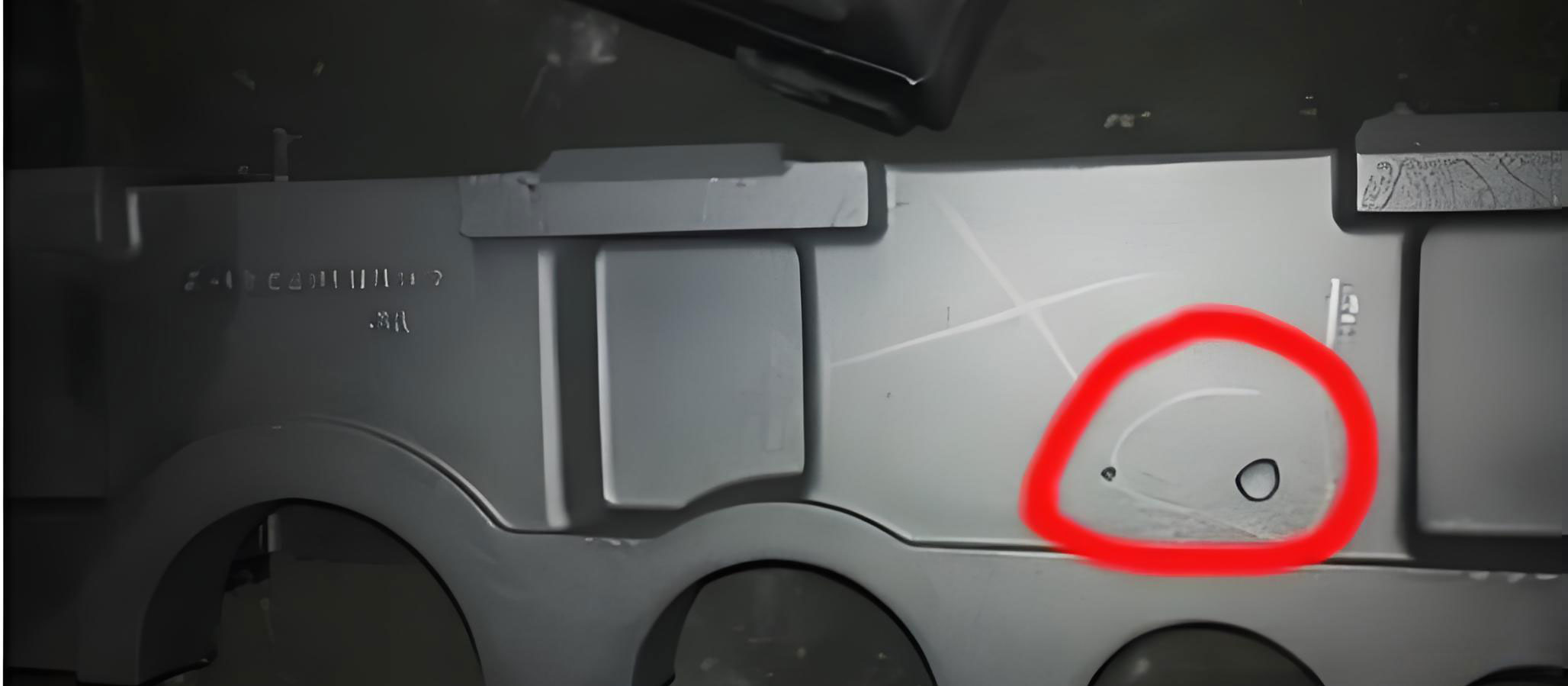
To combat this, we have systematically attacked the problem from three primary angles: core and mold design, gating and feeding system optimization, and rigorous control of molding materials. Each area contributes to reducing the source of gas or enhancing its escape route, thereby minimizing the risk of porosity in casting.
1. Redesigning Core Architecture for Maximum Venting
The traditional approach to core design often prioritizes minimal core print size to save sand and simplify molding. However, we found this “small core print” philosophy to be a major contributor to venting problems. The small print creates a restricted interface between the core and the mold, often sitting below the highest contour of the casting. This configuration hinders the natural venting of the cavity through the mold walls and limits the cross-sectional area for gas flow from the core into the mold’s ventilation channels.
Our fundamental redesign principle is “large-scale venting.” We transitioned to using large core prints. By extending the core print significantly beyond the internal contour of the part, we create a much larger sealing and venting interface within the mold. This larger area serves two critical functions: it provides a more reliable seal against metal penetration (minimizing fin formation) and, more importantly, it offers a vastly improved pathway for gas generated deep within the core to travel into the mold’s built-in venting system (such as vents along the parting line). The difference is not merely incremental; it transforms the core from a potential gas trap into an integrated part of the mold’s exhaust system.
Furthermore, we meticulously engineer the core’s internal venting system. During core production, continuous vent channels are created using vent wires or baked-in passages. During mold assembly, we ensure these channels align perfectly with the vent channels crafted in the core prints and mold. A critical detail is the use of “sand seals” or “fire-clay seals” around the core print. A raised sand ring (压砂环) is formed on the mold around the print, and a rope of refractory paste (封火泥条) is placed on the top of the core print. When the mold is closed, these features compress to create a labyrinth seal that prevents molten metal from entering and blocking the vent channels while still allowing gas to pass. The effectiveness of this sealed venting system is paramount for preventing core-generated porosity in casting.
| Feature | Traditional Small Core Print Design | Optimized Large Core Print with Venting System |
|---|---|---|
| Core Print Area Ratio | ~1:1 (relative to core body contact area) | 1.5:1 to 3:1 (significantly larger) |
| Primary Venting Path | Restricted, through narrow print interface | Dedicated, continuous channels from core body to mold vents |
| Sealing Method | Relies on precision fit, prone to metal penetration | Uses compressed sand rings and refractory paste seals |
| Impact on Cavity Venting | Hinders natural cavity exhaust | Enhances overall mold cavity exhaust capacity |
| Typical Result for Porosity | High incidence of subsurface gas holes | Marked reduction in core-related gas defects |
2. Optimizing the Gating and Feeding System for Controlled Filling and Exhaust
The gating system is the bloodstream of the casting process. Its design dictates the thermal and flow characteristics that directly influence defect formation, including porosity in casting. Our goal is to achieve rapid, yet smooth, filling with a strong directional temperature gradient, all while providing explicit, low-resistance escape routes for displaced air and generated gases.
2.1 Gating Configuration and Pouring Time: We employ a middle-gated system where metal is introduced at a median height of the casting. This promotes balanced filling from the central region upwards and downwards, reducing turbulent splashing and air entrainment compared to top or bottom gating in such geometries. The key to minimizing air entrainment is to achieve a high flow rate through large gates, following the “large orifice outflow” principle. We calculate the total choke area (\(\Sigma F_{choke}\)) based on the required pour time to fill the mold cavity. Empirical data consistently shows a strong correlation between extended pour times and increased porosity in casting. For a typical cylinder block, we target a pour time (\(t_p\)) governed by:
$$ t_p = \frac{W}{k \cdot \sqrt{H}} $$
where \(W\) is the casting weight, \(H\) is the effective metal head height, and \(k\) is an empirical coefficient dependent on the gating system efficiency. Prolonged pour times (e.g., >25 seconds) allow the metal front to cool excessively, increasing viscosity and reducing its ability to allow bubbles to float out. By optimizing runner and gate sizes, we reduce pour time to a window of 18-20 seconds, which significantly reduces air entrapment. We use a semi-pressurized gating ratio to balance flow control and minimal turbulence. A typical successful ratio is:
$$ \Sigma F_{sprue} : \Sigma F_{runner} : \Sigma F_{gate} = 1.2 : 1.5 : 1.0 $$
2.2 Strategic Use of Risers for Venting and Overflow: Perhaps the most impactful change was redefining the purpose of risers (feeders). Beyond mere feeding, we explicitly design them as integral parts of the mold exhaust system. We implement two distinct types:
- Venting Risers (Explicit Vents): These are primarily open passages to the atmosphere, placed at the highest points of the mold cavity where gas naturally collects. They include enlarged vent slots on the parting line and dedicated vent pins. Their sole function is to provide a low-pressure sink for escaping gases.
- Overflow (Whirlgate) Risers: These are larger risers placed at the end of the filling path, opposite the gates. They serve a triple function:
- They act as the final exit for air pushed ahead of the metal front.
- They receive the first, often cooler and dirtier, metal that enters the cavity, preventing it from being part of the final casting.
- They provide a reservoir into which bubbles floating up through the molten metal can coalesce and escape.
To ensure their effectiveness, the connection channel between the casting and the overflow riser is made with a large cross-section and is inclined upwards at a 10°–15° angle (a “climb” or “ramp”). This geometry encourages buoyant bubbles to travel smoothly into the riser. Furthermore, we add a subtle material “padding” or “wash” (a V-shaped ramp) on the casting surface between two risers to guide bubbles towards the escape paths. The total exhaust area provided by all vents and risers (\(\Sigma F_{exhaust}\)) is a critical parameter. We ensure it is substantially larger than the total ingate area:
$$ \Sigma F_{exhaust} \geq 1.3 \cdot \Sigma F_{gate} $$
This ratio ensures that the mold cavity never becomes pressurized, as the capacity to expel gas exceeds the rate at which metal displaces it. Failure to meet this criterion is a common root cause for generalized porosity in casting.
| Parameter | Symbol | Target Value / Principle | Rationale |
|---|---|---|---|
| Pouring Temperature | \(T_p\) | 1390 – 1420 °C | Ensures adequate fluidity without excessive gas solubility. |
| Target Pour Time | \(t_p\) | 18 – 20 seconds | Minimizes heat loss and air entrainment; empirically derived optimum. |
| Gating System Ratio | \(\Sigma F_s : \Sigma F_r : \Sigma F_g\) | 1.2 : 1.5 : 1.0 (Semi-pressurized) | Controls flow, reduces turbulence at gates. |
| Minimum Choke Area | \(\Sigma F_{choke}\) | Calculated via \(Q = A \cdot v\) for target \(t_p\) | Ensures “large orifice” fast filling. |
| Total Exhaust Area | \(\Sigma F_{exhaust}\) | \(\geq 1.3 \cdot \Sigma F_{gate}\) | Prevents cavity pressurization; critical for venting. |
| Overflow Riser Connection | – | Large area, 10°-15° upward incline | Facilitates bubble floatation and cold metal overflow. |
3. Meticulous Control of Molding and Core Materials
Even with perfect geometry, if the mold and cores are prolific gas generators, defects will occur. Therefore, our third pillar focuses on minimizing gas generation and, when generation is inevitable, accelerating its release to occur early in the pour cycle.
3.1 Green Sand Mold Control: The moisture in green sand is a massive source of gas. Upon contact with molten metal, water vaporizes, expanding approximately 1700 times in volume. Uncontrolled humidity directly increases the driving force for mold gas invasion (\(P_{gas}\) in our earlier equation). We enforce a strict upper limit on compacted sand moisture content:
$$ M_{sand} < 4.5\% $$
Regular monitoring of moisture, clay content, and permeability (maintained between 90-140) is essential. High permeability aids venting, but it must be balanced with adequate mold strength to avoid other defects like erosion.
3.2 Core Drying and Secondary Processing: Cores, especially those made with organic binders like phenolic resin (shell cores) or urethane (cold-box), are significant gas sources. We have implemented a secondary drying or baking process for critical cores like water jackets. For example, a phenolic shell core may have a fully cured layer only about 6mm thick. The uncured interior can have a gas evolution potential exceeding 20 ml/g, compared to ~15 ml/g for the cured shell. By subjecting these cores to a post-cure bake at 190–200°C for one hour, we drive off additional volatiles, darkening the surface and reducing the overall and peak gas evolution to levels closer to low-emission grades of sand. The timing of core use is also critical. Cores coated with alcohol-based paints are ignited to dry. However, residual solvent or moisture from air humidity can be absorbed. Therefore, we mandate a minimum aging period of 24 hours in dry conditions before use. In humid seasons, cores undergo a final low-temperature bake (130–150°C for 1 hour) immediately prior to mold assembly to drive off any absorbed moisture. This step is crucial for preventing delayed gas release that can cause porosity in casting.
3.3 The Essential Role of Coatings: Refractory coatings are not just for preventing metal penetration and improving surface finish. They play a vital role in porosity mitigation. A well-applied coating of 0.3–0.5 mm thickness increases the \(P_{resistance}\) term in the gas invasion equation. It acts as a physical and chemical barrier, slowing the rate of gas transfer from the core into the metal and often promoting earlier, more uniform gas release from the core surface. We enforce a strict “no bare core” policy—every core, regardless of process (shell, cold-box, oil-sand), receives a full, unbroken coat of appropriate refractory paint.
3.4 Selecting Core Sands with Favorable Gas Evolution Kinetics: It’s not just the total gas volume that matters, but the timing of its release. A core sand that releases its gas quickly and early, reaching its peak evolution rate before the metal surface solidifies, gives bubbles time to escape. We have experimented with various binders and found that systems like certain phosphate-bonded or modified oil-sands (e.g., KD100 + tall oil blends) exhibit faster gas evolution profiles compared to some slower-curing resin systems. By using these faster-evolving sands for non-critical interior cores (like crankcase cores), we synchronize gas release with the period of maximum metal fluidity, reducing the risk of trapped gas and subsequent porosity in casting.
| Material/Process | Control Parameter | Target Specification | Impact on Gas Behavior |
|---|---|---|---|
| Green Sand Mold | Moisture Content | < 4.5% | Reduces sheer volume of steam generated (~1700x expansion). |
| Green Sand Mold | Permeability | 90 – 140 | Allows internal mold gases to escape laterally. |
| Phenolic Shell Core | Secondary Bake | 190-200°C, 1 hour | Reduces total gas volume & lowers peak evolution rate. |
| All Cores (Post-coating) | Aging / Final Dry | >24h aging; or 130-150°C, 1h bake | Eliminates residual solvent/moisture, preventing late gas bursts. |
| Core Coating | Thickness & Coverage | 0.3-0.5 mm, continuous | Increases barrier resistance (\(P_{resistance}\)), moderates gas influx. |
| Core Sand Selection | Gas Evolution Kinetics | Prefer “fast” evolution binders for non-critical cores | Shifts gas release to early, high-fluidity phase of pouring. |
4. Synthesis and Interactive Effects
The true power of this approach lies in the synergistic application of all these measures. It is a systemic view of the casting process as a gas management system. For instance, a large-core-print design is futile if the core itself is a wet, high-gas generator. Conversely, a perfectly dry, low-gas core can still cause defects if the gating system creates turbulence that entrains air and the mold lacks sufficient exhaust capacity. We model the mold cavity as a control volume where the net gas accumulation (\(G_{acc}\)) must be minimized:
$$ G_{acc} = \int (Q_{generation} + Q_{entrainment}) \, dt – \int Q_{exhaust} \, dt $$
Where \(Q_{generation}\) is the rate of gas generation from molds/cores, \(Q_{entrainment}\) is the rate of air entrainment from poor fluid flow, and \(Q_{exhaust}\) is the rate of gas expulsion via vents and risers. Our strategies aim to minimize the first two terms and maximize the last. The measures on core design and materials reduce \(Q_{generation}\) and shift its peak earlier in time. The gating system optimization reduces \(Q_{entrainment}\). The large prints, internal venting, and oversized exhaust risers maximize \(Q_{exhaust}\). When these are balanced, \(G_{acc}\) approaches zero, and the occurrence of porosity in casting is dramatically reduced.
In practice, implementing these changes required careful monitoring and iteration. We tracked defect rates using statistical process control charts, correlating changes in parameters like pour time, sand moisture, and core bake time with the incidence of porosity in casting. The results were clear: a holistic, physics-based approach yielded far greater improvements than isolated tweaks. The quality of cylinder block castings, measured by pressure test yield and machining scrap rates, showed sustained improvement after the full implementation of this integrated strategy.
5. Conclusion
In conclusion, combating porosity in casting, especially in intricate components like cylinder blocks, demands a comprehensive strategy that addresses the root causes throughout the process chain. From my firsthand experience, the key is to stop thinking of vents and risers as secondary features and to treat gas evacuation as a primary design function equal to that of filling and feeding. The adoption of large core prints with engineered venting channels, the calculation of gating systems for rapid fill with ample exhaust capacity, and the rigorous control of material moisture and gas evolution characteristics form a robust defense against this pervasive defect. This integrated methodology, grounded in the principles of fluid dynamics and heat transfer, has proven highly effective in elevating casting quality and consistency, turning the challenge of porosity in casting from a frequent setback into a manageable aspect of the production process. The continuous pursuit of understanding and controlling these interactive factors remains the cornerstone of advanced foundry practice.