
In my extensive experience working with nodular cast iron components, particularly large cylinder heads for heavy-duty engines, addressing shrinkage porosity has been a persistent and critical challenge. These cylinder heads operate under severe mechanical and thermal loads, often coupled with corrosive environments, necessitating high strength, thermal resistance, and most importantly, exceptional pressure tightness. The presence of dispersed shrinkage, or micro-shrinkage, in critical areas like valve guide holes and oblique oil passages can lead to catastrophic failures during pressure testing and in service, drastically reducing yield rates and increasing production costs. This article delves into a detailed, first-person account of the systematic investigation and resolution of shrinkage defects in a large nodular cast iron cylinder head, leveraging simulation tools, metallurgical principles, and rigorous process optimization. The focus will remain squarely on the intricacies of nodular cast iron behavior, and the term ‘nodular cast iron’ will be repeatedly emphasized to underscore its unique properties and processing requirements.
The specific cylinder head in question had a complex geometry with significant variations in wall thickness. The as-cast weight was approximately 240 kg, with major walls around 15 mm, minimal sections of 9 mm, and heavy sections reaching up to 196 mm in height. The initial production process employed a two-castings-per-mold configuration with a bottom-gated open pouring system. Chills were placed at thick sections and critical functional areas like the valve guide and injector holes, and insulating risers were positioned on the top. Despite these measures, the rejection rate due to shrinkage porosity was unacceptably high, reaching around 80% in early production batches. Defects were predominantly found in the valve guide bosses, injector holes, and, most problematically, the oblique oil channels, leading to leakage during hydrostatic pressure tests.
To understand the root cause, we employed advanced solidification simulation software, MAGMA, to analyze the thermal and feeding behavior of the original process. For nodular cast iron, the solidification mode is mushy, transitioning towards a spongy structure. This is characterized by a wide solidification range and the formation of a dense dendrite network early in the freezing process. The fraction of solid, $f_s$, over temperature, $T$, can be described by relationships derived from the phase diagram. The difficulty in feeding arises because the inter-dendritic channels become blocked while a significant amount of liquid remains, leading to the formation of micro-porosity. The susceptibility to shrinkage porosity in nodular cast iron is inherently higher than in gray iron due to this expansive mushy zone and the different nature of graphite expansion.
The simulation results for the initial process were revealing. They clearly predicted a high probability of shrinkage porosity formation in the regions surrounding the valve guide holes and within the walls containing the oblique oil passages. This aligned perfectly with the actual machining and sectioning results from scrapped castings. The analysis pointed to two primary process shortcomings: ineffective riser design and suboptimal chill application. The original insulating risers were too small and had a poorly designed neck. Furthermore, the riser seat, made from manually compacted air-set sand, had low rigidity. This combination caused the riser to solidify before the critical hot spots in the casting, effectively drawing liquid from the casting instead of feeding it—a classic case of negative feeding. The chills, particularly around the valve guides, were not providing the intended directional solidification or adequate cooling power to shift the thermal center away from these critical zones.
The core strategy for mitigation involved a multi-pronged approach targeting temperature field control, feeding efficiency, and the inherent solidification characteristics of nodular cast iron. The modifications are summarized in the table below, comparing the initial and optimized parameters.
| Process Parameter | Initial Design | Optimized Design | Rationale |
|---|---|---|---|
| Riser Design | Φ100 mm x 130 mm; 20 mm neck; manual sand seat | Φ140 mm x 170 mm; 14 mm neck; resin-coated sand seat | Increased volume and thermal capacity to prolong liquid state. Shorter, wider neck and rigid seat improve feeding pressure transfer and prevent early neck freeze-off. |
| Valve Guide Chill | Standard internal chill inserts | Thin-walled (1 mm) non-closing cylindrical chill sleeves (Φ45 mm x 80 mm) | Accelerates solidification of the boss, moving the thermal center (and potential shrinkage) inwards into areas that are subsequently machined away. |
| Oblique Oil Passage Chill | None | Conformal chill block (96 mm x 87 mm x 45 mm) | Provides intense local cooling to modify the temperature gradient and promote directional solidification towards the riser. |
| Pouring Temperature | 1365 – 1375 °C | 1345 – 1355 °C | Lowers total liquid contraction volume. Finding the “temperature equilibrium point” minimizes both shrinkage and slag/dross formation risks. |
| Carbon Equivalent (CE) | 4.7% – 4.8% | 4.25% – 4.4% | Shifts eutectic point, reduces early primary graphite precipitation, refines graphite structure, and optimizes the timing of graphite expansion for effective “self-feeding”. |
The role of carbon equivalent (CE) is paramount in nodular cast iron. It is calculated as: $$CE = \%C + \frac{1}{3}(\%Si + \%P)$$. A high CE, while improving fluidity and graphitization potential, can lead to excessive primary graphite formation during the early stages of cooling. This early expansion can be lost through the still-open gating system, reducing its effectiveness for compensating shrinkage later during the eutectic solidification. By optimizing the CE to a lower range, we delay the majority of graphite expansion until the casting skin has formed and the feeding paths are closed. This traps the expansion pressure within the casting, enhancing the intrinsic “self-feeding” capability of nodular cast iron. The expansion pressure, $P_{exp}$, due to graphite formation can be conceptually related to the volume increase: $$\Delta V_g \propto n_{graphite} \cdot \bar{d}^3$$ where $n_{graphite}$ is the number of graphite nodules and $\bar{d}$ is their average diameter. A finer, more uniform nodule count achieved with proper inoculation and lower CE contributes to more uniform and timely expansion.
The pouring temperature adjustment was guided by numerous simulation iterations. The goal was to align the thermal history with an ideal solidification path. A simplified thermal model considers the heat extraction rate: $$\frac{dT}{dt} = -k (T – T_mold)$$ where $k$ is a heat transfer coefficient dependent on mold material and chill presence. Lowering the pouring temperature reduces the superheat, decreasing the total liquid contraction, $\Delta V_{liq}$, which is temperature-dependent: $$\Delta V_{liq} \approx \beta_{liq} \cdot (T_{pour} – T_{liquidus})$$ where $\beta_{liq}$ is the coefficient of thermal contraction for the liquid iron. This directly reduces the demand on the feeding system.
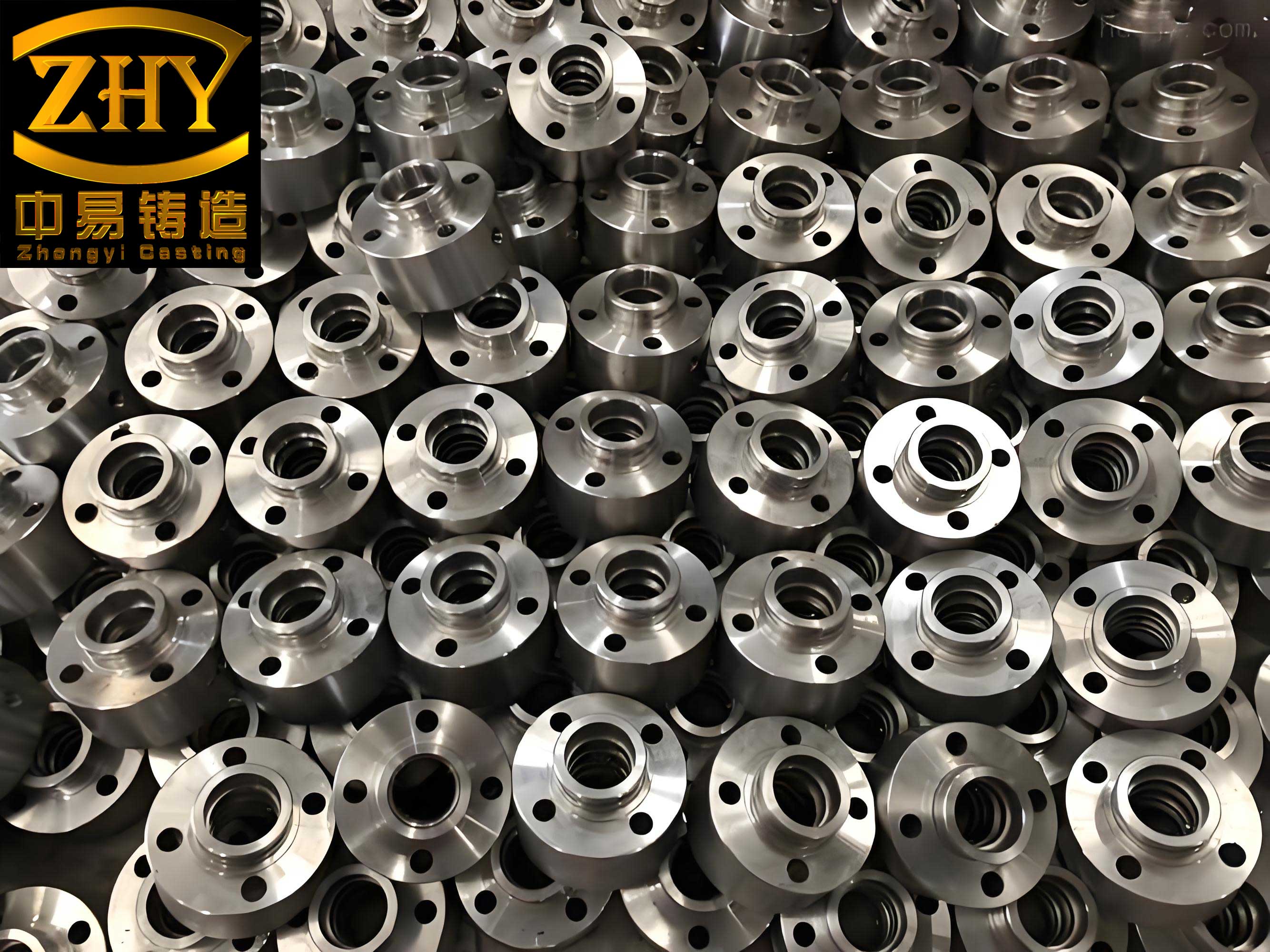
The implementation of chill sleeves for the valve guides was a key innovation. By rapidly extracting heat from the cylindrical boss, the temperature field is drastically altered. The solidification front progresses inward from the chill, potentially isolating any remaining liquid pool in the center where it is harmless after machining. The conformal chill for the oblique oil passage works on a similar principle but for a larger volume. The effectiveness of a chill can be approximated by its chilling power, related to its volume, surface area, and thermal diffusivity, $\alpha$: $$Q_{chill} \propto A_{chill} \cdot \sqrt{\alpha_{chill} \cdot t}$$ where $A_{chill}$ is the contact area and $t$ is time. These chills help establish a steeper temperature gradient, $\nabla T$, which is crucial for directional solidification: $$v_{solid} \propto \nabla T$$ where $v_{solid}$ is the solidification velocity. A higher gradient promotes faster and more orderly solidification towards the feeder.
After implementing these changes, production trials were conducted. The results were significantly improved. Out of an initial batch of 80 castings produced with the optimized process, no internal scrap was identified from machining. Hydrostatic pressure testing was performed on 66 units, of which 53 were accepted for assembly. The rejection rate due to leakage, primarily from the oblique oil passages, was reduced to approximately 20%, a dramatic improvement from the initial 80%. Sectioning of sample castings confirmed the virtual elimination of shrinkage in the valve guide areas and a marked reduction in porosity severity in the oblique oil channel regions. This validated the simulation predictions and the effectiveness of the holistic process optimization for this large nodular cast iron component.
While the primary measures yielded substantial gains, further refinement is always possible. For instance, the application of tellurium-based wash or paint on extra-heavy sections is under consideration. Tellurium (Te) is a strong chill-inducing element that dramatically increases the cooling rate and undercooling when applied to the mold surface. This can promote a whitish iron layer with a very fine structure, effectively sealing the surface and shifting any porosity inward. The use of internal chills within the thickest sections of the oil gallery is another avenue. However, their implementation requires careful design to avoid fusion issues and must be balanced against the excellent self-feeding potential of properly processed nodular cast iron.
In conclusion, solving shrinkage porosity in complex nodular cast iron castings like large cylinder heads requires a deep understanding of the material’s unique solidification mechanics and a systematic approach to process design. The key takeaways from this investigation are manifold. First, riser design for nodular cast iron must account for the timing of graphite expansion; risers must remain open and active long enough to provide liquid feed before the system closes, after which self-feeding takes over. This often means larger riser volumes and specially designed necks to control solidification sequence. Second, strategic use of chills, especially conformal and sleeve-type chills, is incredibly powerful for manipulating local temperature fields and relocating thermal centers to non-detrimental locations. Third, pouring temperature is not a standalone variable but must be optimized in concert with the overall thermal profile of the mold; a lower temperature often reduces liquid contraction demand. Fourth, and perhaps most critical for nodular cast iron, is the precise control of carbon equivalent. An optimized, slightly lower CE can refine the graphite structure and better synchronize the graphite expansion phase with the casting’s solidification state, maximizing the natural compensation effect that makes nodular cast iron both challenging and remarkable.
The journey to improve the integrity of nodular cast iron castings is continuous. Every component geometry presents a new puzzle where the fundamental principles of heat transfer, fluid flow, and metallurgy must be applied. The successful resolution described here hinged on the integration of simulation technology with practical foundry engineering, always keeping the distinctive behavior of nodular cast iron at the forefront of every decision. Future work will focus on further exploiting inoculant technology to control nodule count and size, exploring advanced molding materials for increased mold rigidity to better harness expansion forces, and developing more sophisticated real-time process control to maintain consistency in pouring temperature and chemistry. The goal remains the same: to produce sound, reliable, and high-performance nodular cast iron components that meet the ever-increasing demands of modern engineering applications.