
In my extensive experience within the precision casting industry, the relentless drive towards component lightweighting, particularly in the automotive sector, presents both an opportunity and a significant challenge. The process of lost wax casting is uniquely suited for producing complex, near-net-shape parts that contribute to this goal. However, as designs evolve to be thinner, more integrated, and structurally intricate, the susceptibility to casting defects, especially cracks, increases dramatically. These cracks undermine the structural integrity, fatigue life, and overall reliability of the component. This article synthesizes years of practical application and research into a detailed examination of crack formation mechanisms and, more importantly, a comprehensive suite of proven mitigation strategies for steel lost wax casting.
The fundamental lost wax casting process involves creating a wax pattern, building a ceramic shell around it, melting out the wax, and pouring molten metal into the resulting cavity. While this allows for exceptional detail, the thermal dynamics during solidification and cooling are complex. Cracks represent a critical failure mode where the induced stress exceeds the material’s strength at a given temperature. Understanding their origin is the first step toward prevention.
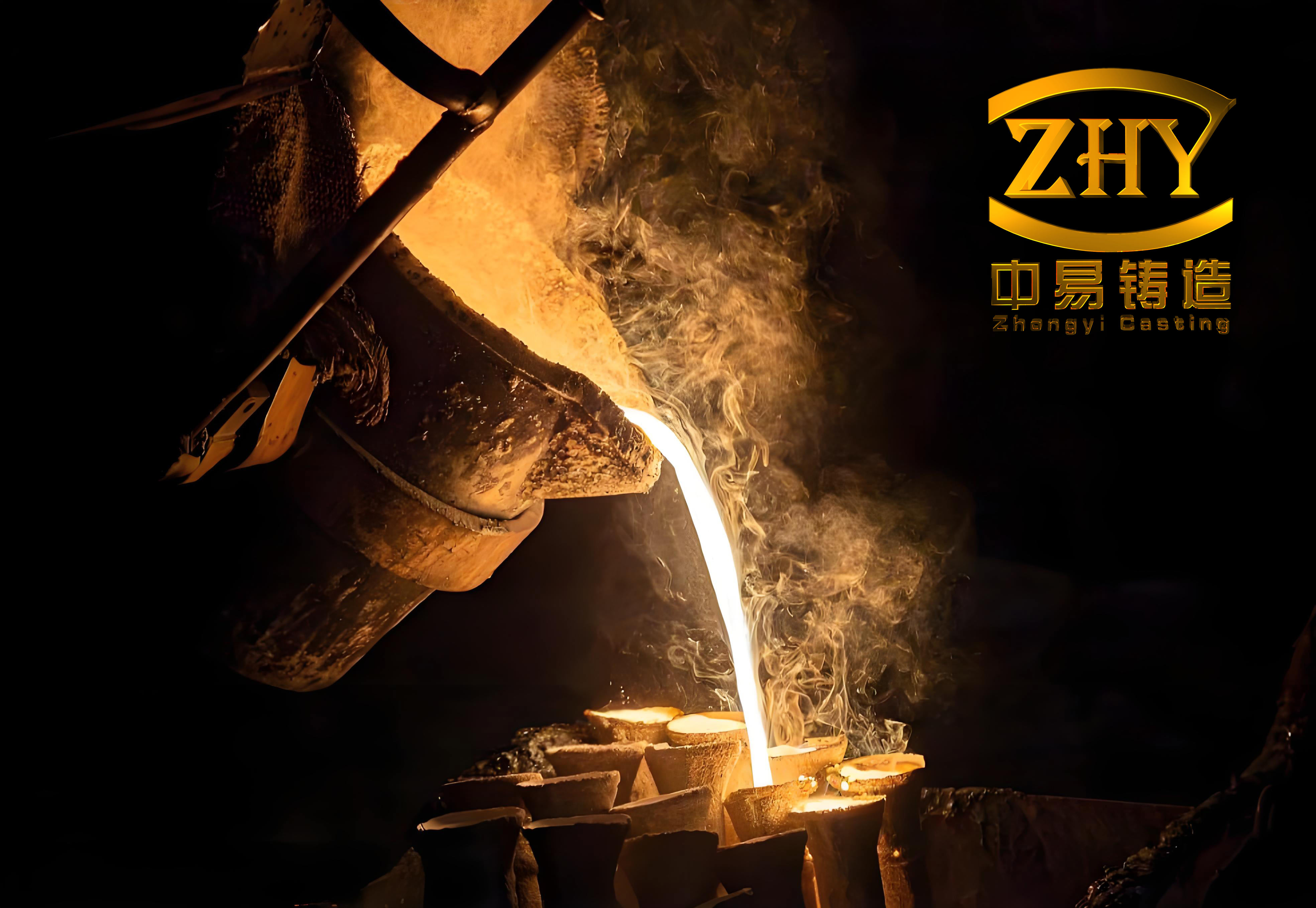
Cracks in steel lost wax casting are primarily classified by the temperature regime in which they occur. The two predominant categories are hot tears (hot cracks) and cold cracks. Hot tears form in the late stages of solidification, when the metal is in a mushy, semi-solid state. The remaining liquid films at grain boundaries are unable to withstand the tensile stresses generated by constrained contraction. Their characteristic appearance is often jagged and intergranular, and they may show signs of oxidation. The susceptibility to hot tearing, $S_{ht}$, can be conceptually related to the strain accumulation during this vulnerable period, often expressed in relation to the coherent solid fraction, $f_s$:
$$S_{ht} \propto \int_{f_s^{coherent}}^{1} \frac{d\epsilon}{dt} \cdot dt$$
where $\frac{d\epsilon}{dt}$ is the strain rate imposed on the semi-solid structure. Cold cracks, on the other hand, occur at temperatures far below the solidus, often at or near room temperature. They are typically transgranular, straight, and bright in appearance. These are driven by residual stresses from thermal gradients (thermal stress) and phase transformations (transformation stress), often exacerbated by hydrogen embrittlement or the presence of hard, brittle microstructural constituents like martensite. The risk can be modeled by considering the combined stress state exceeding the material’s yield strength, $\sigma_y$, at that temperature:
$$\sigma_{thermal} + \sigma_{transformation} + \sigma_{external} > \sigma_y(T)$$
| Crack Type | Formation Temperature | Typical Morphology | Primary Driving Force | Key Influencing Factors |
|---|---|---|---|---|
| Hot Tear | Mushy Zone (Near Solidus) | Jagged, Intergranular, Oxidized | Restricted Contraction Strain | Alloy Solidification Range, Mold Restraint, Section Thickness Variation |
| Cold Crack | Low Temperature (<200°C) | Straight, Transgranular, Bright | Residual Tensile Stress | High Carbon/Martensite, Hydrogen Content, Severe Thermal Gradients |
| Quench Crack | During Heat Treatment | Sharp, Often Branched | Rapid Cooling & Phase Transformation Stresses | Quenchant Severity, Part Geometry, Austenitizing Temperature |
| Handling Crack | Room Temperature | Localized, Often at Stress Concentrators | Mechanical Impact/Overload | Cast-in Notches, Brittle Microstructure, Improper Handling |
Having established a fundamental understanding of crack types, the core of effective mitigation lies in a multi-faceted approach targeting every stage of the lost wax casting process, from initial design to final handling.
Component Design Optimization for Castability
The most cost-effective method to prevent cracks is to design them out from the beginning. In lost wax casting, this means collaborating with product engineers to adapt the component geometry for manufacturability without compromising function. The primary goal is to minimize stress concentrations and ensure uniform, progressive solidification.
1. Gradual Transitions and Elimination of Sharp Notches: Abrupt changes in section thickness act as inherent stress raisers. During solidification, the thin section cools and gains strength rapidly, constraining the slower-cooling, weaker thick section and leading to hot tears. The stress concentration factor, $K_t$, for a simple step in a bar under tension is a function of the ratio of the section widths ($D/d$) and the fillet radius ($r$):
$$K_t \approx A + B\left(\frac{D}{d}\right) + C\left(\frac{r}{d}\right) + D\left(\frac{D}{d}\right)^2$$
Where A, B, C, D are constants. This clearly shows that increasing the transition fillet radius ($r$) significantly reduces $K_t$. In practice, this means designing generous tapers or radii where walls meet. A common rule in lost wax casting is to maintain a wall thickness transition ratio no greater than 2:1, with a minimum fillet radius of 25-30% of the thicker section’s thickness.
2. Conversion to Shell Structures and Elimination of Isolated Hot Spots: A classic problem in lost wax casting is the intersection of ribs, bosses, and walls, which creates isolated thermal masses or “hot spots.” These areas solidify last, are poorly fed, and are prone to both shrinkage porosity and hot tears due to contraction resistance from the surrounding, already-solid metal. A powerful solution is to redesign solid intersections into hollow, shell-like structures. This not only reduces weight but, more critically, allows for more uniform cooling and drastically reduces the thermal gradient and associated stress. The change in volumetric heat content, $\Delta Q$, when converting a solid junction to a shell of equivalent outer dimensions is significant:
$$\Delta Q = \rho \cdot C_p \cdot V_{solid} \cdot \Delta T – \rho \cdot C_p \cdot V_{shell} \cdot \Delta T = \rho \cdot C_p \cdot \Delta T (V_{solid} – V_{shell})$$
Where $\rho$ is density, $C_p$ is specific heat, and $V$ is volume. The reduced $V_{shell}$ directly lowers the local heat that must be dissipated, synchronizing its cooling with the rest of the casting.
3. Strategic Use of Process Aids: When functional design is rigid, non-functional process aids can be lifesavers in lost wax casting.
- Flanges or Bosses at Hole Edges: Adding a small, thin flange around a hole in a thin wall distributes the thermal stress during solidification away from the sharp edge of the hole, preventing radial cracks.
- Corner Reinforcement Ribs (Gussets): Adding a small, triangular rib in an internal corner (like where a vertical wall meets a horizontal floor) does not add significant thermal mass but dramatically increases the section modulus, stiffening the corner against distortion and crack initiation during contraction.
| Design Problem | Original Feature | Optimized Feature for Lost Wax Casting | Mechanism of Improvement |
|---|---|---|---|
| Sharp Thickness Transition | 90° corner at wall junction | Minimum fillet radius R = T (thick section), tapered transition if T/t > 2 | Reduces stress concentration factor (Kt), promotes uniform cooling. |
| Hot Spot at Intersection | Solid “+” shaped junction of ribs | Hollow “X” shaped shell structure; cored intersection. | Eliminates last-to-freeze thermal mass, reduces solidification stress and shrinkage. |
| Crack at Hole in Thin Web | Hole with sharp perimeter in thin wall | Hole with a light, raised collar or flange (0.5-1.0 x wall thickness). | Shifts stress concentration away from hole edge, provides a more progressive stiffness change. |
| Distortion & Crack in Large Flat Area | Large, unsupported flat plane | Addition of low-profile, staggered stiffening ribs or a slight crown. | Increases buckling resistance, breaks up monolithic contraction, reduces warpage stress. |
Foundry Process Optimization
Even with a good design, the lost wax casting process parameters must be meticulously controlled to prevent crack formation. This involves gating design, metallurgy, and thermal management.
1. Gating and Feeding System Design: The gating system must fulfill two sometimes contradictory goals: provide adequate feed metal and minimize thermal constraints. A poorly placed gate can itself become a hot spot and a source of restraint.
- Avoiding “Box” Framing: A common mistake is to gate a part from two opposite sides connected to a central runner, creating a rigid rectangular or “box” frame of metal (part-gate-runner). During contraction, this frame fights against the mold, leading to high stress and cracks at the gate attachments. The solution is to use a single, judiciously placed gate or a “knife” gate that yields more easily.
- Flattened and Widened Gates: For thin-walled lost wax casting components, using a thin, wide gate (like a “fan” gate) is advantageous. It reduces the local thermal mass at the connection point compared to a thick, narrow gate, minimizing the hot spot. It also allows for a gentler fill. The gate cross-sectional area $A_g$ should be designed based on the desired fill time $t_f$ and the Bernoulli equation principle:
$$A_g \approx \frac{V_c}{v_c \cdot t_f}$$
where $V_c$ is the cavity volume and $v_c$ is the flow velocity through the gate, which must be controlled to avoid turbulence.
| Gating Strategy | Schematic Intent | Thermal/Stress Consequence | Improved Alternative for Lost Wax Casting |
|---|---|---|---|
| Dual Opposite Gates | Feed two heavy sections simultaneously. | Creates a rigid “box” frame, high restraint, cracks at gates. | Single central gate or offset gate with longer, thinner runner connection to reduce stiffness. |
| Thick, Round Gate | Provide ample feeding channel. | Creates a massive hot spot at attachment, prone to hot tear. | Flattened “knife” or “fan” gate; same cross-sectional area but distributed over a wider, thinner connection. |
| Direct Gate on Thin Wall | Simplest connection. | Local overheating, distortion, and crack initiation in thin section. | Gate onto a heavier section (boss, flange) or use an indirect gate with a runner extension to cool metal before entering thin wall. |
2. Alloy Chemistry and Melt Quality Control: The base material’s inherent resistance to cracking is paramount. In steel lost wax casting, sulfur (S) and phosphorus (P) are particularly detrimental as they form low-melting-point eutectic films (e.g., FeS) along grain boundaries, severely weakening the material in the mushy zone. The hot tearing susceptibility increases non-linearly with impurity content. Effective desulfurization using ladle metallurgy (e.g., calcium treatment) is critical. Furthermore, controlling the carbon equivalent (CE) helps manage hardenability and the risk of cold cracks post-casting or after heat treatment. A common formula for CE is:
$$CE = C + \frac{Mn}{6} + \frac{Cr + Mo + V}{5} + \frac{Ni + Cu}{15}$$
For crack-sensitive applications in lost wax casting, a lower CE is often targeted, and hydrogen content is rigorously minimized through proper furnace atmosphere control or vacuum degassing.
3. The “Low-Temperature Pour, High-Temperature Mold” Principle: This is a cornerstone technique for preventing hot tears in lost wax casting. Pouring the steel at the lowest possible temperature within the fluidity window reduces the total heat input, shortening the solidification time and the duration the metal spends in the brittle temperature range. However, a low pour temperature risks misruns in thin sections. The countermeasure is to pre-heat the ceramic shell (the “mold”) to a “red-hot” state, typically above 900°C. This achieves several things: it prevents thermal shock to the shell, eliminates the steep initial thermal gradient that causes shell cracking, and, crucially, it slows the cooling rate of the metal immediately after pouring. This slower initial cooling allows the thin sections to fill completely while the overall temperature gradient across the casting is reduced, minimizing thermal stress. The heat transfer at the metal-mold interface is governed by:
$$q = h \cdot (T_{metal} – T_{mold})$$
Where $q$ is heat flux and $h$ is the interfacial heat transfer coefficient. By raising $T_{mold}$ significantly, the driving force $(T_{metal} – T_{mold})$ is reduced from the very start, leading to a more gentle and uniform cooling profile.
Post-Casting and Handling Protocol
Cracks can occur even after a sound casting has solidified, during the decasting, cleaning, and heat treatment stages. Implementing controlled procedures here is essential for a holistic lost wax casting quality system.
1. Controlled Shell Removal and De-gating: The mechanical shock of breaking the ceramic shell or knocking off the浇注系统 can fracture a brittle casting. Strategies include:
- Designated knock-off points on the浇注系统, such as reinforced “pads” or notches that localize the impact force away from the casting itself.
- For highly delicate or complex lost wax casting parts, using vibratory descaling or high-pressure water jetting instead of mechanical hammering.
- Using abrasive cutting wheels or band saws for de-gating instead of brute force, especially for parts with high residual stress.
2. Stress Relief and Controlled Heat Treatment: For high-strength or crack-prone alloys, a stress relief anneal immediately after casting and shell removal is vital. This involves heating the castings to a temperature below the lower transformation temperature (e.g., 600-650°C for low-alloy steels), holding to allow creep to relax the stresses, and then cooling slowly. The stress relaxation follows a time-temperature relationship often approximated by:
$$\sigma_t = \sigma_0 \cdot e^{-k(T) \cdot t}$$
where $\sigma_t$ is stress at time $t$, $\sigma_0$ is initial stress, and $k(T)$ is a temperature-dependent relaxation constant. Subsequent quenching for hardening is a major source of cold (quench) cracks. Mitigation involves using less severe quenchants (e.g., oil instead of water, polymer solutions), interrupted quenching (martempering), and ensuring the part geometry is suitable for even cooling. Computational modeling of quench severity ($H$-value) and cooling curves is increasingly used in lost wax casting to predict and avoid dangerous thermal gradients.
3. Gentle Cleaning and Inspection: Post-heat treatment cleaning processes like shot peening or blasting must be carefully calibrated. Excessive intensity or improper media can propagate micro-cracks. For extremely delicate surfaces in lost wax casting, techniques like chemical milling or gentle abrasive flow machining may be specified. Non-destructive testing (NDT), such as fluorescent penetrant inspection (FPI) or radiography, is the final critical gate to ensure no cracks escape to the customer.
In conclusion, eliminating cracks in steel lost wax casting is not a matter of applying a single fix but requires a systematic, multi-disciplinary approach. It begins with casting-friendly design principles that minimize stress concentrators and thermal imbalances. It is executed through precise foundry engineering that manages thermal dynamics via optimized gating, clean metallurgy, and controlled pouring practices. It is safeguarded by post-casting protocols that handle the component with care and employ appropriate thermal treatments to manage residual stress. Each stage of the lost wax casting journey presents an opportunity to either induce or prevent cracking. By understanding the underlying mechanisms—from the strain accumulation in the mushy zone to the final stress state after heat treatment—and implementing the layered strategies outlined here, manufacturers can dramatically improve yield, reliability, and the performance limits of their precision cast components, fully unlocking the potential of the lost wax casting process for demanding lightweight applications.