
As a leading steel castings manufacturer, I have witnessed firsthand the rapid expansion of the automotive and heavy machinery industries, which has driven unprecedented growth in foundry production capacity. However, traditional casting operations are plagued by significant issues such as low automation, high energy consumption, severe pollution, and poor working conditions for personnel. With growing environmental awareness, our industry is increasingly adopting green manufacturing principles. In this article, I will elaborate on the integrated ventilation and air conditioning system design we implemented for a state-of-the-art green foundry, focusing on how it enhances environmental performance, improves indoor air quality, and ensures worker comfort. This design is particularly relevant for any steel castings manufacturer aiming to modernize their operations.
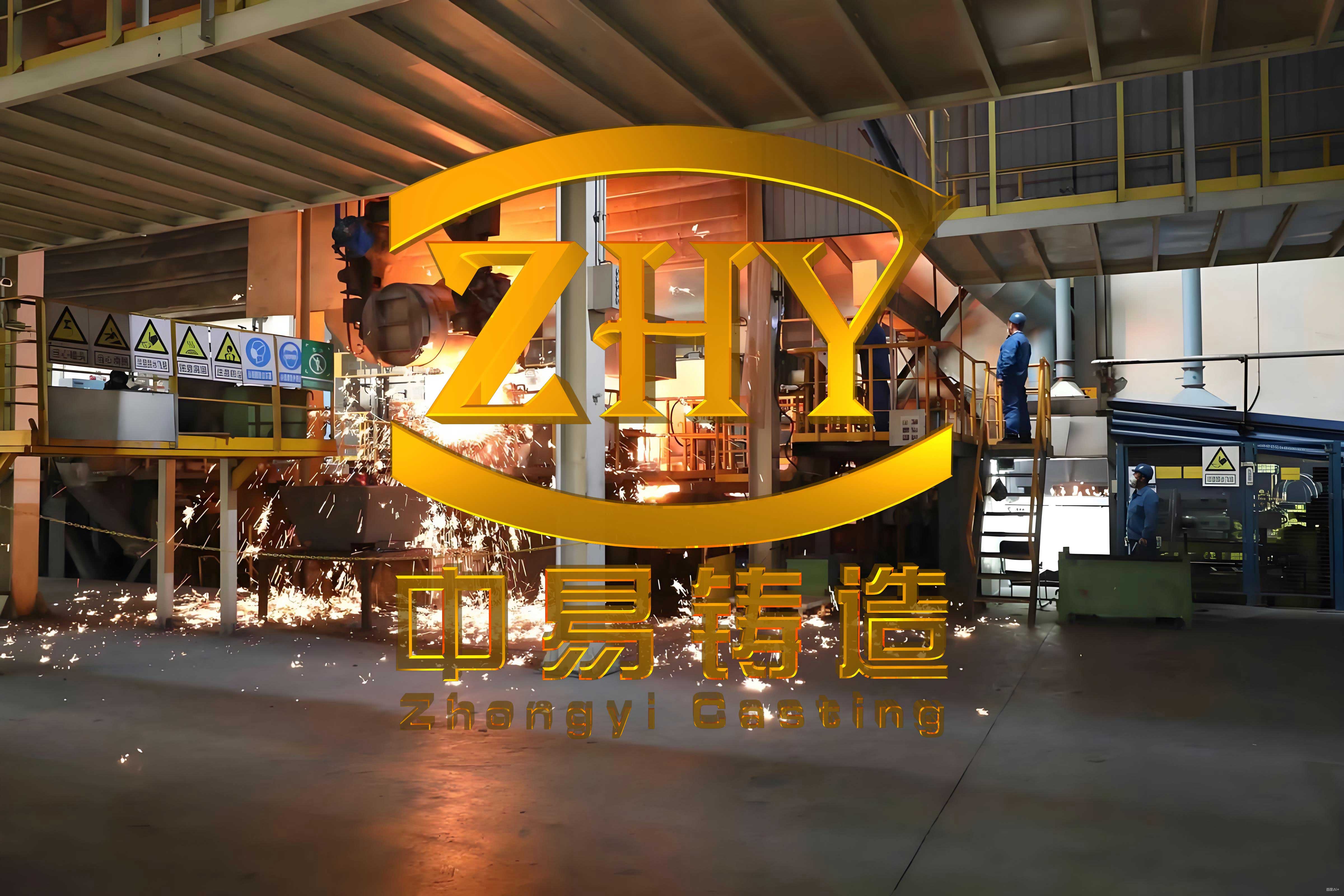
The core philosophy behind our approach is the synergistic combination of centralized dust collection systems, strategic workshop ventilation, and personalized岗位送风 (gangwei songfeng) or spot cooling/personalized air supply systems. For a steel castings manufacturer, controlling particulate matter and thermal loads is paramount. The foundry workshop in question, part of a large-scale facility, has a total floor area of approximately 19,660 square meters and houses three vertical squeeze molding lines with an annual output of 65,000 tons of castings. The production process includes melting, molding, core making, and sand handling—all significant sources of dust, fumes, and heat.
A critical first step for any steel castings manufacturer is a thorough identification and quantification of pollution sources. The following table summarizes the primary dust and fume emission points during steel casting production:
| Process Department | Operation/Equipment | Primary Emissions | Particle Size Range (Typical) |
|---|---|---|---|
| Melting | Medium-Frequency Coreless Induction Furnace | Oil fumes, metallic oxides (Fe2O3, ZnO) | 0.1 – 10 µm |
| Melting | Nodularizing (Spheroidization) Station | Metallic oxides, MgO fumes | Submicron – 5 µm |
| Melting | Ladle Drying/Roasting | Combustion products, moisture | N/A (Gaseous) |
| Molding | Pouring | CO, CO2, resin pyrolysis fumes, steam, particulates | 0.01 – 100 µm |
| Molding | Molding & Sand Handling | Silica sand, coal dust, bentonite clay | 1 – 200 µm |
| Molding | Shakeout & Cooling Drum | Sand, burnt carbon, residual binders | 10 – 500 µm |
| Core Making | Core Shooting Machines | Fine sand dust, Volatile Organic Compounds (VOCs: formaldehyde, phenols) | Dust: 1-50 µm; VOCs: Molecular |
| Sand Preparation | Sand Mixing, Reclamation | Silica dust, additives | 1 – 150 µm |
For a steel castings manufacturer, the design of dust collection systems must be tailored to these specific sources. The fundamental principle for calculating exhaust air volume for capture hoods is based on the required control velocity at the hood face. The general formula is:
$$ Q = A \times v_0 $$
where \( Q \) is the exhaust volume flow rate (m³/h), \( A \) is the open face area of the hood (m²), and \( v_0 \) is the required average face velocity (m/s). The value of \( v_0 \) varies depending on the process toxicity, thermal updrafts, and interference from cross-drafts. For a typical steel castings manufacturer, we apply the following guidelines:
- \( v_0 = 2.0 \, \text{m/s} \) for furnace tilting, ladle transfer, and nodularizing stations.
- \( v_0 = 1.5 \, \text{m/s} \) for pouring cooling zones and core machine outlets.
- \( v_0 = 3.0 \, \text{m/s} \) for intense dust generation points like shakeout conveyors and sand return belts.
Our integrated system comprises several independent but coordinated subsystems. The first major subsystem is the Furnace Melting Dust Collection System. Each production line for this steel castings manufacturer features four 5-ton/hour medium-frequency coreless induction furnaces. A dedicated baghouse filter system serves each line. The key innovation was combining exhaust from furnace roof hoods and ladle transfer hoods. The roof hood captures fumes during melting and tapping, while side-draft hoods along the molten metal transfer path capture fugitive emissions. The combined airflow not only captures dust but also cools the hot furnace gases before they enter the baghouse, preventing filter damage. The heat balance at the merger point can be approximated by:
$$ \sum (m_{hot} \cdot c_{p,hot} \cdot T_{hot}) + \sum (m_{cool} \cdot c_{p,cool} \cdot T_{cool}) = (m_{total} \cdot c_{p,mix} \cdot T_{mix}) $$
where \( m \) is mass flow rate of air, \( c_p \) is specific heat, and \( T \) is temperature. Mixing the streams ensures \( T_{mix} \) is below the fabric filter’s maximum continuous operating temperature (typically 120-150°C). Each system handles approximately 120,000 m³/h.
The second subsystem is the Ladle Repair Station Dust Collection. This area, often overlooked by a steel castings manufacturer, generates significant particulate matter during refractory removal using pneumatic tools. A standalone system with capture hoods designed for \( v_0 = 2.0 \, \text{m/s} \) serves this zone, with a capacity of 40,000 m³/h. The capture efficiency \( \eta_c \) for such hoods is crucial and can be related to the dimensionless capture number \( N_c \):
$$ \eta_c = 1 – \exp(-k \cdot N_c) $$
where \( k \) is an empirical constant and \( N_c \) is a function of hood geometry, distance to source, and exhaust velocity.
The third critical system is for Nodularizing, Slag Skimming, and Pouring. These operations are central to the quality of ductile iron castings, a key product for many steel castings manufacturers. Combined canopy hoods over the nodularizing station and pouring manipulators, along with side-draft hoods for inoculant addition, are connected to a single baghouse per line. The total design airflow is 65,000 m³/h per line. The required exhaust rate must overcome the thermal plume from the molten metal. The plume rise velocity \( w_p \) can be estimated using Morton’s formula for a buoyant source:
$$ w_p \sim \left( \frac{B}{z} \right)^{1/3} $$
where \( B \) is the buoyancy flux \( (B = g \cdot \dot{Q}_h / (\pi \cdot \rho_a \cdot c_p \cdot T_a)) \), \( g \) is gravity, \( \dot{Q}_h \) is heat emission rate, \( \rho_a \) is air density, \( c_p \) is specific heat, \( T_a \) is ambient temperature, and \( z \) is height above source. The hood design must account for this upward momentum.
The fourth subsystem handles emissions from the Post-Pouring Cooling, Shakeout, and Sand Return. This is often the dustiest area for a steel castings manufacturer. A single system per line captures fumes from the cooling conveyor (\(v_0=1.5\) m/s), shakeout grid, cooling drum, and return sand belts in pits (\(v_0=3.0\) m/s). Total airflow is about 110,000 m³/h per line. The moisture from cooling castings necessitates system protection. We use a burner to introduce hot air into the ductwork when needed, preventing condensation. The dew point temperature \( T_{dp} \) must be calculated:
$$ T_{dp} = \frac{B \cdot \gamma(T, RH)}{A – \gamma(T, RH)} $$
where \( A = 17.27 \), \( B = 237.7 \, ^\circ\text{C} \), and \( \gamma(T, RH) = \frac{A \cdot T}{B + T} + \ln(RH/100) \), with \( T \) in °C and \( RH \) as relative humidity. Insulation is applied to keep duct and filter temperatures above \( T_{dp} \).
The fifth subsystem addresses the unique challenge of the Core Making Department. Here, a steel castings manufacturer must deal with both particulate (fine sand) and gaseous (VOCs) pollutants. We implemented a combined dust collection and VOC abatement system. After initial capture by hoods (\(v_0=1.5\) m/s), the air passes through a baghouse for particulate removal, then through a photocatalytic oxidation (PCO) unit for VOC destruction. The system airflow is 45,000 m³/h. The VOC removal efficiency in a PCO reactor can be modeled as a first-order reaction:
$$ C_{out} = C_{in} \cdot \exp(-k_{PCO} \cdot \tau) $$
where \( C \) is concentration, \( k_{PCO} \) is the apparent rate constant (depending on UV intensity, catalyst, humidity), and \( \tau \) is residence time in the reactor.
The Sand Preparation Department, typically enclosed, has its own dedicated dust collectors provided by the process equipment supplier, with a total capacity of 130,000 m³/h.
The performance parameters of all these primary dust collection systems for this representative steel castings manufacturer are summarized below:
| Dust Collection System | Primary Sources Covered | Design Airflow (m³/h) | Control Velocity \(v_0\) (m/s) | Filtration/Abatement Technology | Key Design Consideration |
|---|---|---|---|---|---|
| Furnace Melting | Induction Furnaces, Ladle Transfer | 120,000 | 2.0 | Baghouse Filter | Gas cooling via stream mixing |
| Ladle Repair | Refractory Demolition | 40,000 | 2.0 | Baghouse Filter | Localized, intermittent operation |
| Nodularizing & Pouring | Spheroidization, Pouring, Inoculation | 65,000 | 2.0 | Baghouse Filter | Overcoming thermal plumes |
| Cooling & Shakeout | Cooling Conveyor, Shakeout, Sand Return | 110,000 | 1.5 & 3.0 | Baghouse Filter | Moisture control, anti-condensation |
| Core Making | Core Machines, Core Storage | 45,000 | 1.5 | Baghouse + Photocatalytic Oxidizer | Combined particulate and VOC removal |
| Sand Preparation | Mullers, Mixers, Screens, Hoppers | 130,000 | Varies | Baghouse Filters (Integrated) | Process-integrated design |
Despite these comprehensive local exhaust systems, fugitive emissions are inevitable for a steel castings manufacturer due to process constraints and hood design limitations. Furthermore, the immense process heat released—primarily as radiation from molten metal, cooling castings, and hot sand—creates a significant thermal burden. Therefore, a robust general ventilation strategy is indispensable. Our design emphasizes natural ventilation as the primary mode, supplemented by targeted mechanical exhaust. The workshop building is equipped with continuous ridge ventilators (roof monitors) to leverage thermal buoyancy. The theoretical natural ventilation airflow rate \( Q_n \) driven by stack effect can be estimated as:
$$ Q_n = C_d \cdot A \cdot \sqrt{2g \cdot H \cdot \frac{\Delta T}{T_o}} $$
where \( C_d \) is discharge coefficient (~0.65), \( A \) is effective opening area, \( H \) is height difference between inlet and outlet, \( g \) is gravity, \( \Delta T \) is indoor-outdoor temperature difference, and \( T_o \) is outdoor absolute temperature. To enhance ventilation in critical zones like the furnace front, pouring area, and shakeout, we installed powered roof exhaust fans. This hybrid approach ensures continuous dilution of escaped contaminants and heat removal, maintaining a safer and less oppressive background environment. This is a cost-effective and energy-efficient strategy that every steel castings manufacturer should consider.
However, general ventilation alone cannot guarantee thermal comfort for workers in fixed operating positions. This leads to the third pillar of our design: the Personalized Spot Cooling and Air Supply System. For a steel castings manufacturer in regions with hot and humid climates, traditional methods like pedestal fans or misting fans are inadequate. They merely increase air movement over sweaty skin, offering limited cooling and often causing discomfort due to strong, unfocused drafts. Full-space air conditioning of such a vast, leaky, and high-ceilinged space is prohibitively expensive in both capital and operational energy costs. Our solution deploys a dedicated ducted system supplying conditioned fresh air directly to predefined workstations. Each of the three molding lines and the core making area is served by an independent air handling unit (AHU) with a capacity of 80,000 m³/h. The system operates on 100% outdoor air. In summer, the AHU cools and dehumidifies the air to a supply temperature \( T_s \) of approximately 22°C. In transitional seasons, it supplies untreated outdoor air. Winter operation is optional based on need.
The supply air is distributed via main ducts running along building columns, with flexible drop-down branches terminating in adjustable drum-louvre diffusers (鼓形风口) positioned about 3.5 meters above the floor at key operator stations. The diffusers are fully adjustable in direction and flow rate, allowing workers personalized control. The strategic positioning is critical: the airflow is directed from the diffuser, across the worker, and towards the primary dust source. This creates a beneficial air current that not only cools the worker but also gently pushes any fugitive fumes away from the breathing zone and towards the local exhaust hoods, enhancing overall capture efficiency. The cooling effect provided by this spot cooling can be quantified by the Predicted Mean Vote (PMV) model, which balances the body’s heat production with heat loss to the environment. The localized cooling significantly improves the PMV index around the workstation. The required cooling capacity \( \dot{Q}_{cool} \) for a spot can be estimated by:
$$ \dot{Q}_{cool} = \dot{m}_a \cdot c_p \cdot (T_{room} – T_s) $$
where \( \dot{m}_a \) is the mass flow rate of supply air to that spot. This system offers multiple benefits: it drastically improves thermal comfort and air quality at the micro-environment level, provides the necessary makeup air for the extensive exhaust systems (preventing negative pressure issues), and reinforces a favorable overall airflow pattern in the workshop. It is an essential component for a modern, worker-centric steel castings manufacturer.
The integration of these three systems—targeted dust collection, general dilution ventilation, and personalized spot cooling—creates a robust defense-in-depth strategy for environmental control. The effectiveness of this integrated approach for a steel castings manufacturer can be evaluated through key performance indicators (KPIs). The table below outlines theoretical and expected performance metrics based on our design calculations and industry benchmarks:
| Performance Indicator | Design Target / Calculation Basis | Expected Outcome |
|---|---|---|
| Total Dust Collection Efficiency (Point Source) | \( \eta_{total} = 1 – [(1-\eta_{capture}) \cdot (1-\eta_{filter})] \) Where \( \eta_{capture} \approx 0.85-0.95 \), \( \eta_{filter} > 0.995 \) |
> 99.5% for captured streams |
| Fugitive Emission Reduction (Workshop Ambient) | Comparison of dust concentration before & after general ventilation. Use of dilution equation: \( C_{in} = \frac{G}{Q_v} + C_{out} \) Where \( G \) is fugitive emission rate, \( Q_v \) is ventilation rate. |
Ambient dust concentration < 1 mg/m³ |
| Worker Thermal Comfort (PMV Index at Station) | PMV calculation based on localized conditions (Air temp, radiant temp, air speed, humidity, clothing, activity). \( PMV = f(T_a, T_r, v, RH, M, I_{cl}) \) |
PMV in range -0.5 to +0.5 (Neutral to Slightly Cool) |
| Makeup Air Balance | \( \sum Q_{exhaust} \approx \sum Q_{makeup} \) Makeup from spot cooling system + natural infiltration + dedicated makeup units. |
Neutral or slight positive pressure in workshop |
| Energy Consumption Index | \( ECI = \frac{\text{Total Fan Power + Cooling Power}}{\text{Annual Tonnage of Castings}} \) (kWh/ton) | Optimized through high-efficiency fans, motors, and use of natural ventilation. |
In conclusion, the journey of a modern steel castings manufacturer towards sustainability and operational excellence hinges on sophisticated environmental control. Our experience demonstrates that a holistic ventilation and air conditioning design, integrating high-efficiency centralized dust collection, optimized general ventilation leveraging natural forces, and a worker-focused personalized spot cooling system, delivers exceptional results. It ensures regulatory compliance for emissions, significantly improves the in-plant air quality and thermal environment, and directly enhances worker health, comfort, and productivity. The technical considerations—from calculating capture velocities and thermal plumes to designing for moisture control and integrating makeup air—are complex but essential. By adopting such an integrated approach, a steel castings manufacturer can truly transform into a green, efficient, and socially responsible enterprise, setting a new standard for the industry. The systems described here are scalable and adaptable, providing a blueprint for both new facilities and the retrofitting of existing operations in the demanding field of steel castings manufacturing.