
In my extensive experience within precision manufacturing, the production of complex pneumatic valve bodies presents a significant challenge. These components are critical for the efficient operation of pneumatic systems, yet their intricate geometries—featuring internal passages, non-uniform external surfaces, recessed arcs, and blind holes—make traditional machining methods both time-consuming and economically inefficient. Through rigorous research and practical application, I have found that the investment casting process, often integrated with selective machining, provides an optimal solution. This article details my comprehensive methodology and the underlying principles of this sophisticated investment casting process, which ensures dimensional accuracy, surface finish, and cost-effectiveness for such demanding parts.
The fundamental advantage of the investment casting process lies in its ability to produce near-net-shape components with complex features that would be prohibitively expensive to machine from solid stock. For the valve body in question, its internal network of channels and ports is ideally formed during the initial casting, leaving only critical mating surfaces and high-tolerance holes for subsequent CNC or traditional machining. This hybrid approach leverages the form-making freedom of casting with the precision of machining. The core of this strategy is a meticulously controlled investment casting process, where every step from pattern making to shell building and final pour is calibrated for the specific alloy and geometry.
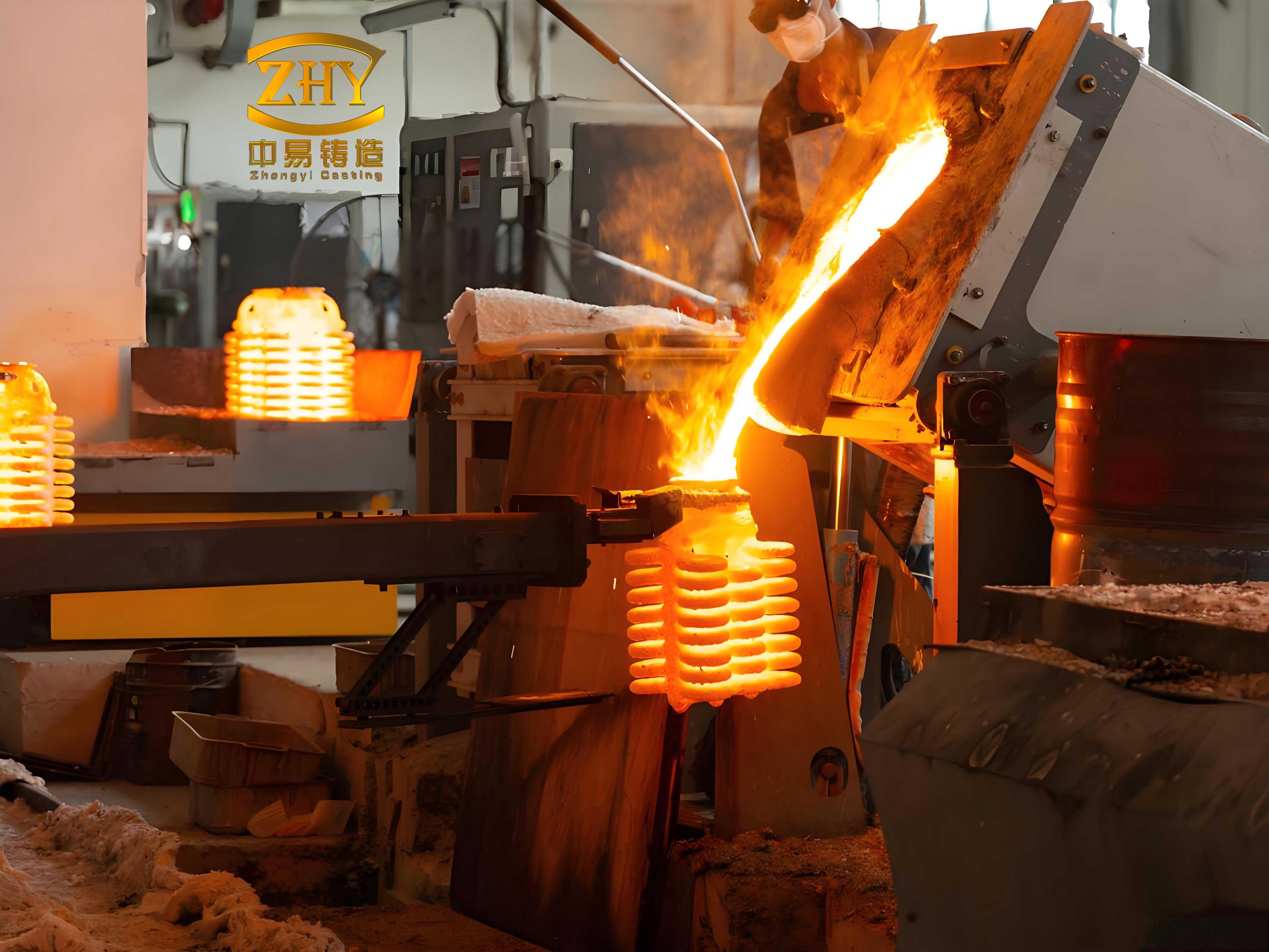
A thorough structural analysis of the valve body is the first critical step in designing a successful investment casting process. The part’s irregular external contour and numerous internal cavities mean that the mold, or “shell,” must capture these details perfectly. The presence of undercuts and thin walls necessitates careful consideration of the pattern material’s removal and the shell’s strength. This analysis directly informs the design of the sacrificial pattern and the subsequent ceramic shell. Relying solely on machining for these features would involve complex multi-axis toolpaths, excessive material removal, and a high risk of tool breakage, all of which escalate cost. Therefore, the investment casting process is not merely an alternative but the foundational manufacturing step for this component.
Mastering Pattern and Die Design for the Investment Casting Process
The journey of the investment casting process begins with the creation of a precise replica of the final part, known as the pattern. For production volumes, this pattern is itself produced using a permanent metal die. I typically specify machined aluminum dies for their excellent balance of thermal conductivity, machinability, and cost. The die must be designed with a suitable parting line—often a simple two-part horizontal split for a component like this valve body—to allow for the easy extraction of the wax or polymer pattern. The design includes alignment pins, locking mechanisms, and ejector systems to ensure pattern consistency and integrity.
The most critical aspect of die design is calculating the dimensional compensation for shrinkage. The final metal casting will be smaller than the die cavity due to the sequential contraction of the pattern material, the ceramic shell, and the metal alloy itself during solidification and cooling. Neglecting this results in an undersized part. The fundamental formula I employ to determine the die cavity dimension (L) based on the desired final part dimension (l) is:
$$ L = l(1 + \Delta_{total}) \pm \delta_{tolerance} $$
Where the total linear shrinkage, $\Delta_{total}$, is the sum of several contributing factors:
$$ \Delta_{total} = \Delta_{pattern} + \Delta_{alloy} + \Delta_{shell} $$
In this formula, $\Delta_{pattern}$ is the shrinkage of the wax or plastic pattern as it cools in the die (typically 0.5-0.6% for wax blends). $\Delta_{alloy}$ is the solidification and thermal contraction of the metal (e.g., approximately 2.0% for carbon steels). $\Delta_{shell}$ accounts for the thermal expansion of the ceramic shell during the high-temperature pre-heat and its restraint on the shrinking metal; this factor is more complex but can be estimated between 0.5% and 1.2%. The term $\delta_{tolerance}$ represents a portion of the final part’s machining allowance or casting tolerance, often taken as half of the specified tolerance band. For a detailed breakdown, the following table summarizes typical shrinkage values used in my investment casting process for common materials:
| Material/Stage | Shrinkage Factor ($\Delta$) | Remarks |
|---|---|---|
| Wax Pattern (Standard Blend) | 0.5% – 0.7% | Depends on wax composition and injection parameters. |
| Low-Carbon Steel | 1.8% – 2.2% | Varies with exact carbon content and pouring temperature. |
| Stainless Steel (304) | 2.1% – 2.3% | Higher shrinkage due to alloy composition. |
| Ceramic Shell Restraint ($\Delta_{shell}$) | 0.5% – 1.2% | Positive factor; shell expansion effectively reduces net alloy shrinkage. |
Applying this formula and the values from the table is the cornerstone of achieving dimensional accuracy in the investment casting process. For instance, if a nominal bore dimension ‘l’ is 25.00 mm and the total calculated $\Delta_{total}$ is 2.4%, the die cavity dimension L would be machined to approximately 25.60 mm. This precise calculation is what differentiates a proficient investment casting process from a trial-and-error approach.
The Core Stages: Pattern Production in the Investment Casting Process
With the die ready, the first tangible step in the investment casting process is pattern production. I prefer a blend of refined paraffin wax and microcrystalline wax or specialty polymers for their excellent replication fidelity and handling properties. The key requirements for an ideal pattern material are a suitable melting point (60-80°C for waxes), high fluidity for fine detail capture, sufficient green strength to handle assembly, and low ash content upon burnout. The wax is heated to a precise temperature above its melting point to achieve optimal viscosity and injected under controlled pressure into the pre-heated die. The injection parameters—pressure, temperature, and time—are critical. Too high a pressure can cause flashing and difficult ejection, while too low a pressure results in incomplete filling of thin sections. The relationship between injection pressure (P), wax viscosity ($\eta$), and flow rate (Q) through a gate of area A can be conceptually described by a simplified form of the Hagen-Poiseuille equation for non-Newtonian fluids:
$$ Q \propto \frac{A \cdot P}{\eta(T)} $$
Where viscosity $\eta$ is a strong function of temperature T. After a brief cooling period, the solidified pattern is ejected. Multiple wax patterns are then carefully assembled onto a central wax “sprue” or “tree” using heated tools, creating a cluster that will allow multiple castings to be produced in a single shell pour. This assembly stage is crucial for the overall yield and efficiency of the investment casting process.
Building the Ceramic Shell: A Multilayer Engineering Feat
The heart of the investment casting process is the creation of a robust, refractory shell around the assembled wax pattern cluster. This shell must withstand the thermal shock of molten metal while maintaining dimensional stability. The shell-building process, or “investing,” is a repetitive cycle of dipping, stuccoing, and hardening. I typically use a silica-based ceramic system, though alumina and zirconia are options for higher-temperature alloys.
The process begins with the preparation of ceramic slurries. A primary or “face coat” slurry is formulated to provide a smooth surface finish and prevent metal-shell reaction. A common formulation I use involves a colloidal silica binder and very fine (200-325 mesh) refractory flour like zircon or fused silica. The viscosity of this slurry is paramount and is measured regularly with a flow cup. The target viscosity $\nu$ is maintained by controlling the binder-to-powder ratio and is often empirically adjusted to a Zahn cup #4 time of 25-30 seconds. The viscosity can be related to the volumetric concentration of solids $\phi$ by models like the Krieger-Dougherty equation:
$$ \eta = \eta_0 \left(1 – \frac{\phi}{\phi_{max}}\right)^{-[\eta]\phi_{max}} $$
Where $\eta_0$ is the viscosity of the binder, $\phi_{max}$ is the maximum packing fraction, and $[\eta]$ is the intrinsic viscosity. In practice, I rely on established tables for mixture proportions. The following table outlines a typical multi-layer shell system I employ in my investment casting process for steel castings:
| Layer Number | Slurry Binder | Refractory Flour | Stucco Sand (Grit Size) | Primary Function |
|---|---|---|---|---|
| 1 (Face Coat) | Colloidal Silica | Zircon (325 mesh) | Zircon (70-100 mesh) | Surface finish, reactivity barrier. |
| 2 | Colloidal Silica | Fused Silica (200 mesh) | Fused Silica (30-50 mesh) | Thermal shock resistance. |
| 3-5 (Back-up Coats) | Ethyl Silicate or Colloidal Silica | Alumino-Silicate (Fused Mullite) | Alumino-Silicate (16-30 mesh) | Build thickness and strength. |
| 6-7 (Final Coats) | Same as backup | Same as backup | Coarse Sand (8-16 mesh) | Mechanical strength for handling. |
The assembled wax tree is first cleaned with a surfactant to ensure good wettability. It is then dipped into the face coat slurry, ensuring complete coverage. After draining excess slurry, it is immediately “rained” with dry, coarse stucco sand. This step creates a mechanical key for the next layer and accelerates drying. The coated cluster is then allowed to dry in a controlled environment with specific humidity and temperature to gel the binder. For colloidal silica, this often involves exposure to an ammonia atmosphere to induce gelation. Each subsequent layer uses a slightly coarser slurry and stucco to build thickness and permeability. The entire shell-building phase in the investment casting process typically requires 6-8 layers and 24-48 hours of cumulative drying time. The final shell thickness (t) can be estimated based on the number of dips (n) and the average thickness per layer ($\bar{t}_l$): $t \approx n \cdot \bar{t}_l$, which is usually in the range of 6-12 mm.
Dewaxing, Firing, and the Metal Pour: The Climax of the Investment Casting Process
Once the ceramic shell is sufficiently dry and strong, the wax must be removed to create the hollow cavity for the metal. In my investment casting process, I primarily use autoclave dewaxing for its speed and efficiency. The shell is placed in a high-pressure steam autoclave. The rapid heating melts the wax, and the pressurized steam (at 10-15 bar) forces the molten wax out of the shell through the sprue openings. The Clausius-Clapeyron relation gives insight into the phase change:
$$ \frac{dP}{dT} = \frac{\Delta H_{fus}}{T \Delta V} $$
This rapid removal minimizes wax residue and shell cracking. Any residual wax is burned out in the next step: high-temperature firing. The fired shell achieves its final strength and prepares the mold to receive molten metal. The firing cycle is critical. I program the furnace to ramp slowly (1-2°C/min) to about 300°C to drive off any remaining volatile compounds, then rapidly heat to the final preheat temperature, which is often within 150-300°C of the alloy’s pouring temperature. For carbon steel, a final shell temperature of 900-1000°C is common. This preheat serves multiple purposes: it removes any last traces of pattern material, stabilizes the ceramic phases, and most importantly, prevents thermal shock and premature freezing of the metal during the pour, which is vital for filling thin sections in a complex investment casting process. The heat transfer during the pour can be modeled conceptually. The rate of heat loss from the metal to the shell is governed by Fourier’s law and the boundary condition at the metal-shell interface.
Simultaneously, the alloy is melted in a induction or arc furnace. Precise temperature control and slag removal are essential. Degassing may be performed to reduce hydrogen content and prevent porosity. When both metal and shell are at their optimal temperatures, the pour is executed quickly and smoothly to maintain a continuous feed. The gating system designed into the wax tree is crucial here, guiding the metal to fill the cavity completely while minimizing turbulence and promoting directional solidification from the casting back to the feeder (riser). The solidification time $t_s$ for a simple shape can be estimated using Chvorinov’s rule:
$$ t_s = C \left( \frac{V}{A} \right)^n $$
Where V is the volume of the casting, A is its surface area, C is a mold constant, and n is an exponent (often ~2). In the complex geometry of a valve body, this rule guides the placement of feeders to ensure soundness.
Post-Casting Operations and Integration with Machining
After the metal has solidified and cooled, the investment casting process enters its final stages. The ceramic shell is mechanically broken away, often using vibration or water jetting—a step known as knockout. The individual castings are then cut from the central sprue using abrasive wheels or band saws. This reveals the raw casting, which is a near-net-shape replica of the final valve body. At this point, the integration with machining occurs. The investment casting process has done the heavy lifting of creating the complex internal and external geometry. Secondary machining is now focused on achieving final tolerances and surface finishes on specific functional areas. For the pneumatic valve body, this typically involves CNC milling of the mounting faces and precision drilling/tapping of the port holes. The casting is designed with a minimal but consistent machining allowance (often 0.5-2.0 mm) on these surfaces. This hybrid approach is the key to economic manufacturing. A comparative analysis of material utilization highlights this advantage. Let’s define material utilization efficiency (U) as:
$$ U = \frac{V_{final\_part}}{V_{raw\_material}} \times 100\% $$
For a traditional machining-from-billet approach for a complex part, U can be as low as 10-20%. For the investment casting process followed by minimal machining, U can exceed 60-70%, dramatically reducing raw material cost and machining time. The following table contrasts the two methodologies for producing 1000 valve bodies:
| Parameter | Traditional Machining from Billet | Investment Casting + Machining |
|---|---|---|
| Raw Material Weight per Part (kg) | 5.0 | 1.8 |
| Machining Hours per Part | 4.5 | 1.2 |
| Material Utilization (U) | ~18% | ~65% |
| Estimated Tooling Wear | High | Low |
| Ability for Internal Features | Limited (requires deep drilling/boring) | Excellent (cast-in-place) |
Furthermore, the mechanical properties of the casting are validated. Heat treatment (e.g., normalizing for carbon steel) is often applied to relieve stresses and achieve the desired hardness and microstructure. Non-destructive testing (NDT) like penetrant testing or radiography is employed to check for internal defects like shrinkage or gas porosity, ensuring the reliability mandated by pneumatic applications.
Conclusion: The Enduring Value of a Refined Investment Casting Process
In conclusion, the successful manufacture of complex pneumatic valve bodies hinges on the strategic adoption and meticulous execution of the investment casting process. This process is not a single operation but a deeply interconnected sequence of material science and engineering decisions—from die design accounting for multi-stage shrinkage, through the colloidal chemistry of ceramic slurries, to the thermal dynamics of dewaxing and pouring. By mastering this investment casting process, one can transform a challenging design into a manufacturable, high-quality, and cost-competitive component. The integration of this casting process with targeted post-casting machining creates a powerful hybrid manufacturing model. It maximizes material efficiency, minimizes expensive machining hours, and unlocks geometric possibilities that are otherwise unattainable. As pneumatic systems evolve towards greater complexity and integration, the role of a robust and intelligent investment casting process will only become more central to their economical and reliable production. The continuous refinement of parameters, materials, and simulation techniques promises to further enhance the precision and capabilities of this time-tested yet ever-advancing investment casting process.