
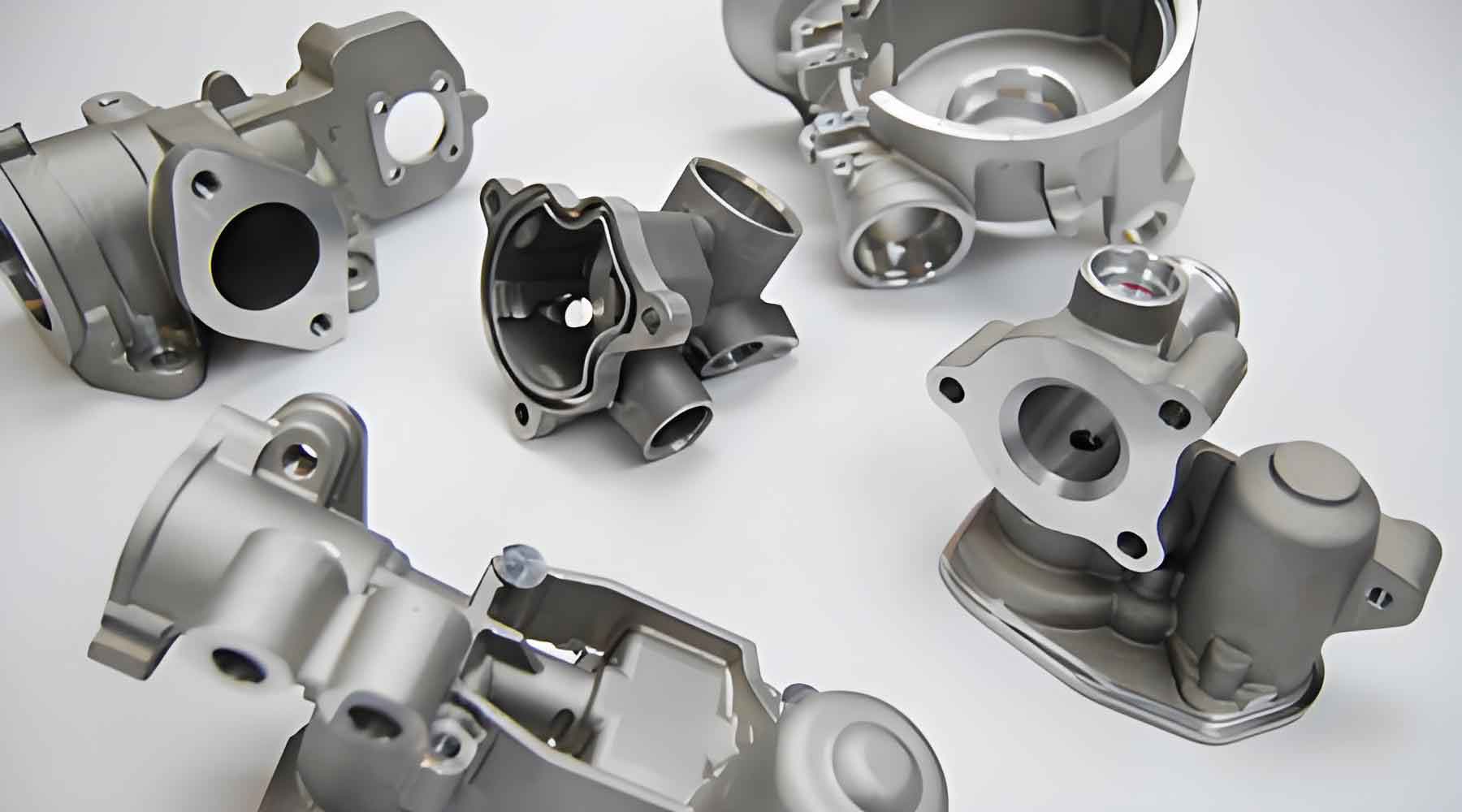
This study investigates the precision investment casting process optimization for automotive air compressor fixed disk components using numerical simulation and experimental validation. The 42CrMo4 alloy steel part with complex geometry (126mm×75mm×72mm) requires defect-free production to withstand dynamic operational loads. Through systematic parameter analysis and orthogonal experiments, we establish an optimized process framework that significantly reduces shrinkage porosity while maintaining casting integrity.
1. Process Parameter Optimization Framework
The precision investment casting optimization follows three critical phases:
| Phase | Objective | Key Parameters |
|---|---|---|
| Filling Analysis | Ensure complete mold filling | Pouring velocity, gate design |
| Solidification Control | Minimize shrinkage defects | Shell preheat, cooling rate |
| Microstructure Prediction | Achieve required mechanical properties | Alloy composition, thermal gradients |
2. Mathematical Modeling of Casting Parameters
The pouring velocity calculation employs the Kalgin equation for thin-walled components:
$$ v = \frac{0.22\sqrt{h}}{\delta \cdot \ln\left(\frac{T}{380}\right)} $$
Where:
- $v$ = Pouring velocity (cm/s)
- $h$ = Casting height (cm)
- $\delta$ = Wall thickness (cm)
- $T$ = Pouring temperature (°C)
3. Orthogonal Experiment Design
Three critical parameters were evaluated through L9(3³) orthogonal array testing:
| Factor | Level 1 | Level 2 | Level 3 |
|---|---|---|---|
| A: Pouring Temp (°C) | 1550 | 1560 | 1580 |
| B: Shell Preheat (°C) | 900 | 1000 | 1100 |
| C: Pouring Speed (mm/s) | 200 | 300 | 400 |
The experimental results revealed significant parameter interactions:
$$ \text{Shrinkage Ratio} = 1.7984\% \pm 0.1384\% $$
Optimal parameters were determined through range analysis:
| Parameter | Optimal Value | Contribution Rate |
|---|---|---|
| Shell Thickness | 6 mm | 34.2% |
| Shell Preheat | 1100°C | 28.7% |
| Pouring Temp | 1560°C | 22.1% |
| Pouring Speed | 300 mm/s | 15.0% |
4. Solidification Dynamics
The cooling rate significantly affects microstructure development in precision investment casting:
$$ t_{solidification} = \frac{(T_p – T_s)^2}{\pi k \rho c} \left(\frac{V}{A}\right)^2 $$
Where:
- $T_p$ = Pouring temperature
- $T_s$ = Solidus temperature
- $k$ = Thermal conductivity
- $\rho$ = Density
- $c$ = Specific heat
- $V/A$ = Volume-surface area ratio
5. Process Validation
The optimized precision investment casting parameters demonstrated:
- Complete filling within 3.74s
- Total solidification time: 368.67s
- Shrinkage porosity reduction: 42.8% vs initial process
- Dimensional accuracy: ±0.15mm
This systematic approach to precision investment casting optimization provides a validated framework for complex automotive components manufacturing. The integration of numerical simulation with orthogonal experimentation effectively balances production efficiency with metallurgical quality requirements, particularly for critical safety components like compressor mounting systems.