
The performance and safety of high-speed trains heavily depend on the thermal stability and mechanical properties of brake disc materials. This study investigates the phase transformation characteristics of low-alloy steels used for cast steel (CS) and forged steel (FS) brake discs through continuous cooling transformation (CCT) curve analysis. By employing thermal dilatometry, microstructure characterization, and hardness testing, critical transformation temperatures and phase evolution mechanisms are elucidated.
Material Composition and Experimental Methodology
The chemical compositions of CS and FS brake disc steels are summarized in Table 1. The CS steel exhibits higher Mn, Ni, and Si content, while FS steel contains elevated Cr, Mo, and V levels, influencing their phase transformation kinetics.
| Element | C | Si | Mn | Cr | Ni | Mo | V |
|---|---|---|---|---|---|---|---|
| Cast Steel | 0.26 | 0.58 | 1.04 | 0.90 | 1.00 | 0.55 | 0.10 |
| Forged Steel | 0.30 | 0.40 | 0.75 | 1.20 | 0.40 | 0.65 | 0.30 |
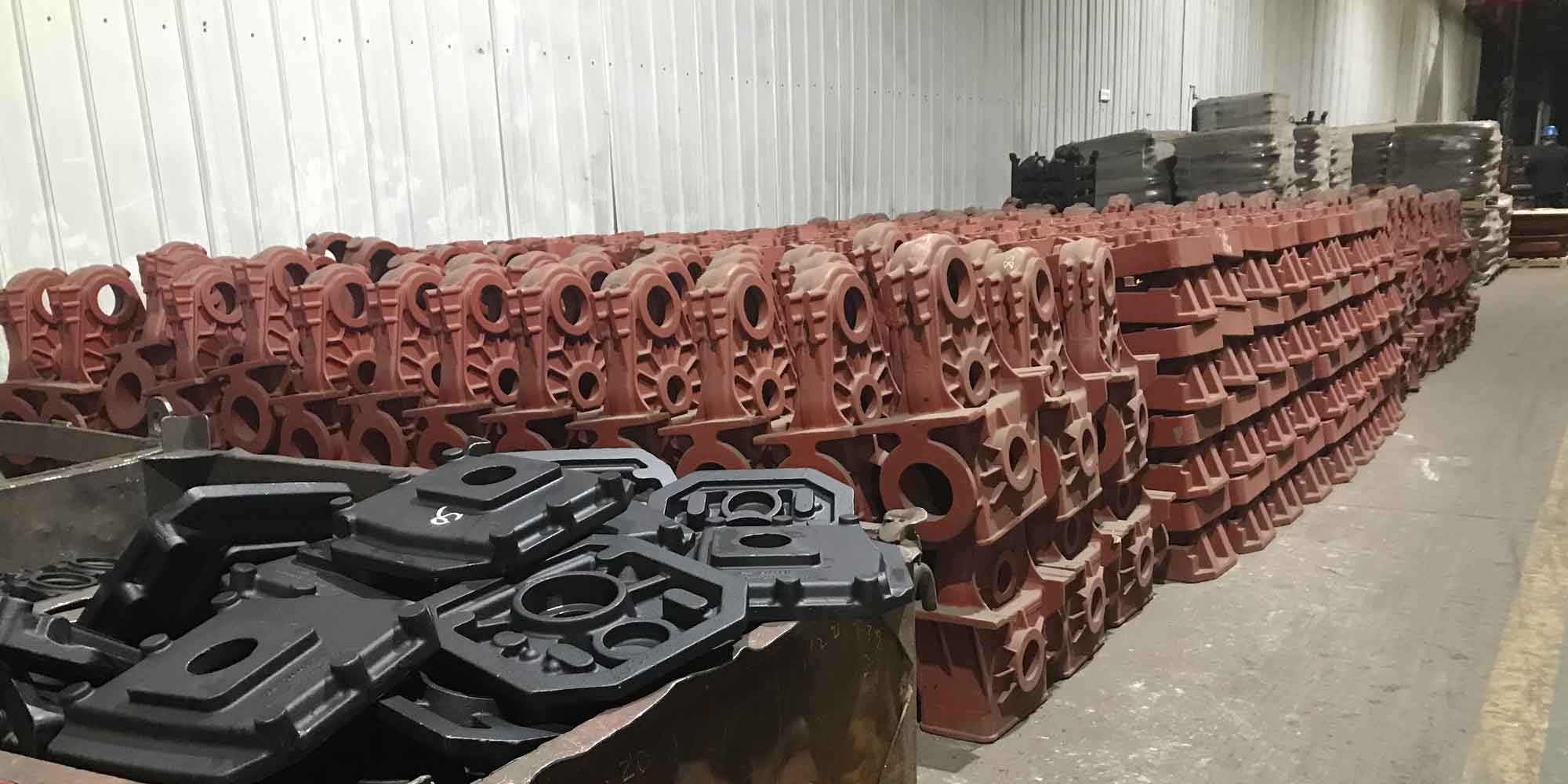
CCT curves were determined using a DIL 805L dilatometer with the thermal protocol:
$$T(t) =
\begin{cases}
500^\circ\text{C}/h \rightarrow 500^\circ\text{C} \\
180^\circ\text{C}/h \rightarrow 900^\circ\text{C} \ (\text{10 min hold}) \\
v_c \rightarrow \text{RT} \ (v_c = 0.2 – 50^\circ\text{C}/s)
\end{cases}$$
Critical Transformation Temperatures
The austenitization completion temperature (AC₃) and martensite start temperature (Mₛ) were derived from dilatometric curves:
| Material | AC₃ (°C) | Mₛ (°C) |
|---|---|---|
| Cast Steel | 847 | 347 |
| Forged Steel | 862 | 368 |
The higher AC₃ in forged steel arises from stronger austenite stabilization by Cr/Mo/V carbides. The Mₛ difference follows the empirical relationship:
$$M_s = 539 – 423\text{C} – 30.4\text{Mn} – 17.7\text{Ni} – 12.1\text{Cr} – 7.5\text{Mo}$$
where elemental concentrations are in weight percent.
CCT Curve Analysis and Microstructural Evolution
Figure 1 compares the CCT diagrams of both materials. Cast steel demonstrates superior hardenability with lower critical cooling rates for martensite formation.
| Cooling Rate (°C/s) | Cast Steel Microstructure | Forged Steel Microstructure |
|---|---|---|
| 0.2 | Granular bainite | Ferrite-pearlite |
| 5 | Lath bainite + martensite | Bainite + martensite |
| 20 | Full martensite | Martensite (80%) |
| 50 | – | Full martensite |
The complete martensitic transformation thresholds are:
$$v_{\text{crit}} =
\begin{cases}
20^\circ\text{C}/s & \text{(Cast steel)} \\
50^\circ\text{C}/s & \text{(Forged steel)}
\end{cases}$$
Hardness Evolution and Service Implications
Microhardness profiles (Table 4) correlate with phase fractions:
| Cooling Rate (°C/s) | Cast Steel (HV) | Forged Steel (HV) |
|---|---|---|
| 0.2 | 383 | 225 |
| 5 | 490 | 410 |
| 20 | 520 | 480 |
| 50 | – | 520 |
The hardness increment follows:
$$\Delta HV = k\sqrt{v_c} + HV_0$$
where \( k \) is material-dependent coefficient. Steel casting’s higher hardenability minimizes thermal cycling-induced property gradients during repeated braking events.
Conclusion
1. Cast steel brake discs exhibit lower AC₃ (847°C vs. 862°C) and higher phase transformation efficiency due to optimized Ni/Mn content
2. Critical cooling rates for full martensite formation differ significantly (20°C/s for cast vs. 50°C/s for forged steel)
3. Steel casting demonstrates superior thermal fatigue resistance through controlled bainite-martensite transformations during service
These findings provide critical insights for selecting and processing brake disc materials in high-speed rail applications, particularly highlighting the advantages of steel casting in managing thermomechanical stresses.