
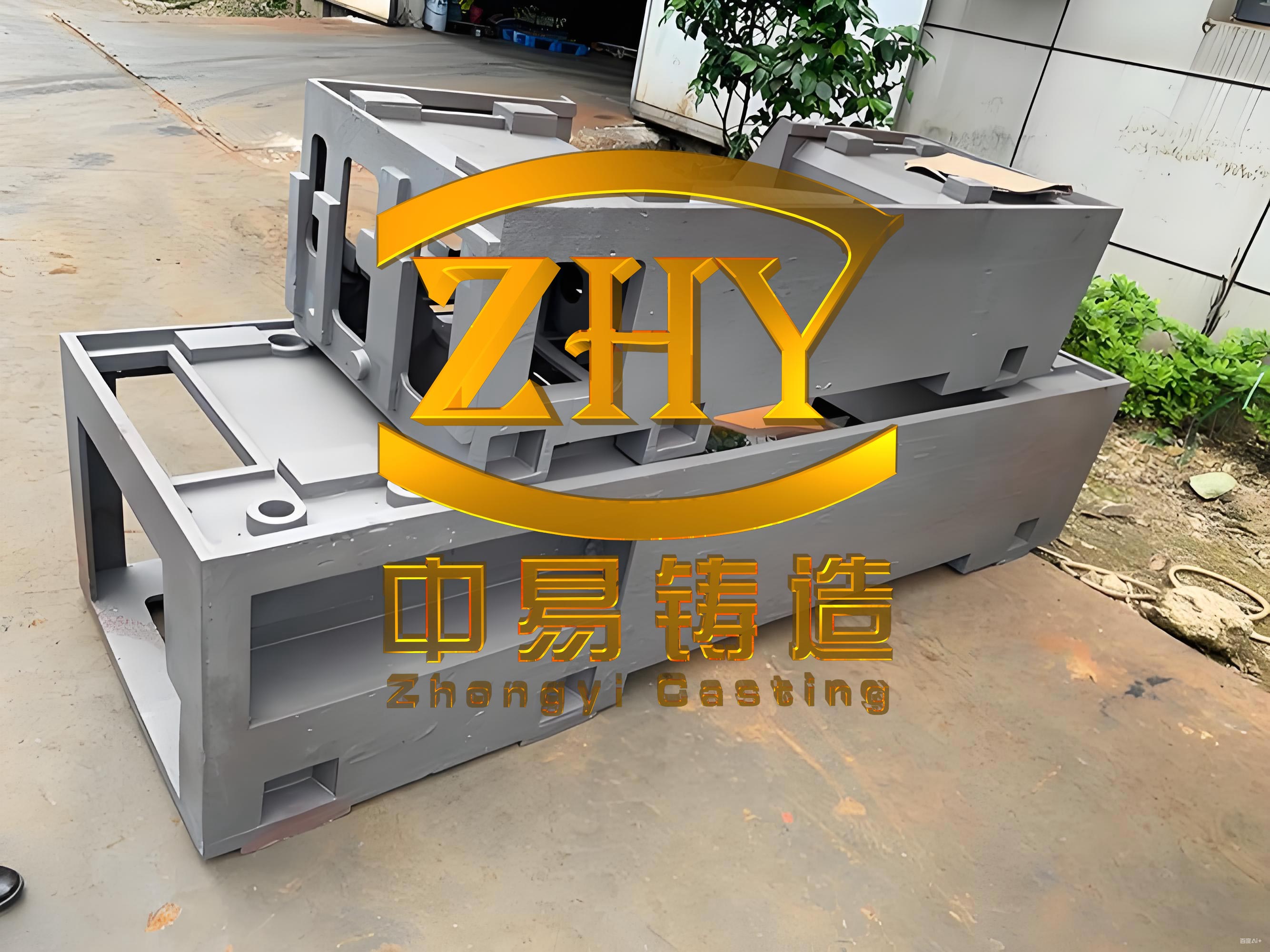
In the modern manufacturing industry, high-end large-scale CNC machine tools serve as critical equipment for the equipment manufacturing sector and are central to intelligent manufacturing systems. The bed, which is the most fundamental component of a machine tool, acts as the base for the entire machine and determines the geometric accuracy of the equipment. As the foundation upon which other parts are mounted and operate, the quality of machine tool castings directly influences the machining performance, precision, and stability of the machine tool. Currently, there remains a gap between the machine tool industry in our country and that of leading machine tool manufacturers worldwide, particularly in the realm of medium to high-end large-scale machine tool products. Domestic functional components often fall short in variety, quantity, and quality to meet the requirements of host machine配套. Consequently, a significant portion of high-end machine tools still relies on imports. High-end large CNC machine tool castings, such as beds, account for approximately 70% to 80% of the total machine weight, typically ranging from several tons to tens of tons. These castings demand exceptionally high quality, as they play a vital role in ensuring the machining performance, accuracy, and precision retention of large precision machine tools. The performance of high-end machine tool castings and their manufacturing technologies are decisive factors in determining the functionality and performance of the entire machine tool.
In recent years, the rapid development of CNC machine tools has imposed increasingly stringent requirements on machine tool castings. New demands have emerged in areas such as high precision, powerful cutting, high-speed cutting, large-scale applications, and ultra-thin designs. High-speed cutting machining equipment necessitates castings with excellent machinability; the lightweighting of machine tools and the thin-wall design of castings require good castability; and the high precision and precision retention of machine tools call for low casting stresses. Recent trends indicate that high carbon equivalent, high-strength gray cast iron remains the发展方向 for machine tool castings. This article, based on exchanges with experts in the field and investigations into domestic enterprises producing machine tool castings, discusses the development direction and quality improvement measures for machine tool castings in our country, focusing on the shift towards high carbon equivalent, high strength, high stiffness, low alloying, and low stress.
Trends in Machine Tool Castings Development
The evolution of machine tool castings is driven by the need for enhanced performance in various aspects. We will explore key trends, including high strength, high stiffness and thin-wall design, low stress and high dimensional accuracy stability, good damping capacity, excellent machinability, and large-scale applications.
High Strength
Machine tool castings typically use high-grade gray cast iron such as HT250, HT300, and HT350. In developed countries, strength grades of 300 and 350 are common, whereas domestically, HT250 and HT300 are more prevalent. However, many domestic foundries achieve high strength by significantly reducing carbon equivalent, which can lead to issues like shrinkage porosity due to increased contraction, deformation from higher casting stresses, and poor machinability from increased hardness. A comparison of carbon equivalent values between domestic and international machine tool castings in 2009 highlights this disparity.
| Item | HT250 Carbon Equivalent CE (%) | HT300 Carbon Equivalent CE (%) | HT350 Carbon Equivalent CE (%) |
|---|---|---|---|
| Foreign Machine Tool Castings Average | 3.95 | 3.83 | 3.76 |
| Domestic Machine Tool Castings Average | 3.75 | 3.60 | 3.48 |
As shown, foreign machine tool castings have higher carbon equivalents for the same grades, approximately 0.2% higher than domestic ones. This data is crucial for developing measures to improve the quality of machine tool castings in our country. Producing high carbon equivalent, high-strength gray cast iron requires a systematic approach involving high-temperature melting, composition selection, charge formulation, low alloying, and the choice of inoculants and inoculation methods. In addition to strength and hardness, other performance indicators such as eutectic degree, elastic modulus, maturity, hardening degree, quality coefficient, and the ratio of tensile strength to hardness should be considered. Monitoring parameters like molten iron temperature, undercooling, proportion of Type A graphite, and graphite size is also essential. Recent advancements in casting technology have led to progress in applying high carbon equivalent, high-strength, low-stress gray cast iron for machine tool castings, as demonstrated by the following data.
| Sample | Chemical Composition (Mass Fraction, %) | Mechanical Properties | ||||||||||
|---|---|---|---|---|---|---|---|---|---|---|---|---|
| CE | C | Si | Mn | P | S | Cu | Sn | Cr | Tensile Strength (MPa) | Elastic Modulus (GPa) | Hardness (HBW) | |
| 1 | 3.21 | 2.70 | 1.504 | 0.80 | 0.034 | 0.016 | – | – | – | 357 | 114 | 229 |
| 2 | 3.88 | 3.25 | 1.880 | 0.75 | 0.034 | 0.012 | 0.672 | 0.029 | 0.342 | 322 | 129 | 215 |
For instance, Japanese FC30 gray cast iron has a carbon equivalent of 3.82% with specific composition ranges: C 3.15–3.25%, Si 1.80–2.00%, Mn 0.8–1.2%, P < 0.12%, S < 0.12%, Cu 0.4–0.6%, and Cr 0.2–0.4%. This exemplifies the international trend towards high carbon equivalent compositions for high-strength applications.
High Stiffness and Thin-Wall Design
Machine tool castings require high resistance to deformation under powerful cutting conditions. Some critical castings are designed based on stiffness, with elastic modulus being a key indicator of material quality. Foreign machine tool castings achieve high strength and stiffness with high carbon equivalents, resulting in elastic moduli that are 10–20 GPa higher than domestic HT250, HT300, and HT350 grades. This enables thin-wall design, where wall thicknesses for medium machine tool castings have reduced from 20–25 mm to 14–20 mm, and small machine tools have reached 8–12 mm, leading to weight reductions of 8–10%. Therefore, the current use of low carbon equivalent, high-strength gray cast iron in our country is a significant barrier to achieving thin-wall and lightweight designs for machine tool castings.
Low Stress and High Dimensional Accuracy Stability
High strength in machine tool castings often leads to increased casting stresses, as shown in the relationship between tensile strength and casting stress. However, high carbon equivalent, high-strength gray cast iron is a crucial pathway to reducing casting stresses. Practical experience shows that as carbon equivalent increases, stress decreases. Thus, the lower carbon equivalent of domestic machine tool castings at the same strength level explains their poorer dimensional accuracy stability compared to foreign counterparts. The relationship can be expressed mathematically: casting stress decreases with increasing carbon equivalent, highlighting the importance of optimizing composition for low stress.
For example, the casting stress $\sigma_c$ can be related to carbon equivalent CE by the empirical formula: $$\sigma_c = k_1 – k_2 \cdot \text{CE}$$ where $k_1$ and $k_2$ are constants derived from experimental data. This underscores the need for high carbon equivalent in minimizing residual stresses.
Good Damping Capacity
Machining accuracy demands excellent damping capacity from machine tool castings. Among steels and cast irons, gray cast iron offers the best damping performance. However, as strength increases (i.e., carbon equivalent decreases), damping capacity diminishes. Therefore, increasing carbon equivalent is essential from a damping perspective. The damping coefficient $\zeta$ for gray cast iron can be approximated as a function of carbon equivalent: $$\zeta = a + b \cdot \text{CE}$$ where $a$ and $b$ are material constants, indicating improved damping with higher CE.
Excellent Machinability
With the advancement of CNC machine tools, traditional machining methods are being replaced by machining centers with tool magazines and flexible automated production lines. Improving machining efficiency, reducing tool wear, and lowering processing costs have become increasingly important, necessitating enhanced machinability of machine tool castings. Typically, hardness values and the machinability index $m$ (where $m = R_m / \text{HBW}$) are used to evaluate machinability.
| Hardness (HBW) | 160–190 | 190–220 | 220–240 | >240 |
|---|---|---|---|---|
| Machinability | Easy Machining | Smooth Cutting | Machinable | Difficult to Machine |
| Cast Iron Grade | GG20 | GG25 | GG30 | GG35 |
|---|---|---|---|---|
| m (R_m/HBW) | 0.95–1.18 | 1.04–1.39 | 1.15–1.50 | 1.25–1.37 |
In production, controlling the hardness of machine tool castings is complex and cannot be uniform. For instance, hardness at guideways is ensured using chills or graphite bricks, hardness uniformity and machinability in thin sections are addressed through inoculation, and hardness in large sections requires combination with alloying. Section sensitivity is closely related to comprehensive control of chemical composition, alloying, inoculation, and other factors. Practice shows that the machinability of gray cast iron is intimately linked to its冶金 quality.
Large-Scale Applications
Heavy and ultra-heavy machine tool castings face challenges such as reduced mechanical properties, inoculation衰退, and severe section sensitivity due to slow cooling and large sections. Gray cast iron may no longer meet strength and stiffness requirements for large sections weighing tens to hundreds of tons. Issues like deterioration in graphite morphology, inoculation衰退,球化衰退, and severe shrinkage porosity are critical problems that need addressing in machine tool castings.
Evaluation Indicators for CNC Machine Tool Castings
To ensure quality, CNC machine tool castings are evaluated based on mechanical properties, metallographic structure,冶金 quality, and hardness. These indicators collectively define the performance of machine tool castings.
Mechanical Properties
Four key requirements for CNC machine tool castings are high carbon equivalent, high strength, high stiffness, and low stress. High stiffness refers to the casting’s ability to resist deformation under high-speed and powerful cutting, characterized by elastic modulus. Low stress indicates minimal residual internal stress, ensuring small deformation after precision machining and good dimensional accuracy stability. High strength aims to guarantee high stiffness, as elastic modulus increases with strength. Modern high-precision CNC machine tools often design critical load-bearing components based on stiffness, making tensile strength a means to ensure elastic modulus. However, high strength, high stiffness, and low stress are interdependent; high strength requires low carbon equivalent, while low stress necessitates high carbon equivalent. The challenge lies in achieving high strength and stiffness at high carbon equivalent, unifying high stiffness with low stress. Performance indicators for CNC machine tool castings are summarized below.
| Grade | Tensile Strength (MPa) | Carbon Equivalent CE (%) | Elastic Modulus (GPa) | Casting Stress (MPa) | ||
|---|---|---|---|---|---|---|
| Average | Range | As-Cast | After Thermal Aging | |||
| HT250 | ≥250 | 3.95 | 3.90–4.00 | 115–120 | ≤50 | ≤20 |
| HT300 | ≥300 | 3.83 | 3.80–3.85 | 120–125 | ≤60 | ≤20 |
| HT350 | ≥350 | 3.76 | 3.73–3.78 | 125–130 | ≤60 | ≤20 |
| QT600-3 | ≥600 | 4.45 | 4.35–4.55 | 150–170 | ≤85 | ≤30 |
Metallographic Structure
The metallographic structure of machine tool castings must meet specific standards to ensure performance.
| Item | Matrix | Graphite Distribution Morphology | Graphite Size | Phosphide Eutectic + Carbides |
|---|---|---|---|---|
| Gray Cast Iron (HT300) | Pearlite ≥98% | Type A >90%, Type D <10%, No Type E allowed | 4–5级 (6–25 mm at 100x) | <2% |
| Ductile Iron (QT600-3) | Pearlite ≥60% | Nodularity ≥90% | 4–5级 (6–25 mm at 100x) | <2% |
冶金 Quality of Machine Tool Castings
冶金 quality is assessed through eutectic degree, maturity, hardening degree, and quality coefficient.
Eutectic degree $S_c$ is calculated as: $$S_c = \frac{\omega(C)}{4.26 – \frac{1}{3} \omega(Si)}$$ where $\omega(C)$ and $\omega(Si)$ are the mass fractions of carbon and silicon, respectively. For machine tool castings, the required $S_c$ values are:
| Grade | Chemical Composition (Mass Fraction, %) | Eutectic Degree $S_c$ | ||
|---|---|---|---|---|
| $\omega(C)$ | $\omega(Si)$ | Average (%) | Range (%) | |
| HT250 | 3.25–3.35 | 1.85–2.05 | 0.91 | 0.89–0.92 |
| HT300 | 3.15–3.25 | 1.80–2.00 | 0.88 | 0.87–0.89 |
| HT350 | 3.10–3.20 | 1.75–1.95 | 0.86 | 0.82–0.87 |
Maturity $R_G$, hardening degree $H_G$, and quality coefficient $Q_i$ are defined as: $$R_G = \frac{R_m}{1000 – 800 S_c}$$ $$H_G = \frac{R_m}{900 – 744 S_c}$$ $$Q_i = \frac{R_G}{H_G}$$ where $R_m$ is the tensile strength from a φ30 mm test bar. The requirements are: $S_c \geq 0.85$, $R_G \geq 1.0$, $H_G \leq 1.0$, and $Q_i \geq 1.0$ (for hardness >186 HBW).
Hardness of Machine Tool Castings
The hardness of machine tool guideways should be 200 HBW ±20 HBW to balance machinability and wear resistance.
Key Technologies and Control for High Carbon Equivalent, High Strength, High Stiffness, Low Stress High-End Machine Tool Castings
Producing high-end machine tool castings requires a systematic approach that integrates various technologies. Many enterprises struggle due to incomplete implementation of critical steps such as molten iron temperature control, scrap steel carburizing process, $\omega(Si)/\omega(C)$ ratio, alloying, enhanced inoculation, mold opening time, and aging treatment. We will delve into these aspects to outline the essential controls.
High-Temperature Melting and Scrap Steel Carburizing Process: The Foundation for High Carbon Equivalent, High-Strength Gray Cast Iron Machine Tool Castings
Gray cast iron, characterized by flake graphite, has its mechanical properties largely determined by the amount of graphite and carbon equivalent. To achieve high strength at high carbon equivalent, improvements in graphite nucleation, refinement, distribution morphology, and matrix refinement are necessary. High superheating temperature, scrap steel carburizing process, high $\omega(Si)/\omega(C)$ ratio, and alloying are the four factors that enhance graphite and strengthen the matrix.
First, molten iron superheating temperature should reach 1500–1550°C. High superheating refines graphite and improves tensile strength and elastic modulus, as shown in the effect of superheating temperature on graphite refinement and mechanical properties. This is attributed to the refinement of graphite and matrix at high temperatures. For instance, the difference in strength between coarse and fine pearlite can exceed 100 MPa.
| Mechanical Properties | Coarse Pearlite (Plate Spacing 1–2 μm) | Fine Pearlite (Plate Spacing ≤1 μm) | Troostite (Ultra-Fine Pearlite) |
|---|---|---|---|
| Tensile Strength (MPa) | 240 | 350 | 380 |
| Hardness (HBW) | 207 | 255 | 315 |
High superheating also enhances冶金 quality, as seen in the effect of molten iron temperature on quality coefficient $Q_i$. The increase in $Q_i$ indicates improved castability and machinability at higher石墨化 degrees. Moreover, high temperatures reduce oxygen and oxide inclusions through self-deoxidation reactions, purifying the molten iron. For example, at 1510°C, SiO2 content decreases significantly compared to 1350°C. This purification facilitates inoculation, especially for high carbon equivalent gray cast iron, where inoculation effectiveness decreases with increasing carbon equivalent or eutectic degree. High-temperature melting increases undercooling, enhancing the “receptivity” of high CE molten iron to inoculation.
The relationship between undercooling $\Delta T$ and superheating temperature $T_s$ can be expressed as: $$\Delta T = c \cdot (T_s – T_e)$$ where $c$ is a constant and $T_e$ is the equilibrium temperature. This underscores the importance of high superheating for effective inoculation.
Second, high scrap steel ratio and carburizing process are crucial supports for achieving high strength at high carbon equivalent. Scrap steel carburizing improves graphite nucleation and quality, leading to finer and more uniform graphite distribution compared to graphite inherited from pig iron. This process also enhances铁液 purity by reducing harmful trace elements and increasing nucleation sites. Two common charge formulations are: high scrap steel with low pig iron (50–80% scrap steel, <10% pig iron, balance returns) and synthetic cast iron (100% scrap steel + returns). Carburizing methods include carburizer addition in electric furnace melting or coke + SiC in cupola.
The scrap steel carburizing process yields several benefits: it enables high strength at high carbon equivalent, reduces shrinkage tendency due to enhanced石墨化 expansion, decreases section sensitivity, and lowers white tendency by promoting石墨化. For example, in one case, using 100% scrap steel carburizing increased tensile strength from 270–280 MPa to 320–325 MPa at the same carbon equivalent of 4.0%.
| Charge | Melting Process | Molten Iron State | CE (%) | Chemical Composition (Mass Fraction, %) | φ30 Standard Bar Properties | ||||||||
|---|---|---|---|---|---|---|---|---|---|---|---|---|---|
| C | Si | Mn | P | S | Cr | Cu | Sn | Tensile Strength (MPa) | Hardness (HBW) | ||||
| Scrap + Pig Iron + Returns | Cupola Duplex | Base Iron | 4.03 | 3.33 | 1.97 (orig) | 0.79 | 0.045 | 0.097 | 0.22 | 0.17 | 0.01 | 280 | 203 |
| After Inoculation | 2.10 (final) | 0.29 | 0.45 | 0.06 | 270 | 198 | |||||||
| 100% Scrap Steel | Electric Furnace Melting | Base Iron | 4.00 | 3.32 | 1.86 (orig) | 0.65 | 0.036 | 0.074 | 0.32 | 0.53 | 0.01 | 325 | 217 |
| After Inoculation | 2.06 (final) | 0.06 | 320 | 211 |
Additionally, scrap carburizing reduces section sensitivity and white tendency, as shown in comparative data.
| Melting Process | Hardness (HBW) at Different Section Thicknesses | Hardness Difference between 40 mm and 70 mm (HBW) | |||
|---|---|---|---|---|---|
| 40 mm | 20 mm | 10 mm | 5 mm | ||
| Traditional Charge Cupola Electric Duplex | 189 | 198 | 229 | – | 40 |
| 100% Scrap Steel Electric Melting | 207 | 210 | 222 | – | 15 |
| Melting Process | Chill Width (mm) Before Inoculation | Chill Width (mm) After Inoculation |
|---|---|---|
| Traditional Charge Cupola Electric Duplex | 19 | 5 |
| 100% Scrap Steel Electric Melting | 14 | 2 |
Shared Group’s practice with scrap carburizing and synthetic cast iron also shows significant improvements in elastic modulus.
| Type | Charge Ratio (%) | Tensile Strength (MPa) | Elastic Modulus (GPa) | Hardness (HBW) | ||
|---|---|---|---|---|---|---|
| Scrap Steel | New Pig Iron | Returns | ||||
| Synthetic Cast Iron | 70 | 0 | 30 | 325 | 128.9 | 221 |
| 310 | 136.2 | 217 | ||||
| High Scrap Steel Ratio | 60 | 15 | 25 | 320 | 100.5 | 217 |
| 300 | 100.7 | 203 |
High Carbon Equivalent Gray Cast Iron Requires Appropriate ω(Si)/ω(C) Ratio and Alloying for High Strength
At carbon equivalents between 3.42% and 3.70%, maintaining constant CE while decreasing carbon content and increasing the $\omega(Si)/\omega(C)$ ratio can enhance tensile strength and elastic modulus. For example, at CE=3.66%, increasing $\omega(Si)/\omega(C)$ from 0.51 to 0.6 raised tensile strength from 325 MPa to 350 MPa (7.6% increase) and elastic modulus from 102.5 GPa to 126.8 GPa (23.7% increase).
| CE (%) | Chemical Composition (Mass Fraction, %) | $\omega(Si)/\omega(C)$ Ratio | Tensile Strength (MPa) | Elastic Modulus (GPa) | |
|---|---|---|---|---|---|
| C | Si | ||||
| 3.66 | 3.12 | 1.60 | 0.51 | 325 | 102.5 |
| 3.66 | 3.08 | 1.74 | 0.56 | 330 | 128.7 |
| 3.65 | 3.07 | 1.75 | 0.57 | 350 | 133.1 |
| 3.67 | 3.06 | 1.83 | 0.60 | 350 | 126.8 |
However, for HT300 with CE as high as 3.82%, increasing $\omega(Si)/\omega(C)$ may reduce strength because high silicon content, while increasing austenite amount and strengthening ferrite, can also increase ferrite content and raise共析 temperature, leading to coarse pearlite formation. Thus, for high CE cast iron, $\omega(Si)/\omega(C)$ should be moderately increased, ideally between 0.55 and 0.60, in combination with alloying. Japanese high CE gray cast iron exemplifies this, with $\omega(Si)/\omega(C)$ ratios around 0.57–0.59 for HT250, HT300, and HT350, along with additions of Cu 0.4–0.6% and Cr 0.2–0.4%.
Upgrading machine tool castings from low carbon equivalent high strength to high carbon equivalent high strength represents a significant improvement in material quality. Although challenging, it is achievable. Commonly used alloying elements in machine tool castings include Cu, Cr, Sn, and Sb, applied in various combinations such as Cu-Cr-Sn or Cu-Cr. A comparison shows the advantages of high CE high-strength gray cast iron over low CE versions.
| Type | CE (%) | Chemical Composition (Mass Fraction, %) | Tensile Strength (MPa) | Elastic Modulus (GPa) | Hardness (HBW) | ||||
|---|---|---|---|---|---|---|---|---|---|
| C | Si | Cu | Cr | Sn | |||||
| Low CE High Strength Gray Cast Iron | 3.47 | 2.96 | 1.50 | – | – | – | 332 | 129 | 215 |
| High CE High Strength Gray Cast Iron | 3.88 | 3.26 | 1.88 | 0.67 | 0.34 | 0.029 | 357 | 114 | 229 |
Strengthening High Carbon Equivalent Gray Cast Iron with Nitrogen and Tin for High Performance and Low Stress
To achieve high strength in gray cast iron, researchers have explored methods like inoculated cast iron, high silicon-to-carbon ratio, high scrap steel ratio synthetic cast iron, and alloying. However, high-grade gray cast iron has long been limited by low carbon equivalent and high alloying, which lead to poor castability, high shrinkage tendency, high stress, poor machinability, and low thermal conductivity. High alloying also increases costs. By optimizing the basic composition of HT300 high carbon equivalent gray cast iron and studying the effects of nitrogen and tin on microstructure and properties, we can improve graphite morphology and distribution, increase pearlite content, refine pearlite, and enhance strength, hardness, and elastic modulus, developing high carbon equivalent, high-strength, low-stress gray cast iron. The designed chemical composition for HT300 gray cast iron is as follows.
| $\omega(Si)/\omega(C)$ | CE (%) | Chemical Composition (Mass Fraction, %) | ||||||
|---|---|---|---|---|---|---|---|---|
| C | Si | Mn | P | S | N | Sn | ||
| 0.55–0.60 | 3.80–3.90 | 3.20–3.30 | 1.75–1.95 | 0.80–1.00 | ≤0.06 | 0.05–0.09 | 0.008–0.010 | 0.02–0.06 |
This composition aims for tensile strength ≥300 MPa, hardness ≥200 HBW, elastic modulus >120 GPa, and as-cast residual stress ≤50 MPa. Key steps include selecting high-quality raw materials, such as优质普通碳素结构钢 scrap steel (60–65%), HT300 returns (35–40%), medium-temperature graphitized carburizer (1.5–2.0%), metallurgical silicon carbide (0.6–1.2%), and ferromanganese nitride (0.06–0.12%) to control nitrogen content at 80–100 ppm after high-temperature melting at 1500–1520°C. Inoculation with barium-silicon长效孕育剂 (0.4%) and随流孕育 with SiFe75 (0.05–0.1%) are employed, with pouring temperatures of 1380–1400°C for resin sand molds.
Nitrogen affects the microstructure and mechanical properties of gray cast iron. As nitrogen content increases, tensile strength, hardness, and elastic modulus first rise and then decline, peaking at ω(N)=0.0120%. However, excessive nitrogen can cause porosity after machining, so practical control is at ω(N)=0.0080–0.0100%. Tin, as an alloying element, increases eutectic cell count, promotes pearlite formation, refines pearlite plate spacing, and enhances comprehensive mechanical properties. With tin content increasing from ω(Sn) 0.02% to 0.06%, tensile strength continuously improves, while hardness and elastic modulus gradually increase, plateauing above ω(Sn) 0.05%.
Production tests on nitrogen-containing machine tool bed castings show the following results.
| Item | Tensile Strength (MPa) | Elastic Modulus (GPa) | Test Bar Hardness (HBW) | Guideway Hardness (HBW) |
|---|---|---|---|---|
| Control Target | ≥300 | ≥120 | ≤240 | 190±10 |
| Maximum | 368 | 131 | 223 | 196 |
| Minimum | 321 | 120 | 201 | 181 |
| Average | 339 | 124 | 223 | 187 |
| Grade | Graphite Morphology | Graphite Size | Matrix Structure |
|---|---|---|---|
| HT300 | Type A Graphite >95%, Fine, Curved, Blunted Tips | 4–6级 | Pearlite >98%, Pearlite Plate Spacing 1 μm |
| Item | Eutectic Degree $S_c$ | Maturity $R_G$ | Hardening Degree $H_G$ | Quality Coefficient $Q_i$ |
|---|---|---|---|---|
| Control Target | $S_c \geq 0.85$ | $R_G \geq 1.0$ | $H_G \leq 1.0$ | $Q_i \geq 1.0$ |
| Maximum | 0.90 | 1.26 | 0.99 | 1.32 |
| Minimum | 0.88 | 1.10 | 0.88 | 1.15 |
| Average | 0.89 | 1.17 | 0.94 | 1.24 |
Investigations into domestic foundries show that nitrogen-containing gray cast iron can achieve: tensile strength ≥250 MPa with little or no expensive alloys; ≥300 MPa with minimal alloying; and ≥350 MPa while maintaining carbon equivalent around 4.0%. Nitrogen-containing gray cast iron offers significant effects at low cost, providing a new approach for high carbon equivalent, high-strength gray cast iron production. However, due to a narrow production window, stable results require strict process and material control. With improvements in process management, raw material quality, and testing capabilities, more machine tool castings, diesel engine cylinder heads, and heavy-duty truck brake drums are adopting nitrogen-containing gray cast iron. Machine tool castings demand high stiffness for deformation resistance and low stress for precision retention; diesel engines require high strength, good thermal conductivity, and damping capacity for increased power and reduced weight; and brake drums need high strength and excellent thermal conductivity to lower operating temperatures. Given the unique advantages of gray cast iron, there is substantial potential for developing high carbon equivalent, high-strength, high-stiffness, high silicon-to-carbon ratio, low-alloy, low-stress, nitrogen-containing gray cast iron.
Conclusion
In summary, high-end machine tool castings require materials with high stiffness and low stress. High stiffness ensures resistance to deformation under high-speed and powerful cutting, supporting machining accuracy, while low stress guarantees dimensional stability for precision retention. Traditional gray cast iron machine tool castings achieve high stiffness through low CE and high strength, but this leads to high casting stresses, poor machinability, and increased shrinkage tendency. In contrast, high-end machine tool castings balance high CE, high strength, and low stress. The use of N+Sn strengthening technology, where nitrogen blunts graphite—making it shorter, thicker, and curved—and tin refines the matrix structure and increases eutectic cell count, fully meets the technical requirements for high carbon equivalent strength, high elastic modulus, and low stress in high-end CNC machine tool castings. This approach represents a significant advancement in the field, offering a sustainable path for improving the performance and reliability of machine tool castings in demanding applications.