
In the realm of advanced metallurgy, master alloys play a pivotal role as essential additives, particularly when melting alloys with vastly disparate melting points. The pre-prepared master alloy exhibits a lower melting point than pure elements, ensuring homogeneous fusion and uniform distribution of alloying constituents. With the relentless progression of the metallurgical industry and the emergence of novel materials, titanium-containing master alloys have garnered extensive application within the aerospace sector. Specifically, the demand for high-performance materials in aeroengine components has driven the development of specialized alloys. This article, from my perspective as a researcher engaged in this field, delves into the development of a Nb-N-Ti composite master alloy, a critical material for enhancing the properties of key aerospace castings used in aeroengines. The focus is on the Thermite Process Nitride (TPN) synthesis method, a two-step technique that offers a cost-effective and controllable route for producing this advanced additive. The imperative for such materials stems from the stringent requirements of aerospace castings, which must withstand extreme temperatures, stresses, and corrosive environments while maintaining structural integrity and lightweight characteristics.
The superiority of titanium alloys, characterized by low density, high strength, excellent high-temperature resistance, and remarkable corrosion resistance, has cemented their status as premier materials for aerospace applications. Numerous titanium alloys, such as Ti-6Al-4V, Ti-5Al-2.5Sn, and Ti-Nb systems, have been developed, each tailored for specific performance criteria. However, the fabrication of these alloys invariably relies on the incorporation of appropriate master alloys to achieve precise microstructural control and desired properties. The Nb-N-Ti composite master alloy has emerged as a particularly effective grain refiner and strengthening agent for titanium-based aerospace castings. Its introduction into melts leads to significant grain refinement, thereby improving the toughness, strength, and overall workability of the final cast components. Moreover, the resulting materials exhibit enhanced high-temperature stability, a non-negotiable attribute for aeroengine parts operating under severe thermal loads. Traditionally, production methods like metal remelting of pure niobium and titanium have been employed, but these are hampered by exorbitant costs, high equipment demands, and challenges in controlling alloy composition. The TPN method presents a compelling alternative, synthesizing the alloy from oxide precursors and other raw materials, which will be elaborated in detail.
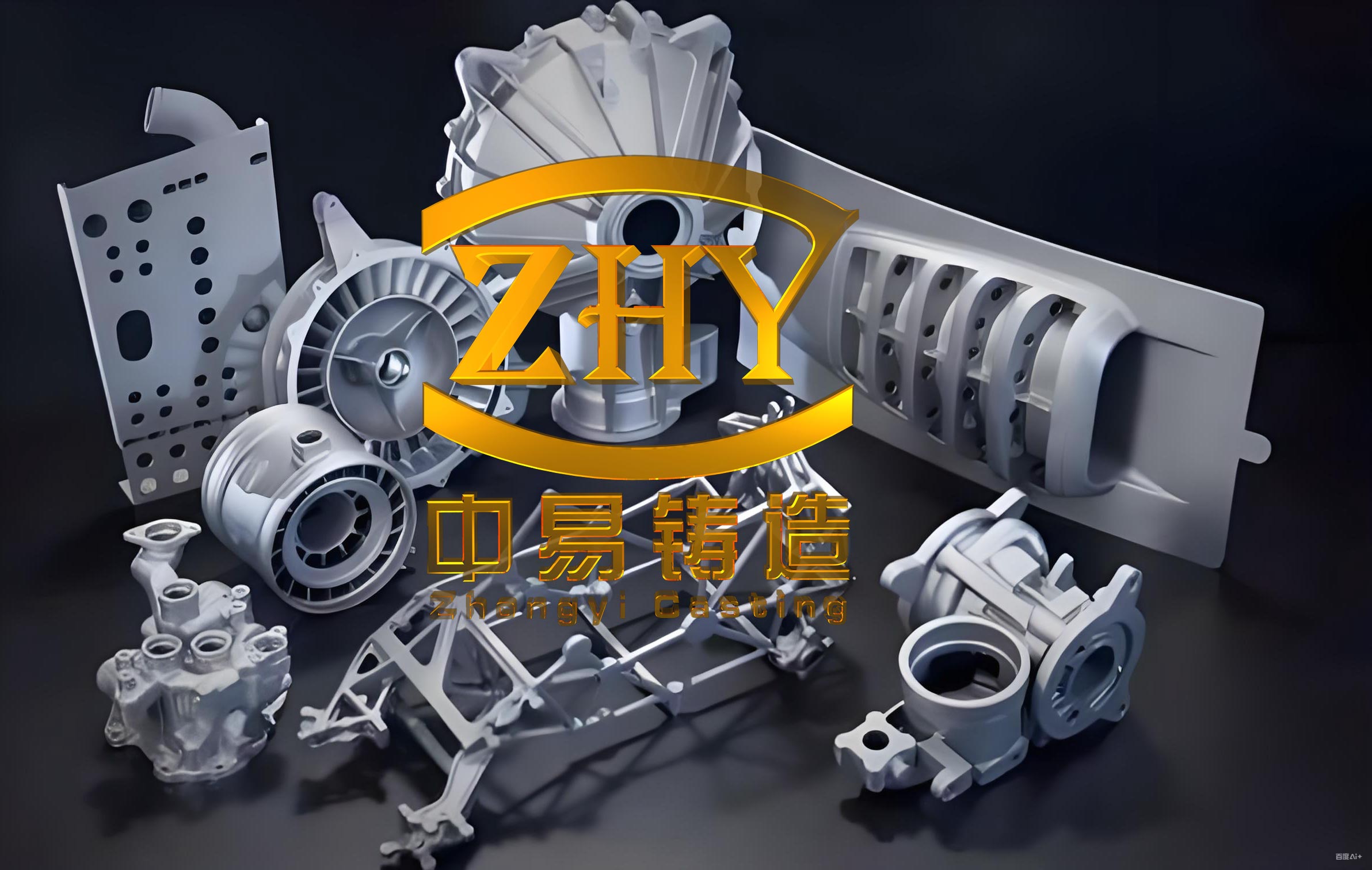
The application of such master alloys is paramount for manufacturing reliable aerospace castings. Aeroengine components, such as turbine blades, compressor cases, and structural brackets, are often produced via casting processes to achieve complex geometries. The incorporation of Nb-N-Ti master alloy directly influences the as-cast microstructure, reducing grain size and mitigating defects like segregation and porosity. This translates to improved mechanical performance and fatigue life in the final aerospace castings, ensuring safety and efficiency in flight operations. The pursuit of advanced master alloys is, therefore, intrinsically linked to the evolution of more powerful and durable aeroengines. In this context, the development of the Nb-N-Ti composite via TPN synthesis represents a significant technological advancement for the aerospace industry’s supply chain.
The TPN synthesis method is fundamentally a two-stage process: first, the metallothermic reduction synthesis to produce a Nb-Ti multi-component alloy, and second, vacuum sintering and nitridation to introduce nitrogen and form the final composite master alloy. The target composition for the final product, crucial for its efficacy in aerospace castings, is as follows: Nb+Ta: 40-45%, Al: 5-10%, Ti: 4-6%, Si: 3-6%, and N: 8-12%. Achieving this precise composition range is essential for consistent performance when the master alloy is used in the production of titanium-based aerospace castings.
Stage 1: Metallothermic Reduction Synthesis
Metallothermic reduction employs a metallic reductant at elevated temperatures to reduce the compound of another metal. In this process, Nb2O5 serves as the primary source material, aluminum acts as the reductant, and potassium chlorate (KClO3) functions as a thermal booster (heating agent). Simultaneously, titanium turnings, ferrosilicon (SiFe), and iron ore powder are added to participate in the reaction, resulting in the synthesis of a Nb-Ti multi-element alloy.
The quality of raw materials is critical. The specifications are summarized in the table below:
| Material Name | Composition Requirement (%) | Physical State Requirement |
|---|---|---|
| Niobium Pentoxide (Nb2O5) | ≥ 98.0 | Particle size ≤ 0.25 mm |
| Aluminum (Al) | ≥ 99.0 | Particle size 2 mm – 0.18 mm |
| Titanium (Ti) turnings | ≥ 99.5 | Curled length < 50 mm |
| Ferrosilicon (SiFe) | Si: 72.0–78.0, P ≤ 0.04%, S ≤ 0.02% | Particle size 10 mm – 20 mm |
| Iron Ore Powder | Fe ≥ 65.0, C ≤ 0.025%, S ≤ 0.025% | Particle size ≤ 0.18 mm |
The synthesis process begins with precise batch calculation and mixing. The underlying thermochemical reactions govern the heat generation and product formation. The key reactions are:
Reduction of Niobium Oxide:
$$ \frac{3}{10} \text{Nb}_2\text{O}_5 + \text{Al} \rightarrow \frac{3}{5} \text{Nb} + \frac{1}{2} \text{Al}_2\text{O}_3 \quad \Delta H \approx -766 \text{ kcal/kg} $$
Reduction of Iron Oxide (from ore):
$$ \frac{1}{2} \text{Fe}_2\text{O}_3 + \text{Al} \rightarrow \text{Fe} + \frac{1}{2} \text{Al}_2\text{O}_3 \quad \Delta H \approx -1280 \text{ kcal/kg} $$
Exothermic reaction from Potassium Chlorate:
$$ \frac{1}{2} \text{KClO}_3 + \text{Al} \rightarrow \frac{1}{2} \text{KCl} + \frac{1}{2} \text{Al}_2\text{O}_3 \quad \Delta H \approx -3598 \text{ kcal/kg} $$
Based on these enthalpy values, the total unit heat of the reaction mixture is carefully controlled within the range of 3000 to 3300 kcal/kg to ensure a self-sustaining reaction with adequate fluidity for slag-metal separation. Additives like lime (CaO) and fluorspar (CaF2) are introduced to modify the slag viscosity and enhance its fluidity. For a standard batch using 100 kg of Nb2O5, the calculated charge composition is as follows:
| Material | Mass (kg) |
|---|---|
| Nb2O5 | 100.0 |
| Al powder | 41.0 |
| Ferrosilicon (SiFe) | 30.0 |
| Pure Ti turnings | 9.0 |
| Iron ore powder | 32.0 |
| KClO3 | 8.0 |
The weighed materials are blended in a horizontal drum mixer for 20-30 minutes at a rotational speed of 20-30 rpm to ensure homogeneity. The mixed charge is then loaded into a cylindrical graphite crucible (approximately 480 mm in diameter, 800 mm height, with a 75 mm wall thickness). The crucible is pre-lined with a 30-40 mm layer of fine magnesia sand at the bottom. The charge is compacted inside the crucible. The loaded crucible is placed in a car-bottom electric resistance furnace and preheated at 80-100°C for 2-3 hours. An ignition mixture of magnesium powder and saltpeter (approx. 200-500 g) is placed centrally on top of the charge. The reaction is initiated using a top-ignition method, typically with an alcohol flame. The reaction rate is controlled to approximately 50-60 kg per minute to ensure a steady, controlled exotherm. After completion, the crucible is allowed to settle for over 8 hours and cooled to below 60°C before discharging. The resulting alloy ingot exhibits good separation from the slag, with dense fracture surfaces displaying a metallic luster and a slight golden-yellow tint. The ingot is subsequently crushed using a jaw crusher, milled in a ball mill, and sieved to obtain the required alloy powder for the next stage. This powder forms the precursor for the master alloy used in aerospace castings.
Stage 2: Vacuum Sintering and Nitridation
The second stage involves the introduction of nitrogen into the alloy matrix to form the final Nb-N-Ti composite. This is achieved through a vacuum sintering and nitriding process.
2.1 Forming and Preparation
The alloy powder from Stage 1 is first conditioned. The target particle size distribution is: +0.18 mm: 0%; -0.18 mm to +0.075 mm: 75%; -0.075 mm: 25%. A binder solution is prepared by dissolving polyvinyl alcohol (PVA) in water at a ratio of 1:2 by mass, using water above 80°C. The binder is gradually added to the alloy powder while mixing thoroughly until a moldable consistency (forming a cohesive ball when squeezed) is achieved. The moist mixture is then pressed into green compacts of dimensions 40 mm × 40 mm × 25 mm using a powder press at a pressure of 15-20 MPa. These compacts are dried in an oven at 150-200°C to remove moisture and solidify the binder.
2.2 Vacuum Nitriding Process
The dried compacts are loosely loaded into square graphite crucibles (e.g., 300 mm × 300 mm × 220 mm). These crucibles are then arranged in 4 to 6 layers on a charging car, with a total furnace charge weight of 500-800 kg. The car is loaded into a vacuum furnace. The furnace is evacuated until a vacuum level of 1.0 × 10⁻¹ kPa is reached, after which heating commences. The temperature is raised to 1500°C and held for 4-5 hours for sintering and homogenization. During this sintering soak, the vacuum should be maintained at approximately 8.0 × 10⁻³ kPa. After the sintering hold, the temperature is lowered to 1450°C. At this point, the vacuum pumps are shut off, and high-purity nitrogen gas (purity > 99.999%) is rapidly introduced into the furnace to establish a slightly positive pressure. The nitridation is carried out at 1450°C for 8 hours under this nitrogen atmosphere, with an automatic gas feed valve maintaining a constant slight overpressure by replenishing nitrogen as needed. Following nitridation, heating is stopped, and the furnace is allowed to cool naturally under the protective nitrogen atmosphere. The furnace is opened for unloading only after the temperature falls below 100°C.
The final product compacts exhibit a uniform brownish or yellowish-brown color throughout, with no adhesion between individual pieces. This indicates successful and uniform nitridation, a critical quality attribute for the master alloy destined for aerospace castings.
Experimental Results and Characterization
The composition of the Nb-N-Ti composite master alloy produced via the TPN process was rigorously analyzed. The results from several production batches confirm the ability to achieve the target specification, which is vital for its performance in modifying aerospace castings. The data is presented below:
| Batch Number | Nb+Ta (wt.%) | Al (wt.%) | Ti (wt.%) | Si (wt.%) | N (wt.%) |
|---|---|---|---|---|---|
| Sample A | 42.33 | 6.11 | 4.88 | 5.11 | 10.25 |
| Sample B | 43.17 | 6.47 | 5.12 | 5.42 | 11.04 |
| Sample C | 42.64 | 6.52 | 4.56 | 4.96 | 10.09 |
| Sample D | 42.86 | 6.93 | 4.62 | 5.82 | 10.17 |
| Sample E | 43.02 | 6.87 | 5.03 | 5.63 | 10.19 |
All compositions fall within the desired ranges, demonstrating the process’s robustness and repeatability. The consistent and high nitrogen content (8-12%) is particularly noteworthy, as nitrogen acts as a potent grain refiner and strengthener in titanium alloys used for aerospace castings.
Theoretical Considerations and Mechanism
The effectiveness of the Nb-N-Ti composite master alloy in refining the microstructure of aerospace castings can be explained through solidification theory and the role of heterogeneous nucleation. When added to a titanium alloy melt, the complex nitride and intermetallic phases present in the master alloy serve as potent nucleation sites for the primary α or β titanium grains. The Gibbs free energy change for nucleation $\Delta G^*$ is significantly reduced in the presence of such substrates, leading to a dramatic increase in the nucleation rate $I$:
$$ I = K \exp\left(-\frac{\Delta G^*}{k_B T}\right) $$
where $K$ is a kinetic constant, $k_B$ is Boltzmann’s constant, and $T$ is the absolute temperature.
The relationship between grain size $d$ and the number of nucleation sites per unit volume $N_v$ can be approximated by:
$$ d \propto \frac{1}{\sqrt[3]{N_v}} $$
Thus, a higher density of effective inoculants from the master alloy leads to a finer as-cast grain structure.
Furthermore, the elements Nb, Ti, and N form various stable compounds during solidification. The formation enthalpy $\Delta H_f$ of potential nitrides like TiN, NbN, or complex (Ti,Nb)N phases contributes to their stability and effectiveness as grain refiners. The presence of Al and Si also modifies the interfacial energy between the nucleant and the growing titanium matrix, further enhancing nucleation potency. For aerospace castings, a fine and equiaxed grain structure is paramount as it improves mechanical isotropy, reduces hot tearing susceptibility, and enhances fatigue resistance—all critical for aeroengine components subjected to cyclic loading.
The TPN process itself is governed by the kinetics of reduction and nitridation. The rate of the metallothermic reduction is largely diffusion-controlled after ignition. The overall reduction efficiency can be modeled considering the stoichiometry and the adiabatic temperature $T_{ad}$, which must be sufficiently high to ensure complete reduction and good metal-slag separation:
$$ T_{ad} = T_0 + \frac{\sum Q_{reactions}}{C_p} $$
where $T_0$ is the initial temperature, $\sum Q_{reactions}$ is the total heat released by the exothermic reactions per unit mass, and $C_p$ is the average heat capacity of the products. Controlling the unit heat within 3000-3300 kcal/kg ensures $T_{ad}$ is optimal.
The nitridation stage involves the diffusion of nitrogen atoms into the alloy compact. The depth of nitridation $\delta$ can be described by a simplified parabolic growth law for a planar geometry:
$$ \delta^2 = D_{eff} \cdot t $$
where $D_{eff}$ is the effective diffusion coefficient of nitrogen in the porous alloy compact at the process temperature (1450°C), and $t$ is the nitridation time (8 hours). The uniform coloration of the final compacts indicates that $\delta$ exceeds half the thickness of the compact, ensuring thorough nitridation.
Advantages of the TPN Synthesis for Aerospace Applications
The TPN method offers distinct benefits over conventional master alloy production routes, making it highly suitable for supplying material for critical aerospace castings.
- Cost-Effectiveness: Utilizing Nb2O5 and titanium turnings as starting materials is significantly more economical than using pure metallic niobium and titanium sponge. This reduces the raw material cost for the master alloy, which is a vital consideration for the large-scale production of aeroengine components.
- High Metal Recovery and Yield: The metallothermic reduction is highly efficient, with recovery rates for valuable metals like Nb and Ti exceeding those of some multi-step pyrometallurgical processes. The slag system, adjusted with CaO and CaF2, promotes clean separation, minimizing metal losses in the slag.
- Precise Composition Control: By carefully calculating the charge mix based on thermochemical principles and using well-specified raw materials, the composition of the intermediate alloy and the final composite can be tightly controlled. This reproducibility is essential for achieving consistent results in downstream casting of aerospace components.
- High and Uniform Nitrogen Content: The vacuum sintering followed by controlled gas nitriding allows for the introduction of a high percentage (8-12%) of nitrogen in a homogeneous manner. Achieving such high nitrogen levels via simple melting of pure metals under nitrogen is challenging and less controllable. This high nitrogen content is directly responsible for the superior grain refining performance in titanium aerospace castings.
- Scalability and Process Stability: The process is amenable to batch production in industrial-scale equipment, such as large graphite crucibles and vacuum furnaces. The reaction parameters (ignition, heat control, nitriding temperature/time) are well-defined and lead to stable, predictable outcomes.
The importance of these advantages cannot be overstated for the aerospace industry. The reliability and performance of aerospace castings are non-negotiable. A master alloy production method that is cost-effective, reliable, and yields a product with consistent, high-performance characteristics directly supports the manufacturing of safer, more efficient, and more durable aeroengines.
Role in Enhancing Aerospace Castings Properties
When the Nb-N-Ti composite master alloy is introduced into the melt for titanium-based aerospace castings, it instigates several key improvements:
- Grain Refinement: As discussed, the primary mechanism is heterogeneous nucleation. This results in a fine, equiaxed grain structure in the casting, which eliminates coarse columnar grains that are prone to segregation and are weak in directions transverse to their growth axis.
- Solid Solution and Dispersion Strengthening: Elements like Nb and Al dissolve in the titanium matrix, providing solid solution strengthening. The finely dispersed nitride particles (e.g., TiN, (Ti,Nb)N) act as barriers to dislocation movement, contributing to dispersion strengthening. This combination enhances the yield strength and creep resistance of the aerospace castings at elevated temperatures.
- Improved Toughness and Fatigue Resistance: A fine grain structure typically improves fracture toughness by providing more grain boundaries to impede crack propagation. It also enhances high-cycle fatigue life, a critical property for rotating parts like turbine blades in aeroengines.
- Enhanced Castability: A finer grain structure can improve the fluidity of the melt slightly and reduce the tendency for hot cracking during solidification, leading to higher integrity and fewer defects in complex-shaped aerospace castings.
The microstructural evolution can be quantitatively linked to the master alloy addition level. If $C_{MA}$ is the weight percent of master alloy added, the resultant grain size $d_{final}$ often follows a relationship such as:
$$ d_{final} = \frac{A}{C_{MA}^n} + d_0 $$
where $A$ and $n$ are constants dependent on the alloy system and casting conditions, and $d_0$ is the inherent grain size without addition. For effective master alloys like Nb-N-Ti, $n$ is typically positive, leading to a significant reduction in $d_{final}$ with modest additions.
For critical aerospace castings, such as those in the hot section of an aeroengine, these property enhancements directly translate to:
– Increased operational temperature margins.
– Extended service life and reduced maintenance intervals.
– Potential for weight reduction through optimized design (using higher strength materials).
– Improved reliability and safety.
The consistent performance of aerospace castings made with alloys refined by this master alloy is a testament to its efficacy. It allows manufacturers to meet the ever-increasing performance demands of next-generation aeroengines, which require materials capable of withstanding higher pressures and temperatures for greater fuel efficiency and thrust.
Process Optimization and Future Directions
While the described TPN process is effective, continuous optimization is possible. Key parameters that can be fine-tuned include:
| Process Stage | Parameter | Typical Value | Optimization Goal |
|---|---|---|---|
| Metallothermic Reduction | Unit Heat (kcal/kg) | 3000-3300 | Minimize slag viscosity while preventing excessive volatility. |
| Al Particle Size | 2 mm – 0.18 mm | Optimize for reaction kinetics and completeness. | |
| Preheat Temperature | 80-100°C | Ensure moisture removal without premature reaction. | |
| Vacuum Nitridation | Sintering Temperature/Time | 1500°C / 4-5 h | Achieve full densification without excessive grain growth. |
| Nitriding Temperature/Time | 1450°C / 8 h | Maximize nitrogen uptake uniformly, minimize cycle time. | |
| Nitrogen Pressure | Slight positive pressure | Optimize for maximum nitrogen diffusion rate. |
Future research may explore:
1. Alternative Reductants or Thermal Boosters: Investigating other metals or compounds to potentially lower costs or environmental impact.
2. Advanced Nitriding Techniques: Such as plasma nitriding or high-pressure gas nitriding to further shorten process times or achieve even higher nitrogen concentrations.
3. Tailored Compositions: Developing variants of the Nb-N-Ti composite with additions of other micro-alloying elements (e.g., Y, La, B) to target specific property improvements in different grades of titanium aerospace castings.
4. Process Modeling: Developing comprehensive computational fluid dynamics (CFD) and thermodynamic models to simulate the reduction reaction flow and the nitridation kinetics, enabling better predictive control and scale-up.
5. Direct Application Studies: Extensive testing of the master alloy in various titanium alloy systems for aerospace castings, correlating precise addition levels with detailed microstructural and mechanical property maps.
The integration of such an optimized master alloy production process into the supply chain for aeroengine manufacturers will further solidify its role as a key enabler for advanced aerospace castings.
Conclusion
The development of the Nb-N-Ti composite master alloy via the Thermite Process Nitride (TPN) synthesis method represents a significant and practical advancement in materials processing for the aerospace industry. This two-step process—comprising metallothermic reduction of Nb2O5 with Al and other additives to form a Nb-Ti alloy, followed by vacuum sintering and nitridation—has proven to be a feasible, cost-effective, and reliable production route. It successfully yields a master alloy with a uniform and targeted composition, notably featuring a high and consistent nitrogen content (8-12%).
The primary application of this master alloy lies in the refinement and strengthening of titanium-based alloys used for critical aerospace castings, especially components within aeroengines. Its ability to promote heterogeneous nucleation during solidification leads to a fine-grained microstructure, which directly translates to enhanced mechanical properties such as strength, toughness, and fatigue resistance in the final cast components. The advantages of the TPN process, including lower cost compared to pure metal methods, high metal recovery, precise composition control, and scalability, make it an attractive industrial solution.
As the demands on aeroengine performance continue to escalate, driving the need for materials capable of operating at higher temperatures and stresses, the role of effective grain refiners and strengtheners like the Nb-N-Ti composite master alloy will only grow in importance. Its successful implementation supports the production of higher-integrity, more reliable aerospace castings, contributing to the safety, efficiency, and innovation trajectory of modern and future aviation technology. Continued optimization and research into this material and its production process will undoubtedly yield further benefits for the field of advanced aerospace manufacturing.