
As a lead engineer specializing in powertrain NVH (Noise, Vibration, and Harshness) development, I encountered a critical issue involving abnormal knocking noises in a V6 engine cylinder block during cold starts. This problem severely impacted customer satisfaction and brand reputation, necessitating a systematic approach to diagnose and resolve the root cause. Below, I present the comprehensive methodology, analysis, and solutions implemented to address this challenge.
1. Introduction
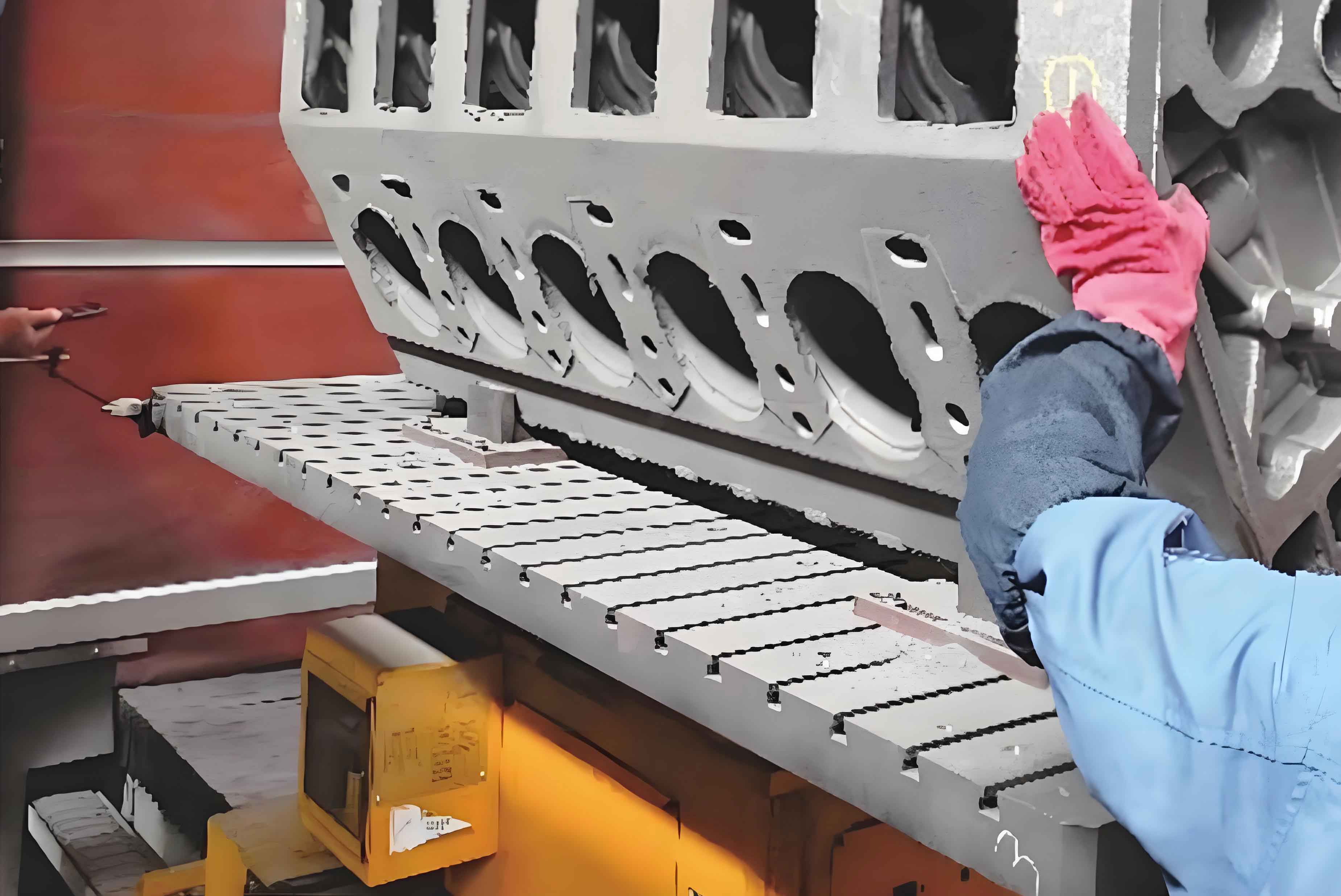
The engine cylinder block is a foundational component of internal combustion engines, housing critical moving parts such as pistons, connecting rods, and crankshafts. Knocking noises within the cylinder block, often perceived as “rattling” or “dangdang” sounds, are indicative of mechanical collisions between components. Such noises are particularly pronounced during cold starts due to thermal expansion mismatches and lubrication inadequacies. Resolving these issues requires precise identification of noise sources through advanced signal processing and structural validation.
2. Problem Description
The subject V6 engine exhibited persistent knocking noises within the engine cylinder block under the following conditions:
- Operational State: Cold start (coolant temperature < 50°C).
- Speed Range: 1,800–2,300 RPM.
- Noise Characteristics: High-frequency “dada” sounds (3,500–5,500 Hz), diminishing as the engine warmed and disappearing entirely at temperatures >90°C.
Preliminary evaluations ruled out external accessories (e.g., belts, pulleys) as noise sources, directing focus toward internal components within the engine cylinder block.
3. Testing and Analysis
3.1 Sensor Configuration
To localize the noise source, we deployed a multi-sensor setup:
- Microphones: Positioned 10–20 cm from the engine cylinder block surfaces to capture acoustic signals.
- Triaxial Accelerometers: Mounted on all six cylinders (Figure 1) to measure vibrations in X, Y, and Z axes.
| Sensor Type | Quantity | Placement | Purpose |
|---|---|---|---|
| Microphone | 2 | Cylinder block sides | Acoustic signal acquisition |
| Triaxial Accelerometer | 6 | Cylinder block walls | Vibration analysis per cylinder |
3.2 Signal Acquisition
Testing involved:
- Cold Start Simulation: Engine stabilized at 2,000 RPM.
- Synchronized Data Collection: Captured vibration, acoustic, and timing signals (crankshaft/camshaft positions).
3.3 Time-Domain Analysis
Time-domain vibration signals revealed abnormal spikes exclusively in Cylinder 5 (Figure 2). The amplitude of these spikes correlated with knocking occurrences, isolating the issue to Cylinder 5.x(t)=A⋅sin(2πft+ϕ)+Noise(t)x(t)=A⋅sin(2πft+ϕ)+Noise(t)
Equation 1: General vibration signal model, where AA, ff, and ϕϕ denote amplitude, frequency, and phase.
3.4 Wavelet Transform for Time-Frequency Analysis
Conventional FFT failed to resolve transient knocking events. We employed wavelet analysis to decompose signals into time-frequency components:W(a,b)=1a∫−∞∞x(t)ψ∗(t−ba)dtW(a,b)=a1∫−∞∞x(t)ψ∗(at−b)dt
Equation 2: Continuous wavelet transform, where aa scales frequency and bb shifts time.
Key findings from wavelet spectrograms (Figure 3):
- Knocking events occurred every 0.06 s (aligned with two engine revolutions).
- Dominant frequency band: 3,500–5,500 Hz.
3.5 Angular Domain Analysis
By synchronizing vibration data with crankshaft/camshaft timing signals, we mapped knocking instances to piston positions. At the knocking moment (486° after Cylinder 1’s compression TDC), Cylinder 5’s piston was at 114° before its compression TDC (Table 1).
| Cylinder | Piston Position at Knocking (°) | Stroke Phase |
|---|---|---|
| 1 | 126 after TDC | Intake |
| 5 | 114 before TDC | Compression |
This angular correlation suggested interactions between the piston, connecting rod, or cylinder wall within the engine cylinder block.
4. Identification of Noise Source
4.1 Component-Level Validation
We tested hypotheses through iterative modifications:
| Test Case | Modification | Knocking Persistence |
|---|---|---|
| 1 | Reduced connecting rod small-end clearance | Yes |
| 2 | Reduced connecting rod big-end clearance | Yes |
| 3 | Increased piston-to-bore clearance | Yes |
| 4 | Swapped engine cylinder blocks | No (noise migrated) |
Conclusion: The engine cylinder block itself was the root cause.
4.2 Structural Inspection
Metallurgical analysis of the defective engine cylinder block revealed:
- Cylinder Bore Distortion: Excessive 2nd-order Fourier coefficient deviation.
- Poor Cylinder-Liner Adhesion: Localized aluminum buildup and porosity due to:
- Low pre-casting liner temperatures (<200°C).
- Gas entrapment from sand core outgassing.
- Incomplete aluminum fill in “V”-block rear sections.
5. Optimization Solutions
To enhance cylinder-liner adhesion in the engine cylinder block, we implemented:
- Liner Preheating: Electromagnetic induction heating raised liner temperatures to 200–300°C before casting.
- Sand Core Drying: Reduced moisture content to minimize outgassing.
- Dual-Riser Pouring: Improved aluminum flow and temperature retention.
Post-optimization validation confirmed elimination of knocking noises (Figure 4). Vibration amplitudes in Cylinder 5 dropped by 72%:ΔV=Voriginal−VoptimizedVoriginal×100%=72%ΔV=VoriginalVoriginal−Voptimized×100%=72%
6. Conclusion
This case underscores the complexity of diagnosing knocking noises within the engine cylinder block. Through a hybrid approach combining time-frequency analysis, angular domain synchronization, and structural validation, we identified and resolved a critical adhesion defect in the cylinder-liner interface. The optimized casting process not only eliminated the noise but also set a precedent for addressing similar issues in V-configuration engines. Future work will focus on real-time monitoring systems to detect early signs of cylinder block degradation.