
In the contemporary landscape of advanced manufacturing, particularly within sectors such as aerospace, automotive, and high-performance machinery, the demand for high-integrity, complex, and lightweight aluminum alloy components is incessant. Among these, shell castings—often characterized by intricate internal passages, thin walls, and integrated functional features—present a significant manufacturing challenge. The conventional development cycle for such shell castings involves protracted lead times and substantial costs associated with pattern and mold fabrication, iterative testing, and modifications. This article delineates a systematic, integrated approach leveraging Digital Patternless Casting Precision Forming Technology, combined with robust CAD/CAE/CAM methodologies, to establish a rapid, cost-effective, and reliable development pathway for aluminum alloy shell castings.
The core of this methodology is the elimination of physical patterns or hard tooling for mold production. Instead, it employs a subtractive manufacturing principle, where three-dimensional CAD models directly drive Computer Numerical Control (CNC) machining centers to fabricate sand molds and cores from pre-cured sand blocks. This digital approach, when synergistically integrated with simulation-led design, facilitates a seamless flow from virtual prototype to physical cast component within an exceptionally condensed timeframe.
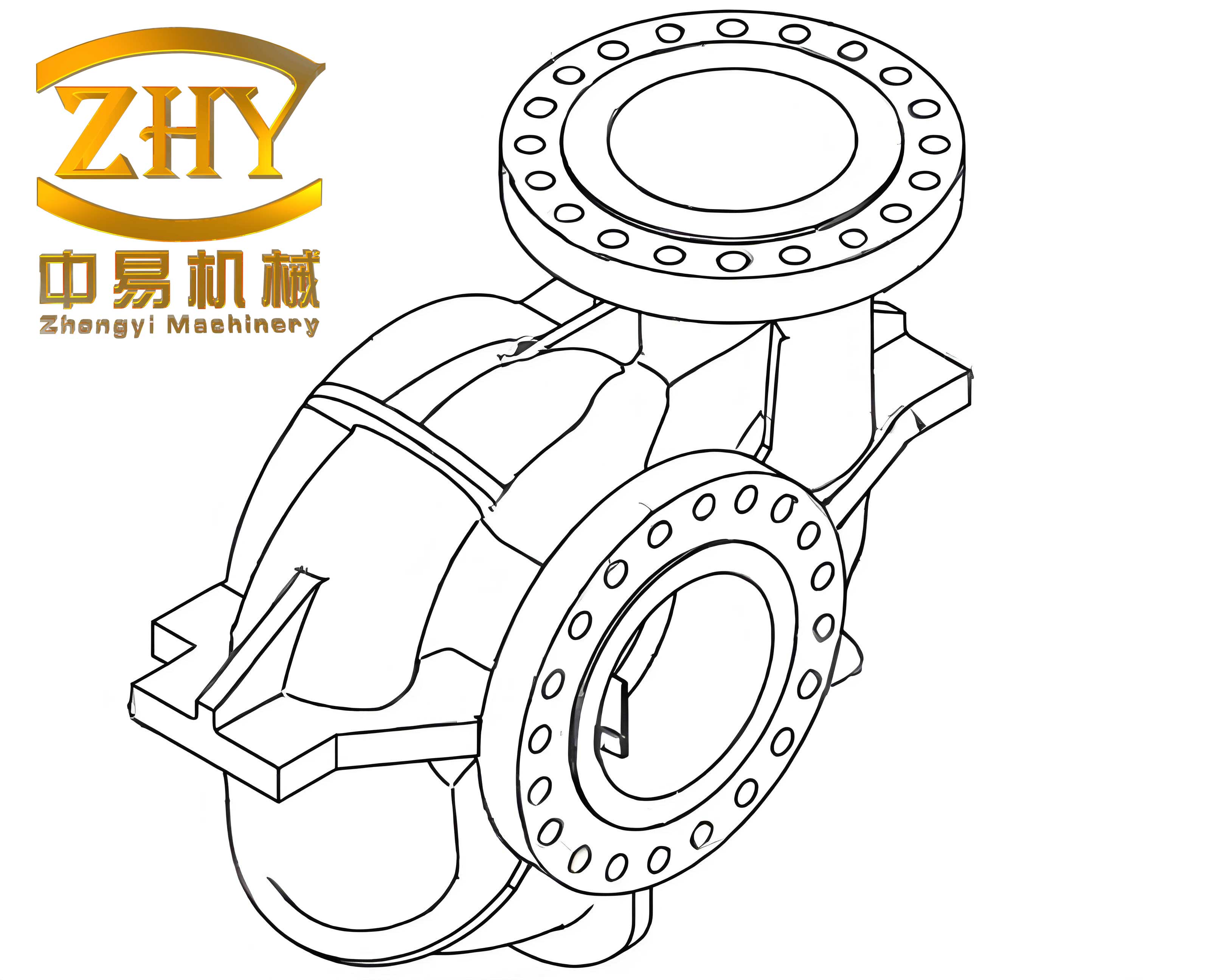
Advantages of the Integrated Digital Patternless Approach for Shell Castings
The adoption of a digital patternless process for producing aluminum alloy shell castings offers transformative advantages over traditional foundry practices:
- Radical Lead Time Reduction: Eliminating weeks or months required for pattern design, fabrication, and try-out compresses the development cycle from concept to first article to a matter of days.
- Cost-Effectiveness for Low-Volume Production: It is exceptionally economical for prototype validation, small-batch production, and manufacturing of large, complex components where hard tooling investment is prohibitive.
- Unparalleled Design Flexibility: Engineering changes can be implemented directly in the CAD model and reflected in the next machined mold, enabling agile design optimization without the constraints of modifying physical patterns.
- Enhanced Quality and Reduced Scrap: The integration of numerical simulation (CAE) prior to any physical commitment allows for the prediction and mitigation of defects, significantly improving first-pass yield and component reliability.
- Integration of Complex Cores: Internal cores for intricate shell castings can be machined as separate segments or fabricated using complementary rapid processes like Binder Jetting or Selective Laser Sintering (SLS) and then assembled, enabling geometries impossible with conventional core boxes.
A Systematic New Product Development Framework for Shell Castings
The success of this technology hinges on a disciplined, integrated workflow. The following chart and subsequent elaboration outline the systematic development path for new aluminum alloy shell castings.
| Process Stage | Core Activities | Key Technologies & Tools | Output |
|---|---|---|---|
| 1. CAD Design & Process Planning | – 3D Modeling of Casting – Addition of Machining Allowances – Design of Gating, Feeding, & Venting Systems |
CAD Software (e.g., NX, SolidWorks) | Complete 3D Casting Process Model |
| 2. CAE Simulation & Optimization | – Filling & Solidification Simulation – Defect Prediction (Porosity, Shrinkage, Cold Shut) – Iterative Process Optimization |
Foundry Simulation Software (e.g., ProCAST, MAGMAsoft) | Validated & Optimized Virtual Process |
| 3. Mold/Core Segmentation & CAM | – Parting Line Definition – Mold Block & Core Segmentation for Machining – Generation of CNC Toolpaths |
CAD/CAM Software, NC Programming | NC Code for Mold/Core Machining |
| 4. Digital Mold Fabrication | – CNC Machining of Sand Blocks – Assembly Feature Machining – Post-processing (Coating) |
Patternless CNC Forming Machine, Resin Sands | Physical Sand Molds and Cores |
| 5. Casting & Finishing | – Mold Assembly and Core Setting – Melting and Pouring – Knock-out, Fettling, and Inspection |
Foundry Equipment, Heat Treatment | Finished Aluminum Alloy Shell Casting |
Stage 1: CAD Design and Foundry Process Planning
The genesis of any quality shell casting is a robust digital model and a sound casting process design. For complex aluminum shell castings, this involves more than just the part geometry. Critical steps include:
- 3D Modeling: Creating an accurate digital twin of the final part, often directly from the product design assembly.
- Process Feature Addition: Strategically adding machining allowances, draft angles (if necessary for deep draws, though less critical for machined molds), and identifying parting lines.
- Rigging System Design: This is paramount for aluminum alloys. The system must ensure smooth, non-turbulent filling to prevent oxide entrapment and air entrainment, and provide effective feeding to counteract shrinkage.
- Gating Design: For thin-walled shell castings, a bottom-gating or stepped-gating system is often preferred to control metal velocity and minimize turbulence. The cross-sectional area of the gating system is calculated based on the Bernoulli and continuity equations. A common empirical formula used for determining the choke area ($F_{choke}$) is:
$$F_{choke} = \frac{G_{casting}}{\rho \cdot \sqrt{2gH} \cdot \mu \cdot t}$$
Where:
$G_{casting}$ is the mass of the casting (kg),
$\rho$ is the density of the molten aluminum ($\approx 2.5-2.7$ g/cm³),
$g$ is gravitational acceleration (9.81 m/s²),
$H$ is the effective metallostatic head height (m),
$\mu$ is the discharge coefficient (accounting for friction, typically 0.3-0.6 for sand molds),
$t$ is the desired fill time (s).
- Feeding System Design: Risers (feeders) are designed to compensate for solidification shrinkage. Their size and location are critical, especially for shell castings with varying wall thickness creating isolated hot spots. The modulus method is frequently applied, where the riser modulus ($M_r$) must be greater than the casting modulus ($M_c$) at the junction:
$$M_r > k \cdot M_c$$
Here, $M = \frac{Volume}{Surface Area}$, and $k$ is a safety factor (usually 1.1 to 1.2).
Stage 2: CAE Simulation and Virtual Optimization
This stage is the crucible where the theoretical design is rigorously tested and refined without consuming any material. Using finite element or finite volume methods, the coupled phenomena of fluid flow, heat transfer, and stress development are simulated.
Key Simulation Analyses for Shell Castings:
| Analysis Type | Physics Modeled | Key Outputs & Objectives for Shell Castings |
|---|---|---|
| Filling Analysis | Transient, turbulent, free-surface flow with heat loss. | – Metal front progression and fill time. – Velocity vectors to identify turbulence, jetting, or splashing. – Temperature distribution at the end of fill to identify cold shuts. – Entrapped air and oxide film tracking. |
| Solidification & Thermal Analysis | Transient heat conduction, latent heat release, radiation at boundaries. | – Temperature gradients and cooling curves. – Identification of thermal centers (hot spots). – Prediction of shrinkage porosity location using criteria functions (e.g., Niyama criterion). – Solidification sequence and feeding paths. |
| Stress & Distortion Analysis | Thermo-mechanical coupling, elasto-plastic deformation. | – Prediction of residual stresses. – Assessment of distortion or hot tearing propensity, crucial for thin-walled shell castings. |
An optimized process for an aluminum shell casting will demonstrate a smooth, progressive fill with minimal velocity and a solidification pattern that is directional, moving from thinner sections towards the designed risers. The simulation allows for interactive modification of gating sizes, riser placements, and chilling strategies until an optimal virtual result is achieved.
Stage 3: Mold Segmentation and CAM Programming
Once the 3D casting process model is finalized and validated via CAE, it is prepared for physical mold fabrication. This involves decomposing the negative mold geometry into machinable blocks.
- Mold and Core Segmentation: The overall mold is split into an upper and lower drag (cope and drag). Complex internal cavities are decomposed into separate core pieces. Each segment must be designed with:
- Machining Allowance: Extra material for the CNC tool to cut into.
- Assembly Features: Locating pins, sockets, and parting surfaces to ensure precise alignment during mold assembly.
- Handling and Reinforcements: “Virtual borders” or support ribs are added to fragile sand sections to prevent breakage during handling and machining.
- Toolpath Generation (CAM): The 3D model of each sand block is imported into CAM software. A two-stage machining strategy is typical:
- Roughing: Uses a larger tool (e.g., φ16 mm PCD tool) with high feed rates to rapidly remove the bulk of material, employing a layer-by-layer “pocket milling” strategy.
- Finishing: Uses a smaller tool (e.g., φ6 mm ball-nose or end mill) with fine step-overs to achieve the final surface detail and accuracy. “Contour parallel” or “z-level” finishing strategies are common.
The CAM software calculates the toolpaths and exports machine-readable G-code, which dictates the tool’s movement, spindle speed (e.g., 2500 RPM), and feed rate (e.g., 180 mm/s for sand).
Stage 4: Digital Fabrication of Molds and Cores
The physical realization of the digital model is performed on a specialized Patternless Casting Forming Machine. The choice of mold material is critical for success.
| Mold/Core Component | Recommended Material | Preparation Process | Key Properties |
|---|---|---|---|
| Main Mold (Cope/Drag) | Phenolic Resin-Coated Sand (e.g., 70/140 mesh) | Sand and resin/catalyst are mixed uniformly and compacted into pre-sized blocks. Curing occurs at room temperature or with mild heating. | Good strength, excellent machinability, moderate gas evolution. |
| Intricate Cores | Furan or Phenolic Resin-Coated Sand (100/200 mesh) or SLS Sand | For coated sand: heated in core box (~180°C). For SLS: laser-sintered layer by layer from CAD data. | High surface finish, high strength for complex, slender shapes. SLS allows un-cored geometries. |
The pre-cured sand blocks are mounted on the CNC machine table. The machining process is dust-intensive but highly automated. After machining, the sand molds are often coated with a refractory wash (e.g., zircon-based for aluminum) to improve surface finish and prevent metal penetration.
Stage 5: Casting, Finishing, and Validation
The final stage brings the digital journey into the physical realm of the foundry.
- Mold Assembly: The machined mold halves and cores are carefully assembled, ensuring all locating features are engaged. The mold is clamped or weighted.
- Pouring: The specified aluminum alloy (e.g., A356, ZL104, etc.) is melted, degassed, and refined to the required quality. It is poured at the temperature suggested by the simulation (e.g., 735°C for ZL104) into the assembled mold.
- Solidification & Knock-out: After sufficient cooling time, the mold is broken apart, and the raw casting is removed.
- Finishing & Inspection: The gating and riser system is removed. The casting is shot-blasted and inspected. Critical sections of the shell casting may be subjected to non-destructive testing (NDT) like X-ray or dye penetrant inspection to validate the simulation predictions and ensure internal soundness.
Technical Deep Dive: Process Modeling and Optimization Equations
The scientific foundation for optimizing shell castings lies in mathematical modeling. Beyond the empirical formulas, more fundamental equations govern the phenomena we simulate.
1. Fluid Flow during Filling (Navier-Stokes Equations with Free Surface):
The flow of molten aluminum is modeled as a transient, incompressible, viscous flow with a moving boundary (the melt front). The governing equations are:
Conservation of Mass (Continuity):
$$\nabla \cdot \vec{v} = 0$$
Conservation of Momentum (Navier-Stokes):
$$\rho \left( \frac{\partial \vec{v}}{\partial t} + (\vec{v} \cdot \nabla) \vec{v} \right) = -\nabla p + \mu \nabla^2 \vec{v} + \rho \vec{g} + \vec{S}$$
Where $\vec{v}$ is the velocity vector, $p$ is pressure, $\rho$ is density, $\mu$ is dynamic viscosity, $\vec{g}$ is gravity, and $\vec{S}$ represents source terms (e.g., Darcy term for flow in mushy zones).
2. Heat Transfer during Solidification:
The temperature field is governed by the transient heat conduction equation with a phase change source term (enthalpy method):
$$\rho c_{eff} \frac{\partial T}{\partial t} = \nabla \cdot (k \nabla T) + Q$$
Where $T$ is temperature, $k$ is thermal conductivity, and $Q$ is the latent heat release rate due to solidification. The effective specific heat $c_{eff}$ incorporates the latent heat:
$$c_{eff} = c_p – L \frac{\partial f_s}{\partial T}$$
Here, $c_p$ is the specific heat, $L$ is the latent heat of fusion, and $f_s$ is the solid fraction, a function of temperature defined by the alloy’s phase diagram and solidification model (e.g., lever rule, Scheil-Gulliver).
3. Prediction of Shrinkage Porosity:
A widely used criterion for predicting macro-porosity in aluminum castings is the Niyama Criterion:
$$N_y = \frac{G}{\sqrt{\dot{T}}}$$
Where $G$ is the temperature gradient (°C/m) and $\dot{T}$ is the cooling rate (°C/s) at the end of solidification. Regions where $N_y$ falls below a critical threshold (alloy-dependent) are predicted to be susceptible to shrinkage porosity. For aluminum shell castings, ensuring a high $G/\sqrt{\dot{T}}$ ratio through proper riser design and chilling is key.
Conclusion and Future Perspective
The integrated digital patternless casting process represents a paradigm shift in the development and low-volume production of high-complexity aluminum alloy shell castings. By fusing CAD for design, CAE for scientific validation and optimization, and CAM-driven digital fabrication, it creates a closed-loop, agile development ecosystem. This methodology demonstrably achieves:
- Extreme Compression of Lead Time: Reducing development from months to approximately one week.
- Significant Cost Savings: Eliminating hard tooling costs for prototypes and small batches.
- High-Fidelity First Articles: Simulation drastically reduces the “trial-and-error” cycle, yielding sound castings on the first or second attempt.
- Manufacturing Agility: It empowers engineers to produce highly complex, integrated geometries that challenge or exceed the limits of conventional pattern-making.
The future evolution of this technology will focus on enhancing material systems (low-gas, high-strength bonded sands), improving the automation of mold assembly, and further integrating additive manufacturing (3D sand printing) for even more complex core assemblies. As computational power increases and simulation models become more precise, the virtual validation will grow ever more reliable, solidifying digital patternless casting as an indispensable pillar of advanced, responsive manufacturing for critical shell castings across all high-tech industries.