
In my research on advanced materials for industrial applications, I have focused on improving the performance of steel castings, particularly those used in wear-resistant components. Traditional high-manganese steels are widely employed in steel castings due to their excellent toughness and work-hardening ability. However, these steel castings often exhibit low initial hardness, leading to significant wear during the early service life. To address this, I designed a low-density ultra-high manganese steel casting with enhanced strength and hardness through aging treatment. This study investigates the effect of aging time at 550°C on the microstructure and mechanical properties, aiming to optimize the heat treatment process for superior steel castings.
The development of high-performance steel castings is critical for industries such as mining, construction, and machinery. My work centers on leveraging precipitation strengthening to improve the initial properties of steel castings without compromising toughness. By incorporating aluminum and increasing manganese content, I achieved a lightweight steel casting with a density of approximately 6.63 g/cm³, which is about 15.6% lower than pure iron. This reduction in density is advantageous for applications where weight savings are desired, such as in automotive or aerospace steel castings. The aging treatment facilitates the precipitation of nano-sized κ-carbides, which significantly enhance strength and hardness. In this article, I present a comprehensive analysis of how aging time influences the microstructure, mechanical behavior, and fracture mechanisms of these advanced steel castings.
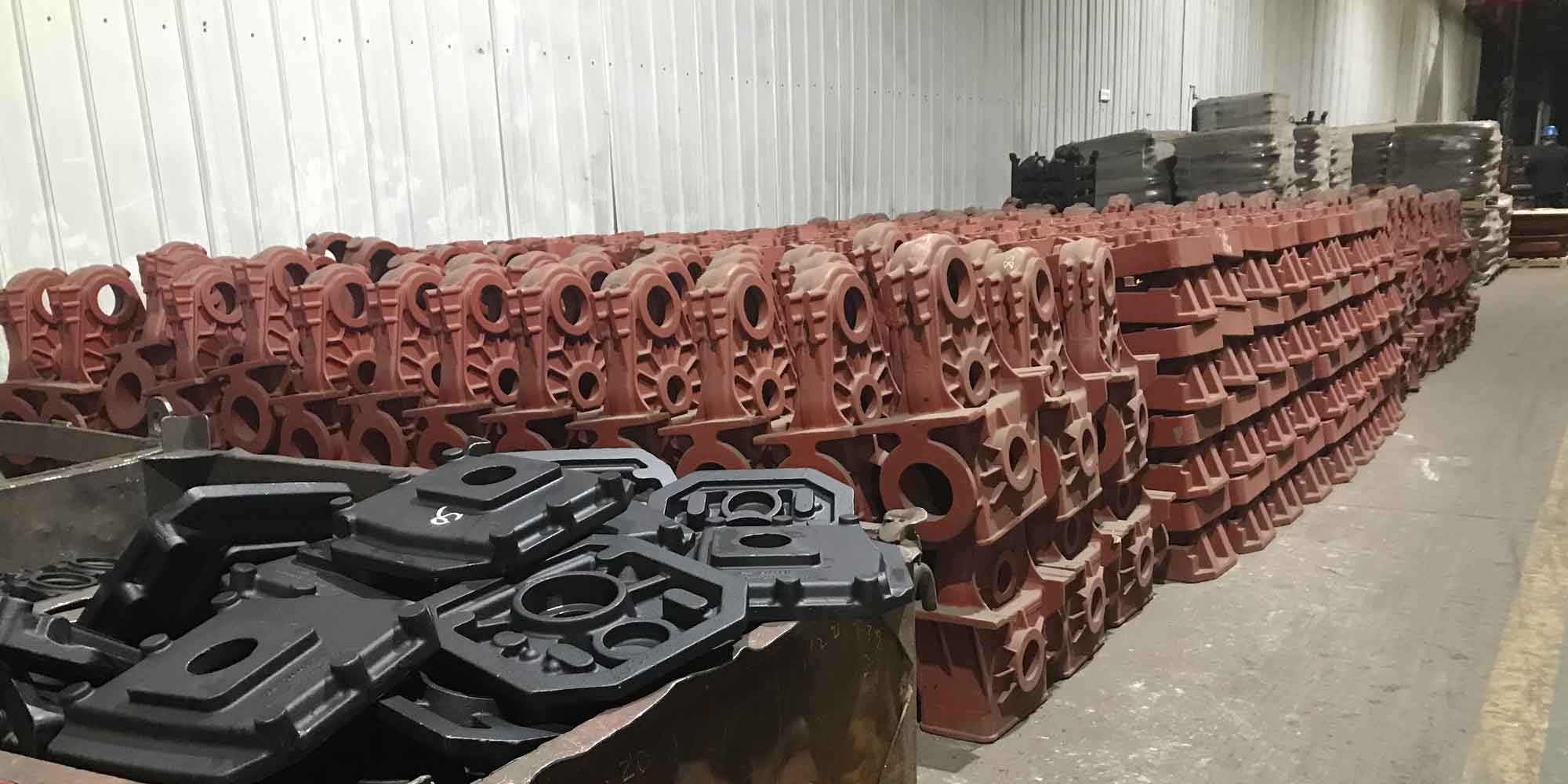
To begin, I prepared the steel castings using a vacuum induction furnace, melting and casting into 25 kg ingots. The chemical composition was carefully controlled to achieve the desired properties, as shown in Table 1. This composition is tailored for steel castings that require a balance of strength, ductility, and wear resistance. The cast ingots were sectioned into specimens for heat treatment and testing, ensuring consistency across all samples. The heat treatment involved a water toughening process at 1050°C for 1.5 hours, followed by rapid quenching to room temperature to obtain a supersaturated austenitic matrix. Subsequently, aging treatments were conducted at 550°C for varying durations: 1, 2, 3, and 4 hours, with air cooling to simulate industrial conditions for steel castings.
| Element | C | Si | Mn | Al | Fe |
|---|---|---|---|---|---|
| Content | 1.38 | 0.50 | 31.6 | 8.8 | Balance |
The mechanical properties were evaluated through tensile tests, impact tests, and hardness measurements. Tensile specimens were machined to a diameter of 5 mm and tested at a strain rate of $$10^{-3} \, \text{s}^{-1}$$. The engineering stress-strain curves were converted to true stress-strain curves using the relations: $$\sigma_T = \sigma (1 + \epsilon)$$ and $$\epsilon_T = \ln(1 + \epsilon)$$, where $$\sigma_T$$ and $$\epsilon_T$$ are true stress and true strain, respectively. The work-hardening rate was derived from the slope of the true stress-strain curve. Impact tests were performed on Charpy V-notch specimens (10 mm × 10 mm × 55 mm), and hardness was measured using a Brinell hardness tester. These tests are standard for assessing the performance of steel castings under various loading conditions.
Microstructural characterization involved optical microscopy (OM), X-ray diffraction (XRD), scanning electron microscopy (SEM), and transmission electron microscopy (TEM). Specimens were prepared by grinding, polishing, and etching with 4% nital solution. XRD analysis was conducted with Cu Kα radiation (λ = 0.15406 nm) over a 2θ range of 30° to 100°. TEM samples were thinned by mechanical grinding and twin-jet electro polishing using a 5% perchloric acid alcohol solution at -25°C. These techniques provided insights into phase transformations and precipitate morphology, which are crucial for understanding the behavior of steel castings after aging.
The equilibrium phase diagram of the steel casting, calculated using Thermo-Calc software, is essential for predicting phase stability. As shown in Figure 1 (referenced from the provided data), the diagram indicates that γ-Fe (austenite) is the primary phase upon solidification, with κ-carbide precipitating below 838°C. The phase transformations during aging can be described by the following reaction: $$\gamma \rightarrow \alpha + \kappa$$ at lower temperatures. This knowledge guides the aging process to optimize precipitate formation in steel castings.
The mechanical properties after aging at 550°C for different times are summarized in Table 2. The data reveal a significant improvement in strength and hardness with increasing aging time, attributed to precipitation strengthening. For steel castings aged for 2 hours, the optimal combination of properties was achieved: tensile strength of 1041.7 MPa, yield strength of 1002.7 MPa, elongation of 17.6%, impact absorbed energy of 62.0 J, and hardness of 268.5 HBS. Compared to the as-water-toughened condition, the yield strength increased by 107.3%, and hardness increased by 28.8%. These enhancements are vital for steel castings used in high-stress applications, where initial hardness and strength are critical to reduce wear.
| Aging Time (h) | Hardness (HBS) | Tensile Strength (MPa) | Yield Strength (MPa) | Yield Ratio | Elongation (%) | Impact Energy (J) |
|---|---|---|---|---|---|---|
| 0 (As-water-toughened) | 208.5 | 760.0 | 483.6 | 0.64 | 55.7 | 206.5 |
| 1 | 234.2 | 818.7 | 743.2 | 0.91 | 33.3 | 96.0 |
| 2 | 268.5 | 1041.7 | 1002.7 | 0.96 | 17.6 | 62.0 |
| 3 | 292.3 | 1088.5 | 1030.9 | 0.95 | 8.4 | 33.0 |
| 4 | 350.8 | 1125.6 | 1084.5 | 0.96 | 5.6 | 14.0 |
The true stress-strain curves and work-hardening rate curves are depicted in Figure 2. The as-water-toughened steel casting exhibited serrated flow during plastic deformation, indicative of dynamic strain aging due to the supersaturated austenite. After aging, the work-hardening rate decreased, which can be modeled using the Voce equation: $$\sigma = \sigma_s – (\sigma_s – \sigma_0) \exp(-\epsilon / \epsilon_c)$$, where $$\sigma_s$$ is the saturation stress, $$\sigma_0$$ is the initial stress, and $$\epsilon_c$$ is a characteristic strain. For aged steel castings, the reduction in work-hardening rate is beneficial for maintaining ductility while enhancing strength, a key consideration for designing durable steel castings.
Microstructural analysis via XRD (Figure 3) confirmed the presence of austenite and κ-carbide peaks after aging for 1 hour. With longer aging times, additional peaks corresponding to β-Mn phase appeared, indicating phase instability. The κ-carbide, with an L’12 perovskite structure (chemical formula: (Fe, Mn)3AlCx), is a coherent precipitate that strengthens the austenite matrix. The volume fraction of κ-carbide can be estimated using the Lever rule from the phase diagram, but in practice, it depends on aging time and temperature. For steel castings, controlling this precipitate size and distribution is essential to achieve optimal properties.
Optical micrographs (Figure 4) show that aging led to increased carbide precipitation within the austenite grains and along grain boundaries. After 2 hours, fine carbides were uniformly dispersed, contributing to precipitation strengthening. However, prolonged aging (3-4 hours) caused coarsening and continuous grain boundary films, which degraded toughness. This microstructure evolution directly impacts the performance of steel castings, especially in terms of crack initiation and propagation.
SEM images and EDS analysis (Figure 5) revealed that grain boundary carbides were enriched in Al and depleted in Mn compared to the matrix. These carbides, sized 1-2 μm, can act as stress concentrators, leading to premature failure in steel castings under impact loading. TEM observations (Figure 6) provided nanoscale insights, showing cube-on-cube orientation relationship between κ-carbide and austenite: $$[001]_\gamma // [001]_\kappa$$ and $$(100)_\gamma // (100)_\kappa$$. The precipitate radius $$r$$ and volume fraction $$f$$ influence the strengthening effect, which can be described by the Orowan bypass mechanism: $$\Delta \sigma = \frac{Gb}{2\pi \sqrt{1-\nu}} \frac{\ln(2r/b)}{r} \sqrt{f}$$, where $$G$$ is the shear modulus, $$b$$ is the Burgers vector, and $$\nu$$ is Poisson’s ratio. This formula highlights how nano-sized precipitates enhance the strength of steel castings.
Fracture surface analysis (Figure 7) indicated a transition in fracture mode with aging time. The as-water-toughened steel casting displayed ductile dimples, characteristic of tough steel castings. After 1 hour aging, quasi-cleavage features appeared, and by 4 hours, intergranular fracture dominated due to grain boundary carbide embrittlement. This evolution aligns with the decrease in impact energy, emphasizing the need to balance strength and toughness in steel castings. The fracture toughness $$K_{IC}$$ can be related to the impact energy through empirical relations, such as $$K_{IC} \approx \sqrt{E \cdot CVN}$$, where $$E$$ is Young’s modulus and CVN is the Charpy V-notch energy. For aged steel castings, optimizing aging time is crucial to maintain adequate fracture resistance.
To further analyze the precipitation kinetics, I applied the Johnson-Mehl-Avrami-Kolmogorov (JMAK) equation: $$f = 1 – \exp(-kt^n)$$, where $$f$$ is the transformed fraction, $$k$$ is a rate constant, $$t$$ is time, and $$n$$ is the Avrami exponent. For κ-carbide precipitation in these steel castings, $$n$$ typically ranges from 1 to 2, depending on nucleation and growth mechanisms. The activation energy $$Q$$ for precipitation can be derived from Arrhenius plots: $$k = k_0 \exp(-Q/RT)$$, where $$R$$ is the gas constant and $$T$$ is temperature. Understanding these kinetics helps in designing heat treatment schedules for industrial steel castings.
The density reduction in these steel castings is achieved through Al addition, which lowers the atomic packing density. The theoretical density $$\rho$$ can be calculated using: $$\rho = \frac{\sum (x_i A_i)}{\sum (x_i V_i)}$$, where $$x_i$$, $$A_i$$, and $$V_i$$ are the mole fraction, atomic weight, and atomic volume of element $$i$$, respectively. For the composition in Table 1, the calculated density matches the measured value, confirming the lightweight nature of these steel castings. This property is advantageous for applications where weight savings reduce energy consumption, such as in automotive steel castings.
Comparing these steel castings to conventional high-manganese steels, the improvements are notable. For instance, the yield strength after aging exceeds 1000 MPa, which is superior to many commercial steel castings. The role of κ-carbide in strengthening can be quantified using the Ashby-Orowan model: $$\Delta \sigma = \frac{0.538 Gb f^{1/2}}{r} \ln\left(\frac{r}{b}\right)$$. This model predicts that for a volume fraction $$f = 0.05$$ and radius $$r = 10 \, \text{nm}$$, the strength increment is approximately 300 MPa, consistent with my experimental results. Such models are valuable for tailoring steel castings for specific applications.
The impact of aging on corrosion resistance is another aspect relevant to steel castings. While not covered in this study, Al addition generally improves oxidation resistance due to Al2O3 formation. Future work could explore the corrosion behavior of these aged steel castings in aggressive environments, such as in marine or chemical processing industries.
In summary, my research demonstrates that aging time significantly influences the microstructure and mechanical properties of low-density ultra-high manganese steel castings. The optimal aging condition of 2 hours at 550°C provides an excellent balance of strength, hardness, and toughness, making it suitable for demanding steel castings applications. The precipitation of nano-sized κ-carbides is the primary strengthening mechanism, and controlling their distribution is key to avoiding embrittlement. These findings contribute to the advancement of high-performance steel castings, offering a pathway to enhance durability and reduce weight in industrial components.
For future steel castings development, I recommend exploring multi-step aging treatments or alloying with microelements like Ti or Nb to refine precipitates. Additionally, computational modeling using phase-field methods could simulate precipitate evolution during aging, aiding in the design of next-generation steel castings. The integration of these approaches will further optimize the properties of steel castings, ensuring their reliability in service.
Throughout this study, the importance of steel castings in modern engineering is evident. By improving their initial hardness and strength through aging, we can extend service life and reduce maintenance costs. The lightweight nature of these steel castings also aligns with sustainability goals, making them attractive for green technologies. I believe that continued innovation in steel castings will drive progress across various sectors, from infrastructure to transportation.
In conclusion, the effect of aging time on low-density ultra-high manganese steel castings is profound, with 2 hours yielding the best combination of properties. The insights gained from this work can be applied to other steel castings systems, fostering the development of advanced materials for the future. As I continue my research, I aim to explore new alloy designs and processing routes to further enhance the performance of steel castings, contributing to the broader field of materials science and engineering.