
In the context of rapid development in modern equipment manufacturing, the resource consumption and economic losses caused by material wear have become increasingly significant. The research and advancement of wear-resistant steel casting not only contribute to improving production efficiency, reducing resource waste, and mitigating economic losses but also play a pivotal role in driving technological progress and the evolution of the equipment manufacturing industry. As a researcher focused on advanced steel materials, I embarked on this study to explore the influence of magnesium addition on the microstructure and properties of 35Cr2Ni2Mo wear-resistant steel casting. This investigation aims to provide a foundational research basis for the promotion and application of new high-performance wear-resistant steel casting, ultimately enhancing the durability and performance of components in demanding environments such as mining and excavation.
Steel casting, particularly wear-resistant grades like 35Cr2Ni2Mo, is widely utilized in the manufacturing of critical parts for large machinery due to its high hardness, excellent wear resistance, and fatigue resistance. However, as operational conditions become more severe, there is a growing demand for improved friction wear and fatigue properties in structural components. The pursuit of low-cost, long-life, high-performance wear-resistant steel casting remains a key objective in mechanical manufacturing. In recent years, various approaches, including alloying, substitution of forging with casting, and novel heat treatment processes, have been employed to enhance the comprehensive mechanical properties of wear-resistant steel casting. The inherent as-cast microstructure of steel casting plays a crucial role in determining the final properties after forming and heat treatment, making the refinement of the as-cast structure a critical aspect of production. The presence of non-metallic inclusions also significantly impacts the service life of steel casting, with parameters such as size, distribution, volume fraction, morphology, and chemical composition being key factors influencing crack propagation and wear resistance.
In this study, I focused on the addition of magnesium to 35Cr2Ni2Mo steel casting, without altering the types and amounts of other elements, to minimize the use of expensive alloying elements like chromium, nickel, and molybdenum. The objective was to analyze how magnesium affects the microstructure and properties of wear-resistant steel casting, leveraging its potential to refine inclusions and enhance performance. The experimental methodology involved detailed characterization using optical microscopy, scanning electron microscopy (SEM), and transmission electron microscopy (TEM) to observe microstructures and inclusions. Mechanical properties were assessed through microhardness testing and tensile experiments, while wear resistance was evaluated using a friction and wear testing machine. The findings are expected to contribute to the development of more efficient and cost-effective wear-resistant steel casting.
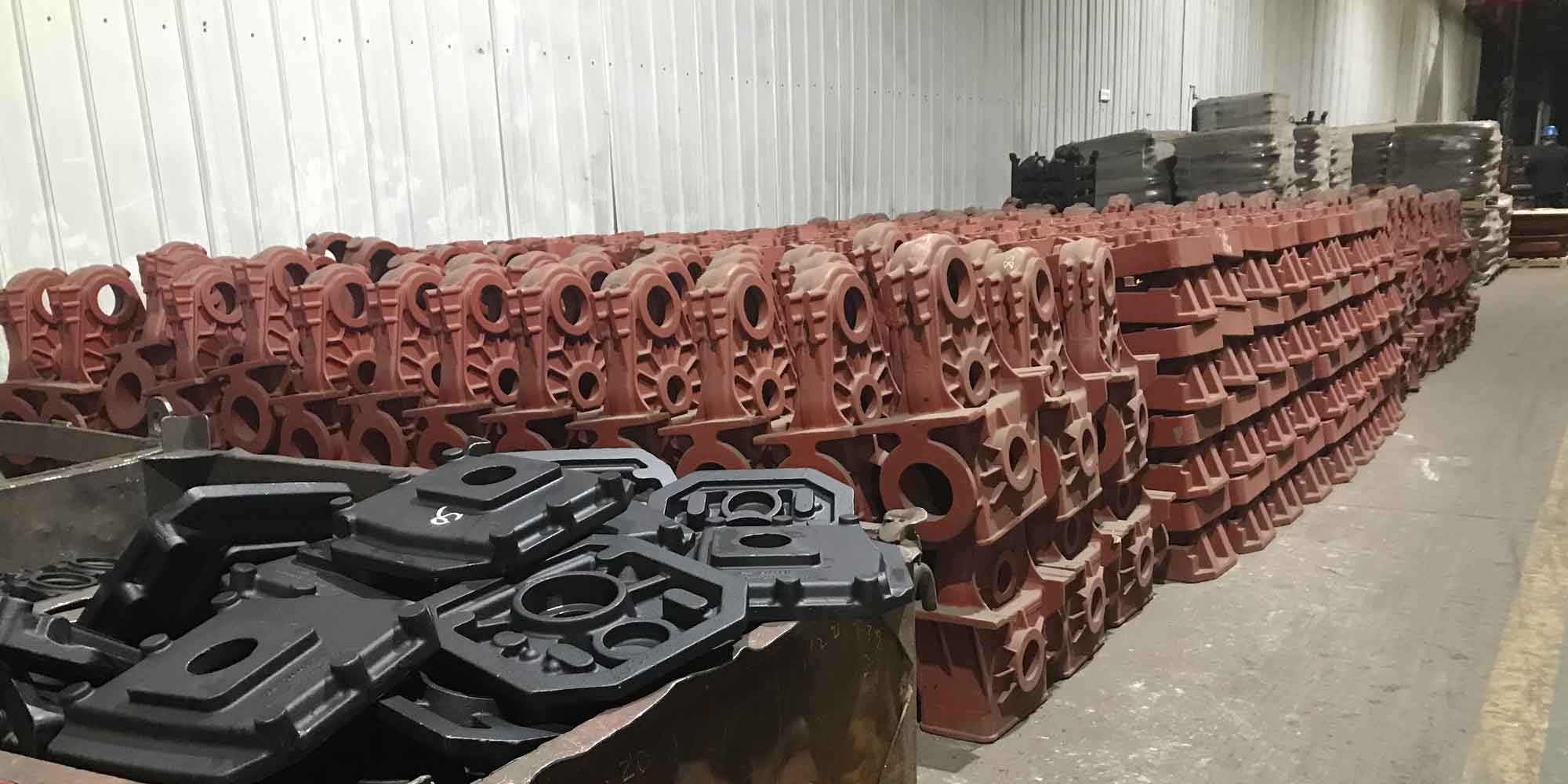
The production of high-quality steel casting involves meticulous control over melting, solidification, and subsequent processing steps. In this investigation, two variants of steel casting were prepared: a base 35Cr2Ni2Mo steel casting (referred to as Steel 1) and a modified version with magnesium addition (referred to as Steel 2). The chemical compositions of these steel casting materials are summarized in Table 1. Both steel casting samples underwent identical heat treatment processes to ensure comparability. The heat treatment involved austenitizing, quenching, and tempering to achieve a tempered sorbite microstructure, which is desirable for wear-resistant applications. The detailed parameters of the heat treatment cycle are provided in Table 2, highlighting the conditions used to optimize the properties of the steel casting.
| Sample | C | Mn | P | S | Si | Ni | Cr | Mo | Mg |
|---|---|---|---|---|---|---|---|---|---|
| Steel 1 (35Cr2Ni2Mo) | 0.34 | 1.07 | 0.016 | 0.006 | 0.76 | 1.63 | 2.10 | 0.57 | – |
| Steel 2 (35Cr2Ni2Mo-Mg) | 0.32 | 1.09 | 0.003 | 0.005 | 0.77 | 1.56 | 2.04 | 0.56 | 0.0032 |
| Process Step | Temperature (°C) | Time (min) | Cooling Medium |
|---|---|---|---|
| Austenitization | 900 | 60 | – |
| Quenching | Water | Immediate | Water |
| Tempering | 600 | 120 | Air |
Microstructural analysis was conducted using optical microscopy, SEM, and TEM. The observed microstructures for both steel casting samples are presented in Table 3, which summarizes key features such as carbide size and morphology. In Steel 1, the microstructure consisted of lath-shaped tempered sorbite with carbides dispersed along the ferrite lath boundaries or within grains. The carbides were primarily spherical M23C6 and short rod-shaped M7C3, with sizes ranging from 20 to 50 nm for spherical carbides and 50 to 200 nm for rod-shaped carbides. For Steel 2, the microstructure remained lath tempered sorbite, but the carbide sizes were finer: spherical carbides measured 20 to 45 nm, while rod-shaped carbides were in the range of 50 to 200 nm. This refinement in carbide size due to magnesium addition is attributed to the role of magnesium in promoting nucleation and inhibiting growth during solidification and heat treatment of steel casting.
| Sample | Microstructure | Carbide Type | Carbide Size (nm) | Morphology |
|---|---|---|---|---|
| Steel 1 | Lath Tempered Sorbite | M23C6 (spherical), M7C3 (rod) | 20-50 (spherical), 50-200 (rod) | Dispersed along boundaries |
| Steel 2 | Lath Tempered Sorbite | M23C6 (spherical), M7C3 (rod) | 20-45 (spherical), 50-200 (rod) | More refined distribution |
Non-metallic inclusions in steel casting are critical defects that can degrade mechanical properties and wear resistance. In this study, inclusion analysis was performed using SEM, and the results are summarized in Table 4. For Steel 1, the average inclusion size was 4.35 μm, with 82.52% of inclusions being ≤5 μm in size. The inclusion types included oxides, sulfides, and complex compounds, with spherical MnS inclusions being predominant. In contrast, Steel 2 exhibited a significant reduction in inclusion size, with an average of 1.78 μm and 98.55% of inclusions ≤5 μm. The proportion of small-sized inclusions (<1 μm) increased dramatically to 69.33%, indicating that magnesium addition effectively refined the inclusions in the steel casting. This refinement is crucial because inclusions larger than 5 μm can act as stress concentrators and crack initiation sites, adversely affecting the toughness and wear resistance of steel casting.
| Sample | Average Inclusion Size (μm) | Percentage of Inclusions ≤5 μm | Predominant Inclusion Types | Inclusion Size Distribution (μm) and Count |
|---|---|---|---|---|
| Steel 1 | 4.35 | 82.52% | MnS, Oxides, TiN | <1: 295, 1-3: 430, 3-5: 276, 5-10: 191, >10: 21 |
| Steel 2 | 1.78 | 98.55% | MnS, Oxides, TiN | <1: 1473, 1-3: 574, 3-5: 47, 5-10: 13, >10: 18 |
The mechanical properties of the steel casting samples were evaluated through hardness and tensile tests. The results are presented in Table 5. Steel 1 had a hardness of 48.45 HRC, a yield strength of 845 MPa, a tensile strength of 1157 MPa, and an elongation of 7.02%. With magnesium addition, Steel 2 showed improved hardness (48.67 HRC), yield strength (940 MPa), and tensile strength (1254 MPa), but a reduction in elongation to 5.76%. This trade-off between strength and ductility is common in alloyed steel casting, where strengthening mechanisms such as grain refinement and precipitation hardening enhance strength but may compromise plasticity. The increase in hardness and strength can be attributed to the finer carbides and inclusions, which impede dislocation movement and improve load-bearing capacity in the steel casting.
| Sample | Hardness (HRC) | Yield Strength (MPa) | Tensile Strength (MPa) | Elongation (%) | Yield Ratio |
|---|---|---|---|---|---|
| Steel 1 | 48.45 | 845 | 1157 | 7.02 | 0.73 |
| Steel 2 | 48.67 | 940 | 1254 | 5.76 | 0.75 |
To quantify the strengthening effect, the Hall-Petch relationship can be applied, which relates yield strength to grain size in polycrystalline materials like steel casting. The formula is given by:
$$ \sigma_y = \sigma_0 + k_y \cdot d^{-1/2} $$
where $\sigma_y$ is the yield strength, $\sigma_0$ is the friction stress, $k_y$ is the strengthening coefficient, and $d$ is the average grain diameter. Although grain size was not directly measured in this study, the refinement of carbides and inclusions likely contributes to a smaller effective grain size, thereby increasing $\sigma_y$. Additionally, the Orowan strengthening mechanism can be considered for the finely dispersed carbides in steel casting, with the increase in yield strength due to bypassing of particles by dislocations expressed as:
$$ \Delta \sigma_{orowan} = \frac{0.4 G b}{\pi \sqrt{1-\nu}} \cdot \frac{\ln(2r/b)}{r} $$
where $G$ is the shear modulus, $b$ is the Burgers vector, $\nu$ is Poisson’s ratio, and $r$ is the particle radius. The reduction in carbide size in Steel 2 would enhance $\Delta \sigma_{orowan}$, contributing to the higher yield strength observed.
The wear resistance of steel casting is a critical performance metric, especially for applications involving abrasive environments. Wear tests were conducted under a load of 100 N for 40 minutes using quartz sand as the abrasive. The weight loss and wear rate were calculated using the following formulas:
$$ X = M_0 – M $$
where $X$ is the mass loss (g), $M_0$ is the initial mass, and $M$ is the mass after wear. The wear rate $G$ is defined as:
$$ G = \frac{X}{t} $$
with $t$ being the wear time in minutes. The relative wear resistance $\epsilon$ is used to compare materials, given by:
$$ \epsilon = \frac{X_{\text{reference}}}{X_{\text{sample}}} $$
where $X_{\text{reference}}$ is the mass loss of a reference material (Steel 1 in this case). The results are summarized in Table 6. Steel 1 had a mass loss of 3.2498 g, corresponding to a wear rate of 0.081 g/min. Steel 2 exhibited a lower mass loss of 2.5793 g and a wear rate of 0.064 g/min. The relative wear resistance $\epsilon$ for Steel 2 was 1.26, indicating a 26% improvement in wear resistance compared to Steel 1. This enhancement can be linked to the higher hardness and refined microstructure of the magnesium-modified steel casting, which reduces material removal during abrasive wear.
| Sample | Mass Loss after 40 min (g) | Wear Rate (g/min) | Relative Wear Resistance ($\epsilon$) | Improvement in Wear Resistance (%) |
|---|---|---|---|---|
| Steel 1 | 3.2498 | 0.081 | 1.00 | – |
| Steel 2 | 2.5793 | 0.064 | 1.26 | 26 |
The wear mechanisms observed in the steel casting samples were analyzed using SEM. For Steel 1, the wear surfaces exhibited features such as micro-cutting, embedded abrasives, ploughing grooves, and material accumulation due to abrasive extrusion. Deep切削痕迹 and micro-cracks were prevalent, indicating severe fatigue damage alongside micro-cutting. In contrast, Steel 2 showed shallower ploughing grooves, fewer pits from abrasive detachment, and less pronounced fatigue damage. This suggests that the wear mechanism in both steel casting materials is primarily micro-cutting, but with reduced fatigue-related deterioration in the magnesium-added steel casting. The improved wear resistance can be explained by the Archard wear equation, which relates wear volume to load and material hardness:
$$ V = k \cdot \frac{F \cdot s}{H} $$
where $V$ is the wear volume, $k$ is the wear coefficient, $F$ is the applied load, $s$ is the sliding distance, and $H$ is the hardness. Since hardness $H$ increased in Steel 2, the wear volume $V$ decreased for a given load and sliding distance, aligning with the experimental observations. Furthermore, the refinement of inclusions and carbides in steel casting reduces stress concentration and crack initiation, mitigating fatigue wear and extending component life.
The role of magnesium in steel casting can be further elucidated through thermodynamic considerations. Magnesium has a high affinity for oxygen and sulfur, leading to the formation of fine MgO or MgS inclusions that can act as nucleation sites for precipitates and refine the microstructure. The Gibbs free energy change for the reaction of magnesium with oxygen in steel casting can be expressed as:
$$ \Delta G = \Delta H – T \Delta S $$
where $\Delta G$ is the Gibbs free energy, $\Delta H$ is the enthalpy change, $T$ is the temperature, and $\Delta S$ is the entropy change. At typical steelmaking temperatures, magnesium reactions are favorable, promoting the formation of stable compounds that modify inclusion morphology. This effect is crucial in steel casting processes, where control over solidification and phase transformation is essential for achieving desired properties.
In summary, this study demonstrates that the addition of magnesium to 35Cr2Ni2Mo wear-resistant steel casting significantly refines the microstructure and non-metallic inclusions, leading to enhanced mechanical properties and wear resistance. The steel casting with magnesium exhibited finer carbides, a higher proportion of small-sized inclusions, increased hardness and strength, and improved wear performance, albeit with a slight reduction in plasticity. These findings underscore the potential of magnesium as a beneficial alloying element in the development of advanced wear-resistant steel casting for demanding industrial applications. Future work could explore optimal magnesium concentrations, interaction with other alloying elements, and scalability in industrial steel casting production to further optimize cost-effectiveness and performance.
From a broader perspective, the advancement of steel casting technology relies on continuous innovation in alloy design and processing. The integration of elements like magnesium offers a pathway to reduce reliance on expensive alloys while maintaining or improving properties. As the demand for durable and efficient materials grows, research on wear-resistant steel casting will remain vital for sectors such as mining, construction, and energy. By leveraging insights from this study, manufacturers can enhance the lifecycle of components, contributing to sustainability and economic efficiency in equipment manufacturing. The ongoing evolution of steel casting processes, coupled with strategic alloy modifications, promises to drive future breakthroughs in material science and engineering.