
In the field of industrial manufacturing, steel castings play a pivotal role due to their versatility and ability to form complex shapes. Among these, G18CrMo2-6 steel is a low-alloy Cr-Mo grade widely utilized in critical applications such as nuclear power turbine casings, where high strength, good plasticity, and toughness are paramount. However, achieving a balance between strength and toughness in steel castings often presents challenges, with toughness frequently fluctuating or being insufficient. Heat treatment, particularly normalizing, is a key process that can tailor the microstructure and mechanical properties of steel castings. In this study, I investigate the effect of normalizing temperature on the microstructure and mechanical properties of G18CrMo2-6 steel castings, aiming to optimize the heat treatment parameters for enhanced performance.
Steel castings are integral to many heavy industries, and their performance hinges on microstructural features. For low-alloy steels like G18CrMo2-6, the formation of granular bainite—composed of bainitic ferrite (BF) and martensite-austenite (M-A) islands—is common after normalizing. The characteristics of M-A islands, such as their size, quantity, and distribution, significantly influence mechanical properties. Prior research has indicated that M-A islands can act as stress concentrators, potentially deteriorating toughness, especially when they are large or numerous. This underscores the importance of controlling normalizing parameters to refine microstructure in steel castings. By adjusting the normalizing temperature, one can manipulate phase transformations, elemental diffusion, and grain growth, thereby optimizing properties for demanding applications.
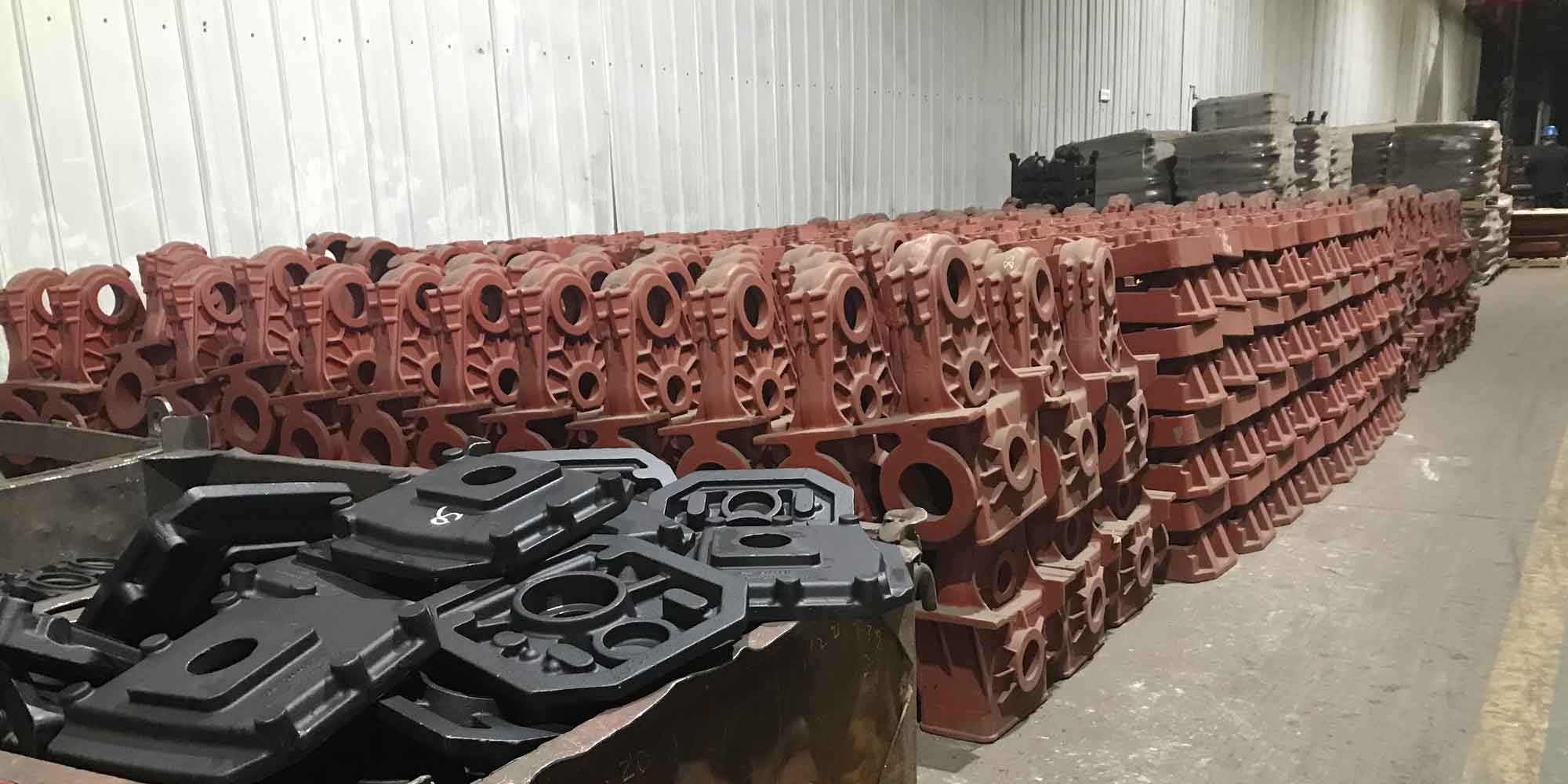
The production of high-quality steel castings requires precise thermal processing. Normalizing involves heating the steel to a temperature above the Ac3 point, holding for a sufficient time to achieve austenitization, and then cooling in air. This process aims to homogenize the microstructure, refine grains, and improve mechanical properties. For G18CrMo2-6 steel castings, the optimal normalizing temperature is not well-defined, with variations leading to differences in M-A island evolution and consequent performance. In this work, I explore a range of normalizing temperatures from 850°C to 1000°C to systematically evaluate their impact, leveraging tables and formulas to summarize findings and provide insights for industrial practices.
To conduct this investigation, I used G18CrMo2-6 steel castings produced via vacuum melting and casting. The chemical composition is critical for understanding phase transformations, and it can be represented as follows in mass fraction: C (0.16%), Mn (0.75%), Si (0.45%), Cr (0.61%), Mo (0.61%), Ni (0.46%), and Fe (balance). Samples were cut into blocks of 70 mm × 48 mm × 12 mm and subjected to normalizing treatments at temperatures of 850°C, 880°C, 910°C, 940°C, 970°C, and 1000°C. Each sample was held at the target temperature for 2 hours to ensure complete austenitization, followed by air cooling to room temperature. This simulates typical industrial conditions for steel castings.
Microstructural analysis was performed using scanning electron microscopy (SEM) on polished and etched specimens. Mechanical properties, including tensile strength and impact absorbed energy, were evaluated through standardized tests. To quantify microstructural features, I measured the number and size of M-A islands and the grain size of bainitic ferrite using image analysis software. The data were compiled into tables to facilitate comparison across different normalizing temperatures. Additionally, I derived formulas to describe relationships between temperature, microstructure, and properties, emphasizing the role of M-A islands in steel castings.
The microstructure of G18CrMo2-6 steel castings after normalizing at various temperatures consistently revealed granular bainite. This structure comprises bainitic ferrite (BF) matrix and dispersed M-A islands. As the normalizing temperature increased, notable changes occurred in the M-A islands and BF grains. Below, I present a summary of microstructural parameters in tabular form to illustrate these trends clearly.
| Normalizing Temperature (°C) | Number of M-A Islands (per mm²) | Average M-A Island Size (μm) | Bainitic Ferrite Grain Size (μm) |
|---|---|---|---|
| 850 | 662 | 2.37 | 21.54 |
| 880 | 631 | 2.28 | 21.91 |
| 910 | 197 | 2.20 | 21.87 |
| 940 | 115 | 2.06 | 22.60 |
| 970 | 193 | 2.38 | 32.04 |
| 1000 | 348 | 2.55 | 54.92 |
From Table 1, it is evident that the number and size of M-A islands decrease initially as the normalizing temperature rises from 850°C to 940°C, then increase at higher temperatures. Conversely, the bainitic ferrite grain size remains relatively stable up to 940°C but coarsens significantly beyond that. This behavior can be attributed to phase transformation kinetics and elemental diffusion. At lower temperatures (e.g., 850°C), partial austenitization occurs, leading to retained ferrite and enriched austenite that stabilizes upon cooling, resulting in more and larger M-A islands. As temperature approaches and exceeds the Ac3 point, complete austenitization enhances elemental homogeneity, reducing austenite stability and minimizing M-A island formation. However, at excessively high temperatures, austenite grain growth and reduced nucleation sites for bainite transformation increase austenite stability, promoting larger and more numerous M-A islands.
The mechanical properties of steel castings are directly influenced by these microstructural changes. I evaluated tensile strength, yield strength, and impact absorbed energy, with results summarized in Table 2. The data highlight the interplay between normalizing temperature and performance, underscoring the importance of M-A island characteristics.
| Normalizing Temperature (°C) | Yield Strength (MPa) | Tensile Strength (MPa) | Impact Absorbed Energy (J) |
|---|---|---|---|
| 850 | 580 | 890 | 15 |
| 880 | 595 | 905 | 18 |
| 910 | 610 | 925 | 22 |
| 940 | 625 | 942 | 28 |
| 970 | 600 | 910 | 16 |
| 1000 | 570 | 851 | 11 |
The trends in Table 2 show that both strength and impact absorbed energy peak at a normalizing temperature of 940°C, then decline at higher temperatures. To elucidate these relationships, I propose formulas that model the dependence of properties on microstructural parameters. For instance, the yield strength ($\sigma_y$) can be expressed as a function of M-A island volume fraction ($f_{M-A}$) and bainitic ferrite grain size ($d_{BF}$):
$$\sigma_y = \sigma_0 + k_y \cdot d_{BF}^{-1/2} + \alpha \cdot f_{M-A}$$
where $\sigma_0$ is the lattice friction stress, $k_y$ is the Hall-Petch coefficient, and $\alpha$ is a constant reflecting the strengthening contribution from M-A islands. In steel castings, as normalizing temperature increases up to 940°C, $f_{M-A}$ decreases, and elements like C and Cr diffuse into the BF matrix, enhancing solid solution strengthening and increasing $\sigma_y$. Beyond 940°C, grain coarsening (increase in $d_{BF}$) and dislocation reduction in BF dominate, leading to a decrease in $\sigma_y$.
Similarly, the impact absorbed energy ($E_{impact}$) can be correlated with M-A island size ($s_{M-A}$) and number ($N_{M-A}$):
$$E_{impact} = \beta – \gamma \cdot s_{M-A} \cdot N_{M-A}$$
where $\beta$ and $\gamma$ are material constants. This inverse relationship highlights that larger and more numerous M-A islands act as crack initiation sites, reducing toughness in steel castings. At 940°C, minimal $s_{M-A}$ and $N_{M-A}$ maximize $E_{impact}$, whereas at extreme temperatures, coarse grains and abundant M-A islands degrade impact resistance.
To further analyze the microstructural evolution, I consider the kinetics of bainite transformation. The volume fraction of M-A islands ($f_{M-A}$) after normalizing can be estimated using an Avrami-type equation:
$$f_{M-A} = 1 – \exp(-b \cdot t^n)$$
where $b$ is a rate constant dependent on normalizing temperature ($T$), $t$ is the holding time, and $n$ is an exponent. For steel castings, $b$ increases with $T$ up to a critical point due to enhanced diffusion, then decreases at higher $T$ due to austenite grain growth. This aligns with the observed non-monotonic trend in M-A island quantity.
The impact of normalizing temperature on steel castings extends beyond microstructure to fracture behavior. Fractography of impact test specimens revealed cleavage or quasi-cleavage fracture modes. At optimal temperatures like 940°C, fracture surfaces exhibited small cleavage facets, indicating short crack propagation paths and high energy absorption. In contrast, at 1000°C, large facets corresponded to easy crack propagation and low impact energy. This underscores the role of M-A islands in embrittlement; when these islands are large, they facilitate crack initiation and growth, compromising the durability of steel castings.
In industrial applications, steel castings often undergo additional heat treatments like tempering to further enhance properties. However, normalizing serves as a crucial first step to set the baseline microstructure. For G18CrMo2-6 steel castings, my findings suggest that a normalizing temperature of 940°C yields the best combination of strength and toughness. This temperature ensures complete austenitization without excessive grain growth, leading to a fine granular bainite structure with minimal M-A islands. Such microstructure is desirable for components subjected to cyclic loading or impact in service.
To contextualize these results, I discuss the broader implications for steel castings manufacturing. The control of normalizing temperature is a cost-effective way to tailor properties without alloy modifications. By optimizing this parameter, manufacturers can produce steel castings with consistent performance, reducing waste and improving reliability. For instance, in nuclear power plants, where safety is critical, enhanced toughness in turbine casings can prevent catastrophic failures. My research contributes to this goal by providing a scientific basis for heat treatment protocols.
Moreover, the formulas and tables presented here can be adapted for other low-alloy steel castings. The relationships between temperature, M-A island characteristics, and mechanical properties are generalizable, offering a framework for future studies. I encourage further investigation into the effects of cooling rate and holding time, as these variables also influence microstructure in steel castings. Additionally, advanced characterization techniques like transmission electron microscopy could reveal finer details of M-A island composition and interface cohesion.
In conclusion, the normalizing temperature profoundly affects the microstructure and mechanical properties of G18CrMo2-6 steel castings. Through systematic experimentation and analysis, I determined that 940°C is the optimal normalizing temperature, maximizing tensile strength and impact absorbed energy. This is attributed to the minimized size and number of M-A islands and refined bainitic ferrite matrix. At lower or higher temperatures, M-A island proliferation or grain coarsening degrade performance. The insights from this study underscore the importance of precise thermal processing in enhancing the quality of steel castings for demanding applications. By leveraging the summarized tables and formulas, engineers can better design heat treatment schedules to achieve desired properties, ensuring the longevity and safety of steel castings in service.
To reinforce these points, I reiterate that steel castings are ubiquitous in heavy industry, and their performance hinges on microstructural control. The normalizing process, though seemingly simple, requires careful optimization to balance strength and toughness. My work demonstrates that for G18CrMo2-6 steel castings, a moderate normalizing temperature of 940°C provides an ideal microstructure of granular bainite with sparse M-A islands, leading to superior mechanical properties. This knowledge can be directly applied in foundries to improve product quality and reliability. As research progresses, continued focus on heat treatment parameters will further advance the capabilities of steel castings in critical engineering applications.