
In modern agricultural practices, conservation tillage has emerged as a critical approach to mitigate soil degradation, erosion, and loss of fertility. As a researcher focused on agricultural machinery and material science, I have observed that tools like subsolier shanks are essential for breaking up hardened plow pans, but their wear and tear pose significant challenges. The tips of these shanks, often made from spheroidal graphite iron, experience severe abrasion during operation, leading to increased draft forces, higher fuel consumption, and elevated operational costs. This study delves into how normalizing treatment can enhance the properties of spheroidal graphite iron, aiming to improve durability and efficiency in field applications. Through a series of experiments, I investigated the impact of normalizing temperatures on hardness, toughness, and wear resistance, providing insights that could optimize the design and maintenance of agricultural implements.
Spheroidal graphite iron, commonly known as ductile iron, is a preferred material for components like subsolier tips due to its balanced combination of strength, ductility, and cost-effectiveness. The unique microstructure of spheroidal graphite iron features graphite nodules embedded in a metallic matrix, which reduces stress concentration and crack propagation compared to other cast irons. However, in harsh soil environments containing abrasive particles like sand and silicates, even spheroidal graphite iron can suffer from rapid wear and potential fracture. To address this, heat treatment processes such as normalizing are employed to refine the matrix structure, typically transforming it into fine pearlite, which enhances mechanical properties. In this work, I systematically evaluated the effects of normalizing at various temperatures, from 860°C to 900°C, on the performance of spheroidal graphite iron. The goal was to identify an optimal treatment that maximizes toughness and wear resistance while maintaining adequate hardness, thereby extending the service life of subsolier tips in conservation tillage systems.
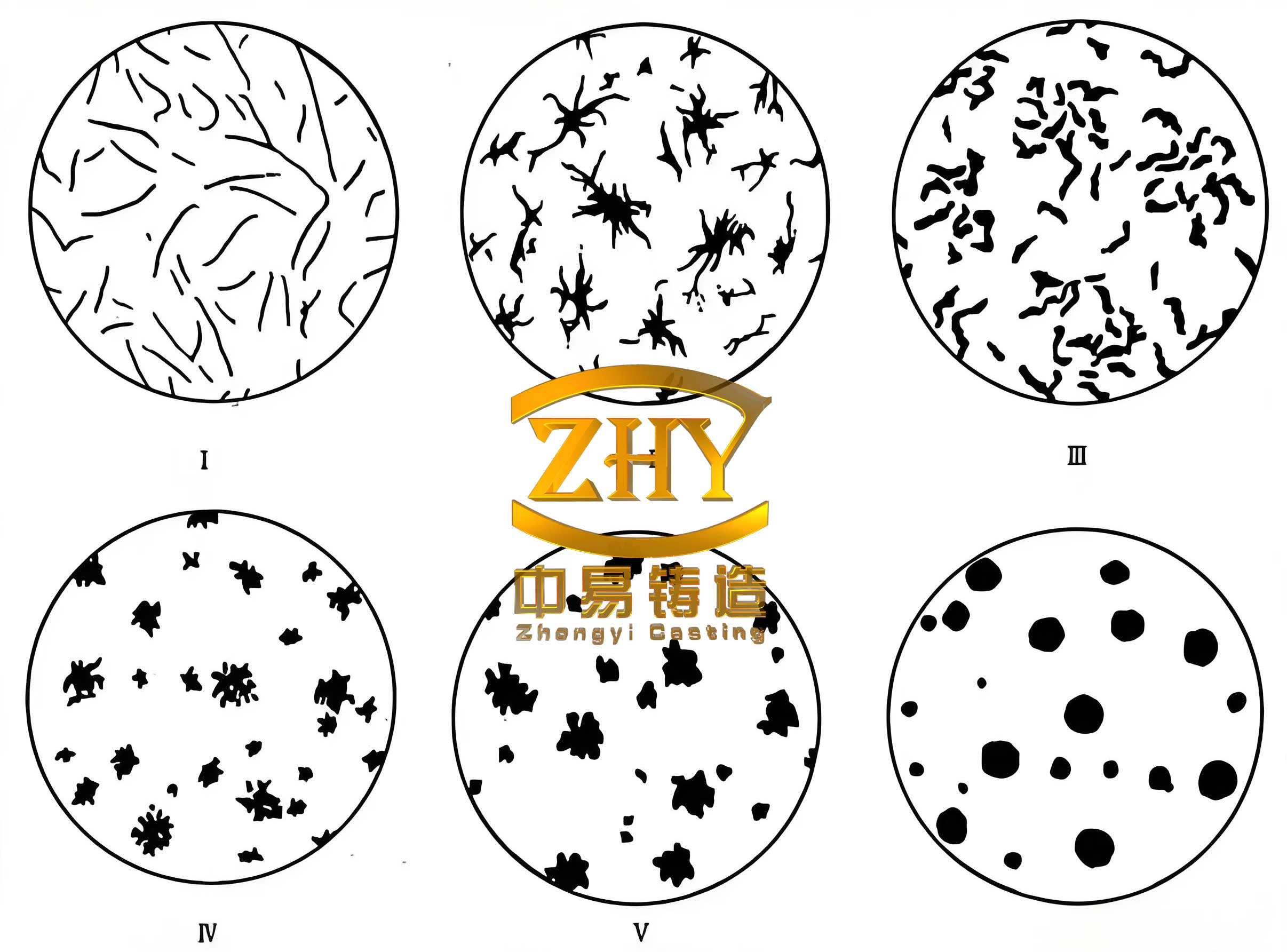
The microstructure of spheroidal graphite iron plays a pivotal role in determining its mechanical behavior. As shown in the image above, the spherical graphite nodules are uniformly distributed within the metallic matrix, which can be ferritic, pearlitic, or a combination thereof. Normalizing involves heating the material to a temperature above the austenitizing range, holding it to allow phase transformation, and then cooling in air to produce a finer, more homogeneous structure. For spheroidal graphite iron, this process can increase the volume fraction of pearlite, reduce graphite size, and improve nodularity, all of which contribute to enhanced performance. In my experiments, I focused on how these microstructural changes influence key properties, leveraging both theoretical models and practical measurements to draw conclusions. The use of spheroidal graphite iron in agricultural tools is widespread, but optimizing its treatment could lead to significant advancements in sustainable farming.
To begin, I selected spheroidal graphite iron samples with a standard chemical composition, as detailed in Table 1. The composition ensures consistency across tests, with carbon, silicon, manganese, phosphorus, and sulfur content within typical ranges for spheroidal graphite iron. This baseline material was used to fabricate subsolier tip specimens, which were then subjected to normalizing at different temperatures. The experimental design, outlined in Table 2, included temperatures of 860°C, 870°C, 880°C, 890°C, and 900°C, with an untreated sample serving as a control. Each treatment involved heating the specimens to the target temperature, holding for three hours to achieve full austenitization, and then air-cooling to room temperature. This process aimed to transform the matrix into fine pearlite, thereby altering the mechanical properties of the spheroidal graphite iron.
| Element | Content (%) |
|---|---|
| Carbon (C) | 3.5–3.9 |
| Silicon (Si) | 1.4–3.0 |
| Manganese (Mn) | 0.5–1.4 |
| Phosphorus (P) | ≤ 0.05 |
| Sulfur (S) | ≤ 0.06 |
| Material | Normalizing Temperatures (°C) |
|---|---|
| Spheroidal Graphite Iron | 860, 870, 880, 890, 900 (Untreated control at 0°C) |
After normalizing, I conducted a series of tests to evaluate the mechanical properties. First, Vickers hardness measurements were taken using a diamond indenter under a load of 0.1 kgf. The hardness value, denoted as HV, is calculated based on the indentation diagonal lengths, with the formula:
$$ HV = \frac{1.8544 \times F}{d^2} $$
where \( F \) is the applied force in kgf and \( d \) is the average diagonal length in mm. For each sample, five indentations were made, and the results were averaged to ensure accuracy. The data, presented in Table 3, show how normalizing temperature affects the hardness of spheroidal graphite iron. Notably, the hardness peaked at 890°C, indicating that this temperature optimizes the matrix strengthening without causing detrimental effects like excessive grain growth.
| Normalizing Temperature (°C) | Hardness Measurement 1 | Hardness Measurement 2 | Hardness Measurement 3 | Hardness Measurement 4 | Hardness Measurement 5 | Average Hardness |
|---|---|---|---|---|---|---|
| 0 (Untreated) | 422 | 410 | 399 | 391 | 402 | 405 |
| 860 | 416 | 462 | 441 | 451 | 398 | 434 |
| 870 | 400 | 439 | 458 | 402 | 420 | 424 |
| 880 | 415 | 420 | 446 | 419 | 428 | 426 |
| 890 | 450 | 468 | 457 | 495 | 507 | 475 |
| 900 | 397 | 382 | 393 | 465 | 395 | 406 |
Next, I assessed the impact toughness of the spheroidal graphite iron samples using a Charpy impact test. Specimens were machined into standard dimensions of 10 mm × 10 mm × 55 mm with a V-notch, and tested on a pendulum impact machine. The impact energy \( A_k \) absorbed during fracture is given by:
$$ A_k = mgH_1 – mgH_2 $$
where \( m \) is the mass of the pendulum, \( g \) is gravitational acceleration, \( H_1 \) is the initial height, and \( H_2 \) is the height after impact. The impact toughness \( \sigma_k \) is then computed as:
$$ \sigma_k = \frac{A_k}{S_N} $$
with \( S_N \) being the cross-sectional area at the notch. Three replicates were tested per condition, and the averages are listed in Table 4. The results demonstrate that normalizing significantly improves the toughness of spheroidal graphite iron, with values increasing by up to 1.5 times compared to the untreated material. This enhancement is crucial for subsolier tips, which must withstand dynamic loads and avoid brittle fracture in rocky soils.
| Normalizing Temperature (°C) | Impact Energy 1 (J) | Impact Energy 2 (J) | Impact Energy 3 (J) | Average Impact Energy (J) |
|---|---|---|---|---|
| 0 (Untreated) | 1.80 | 1.85 | 1.78 | 1.81 |
| 860 | 2.22 | 2.15 | 2.21 | 2.19 |
| 870 | 2.14 | 2.26 | 2.40 | 2.27 |
| 880 | 2.21 | 2.39 | 2.34 | 2.31 |
| 890 | 2.13 | 2.50 | 2.45 | 2.36 |
| 900 | 2.62 | 2.41 | 2.30 | 2.44 |
Wear resistance is another critical property for spheroidal graphite iron in agricultural applications. To evaluate this, I conducted pin-on-disk wear tests using a tribometer under controlled conditions: a rotational speed of 200 rpm, a normal load of 50 N, and a duration of 30 minutes. The weight loss of each specimen was measured before and after testing using a precision electronic balance, with results summarized in Table 5. Additionally, the coefficient of friction was monitored during the tests, as shown in Table 6. The wear mechanism in spheroidal graphite iron involves abrasive particles plowing through the surface, leading to material removal. The relationship between wear volume \( V \) and hardness \( H \) can be described by the Archard wear equation:
$$ V = k \frac{F_n s}{H} $$
where \( k \) is a wear coefficient, \( F_n \) is the normal load, and \( s \) is the sliding distance. From the data, it is evident that normalizing reduces weight loss and friction coefficient, indicating improved wear resistance. The best performance was observed at 890°C, where the spheroidal graphite iron exhibited minimal wear loss and stable frictional behavior.
| Normalizing Temperature (°C) | Weight Loss 1 (g) | Weight Loss 2 (g) | Weight Loss 3 (g) | Average Weight Loss (g) |
|---|---|---|---|---|
| 0 (Untreated) | 0.150 | 0.121 | 0.112 | 0.128 |
| 860 | 0.076 | 0.065 | 0.056 | 0.090 |
| 870 | 0.061 | 0.082 | 0.077 | 0.078 |
| 880 | 0.085 | 0.068 | 0.082 | 0.071 |
| 890 | 0.088 | 0.085 | 0.097 | 0.070 |
| 900 | 0.096 | 0.114 | 0.102 | 0.104 |
| Normalizing Temperature (°C) | Coefficient of Friction |
|---|---|
| 0 (Untreated) | 0.12 |
| 860 | 0.11 |
| 870 | 0.10 |
| 880 | 0.10 |
| 890 | 0.09 |
| 900 | 0.09 |
To statistically validate the effects of normalizing temperature on the properties of spheroidal graphite iron, I performed analysis of variance (ANOVA) using software tools. The ANOVA results, presented in Tables 7, 8, and 9, indicate that the temperature has a significant influence on hardness, toughness, and wear resistance. For instance, the p-value (significance) for hardness is 0.000, which is less than 0.05, confirming that normalizing temperature critically affects the hardness of spheroidal graphite iron. Similarly, toughness and wear resistance show significant variations, underscoring the importance of selecting an appropriate treatment parameter. This statistical analysis reinforces the experimental findings and provides a robust basis for optimizing the normalizing process for spheroidal graphite iron components.
| Source | Sum of Squares | Degrees of Freedom | Mean Square | F-value | Significance (p) |
|---|---|---|---|---|---|
| Between Groups | 19753.467 | 5 | 3950.693 | 10.467 | 0.000 |
| Within Groups | 9058.400 | 25 | 377.433 | ||
| Total | 28811.867 | 29 |
| Source | Sum of Squares | Degrees of Freedom | Mean Square | F-value | Significance (p) |
|---|---|---|---|---|---|
| Between Groups | 0.745 | 5 | 0.149 | 9.411 | 0.001 |
| Within Groups | 0.190 | 12 | 0.0163 | ||
| Total | 0.935 | 17 |
| Source | Sum of Squares | Degrees of Freedom | Mean Square | F-value | Significance (p) |
|---|---|---|---|---|---|
| Between Groups | 0.008 | 5 | 0.002 | 11.500 | 0.000 |
| Within Groups | 0.002 | 12 | 0.000 | ||
| Total | 0.010 | 17 |
The microstructural evolution during normalizing of spheroidal graphite iron is key to understanding the property changes. When heated to temperatures between 860°C and 900°C, the ferritic and pearlitic phases transform into austenite, with some dissolution of graphite nodules. Upon air cooling, the austenite converts to fine pearlite, while any retained ferrite remains distributed in the matrix. This refined structure enhances the strength and toughness of spheroidal graphite iron by providing more barriers to crack propagation. The Hall-Petch relationship can be applied to describe the strengthening effect:
$$ \sigma_y = \sigma_0 + k_y d^{-1/2} $$
where \( \sigma_y \) is the yield strength, \( \sigma_0 \) is a material constant, \( k_y \) is the strengthening coefficient, and \( d \) is the grain size. In spheroidal graphite iron, the pearlite interlamellar spacing acts similarly to grain size, contributing to hardness and wear resistance. Moreover, the spherical graphite nodules help blunt cracks, as described by the stress intensity factor \( K_I \):
$$ K_I = Y \sigma \sqrt{\pi a} $$
where \( Y \) is a geometry factor, \( \sigma \) is applied stress, and \( a \) is crack length. The nodules reduce effective crack length, thereby increasing fracture toughness. Through normalizing, the distribution and size of these nodules are optimized, further improving the performance of spheroidal graphite iron in abrasive environments.
In practical terms, the application of normalizing to spheroidal graphite iron subsolier tips can lead to substantial benefits in agriculture. For example, consider a subsolier operating in a field with sandy loam soil. The wear rate \( W \) of an untreated tip might be high, leading to frequent replacements. After normalizing at 890°C, the wear resistance improves, as quantified by the reduced weight loss. The economic impact can be estimated using a cost model:
$$ C_{total} = C_{material} + C_{labor} + C_{downtime} $$
where \( C_{material} \) is the cost of spheroidal graphite iron, \( C_{labor} \) is the labor for replacement, and \( C_{downtime} \) is the loss due to machine inactivity. By extending the service life through normalizing, these costs decrease, enhancing the overall efficiency of conservation tillage systems. Additionally, the improved toughness reduces the risk of sudden fractures, which could cause field delays and safety hazards. Thus, optimizing the normalizing process for spheroidal graphite iron is not just a material science exercise but a practical solution for sustainable farming.
Looking deeper into the wear mechanisms, spheroidal graphite iron exhibits a combination of abrasive and adhesive wear when interacting with soil particles. The hardness provided by normalizing helps resist plastic deformation and cutting by abrasive grains. Meanwhile, the toughness prevents crack initiation and propagation under cyclic loading. The wear volume \( V \) can also be related to the material’s toughness \( K_{IC} \) (fracture toughness) through the model:
$$ V \propto \frac{F_n^{3/2}}{H^{1/2} K_{IC}} $$
This implies that both hardness and toughness are vital for wear resistance, which aligns with my findings that normalizing at 890°C balances these properties in spheroidal graphite iron. Furthermore, the friction coefficient reduction after normalizing suggests smoother surface interactions, potentially lowering energy consumption during subsolier operation. This is critical for reducing tractor fuel usage, as draft force \( F_d \) is proportional to the friction coefficient \( \mu \):
$$ F_d = \mu F_n $$
where \( F_n \) is the normal force from soil resistance. By minimizing \( \mu \), normalizing helps decrease \( F_d \), leading to lower fuel costs and environmental impact. Therefore, the treatment of spheroidal graphite iron has broad implications for agricultural sustainability.
In conclusion, my investigation demonstrates that normalizing is an effective method to enhance the performance of spheroidal graphite iron for agricultural tools like subsolier tips. The optimal normalizing temperature was found to be 890°C, at which the spheroidal graphite iron achieved a Vickers hardness of 475 HV0.1, an impact energy of 2.36 J, and a wear loss of 0.070 g under tested conditions. These improvements stem from microstructural refinements, including finer pearlite and better graphite nodularity, which collectively boost strength, toughness, and wear resistance. Statistical analyses confirmed the significant effects of temperature on these properties, validating the experimental approach. For farmers and equipment manufacturers, adopting normalizing at 890°C for spheroidal graphite iron components can lead to longer tool life, reduced operational costs, and enhanced efficiency in conservation tillage. Future work could explore combined treatments, such as normalizing followed by tempering, to further tailor the properties of spheroidal graphite iron for specific soil conditions. Ultimately, this research underscores the importance of material optimization in advancing agricultural technology and promoting sustainable practices.
The role of spheroidal graphite iron in modern agriculture cannot be overstated. Its versatility and cost-effectiveness make it a go-to material for demanding applications. Through controlled heat treatments like normalizing, we can unlock even greater potential, ensuring that tools like subsolier tips perform reliably in challenging environments. As I reflect on this study, it is clear that continuous innovation in material science is key to addressing global food security challenges. By refining processes for spheroidal graphite iron, we contribute to more resilient and efficient farming systems, benefiting both producers and the planet. The journey from laboratory experiments to field applications highlights the interconnectedness of research and real-world impact, driving progress in agricultural mechanization.