
In modern manufacturing, the machining of nodular cast iron has become increasingly critical due to its widespread application in automotive and heavy machinery components. Nodular cast iron, often referred to as ductile iron, exhibits a unique microstructure with graphite nodules dispersed in a ferritic or pearlitic matrix, conferring a combination of high strength, good ductility, and excellent castability. However, its machinability presents distinct challenges, as it blends characteristics of both ductile and brittle materials. The cutting process involves complex interactions between the tool geometry, material properties, and cutting parameters, which directly influence cutting forces, tool wear, and surface integrity. In this study, we systematically investigate the impact of rake face groove structures on the performance of D-type carbide inserts during turning operations of nodular cast iron. Through a series of controlled experiments focusing on cutting forces, tool wear, and impact resistance, we aim to elucidate the role of key geometric parameters such as the first rake angle, cutting edge land width, and tool cutting edge inclination. The findings are intended to provide practical insights for optimizing tool design and enhancing the efficiency and reliability of machining processes for nodular cast iron components.
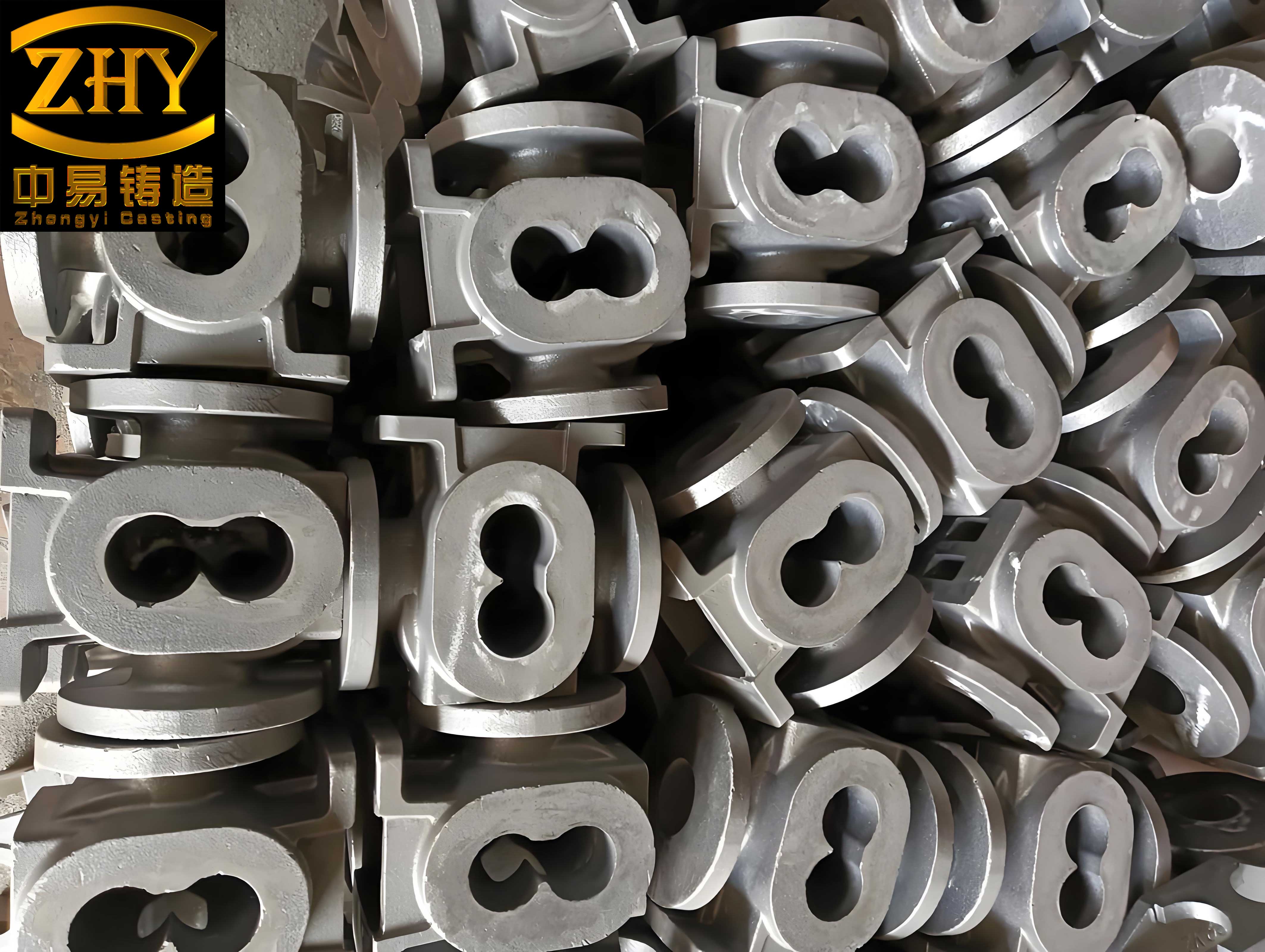
The importance of nodular cast iron in industry cannot be overstated. It is extensively used for engine blocks, crankshafts, camshafts, and valve bodies due to its favorable mechanical properties and cost-effectiveness. However, the machining of nodular cast iron often leads to accelerated tool wear and varying cutting forces, which can affect productivity and part quality. Tool geometry, particularly the rake face configuration, plays a pivotal role in controlling chip formation, heat dissipation, and stress distribution at the cutting edge. Previous research has indicated that the first rake angle significantly affects cutting forces, while the cutting edge land and inclination angles influence wear resistance and toughness. Nevertheless, comprehensive studies linking specific groove geometries to the cutting performance of D-type inserts in nodular cast iron are limited. This work addresses this gap by evaluating three distinct insert designs under identical cutting conditions, employing advanced measurement techniques to capture force dynamics, wear progression, and impact failure. The experimental approach is designed to simulate real-world machining scenarios, providing data that can guide tool selection and process optimization for nodular cast iron applications.
Experimental Conditions and Methodology
The experimental setup was carefully configured to ensure reproducibility and accuracy. The workpiece material selected was nodular cast iron grade QT500-7, a common grade used in structural components. Its chemical composition and mechanical properties are detailed in Tables 1 and 2, respectively. The material’s microstructure consists of graphite nodules in a ferritic-pearlitic matrix, which influences its cutting behavior by introducing intermittent stresses and abrasion during machining.
| Element | C | Si | Mn | S | P | Mg | Fe |
|---|---|---|---|---|---|---|---|
| Content | 3.55–3.85 | 2.34–2.86 | <0.6 | <0.025 | <0.08 | 0.02–0.04 | Balance |
| Property | Tensile Strength (MPa) | Yield Strength (MPa) | Hardness (HB) | Elongation (%) |
|---|---|---|---|---|
| Value | 500 | 320 | 170–230 | 7 |
The machining trials were conducted on a CNC lathe with a maximum spindle speed of 3000 rpm and a power rating of 15 kW. Cutting forces were measured using a piezoelectric dynamometer coupled with a data acquisition system, allowing for real-time monitoring of the three orthogonal force components: cutting force (Fc), feed force (Ff), and radial force (Fr). Tool wear was assessed using an optical measurement system to quantify the flank wear land width (VB), while impact resistance was evaluated through intermittent cutting tests on a workpiece with predefined grooves to simulate shock loading. Surface roughness of the machined parts was measured to correlate tool condition with finish quality.
Three types of D-style cemented carbide inserts, designated as Insert A, Insert B, and Insert C, were employed. All inserts shared the same substrate composition (92% WC, 8% Co) and coating to isolate the effects of groove geometry. The rake face profiles were meticulously characterized using a contour measurement instrument, and key geometric parameters are summarized in Table 3. Insert A features a relatively large first rake angle and a positive tool cutting edge inclination, Insert B has a smaller first rake angle and zero inclination, while Insert C offers an intermediate first rake angle with zero inclination. The cutting edge land width also varies among the inserts, which is expected to influence edge strength and wear behavior.
| Insert | First Rake Angle, γ0 (°) | Tool Cutting Edge Inclination, λs (°) | Cutting Edge Land Width, bα (mm) | Second Rake Angle (°) |
|---|---|---|---|---|
| A | 12.24 | +3 | 0.230 | 20 |
| B | 8.10 | 0 | 0.199 | 18 |
| C | 10.01 | 0 | 0.206 | 19 |
The cutting parameters were held constant across all tests to ensure comparability: cutting speed vc = 200 m/min, feed rate f = 0.15 mm/rev, and depth of cut ap = 2.0 mm. Dry cutting conditions were maintained to eliminate the influence of coolant and to focus on the tool-workpiece interaction. The workpiece was a cylindrical bar of nodular cast iron with an initial diameter of 120 mm and length of 300 mm. For the impact tests, a modified workpiece with axial grooves was used to create periodic interruptions in the cut, thereby subjecting the insert to mechanical shock.
Analysis of Cutting Forces
The measurement of cutting forces provides fundamental insight into the energy consumption and process stability during machining. In the context of nodular cast iron, cutting forces are influenced by the material’s heterogeneous structure, where the graphite nodules can act as stress concentrators and lubricants, albeit with abrasive effects. The recorded cutting force components for the three inserts are presented in Table 4. The resultant cutting force F is calculated using the formula:
$$F = \sqrt{F_c^2 + F_f^2 + F_r^2}$$
where Fc is the primary cutting force, Ff the feed force, and Fr the radial force.
| Insert | Fc (N) | Ff (N) | Fr (N) | Resultant F (N) |
|---|---|---|---|---|
| A | 485 | 215 | 180 | 560.2 |
| B | 520 | 240 | 210 | 608.1 |
| C | 500 | 230 | 195 | 585.4 |
The data clearly indicate that Insert A generates the lowest cutting forces, followed by Insert C, and then Insert B. This trend can be primarily attributed to the first rake angle γ0. According to the classic Lee and Shaffer shear angle model, the shear angle φ is related to the rake angle and the friction angle β at the tool-chip interface:
$$\phi = \frac{\pi}{4} – \beta + \gamma_0$$
A larger first rake angle γ0 increases the shear angle φ, which reduces the shear plane area and consequently the plastic work required for chip formation. This leads to lower cutting forces. For nodular cast iron, which exhibits limited plastic deformation compared to steels, the effect is pronounced within the practical range of 10° to 15°. Insert A, with γ0 = 12.24°, benefits from this mechanism, whereas Insert B, with γ0 = 8.10°, requires higher energy input. The results underscore the importance of optimizing the first rake angle to minimize cutting forces when machining nodular cast iron, thereby reducing power consumption and potential for workpiece deflection.
Furthermore, the influence of the tool cutting edge inclination λs on force distribution is subtle but notable. A positive λs, as in Insert A, can alter the direction of the resultant force vector, slightly reducing its radial component. This can enhance process stability, especially in slender workpiece setups. The cutting edge land width, while more critical for wear, shows negligible direct impact on the magnitude of cutting forces under steady-state conditions.
Tool Wear Characteristics
Tool wear is a critical factor determining tool life and economic efficiency in machining nodular cast iron. The abrasive nature of the material, combined with occasional adhesive interactions, leads to progressive wear of the cutting edge. We conducted prolonged turning tests to evaluate the flank wear progression for Inserts A and C, as they exhibited lower cutting forces. The wear curves, depicting flank wear land width VB versus cutting time, are shown in Figure 1 (conceptual representation via data table). The wear process typically follows three stages: initial wear, steady-state wear, and accelerated wear. The criteria for tool failure was set at VB = 0.3 mm, a common industrial standard.
| Cutting Time t (min) | Insert A VB (mm) | Insert C VB (mm) |
|---|---|---|
| 1 | 0.085 | 0.078 |
| 2 | 0.152 | 0.165 |
| 3 | 0.235 | 0.467 |
| 4 | 0.320 | – |
| 5 | 0.394 | – |
Insert A demonstrated superior wear resistance, reaching the failure threshold after approximately 5 minutes, whereas Insert C failed after only 3 minutes. The primary wear mechanisms observed were abrasion and adhesion. Abrasive wear is driven by the hard carbide phases and graphite nodules in the nodular cast iron, which mechanically erode the tool surface. Adhesive wear occurs due to micro-welding at the tool-workpiece interface, followed by fracture. Insert C showed signs of more pronounced adhesion, likely due to its smaller cutting edge land width, which leads to higher localized stresses and temperature.
The cutting edge land acts as a negative chamfer when the insert is mounted, enhancing edge strength and heat dissipation. The wider land of Insert A (bα = 0.230 mm) compared to Insert C (bα = 0.206 mm) provides better support to the cutting edge, distributing the load over a larger area and reducing stress concentration. This can be modeled using a simplified wear rate equation:
$$\frac{dVB}{dt} = k \cdot \sigma^n$$
where k is a wear coefficient, σ is the interfacial stress, and n is an exponent. A wider land reduces σ, thereby lowering the wear rate. Additionally, the positive tool cutting edge inclination of Insert A may promote smoother chip flow, reducing contact length and frictional heating, which indirectly mitigates wear. For machining nodular cast iron, these findings suggest that a combination of a moderate first rake angle and a sufficiently wide cutting edge land is beneficial for prolonging tool life.
Impact Resistance and Intermittent Cutting Performance
In practical applications, tools often face intermittent cuts, such as when machining keyways or interrupted surfaces, which impose impact loads on the cutting edge. The ability to withstand such shocks is crucial for tool reliability. We performed impact tests by turning a nodular cast iron workpiece with axial grooves, creating periodic entry and exit of the tool. The number of impacts until tool failure and the corresponding surface roughness were recorded, as summarized in Table 6.
| Insert | Total Impact Time (s) | Number of Impacts | Surface Roughness Ra (μm) | Final Flank Wear VB (mm) |
|---|---|---|---|---|
| A | 1100.1 | 51333 | 1.823 | 0.388 |
| C | 578.7 | 36667 | 1.895 | 0.355 |
Insert A endured nearly twice as many impacts as Insert C before reaching a comparable level of flank wear. This remarkable difference highlights the role of the positive tool cutting edge inclination λs. In intermittent cutting, the tool edge experiences cyclic tensile and compressive stresses upon entry and exit. A positive λs alters the angle at which the edge engages the workpiece, gradually increasing the load rather than subjecting it to an abrupt shock. This can be analyzed using stress intensity factors. The effective stress σeff at the cutting edge during impact can be approximated by:
$$\sigma_{eff} = \frac{F_{impact}}{A_{edge}} \cdot \cos(\lambda_s)$$
where Fimpact is the impact force and Aedge is the effective edge area. The cosine term reduces the normal stress component for positive λs, thereby enhancing fatigue resistance.
Moreover, the first rake angle also contributes; a larger γ0 generally weakens the edge geometrically, but this is compensated by the positive λs in Insert A. Empirical rules suggest that increasing the rake angle by 2° while simultaneously increasing the inclination angle by 3° can maintain edge strength. This synergy is evident in Insert A’s performance. In contrast, Insert C, with zero inclination, lacks this protective mechanism, making it more susceptible to chipping and fracture under impact when machining nodular cast iron. The surface roughness values further corroborate Insert A’s stability, as it produced a slightly smoother surface despite longer cutting time, indicating maintained edge integrity.
Discussion and Theoretical Implications
The experimental outcomes collectively underscore the complex interplay between rake face geometry and cutting performance when machining nodular cast iron. Nodular cast iron, with its dual-phase nature, demands tools that can manage both abrasive wear and mechanical shock. The first rake angle emerges as a dominant parameter for controlling cutting forces, which aligns with classical metal cutting theory. However, its optimization cannot be isolated; it must be balanced with edge strengthening features like the cutting edge land and inclination angle.
From a theoretical perspective, the mechanics of chip formation in nodular cast iron can be further modeled using finite element analysis (FEA) to simulate stress distributions. The presence of graphite nodules introduces inhomogeneity, which may cause fluctuations in cutting forces. A modified Merchant’s equation incorporating material heterogeneity could be proposed:
$$\tau_s = \frac{F_c \cdot \sin \phi \cdot \cos(\phi + \beta – \gamma_0)}{a_p \cdot f}$$
where τs is the shear strength of the workpiece material, which may vary locally due to nodules. This variability necessitates robust tool designs that can accommodate such fluctuations.
Additionally, the role of the second rake angle, which was kept relatively constant in this study, warrants investigation for its effect on chip curl and breakage. In nodular cast iron machining, continuous chips are less common, but controlled chip formation remains important for automation. Future studies could explore the interaction between groove geometry and chip morphology for different grades of nodular cast iron.
The findings also have practical implications for tool manufacturers and machining engineers. For continuous turning of nodular cast iron, inserts with a first rake angle around 12°, a cutting edge land width of at least 0.22 mm, and a positive inclination of 3° are recommended to achieve low forces and extended tool life. For interrupted cutting, the positive inclination becomes even more critical to prevent premature failure. These guidelines can enhance productivity and reduce tooling costs in industries heavily reliant on nodular cast iron components.
Conclusion
This comprehensive investigation into the effects of rake face groove geometry on D-type inserts for turning nodular cast iron has yielded several key insights. Firstly, the first rake angle is the most influential parameter on cutting forces; within the range of 10° to 15°, a larger angle significantly reduces the energy required for chip separation, with Insert A (γ0 = 12.24°) exhibiting the lowest forces. Secondly, wear resistance is strongly correlated with the cutting edge land width; a wider land, as in Insert A (bα = 0.230 mm), provides better support against abrasive and adhesive wear, prolonging tool life in the machining of nodular cast iron. Thirdly, impact resistance is markedly improved by a positive tool cutting edge inclination; Insert A, with λs = +3°, survived nearly double the number of impacts compared to Insert C with zero inclination, demonstrating enhanced toughness under intermittent cutting conditions typical for nodular cast iron components like crankshafts or valve bodies.
These findings highlight the importance of a holistic approach to tool design, where multiple geometric features are optimized in tandem to address the specific challenges posed by nodular cast iron. Future work could extend this research to include other insert shapes, coatings, and a wider range of cutting parameters to develop a more generalized model for nodular cast iron machining. Nevertheless, the present study offers valuable guidelines for selecting and designing cutting tools to improve efficiency and reliability in industrial applications involving nodular cast iron.