
Introduction
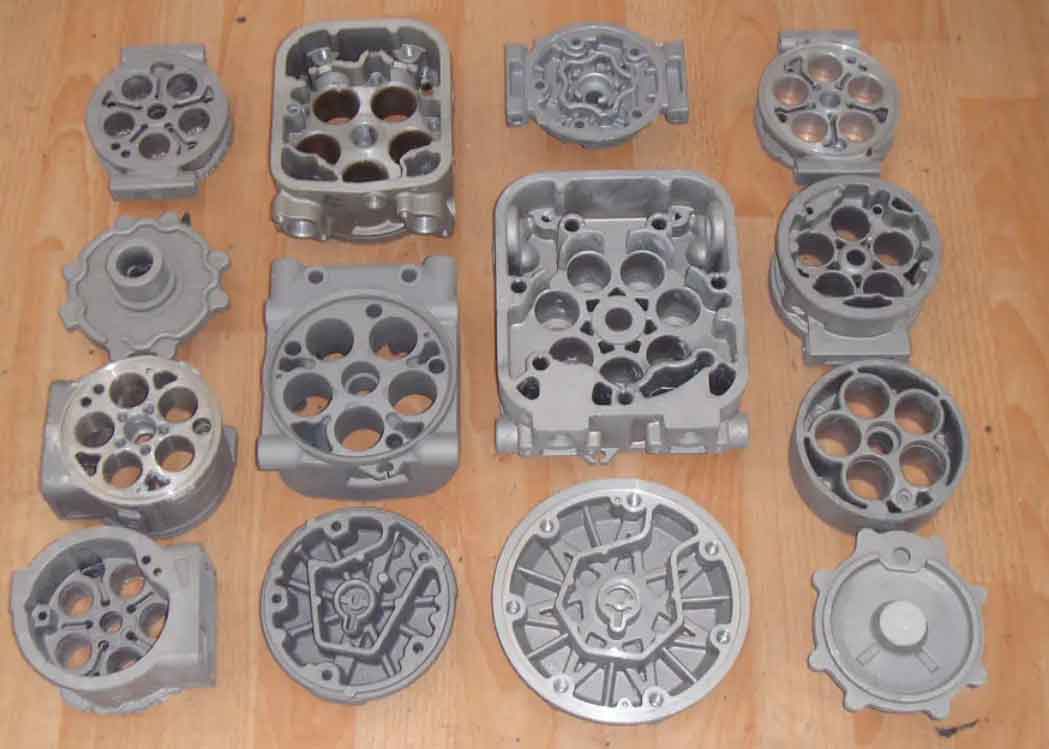
Semi-solid squeeze casting (SSSC) combines the advantages of forging and casting, enabling the production of near-net-shape components with high density, superior mechanical properties, and precise dimensional accuracy. This technology has gained significant attention in automotive, aerospace, and defense industries due to its efficiency and sustainability. However, achieving high-performance alloys through semi-solid squeeze casting requires optimizing both process parameters and material composition. Rare earth elements, particularly cerium (Ce), have shown promise in refining microstructures, enhancing mechanical properties, and improving electrical conductivity in aluminum alloys. This study investigates the influence of Ce addition on the microstructure, mechanical properties, and conductivity of semi-solid squeeze-cast AlSi10Cu3Fe alloy, aiming to establish a scientific foundation for developing high-performance materials.
Experimental Materials and Methods
The AlSi10Cu3Fe alloy was prepared using pure Al, Si, Cu, and Fe. Ce was introduced via an Al-10Ce master alloy. Four compositions with varying Ce content (0%, 0.25%, 0.5%, and 0.75%) were produced. The melt was held at 750°C, degassed with C22Cl66, and cast at 600°C under 150 MPa pressure using an SCH-350A squeeze casting machine. Key process parameters are summarized in Table 1.
Table 1: Squeeze casting parameters for AlSi10Cu3Fe alloy
| Parameter | Value |
|---|---|
| Mold temperature | 250°C |
| Pouring temperature | 600°C |
| Pressure | 150 MPa |
| Holding time | 15 s |
| Plunger speed | 0.2 m/s |
Microstructural analysis was conducted using optical microscopy (OM), scanning electron microscopy (SEM), and X-ray diffraction (XRD). Mechanical properties were evaluated via tensile testing (ASTM E8) and microhardness measurements (HV, 9.8 N load). Electrical conductivity was measured using a digital eddy current conductivity meter.
Results and Discussion
1. Microstructural Evolution
Ce addition significantly refined the microstructure of the semi-solid squeeze-cast alloy. Without Ce, the primary α-Al phase exhibited coarse dendritic structures (Figure 1a), while 0.5% Ce promoted equiaxed or spherical grains (Figure 1c). Quantitative analysis (Table 2) revealed a 51.51% reduction in grain size (from 99 μm to 48 μm) and a 53.06% increase in shape factor (from 0.49 to 0.75) at 0.5% Ce. Excessive Ce (0.75%) caused grain coarsening due to the formation of Al1111Ce33 intermetallics, which reduced solute segregation and suppressed nucleation.
Table 2: Grain size and shape factor vs. Ce content
| Ce Content (%) | Grain Size (μm) | Shape Factor |
|---|---|---|
| 0 | 99 | 0.49 |
| 0.25 | 72 | 0.63 |
| 0.5 | 48 | 0.75 |
| 0.75 | 67 | 0.62 |
The Hall-Petch relationship explains the enhanced microhardness (HvHv) with grain refinement:Hv=H0+k⋅d−1/2Hv=H0+k⋅d−1/2
where H0H0 and kk are material constants, and dd is the grain size. Finer grains increased boundary density, hindering dislocation motion and improving hardness.
2. Mechanical Properties
Mechanical properties peaked at 0.5% Ce (Table 3). Tensile strength increased by 37.81% (from 168.33 MPa to 231.98 MPa), elongation by 59.18% (from 4.9% to 7.8%), and microhardness by 25.38% (from HV 79.88 to HV 100.15). The refined microstructure reduced stress concentration at grain boundaries and improved load distribution. However, excessive Ce (0.75%) degraded properties due to coarse intermetallics acting as crack initiation sites.
Table 3: Mechanical properties vs. Ce content
| Ce Content (%) | Tensile Strength (MPa) | Elongation (%) | Microhardness (HV) |
|---|---|---|---|
| 0 | 168.33 | 4.9 | 79.88 |
| 0.25 | 201.45 | 6.2 | 89.34 |
| 0.5 | 231.98 | 7.8 | 100.15 |
| 0.75 | 195.67 | 5.1 | 85.42 |
3. Electrical Conductivity
Electrical conductivity followed a similar trend, peaking at 43.27% IACS with 0.5% Ce (Table 4). Ce refined the eutectic Si phase and reduced porosity, enhancing electron mobility. At 0.75% Ce, Al1111Ce33 intermetallics disrupted the conductive network, lowering conductivity.
Table 4: Electrical conductivity vs. Ce content
| Ce Content (%) | Conductivity (%IACS) |
|---|---|
| 0 | 38.56 |
| 0.25 | 40.33 |
| 0.5 | 43.27 |
| 0.75 | 40.05 |
The relationship between conductivity (σσ) and grain size can be approximated as:σ∝1d⋅exp(−ΔEkT)σ∝d1⋅exp(−kTΔE)
where ΔEΔE is the activation energy for electron scattering, kk is Boltzmann’s constant, and TT is temperature. Finer grains reduced scattering sites, improving σσ.
4. Fracture Morphology
Fracture surfaces transitioned from cleavage-dominated (0% Ce) to quasi-cleavage (0.5% Ce), indicating improved ductility. At 0.75% Ce, brittle fracture reappeared due to intermetallic-induced stress concentrations.
Conclusions
- Optimal Ce Addition: 0.5% Ce refined the α-Al phase into equiaxed grains (48 μm, shape factor 0.75), enhancing mechanical properties and conductivity.
- Mechanical Performance: Peak tensile strength (231.98 MPa), elongation (7.8%), and microhardness (HV 100.15) were achieved, demonstrating the efficacy of squeeze casting in producing high-integrity components.
- Conductivity Enhancement: Conductivity improved to 43.27% IACS at 0.5% Ce, highlighting Ce’s role in minimizing defects and optimizing phase distribution.
- Overloading Effects: Excessive Ce (0.75%) degraded properties due to coarse intermetallics, underscoring the need for precise composition control in squeeze casting.
This study validates the strategic use of Ce in semi-solid squeeze casting to achieve high-performance AlSi10Cu3Fe alloys, paving the way for advanced industrial applications.