
The pursuit of advanced wear-resistant materials is a constant endeavor in industrial sectors such as mining, mineral processing, and cement production, where component failure due to abrasive and adhesive wear leads to significant economic losses and operational downtime. Among the various candidate materials, chromium-containing alloy white cast irons have established themselves as a prominent class due to their excellent combination of high hardness and good abrasion resistance, primarily imparted by the presence of hard chromium carbides within their microstructure.
However, the conventional high-chromium white cast iron, which relies on the M7C3 type carbides (where M is primarily Cr and Fe), has inherent limitations. While these carbides are hard, they often form a continuous or semi-continuous network that can act as stress concentrators and initiate crack propagation, thereby compromising the fracture toughness of the material. This has driven research towards microstructural modifications aimed at refining this carbide network or introducing alternative, more favorable carbide phases.
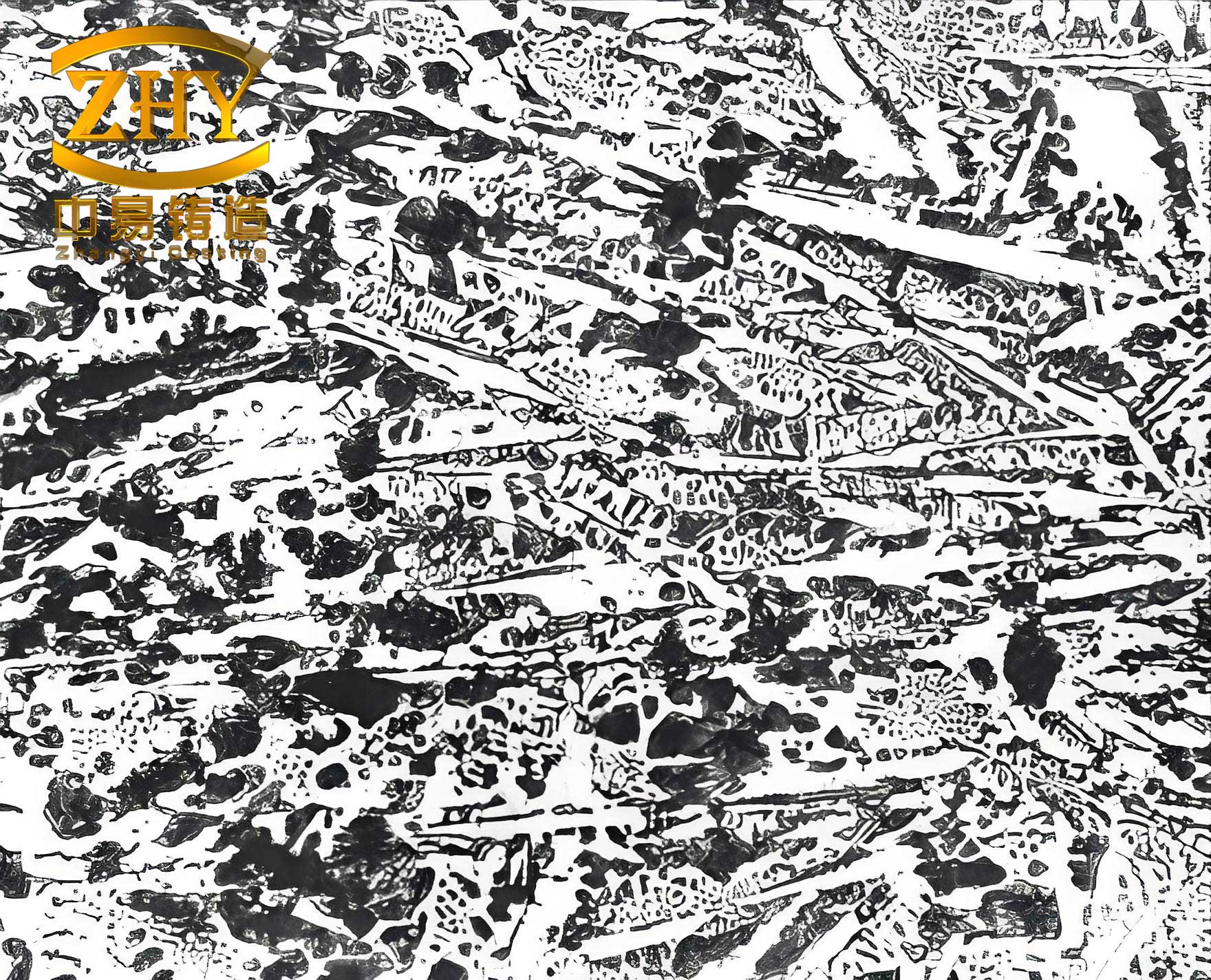
The introduction of strong carbide-forming elements like vanadium (V) presents a promising avenue for enhancing the properties of alloy white cast iron. Vanadium has a very high affinity for carbon, leading to the formation of vanadium carbide (VC). This carbide possesses several advantageous characteristics: firstly, its hardness (approximately 2800 HV) significantly exceeds that of typical M7C3 carbides (1200-1800 HV); secondly, VC typically precipitates as discrete, globular, or finely dispersed particles rather than a continuous network. This particulate morphology is less detrimental to the toughness of the metallic matrix, as it does not provide an easy path for crack propagation. Consequently, vanadium-modified alloy white cast iron is anticipated to offer superior wear resistance without a severe penalty on impact toughness. This study systematically investigates the influence of varying vanadium content on the microstructure, hardness, and, most importantly, the dry sliding wear behavior of a V-Cr-Mn alloy white cast iron, aiming to identify the optimal compositional balance for enhanced performance.
Experimental Materials and Methodology
The base composition for this study was designed as a medium-chromium white cast iron, with chromium fixed at approximately 9 wt.% and manganese at 4 wt.% to stabilize the austenitic matrix. Three different vanadium contents were targeted: 5%, 7.5%, and 10%. Silicon was added at 1 wt.% as a graphitizing inhibitor to ensure a fully carbide-stabilized, white iron structure. The alloys were prepared in a medium-frequency induction furnace, melted at 1500°C using pure charge materials including Fe-V, Fe-Cr, Fe-Mn, Fe-Si master alloys, along with pig iron and steel scrap. After complete melting and homogenization, the molten metal was poured into Y-block sand molds to produce castings.
To obtain a primarily austenitic matrix that would allow for a clear assessment of the carbide phase’s role in wear, all cast specimens underwent an austenitization heat treatment, also known as a destabilization treatment. The castings were heated to 980°C, held for 2 hours to allow for carbide dissolution and matrix homogenization, followed by air cooling (normalizing). This process results in the precipitation of secondary carbides from the supersaturated austenite and transforms some austenite to martensite, but a significant amount of retained austenite is typically present, especially with the high Mn content used here. The actual chemical compositions of the heat-treated samples, as determined by optical emission spectrometry, are summarized in Table 1.
| Sample Designation | C | Si | Mn | Cr | V | Fe | Heat Treatment |
|---|---|---|---|---|---|---|---|
| 10V-9Cr White Cast Iron | 3.10 | 1.05 | 3.99 | 9.10 | 9.49 | Balance | 980°C for 2h, Air Cooled |
| 7.5V-9Cr White Cast Iron | 3.11 | 0.98 | 4.11 | 9.08 | 7.50 | Balance | |
| 5V-9Cr White Cast Iron | 3.26 | 1.09 | 3.97 | 9.09 | 5.27 | Balance |
Microstructural characterization was performed on polished and etched samples using scanning electron microscopy (SEM) equipped with an energy-dispersive X-ray spectroscopy (EDS) system for local chemical analysis. Phase identification was carried out using X-ray diffraction (XRD) with Cu-Kα radiation. The volume fraction of the various carbide phases was quantitatively evaluated using specialized image analysis software on SEM micrographs. Macro-hardness was measured on a Rockwell C scale (HRC), while the micro-hardness of individual phases (carbides and matrix) was determined using a Vickers micro-hardness tester under a low load.
The core of this investigation was the evaluation of dry sliding wear resistance. Wear tests were conducted at room temperature using a reciprocating sliding wear tester. The test configuration involved a flat rectangular specimen of the alloy white cast iron sliding against a stationary counterface of silicon carbide (SiC) abrasive paper (grit size #18, nominal particle size ~78 µm). The SiC abrasive, with a hardness of approximately 2600 HV, served as the hard, fixed abrasive medium. A constant normal load of 19.6 N was applied. The cumulative wear loss was measured by weighing the specimen at regular intervals over a total sliding distance. The worn surfaces were subsequently examined using SEM to identify the dominant wear mechanisms.
Microstructural Analysis and Phase Identification
The XRD patterns for all three compositions of the V-Cr-Mn alloy white cast iron are presented below. The diffraction peaks confirm the presence of three primary phases: a metallic matrix phase (γ-austenite, PDF# 31-0619), the vanadium-rich MC-type carbide (primarily VC, PDF# 65-8741), and the chromium-rich M7C3 type carbide (PDF# 36-1482). No peaks corresponding to graphite or other carbide types like M3C were detected, confirming the successful production of a fully white iron structure.
The SEM micrographs reveal the detailed morphology and distribution of these phases. The microstructure of all alloys consists of a metallic matrix (appearing dark gray) embedded with two distinct types of carbides. The first type exhibits granular, blocky, or occasionally short-rod-like morphologies. The second type appears as a interconnected, script-like, or fine network. EDS point and area analysis, as exemplified by the map for the 7.5V-9Cr alloy white cast iron, provides clear elemental mapping: the granular carbides are rich in vanadium (V) and carbon (C), confirming them as MC-type (predominantly VC). The script-like network is rich in chromium (Cr) and carbon (C), identifying it as the M7C3 type carbide. The matrix is rich in iron (Fe), with significant amounts of Mn and some dissolved Cr and Si.
A critical observation is the evolution of carbide phase fractions with changing vanadium content. Quantitative image analysis results are compiled in Table 2. As the vanadium content increases from 5% to 10%, the volume fraction of the hard MC-type carbides increases progressively, from 2.0% to 5.6%. Conversely, the fraction of the M7C3 type carbides decreases significantly, from 18.7% to 10.1%. This inverse relationship is a direct consequence of metallurgical thermodynamics. Vanadium, being a stronger carbide former than chromium, preferentially combines with carbon to form stable MC carbides during solidification and subsequent heat treatment. This sequestration of carbon by vanadium reduces the amount of carbon available to form chromium carbides, thereby suppressing the formation of M7C3. The total carbide content remains relatively high for the 5V and 7.5V alloys (~21%) but is notably lower for the 10V alloy white cast iron (~15.7%).
| Sample Designation | MC-type Carbide (Vol.%) | M7C3-type Carbide (Vol.%) | Total Carbide Content (Vol.%) |
|---|---|---|---|
| 5V-9Cr White Cast Iron | 2.0 | 18.7 | 20.7 |
| 7.5V-9Cr White Cast Iron | 5.4 | 15.7 | 21.1 |
| 10V-9Cr White Cast Iron | 5.6 | 10.1 | 15.7 |
Hardness Characteristics
The hardness profile of these multi-phase materials is a composite result of the hardness of individual constituents and their volume fractions. The macro-hardness, measured on the Rockwell C scale, shows surprisingly little variation among the three alloys, with all values clustering around 52-53 HRC (see Table 3). This suggests that while the carbide type and distribution change, the overall resistance to indentation from a large-scale test remains similar.
Micro-hardness testing, however, reveals dramatic differences at the phase level. The MC-type vanadium carbides exhibit exceptional hardness, with values ranging from approximately 2073 HV to 2332 HV, confirming their status as extremely hard reinforcing particles. The M7C3 type chromium carbides are also hard but notably softer than the VC, with hardness values between 1091 HV and 1260 HV. The austenitic matrix, stabilized by manganese, has a considerably lower hardness, measured between 338 HV and 404 HV. The relationship can be succinctly expressed as:
$$H_{MC} \approx 2 \times H_{M_7C_3} \gg H_{Austenite}$$
where \(H\) represents the Vickers micro-hardness. This hierarchy is fundamental to understanding the wear behavior of this alloy white cast iron.
| Sample | Micro-hardness of MC (HV) | Micro-hardness of M7C3 (HV) | Micro-hardness of Austenite (HV) | Macro-hardness (HRC) |
|---|---|---|---|---|
| 10V-9Cr White Cast Iron | 2332 | 1243 | 404 | 53 |
| 7.5V-9Cr White Cast Iron | 2142 | 1091 | 338 | 53 |
| 5V-9Cr White Cast Iron | 2073 | 1260 | 360 | 52 |
Dry Sliding Wear Performance and Mechanisms
The wear loss as a function of sliding cycles (or cumulative sliding distance) for the three variants of alloy white cast iron is plotted. All materials exhibit a linear increase in wear mass loss with increasing sliding distance, which is characteristic of steady-state abrasive wear. The key finding is that the 7.5V-9Cr alloy white cast iron demonstrates the lowest cumulative wear loss, indicating the best dry sliding wear resistance under the tested conditions. Both the 5V-9Cr and the 10V-9Cr compositions show higher wear rates, with their performance being inferior to that of the 7.5V alloy.
Examination of the worn surfaces via SEM provides clear evidence of the active wear mechanisms. All surfaces exhibit pronounced grooves, scratches, and ploughing marks aligned with the sliding direction, which are the classic hallmarks of abrasive (specifically, two-body abrasion) wear. The harder SiC abrasive particles (2600 HV) act as microscopic cutting tools, plowing through the softer metallic matrix and engaging with the hard carbide phases. The interaction with the two carbide types is distinctly different:
- Interaction with MC (VC) Carbides: The globular MC carbides, despite their high hardness (2073-2332 HV), are still somewhat softer than the SiC abrasives. They do not get easily cut. Instead, they are subjected to intense localized contact stresses. The SEM images reveal that these carbides often show signs of micro-cracking, fragmentation, or subsurface damage. They resist cutting but may eventually fracture or be plucked out from the matrix after repeated stress cycles. Larger MC particles offer more resistance to this process.
- Interaction with M7C3 Carbides: The network of M7C3 carbides, with a hardness of ~1100-1260 HV, is significantly softer than the SiC. Consequently, these carbides are vulnerable to direct micro-cutting and micro-ploughing by the abrasive. The wear tracks show clear evidence of the abrasives slicing through these carbide arms. The interconnected network can be worn down layer by layer.
An important observation is the deflection of abrasive grooves when they encounter hard MC carbide particles. This indicates that these discrete, hard particles act as obstacles, forcing the abrasive to change its path, thereby reducing the efficiency of the cutting process and protecting the surrounding matrix.
Comprehensive Discussion: The Role of Vanadium in Wear Performance
The superior dry sliding wear resistance of the 7.5V-9Cr alloy white cast iron, compared to both the lower (5V) and higher (10V) vanadium counterparts, is a non-linear outcome that stems from the complex interplay between carbide type, fraction, morphology, and size. A simplistic assumption might suggest that higher vanadium content, leading to more of the ultra-hard MC carbide, should monotonically improve wear resistance. However, the experimental results contradict this, indicating that an optimum balance exists.
The wear performance \( W \) of this multi-phase alloy white cast iron can be conceptualized as a function dependent on the characteristics of both carbide populations and the matrix:
$$ W = f(V_f^{MC}, H^{MC}, D^{MC}, V_f^{M_7C_3}, H^{M_7C_3}, S^{M_7C_3}, H_{matrix}) $$
where:
\( V_f^{MC} \) = Volume fraction of MC carbides.
\( H^{MC} \) = Hardness of MC carbides.
\( D^{MC} \) = Effective size/distribution of MC carbides.
\( V_f^{M_7C_3} \) = Volume fraction of M7C3 carbides.
\( H^{M_7C_3} \) = Hardness of M7C3 carbides.
\( S^{M_7C_3} \) = Morphological factor for M7C3 (e.g., continuity of network).
\( H_{matrix} \) = Hardness of the metallic matrix.
Analysis of the 10V-9Cr Alloy White Cast Iron: This alloy has the highest MC fraction (5.6%) but the lowest M7C3 fraction (10.1%) and the lowest total carbide content (15.7%). While the high MC content is beneficial, vanadium is also a potent grain refiner. High vanadium content leads to a finer solidification structure, resulting in smaller MC carbide particles. Smaller MC particles are less effective at deflecting or blocking the abrasive SiC particles and are more susceptible to being completely plucked out. Furthermore, the reduced amount of the secondary hard phase, M7C3, means there is less overall bulk material capable of resisting abrasion directly, placing a greater load on the matrix and the fine MC particles. Therefore, despite having the most of the hardest phase, its effectiveness is compromised by particle size and the reduced support from other hard phases.
Analysis of the 5V-9Cr Alloy White Cast Iron: This alloy has the lowest MC fraction (2.0%) but the highest M7C3 fraction (18.7%) and high total carbide content (20.7%). The primary wear-resistant load is borne by the abundant but relatively softer M7C3 network. While this network provides good bulk abrasion resistance, it is prone to being cut through by the harder SiC abrasives. The scarcity of hard, discrete MC particles means there are fewer obstacles to disrupt the cutting action of the abrasives, allowing them to engage more continuously with the M7C3 network and the matrix. The wear resistance is thus limited by the intrinsic hardness of the dominant carbide.
Analysis of the 7.5V-9Cr Alloy White Cast Iron – The Optimal Balance: This alloy achieves the best wear performance by striking an optimal balance. It possesses a significant volume of MC carbides (5.4%), which is nearly as high as the 10V alloy. Crucially, with intermediate vanadium content, the MC carbides likely have a more favorable size distribution—they are large enough to effectively obstruct and deflect abrasive particles but not so refined as to be ineffective. Simultaneously, it retains a substantial amount of M7C3 carbides (15.7%), providing a hard, continuous background that resists penetration and supports the MC particles. The total carbide content is the highest (21.1%). This synergistic combination creates a microstructure where the abrasives are constantly challenged: they are deflected by hard MC particles and must also cut through a resistant network of M7C3. This multi-scale defense mechanism leads to the lowest wear rate. The relationship can be simplified for the tested system as:
$$ \text{Wear Resistance} \propto (V_f^{MC} \times D^{MC}) + (V_f^{M_7C_3} \times H^{M_7C_3}) $$
where the 7.5V-9Cr composition maximizes the value of this composite parameter for the given test conditions.
Conclusion
This investigation into the effect of vanadium on the microstructure and dry sliding wear properties of V-Cr-Mn alloy white cast iron leads to the following key conclusions:
- The microstructure of the developed alloys consists of an austenitic matrix, globular MC-type vanadium carbides, and a network of M7C3-type chromium carbides. Increasing vanadium content from 5% to 10% systematically increases the volume fraction of MC carbides while decreasing the fraction of M7C3 carbides.
- The MC carbides possess a micro-hardness approximately double that of the M7C3 carbides (~2200 HV vs. ~1100-1200 HV), while the macro-hardness of all alloy white cast iron variants remains similar at ~52-53 HRC.
- Under dry sliding abrasion against SiC, the wear mechanism is predominantly micro-cutting and ploughing. The MC carbides resist via fracture and plucking, while the M7C3 carbides are directly cut.
- Wear resistance does not increase monotonically with vanadium content. The 7.5V-9Cr alloy white cast iron exhibits the best performance, superior to both the 5V and 10V variants.
- The optimal wear resistance is attributed to a synergistic microstructural combination: a sufficient volume of moderately-sized, hard MC carbides to disrupt abrasive action, coupled with a substantial supporting network of M7C3 carbides to provide bulk resistance. This study underscores that designing high-performance alloy white cast iron requires optimizing not just the amount of the hardest phase, but also its morphology and its interplay with other microstructural constituents.