
As a researcher in advanced manufacturing technologies, I have witnessed the transformative impact of additive manufacturing, commonly known as 3D printing, on various industries. In the realm of agricultural machinery production, the integration of additive manufacturing with the investment casting process represents a significant leap forward. This synergy not only enhances the quality and efficiency of component fabrication but also drives innovation in precision agriculture. In this article, I will delve into the principles of additive manufacturing, its advantages, and its specific applications within the investment casting process for agricultural machinery. I will also explore practical measures, challenges, and future prospects, supported by tables and mathematical formulations to provide a comprehensive analysis. Throughout, the term “investment casting process” will be emphasized to underscore its centrality in this discussion.
The investment casting process, also known as lost-wax casting, has long been valued for producing complex, high-precision metal parts with excellent surface finish. In agricultural machinery, components such as engine impellers, gearboxes, and structural fittings often require intricate geometries that are challenging to achieve through conventional methods. By incorporating additive manufacturing into this process, we can create precise wax or resin patterns directly from digital models, bypassing traditional tooling and reducing lead times. This integration is particularly beneficial for the investment casting process, as it allows for rapid prototyping and small-batch production of customized parts, essential for modern farm equipment that demands adaptability and reliability.
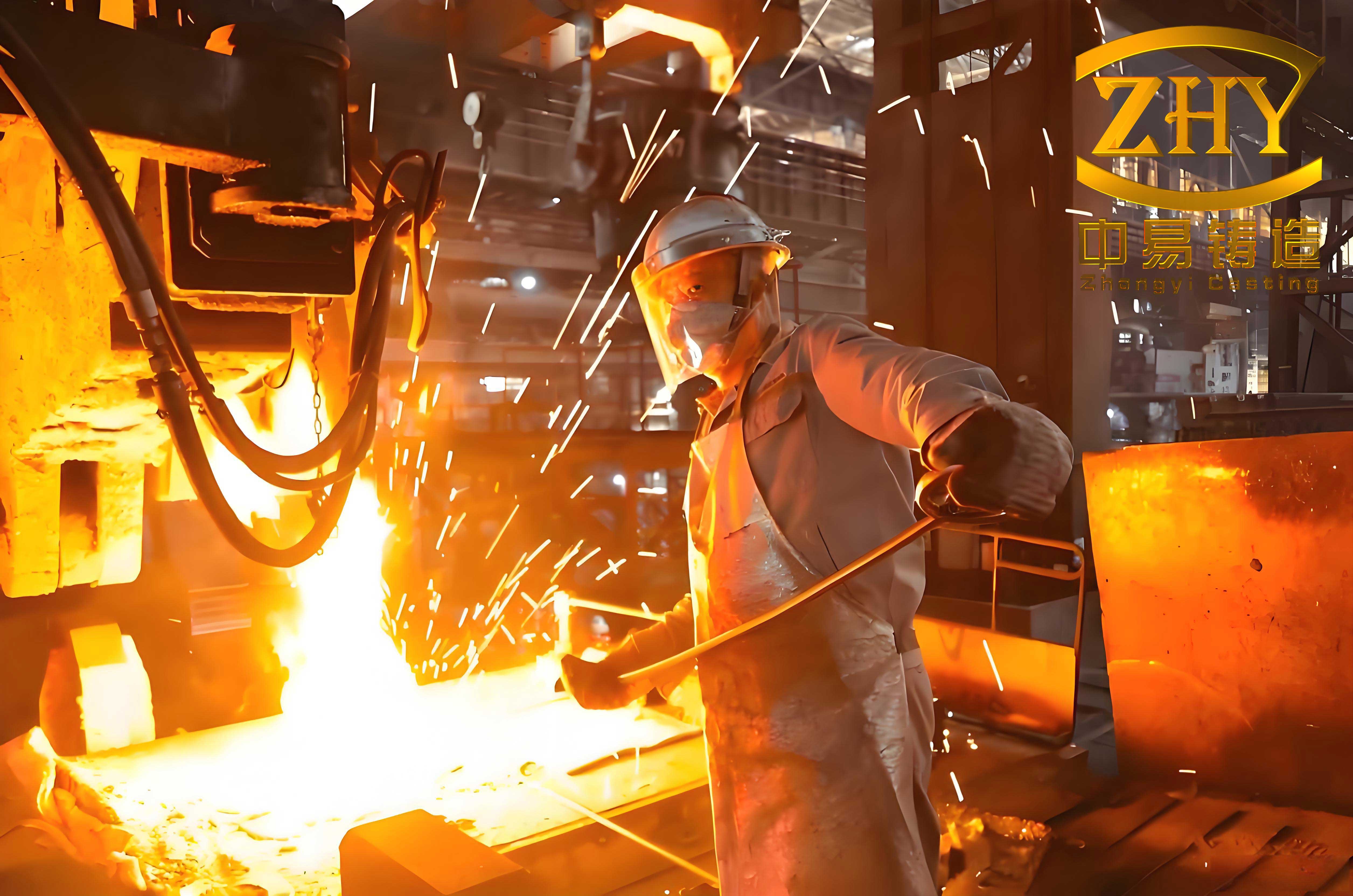
Additive manufacturing refers to a suite of technologies that build objects layer by layer from digital designs, using materials such as metals, polymers, ceramics, or composites. Unlike subtractive manufacturing, which removes material, additive manufacturing accumulates it, enabling unprecedented design freedom. Key advantages include high precision, rapid成型, material efficiency, and operational convenience. For the investment casting process, these benefits translate to faster pattern production, reduced waste, and the ability to fabricate complex internal features that are otherwise impossible with traditional pattern-making. In agricultural machinery, where components must withstand harsh environmental conditions and heavy loads, the investment casting process enhanced by additive manufacturing ensures superior part integrity and performance.
To illustrate the advantages of additive manufacturing in the investment casting process, consider the following table summarizing its key benefits compared to conventional methods:
| Aspect | Additive Manufacturing in Investment Casting | Traditional Investment Casting |
|---|---|---|
| Precision | High, with layer resolutions down to 0.05 mm | Moderate, dependent on manual pattern creation |
| Production Time | Reduced by up to 70%, due to direct digital fabrication | Longer, involving multiple steps like mold making |
| Material Usage | Efficient, with minimal waste from unused powder or resin | Higher waste from machining and trimming |
| Complexity | Can produce intricate geometries and internal channels | Limited by pattern extraction and mold design |
| Cost | Lower for small batches and prototypes | Higher for custom parts due to tooling expenses |
The mathematical foundation of additive manufacturing often involves optimizing parameters for the investment casting process. For instance, the staircase effect, which arises from layer-wise deposition, can be modeled to control surface quality. If we denote the layer thickness as \( \Delta z \) and the slope angle of a surface as \( \theta \), the step height \( h \) on a sloping surface can be approximated by:
$$ h = \Delta z \cdot \tan(\theta) $$
This formula highlights how reducing layer thickness minimizes the staircase effect, improving the fidelity of patterns used in the investment casting process. However, thinner layers increase the number of layers \( N \), where \( N = \frac{H}{\Delta z} \) for a part height \( H \), thereby affecting build time. Balancing these factors is crucial in the investment casting process to achieve optimal results.
Several additive manufacturing technologies are particularly relevant to the investment casting process for agricultural machinery. I will discuss five prominent ones: Selective Laser Sintering (SLS), Stereolithography (SLA), Fused Deposition Modeling (FDM), Three-Dimensional Printing (3DP), and Laminated Object Manufacturing (LOM). Each offers unique advantages when applied to the investment casting process, as summarized in the table below.
| Technology | Materials Used | Key Advantages for Investment Casting | Limitations |
|---|---|---|---|
| Selective Laser Sintering (SLS) | Polymer powders (e.g., nylon, wax) | High strength patterns, suitable for complex geometries | Requires post-processing, limited material variety |
| Stereolithography (SLA) | Photopolymer resins | Excellent surface finish, high accuracy for detailed patterns | Brittle patterns, may need supports |
| Fused Deposition Modeling (FDM) | Thermoplastics (e.g., ABS, PLA) | Low cost, easy to use for wax-like materials | Lower resolution, visible layer lines |
| Three-Dimensional Printing (3DP) | Powder materials with binders | Fast processing, good for large patterns | Poor surface quality, limited durability |
| Laminated Object Manufacturing (LOM) | Paper or plastic sheets | Rapid production of sacrificial patterns | Not suitable for intricate details |
In my experience, Selective Laser Sintering (SLS) is often preferred for the investment casting process in agricultural machinery due to its ability to produce robust wax patterns that can withstand handling during mold preparation. The process begins with a CAD model of the component, such as a tractor engine impeller, exported in STL format. This format approximates the surface using triangular facets, where the model accuracy depends on the facet count. If \( A \) is the surface area and \( n \) is the number of triangles, the error \( \epsilon \) can be estimated by:
$$ \epsilon \propto \frac{1}{\sqrt{n}} $$
Thus, increasing \( n \) improves accuracy but at the cost of larger file sizes and longer processing times. For the investment casting process, a balance must be struck to ensure pattern precision without compromising efficiency.
The SLS workflow for the investment casting process involves slicing the CAD model into layers of thickness \( \Delta z \). Each layer is then scanned by a laser beam that sinters powder material along predefined paths. The energy input \( E \) per unit area can be expressed as:
$$ E = \frac{P}{v \cdot d} $$
where \( P \) is laser power, \( v \) is scanning speed, and \( d \) is beam diameter. Optimizing these parameters is vital to achieve full densification of patterns for the investment casting process, avoiding defects like porosity that could transfer to final metal parts. After sintering, the pattern is removed from the powder bed, cleaned, and assembled into a tree for shell building—a critical step in the investment casting process that ensures uniform coating and burnout.
When applying additive manufacturing to the investment casting process for agricultural components, several practical considerations emerge. First, pattern accuracy must be controlled to match the tolerances required in farm machinery, often within ±0.1 mm. This involves calibrating扫描间隔 \( \delta s \) and layer thickness \( \Delta z \). The relationship between these parameters and surface roughness \( R_a \) can be modeled empirically:
$$ R_a = k_1 \cdot \Delta z + k_2 \cdot \delta s $$
where \( k_1 \) and \( k_2 \) are material-dependent constants. Minimizing \( R_a \) enhances the surface finish of cast parts, which is crucial for reducing friction in moving assemblies like hydraulic pumps. Second, thermal management during additive manufacturing affects pattern distortion, especially for large parts. The temperature gradient \( \nabla T \) during sintering can lead to residual stresses \( \sigma \) approximated by:
$$ \sigma = \alpha E \nabla T $$
with \( \alpha \) as the coefficient of thermal expansion and \( E \) as Young’s modulus. Preheating the powder bed and controlling cooling rates mitigate these issues in the investment casting process.
Despite its promise, additive manufacturing in the investment casting process faces limitations. Component size is restricted by build volumes of 3D printers, typically under 1 cubic meter, whereas traditional patterns can be larger. Additionally, high-energy processes like SLS may induce microcracks in patterns, compromising the integrity of the investment casting process. Material costs for specialized powders or resins remain high, impacting the economic viability for mass production. Environmental concerns also arise from volatile organic compounds emitted during polymer processing. However, for agricultural machinery, where customization and rapid repair are valued, these drawbacks are often outweighed by the agility offered in the investment casting process.
To further elucidate the economic and technical aspects, I present a formula for evaluating the cost-effectiveness of additive manufacturing in the investment casting process. The total cost \( C_{total} \) per part can be broken down as:
$$ C_{total} = C_{material} + C_{machine} + C_{labor} + C_{post} $$
where \( C_{material} \) depends on material usage efficiency \( \eta_m \) (typically 0.9 for additive manufacturing versus 0.6 for traditional methods), \( C_{machine} \) is amortized printer cost, \( C_{labor} \) is reduced due to automation, and \( C_{post} \) includes support removal and finishing. For the investment casting process, additive manufacturing reduces \( C_{labor} \) and \( C_{post} \) by eliminating manual pattern carving, making it advantageous for low-volume runs common in agricultural equipment manufacturing.
Looking ahead, the convergence of additive manufacturing and the investment casting process is inevitable, driven by advancements in digital twins and artificial intelligence. Smart algorithms can optimize scan paths and material deposition for the investment casting process, minimizing defects and enhancing repeatability. In agricultural machinery, this means faster development of durable components like combine harvester blades or irrigation system valves. Moreover, the integration of IoT sensors into additive manufacturing equipment enables real-time monitoring of the investment casting process, ensuring quality control across production batches.
In conclusion, as an advocate for technological innovation in agriculture, I believe that additive manufacturing profoundly enhances the investment casting process for agricultural machinery. By enabling precise, rapid, and cost-effective pattern production, it addresses longstanding challenges in fabricating complex parts. The investment casting process, when augmented with additive manufacturing, becomes more resilient and adaptable, supporting the trend toward smart farming and sustainable food production. Continued research into materials and process optimization will further solidify this synergy, paving the way for next-generation farm equipment that meets the demands of a growing global population.
To summarize key parameters in additive manufacturing for the investment casting process, consider the following table that links process variables to outcomes in agricultural machinery parts:
| Process Variable | Optimal Range for Investment Casting | Impact on Agricultural Component Quality |
|---|---|---|
| Layer Thickness (\( \Delta z \)) | 0.05–0.15 mm | Determines surface finish and dimensional accuracy of cast parts |
| Laser Power (\( P \)) | 50–200 W | Affects pattern density and resistance to shell cracking |
| Scanning Speed (\( v \)) | 1–10 m/s | Influences build time and thermal stress in patterns |
| Powder Particle Size | 20–80 μm | Governs detail resolution and final part mechanical properties |
| Post-Processing Temperature | 60–120°C | Enhances pattern strength for handling in investment casting |
Ultimately, the effective application of additive manufacturing in the investment casting process for agricultural machinery hinges on a holistic approach that balances technological capabilities with practical requirements. By leveraging mathematical models, empirical data, and continuous improvement, manufacturers can harness this combination to produce superior components that drive efficiency and reliability in modern farming operations. The investment casting process, thus revitalized, stands as a testament to the power of innovation in industrial manufacturing.