
In my extensive experience within the foundry industry, combating chill, or the formation of white iron, in thin-walled gray cast iron components remains one of the most persistent and economically significant challenges. This defect, characterized by the presence of hard, brittle cementite (Fe3C) instead of the desired soft, machinable graphite flakes, predominantly manifests at sharp edges, corners, and thin sections. Its occurrence directly undermines the machinability of castings, leading to increased tool wear, potential part rejection, and elevated production costs. The issue is particularly acute for small and micro-motor casings, enclosures, and other intricate components where wall sections are minimal, often produced in green sand molds where the cooling dynamics are rapid and difficult to modulate.
The core of the problem lies in the delicate balance between the chemical composition of the molten iron and its solidification kinetics. While a chemically sound melt forms the foundation, the final microstructure is dictated by the cooling rate. Thin sections and geometric discontinuities like corners act as heat sinks, drastically accelerating the cooling rate. When this rate exceeds a critical threshold for a given composition, the carbon in the iron is forced to solidify as iron carbide (cementite) rather than precipitating as graphite. This critical cooling rate, $V_{cr}$, can be conceptually modeled as a function of the Carbon Equivalent (CE) and the presence of inoculants:
$$V_{cr} = k_1 \cdot \exp(-k_2 \cdot CE) + k_3 \cdot I_{eff}$$
where $CE = \%C + \frac{1}{3}(\%Si + \%P)$, and $I_{eff}$ represents the effectiveness of inoculation. For thin-walled gray cast iron castings, the local cooling rate at edges, $V_{edge}$, often satisfies $V_{edge} > V_{cr}$, leading to chill formation.
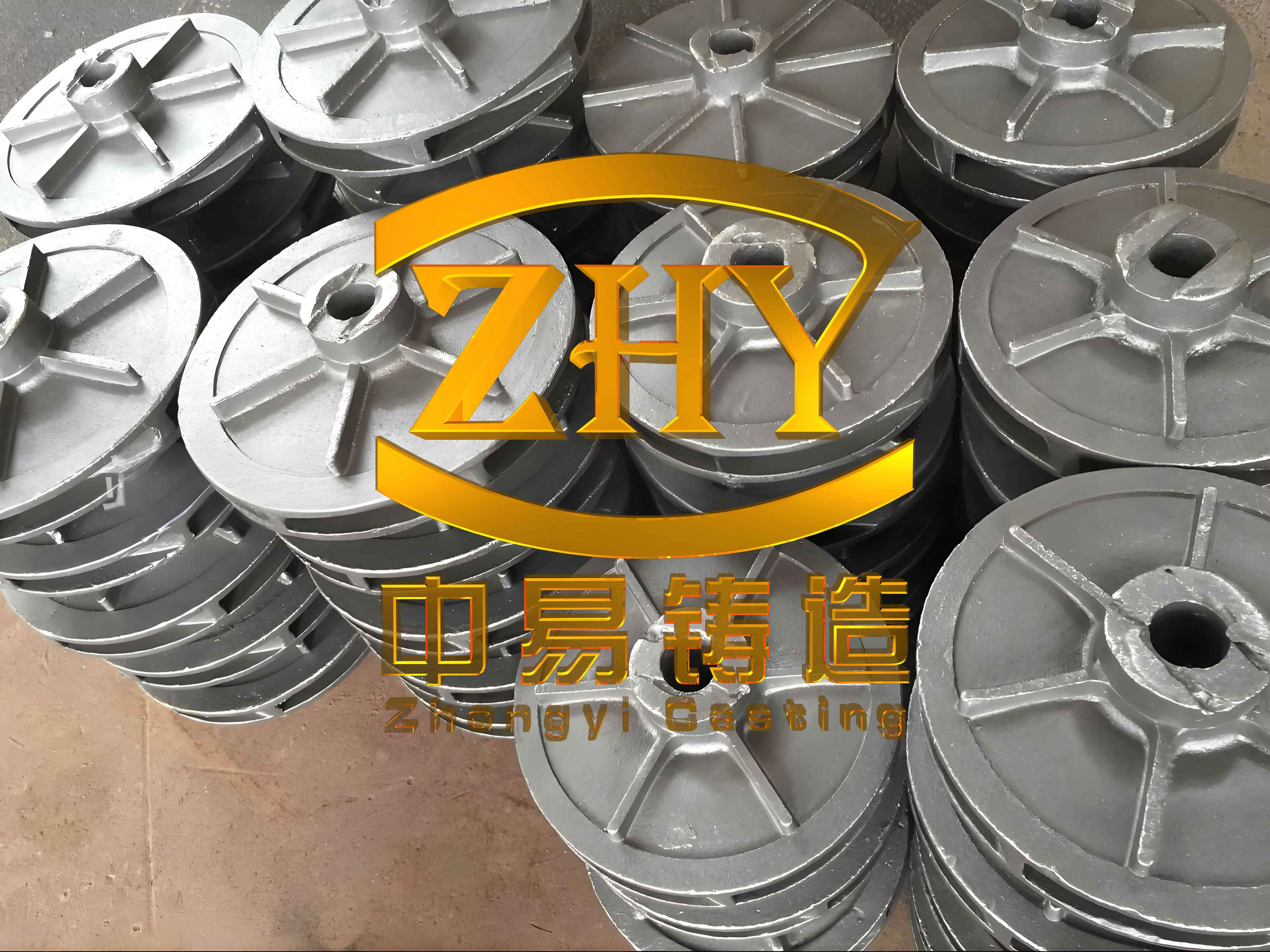
The image above illustrates a typical gray cast iron casting. Note the complex geometry with varying wall thicknesses; the areas of greatest concern for chill are the thinnest ribs and sharp external corners, where heat extraction is most efficient.
To systematically address this, I have developed and refined several practical, low-cost methods focused on manipulating the local solidification conditions at these critical locations. The goal is to effectively lower the local cooling rate or enhance the graphitization potential precisely where it is needed most.
Metallurgical and Thermal Fundamentals of Chill Formation
Understanding the genesis of chill is paramount. In gray cast iron, the stable equilibrium phase is graphite. However, under non-equilibrium cooling conditions, the metastable cementite phase can form. The tendency towards chill is influenced by a primary factor: Cooling Rate, and secondary factors: Composition and Inoculation.
The relationship between cooling rate ($\dot{T}$), undercooling ($\Delta T$), and the resulting microstructure can be described by simplified kinetics. The growth velocity of graphite, $V_G$, and cementite, $V_C$, are functions of undercooling:
$$V_G \propto (\Delta T)^{-n_G}$$
$$V_C \propto \exp\left(-\frac{Q_C}{R \Delta T}\right)$$
where $Q_C$ is an activation energy. At low undercooling (slow cooling), $V_G > V_C$, promoting graphite formation. At high undercooling (fast cooling, as in thin edges), $V_C$ can surpass $V_G$, leading to cementite formation. The following table summarizes the key influencing factors:
| Factor | Effect on Chill Tendency | Mechanism |
|---|---|---|
| High Cooling Rate | Strongly Increases | Promotes metastable Fe3C formation by suppressing graphite nucleation/growth. |
| Low Carbon Equivalent (CE) | Increases | Reduces overall graphitization potential and carbon available for graphite flakes. |
| Low Silicon Content | Increases | Silicon is a strong graphitiser; its deficiency stabilizes cementite. |
| Presence of Carbide Stabilizers (Cr, V) | Increases | These elements preferentially form stable carbides, promoting white solidification. |
| Effective Inoculation | Decreases | Provides abundant substrates for heterogeneous nucleation of graphite. |
| High Pouring Temperature | Can Increase | Increases total heat to be removed, potentially leading to sharper thermal gradients in thin sections. |
Detailed Analysis of Chill in Thin Sections and Edges
For a thin-walled gray cast iron casting, the thermal dynamics are unique. The solidification time, $t_f$, according to Chvorinov’s rule, is proportional to the square of the volume-to-surface area ratio $(V/A)^2$. For a thin plate of thickness $d$:
$$t_f \propto \left(\frac{d}{2}\right)^2$$
This shows that solidification time decreases quadratically with decreasing wall thickness. At an external corner, which can be modeled as the intersection of two plates, the effective cooling modulus is even lower, leading to an extremely short local solidification time, $t_{f,corner} << t_{f,plate}$.
Furthermore, the initial metal that fills these extremities is often the “coldest” part of the stream, having lost heat to the mold walls during filling. This metal already has lower superheat and is closer to its liquidus temperature, making it more susceptible to undercooling upon contact with the cold sand at the corner. The combination of low superheat and high heat extraction rate creates a perfect environment for chill formation.
Proven Practical Measures for Chill Prevention
Based on the principles outlined, the counter-strategies involve either modifying the local thermal environment or enhancing the intrinsic graphitization ability of the iron at the critical location. The following three methods have proven exceptionally effective in my practice.
1. Strategic Venting/Pinning of Mold at Critical Areas
This is a proactive mold engineering technique. After the mold is completed but before closing, small-diameter vents or pins are created in the sand at precise locations corresponding to the problem edges and corners on the casting.
Procedure:
- Identify all high-risk areas (sharp external corners, thin ribs, edges near ingates).
- Using a vent wire or a pre-formed sand nail with a diameter typically between 1.5-3.0 mm (selected based on casting wall thickness), create channels perpendicular to the mold cavity surface.
- The depth should be sufficient to penetrate the immediate chill zone, usually 10-25 mm.
- The number of vents per area depends on the size of the risk zone; a cluster of 3-5 vents around a corner is common.
- The raised sand at the vent entry is carefully smoothed flush with the mold surface.
Mechanism & Effect: During pouring, the initial, cooler front of the iron flows into these small cavities. This metal solidifies rapidly, forming a small, isolated protrusion. Crucially, this protrusion acts as a thermal sink or a heat shunt. It sacrificially absorbs the initial thermal shock and undergoes rapid solidification. Subsequent, hotter iron filling the main casting cavity now encounters a mold wall that has been slightly pre-warmed by the solidified metal in the vent and, more importantly, the critical edge itself is now part of a slightly thicker, more massive section (the base of the vent protrusion). This effectively reduces the cooling rate $V_{edge}$ at the critical corner. Metallographic examination often reveals the pin itself to have a white iron tip, a mottled middle, and a gray iron root, confirming its role as a targeted chill absorber, thereby preserving the main casting.
2. Ladle Inoculation with Ferrosilicon or Recarburizer
This method enhances the graphitization potential of the entire melt batch just before pouring, providing a more robust resistance to chill.
Procedure:
- Prepare high-quality, fine-grained (0.2-1.0 mm) inoculant, typically FeSi alloy containing 75% Si, with small additions of Ca, Al, Sr, or Ba to enhance potency and fade resistance.
- Alternatively, clean, high-carbon recarburizer (e.g., graphite flakes) or even small pieces of low-sulfur steel scrap can be used for a milder effect.
- Place the calculated amount of additive in the bottom of the pouring ladle. A common addition rate is 0.1-0.3% of the expected metal charge weight.
- Tap the furnace or transfer metal into the ladle, ensuring a vigorous enough flow to stir and dissolve the additive thoroughly.
Mechanism & Effect: The turbulence during tapping promotes dissolution and distribution of the inoculant. The added silicon increases the effective Carbon Equivalent (CE), shifting the composition further into the stable graphite region of the phase diagram. More importantly, the inoculant particles provide countless nucleation sites for graphite. This drastically increases the number of graphite embryos, reducing the undercooling $\Delta T$ required for graphite formation. With a higher density of nucleation sites, the graphite phase can initiate and grow more easily, even under the relatively faster cooling conditions of thin walls, outcompeting the formation of cementite. The effect is a general reduction in chill tendency and a more uniform, finer Type A graphite structure throughout the gray cast iron casting.
The effectiveness of different inoculant types can be compared as follows:
| Inoculant Type | Typical Addition (%) | Primary Effect | Fade Resistance |
|---|---|---|---|
| FeSi75 (Standard) | 0.15 – 0.30 | Good graphitization, increases Si | Moderate (5-8 minutes) |
| FeSiCa (Calcium-bearing) | 0.10 – 0.25 | Powerful nucleation, desulfurization | Good |
| FeSiSr (Strontium-bearing) | 0.08 – 0.20 | Excellent for thin sections, reduces undercooling | Very Good |
| Graphite Recarburizer | 0.05 – 0.15 | Increases C content, mild inoculation | N/A (not a fade-prone inoculant) |
3. Gating System Inoculation (Flow-Through Inoculation)
This is a highly targeted, late-stage inoculation method that treats the metal stream as it enters the mold cavity, offering excellent efficiency and minimal fade.
Procedure:
- Calculate the required amount of fine inoculant powder (e.g., FeSi). The addition is typically 0.05-0.15% of the casting weight, significantly less than ladle inoculation due to higher efficiency.
- Place the measured inoculant powder directly into the sprue well or at the base of the down-gate runner just before pouring.
- Alternatively, specially designed inline inoculating chambers or porous plugs in the gating system can be used for automated processes.
- Pour the metal steadily. The flowing iron entrains and dissolves the powder, carrying the active nuclei directly into the cavity.
Mechanism & Effect: This method ensures that the inoculating effect is delivered at the last possible moment before solidification, virtually eliminating the problem of “fade” where nucleation potency diminishes over time in the ladle. The freshly created nuclei are most active when the metal enters the thin sections. The highly turbulent flow in the gating system ensures excellent dispersion. The localized increase in silicon and the surge of nucleation sites at the metal front specifically counteract the chilling effect of the cold mold at edges and corners. This technique is exceptionally effective for high-volume production of thin-walled gray cast iron castings where consistency is key. The efficiency factor $E$ compared to ladle inoculation can be approximated as:
$$E_{stream} \approx \frac{A_{ladle}}{A_{stream}} \cdot \frac{t_{fade}}{t_{pour}}$$
where $A$ is the addition rate and $t$ are relevant times, indicating a more efficient use of inoculant.
Comparative Analysis and Implementation Guidelines
Choosing the right method depends on production scale, casting geometry, and available facilities. A synergistic combination is often the most robust approach.
| Method | Complexity | Cost | Targeting Precision | Best For |
|---|---|---|---|---|
| Strategic Venting | Low (Manual skill needed) | Very Low | Very High (Pinpoint) | Jobbing shops, heavy sections adjacent to thin walls, prototypes. |
| Ladle Inoculation | Medium | Low to Medium | Low (Entire melt) | Batch production, general improvement of machinability. |
| Gating Inoculation | Medium to High | Medium (Efficient use) | High (Metal stream) | High-volume production, automated lines, severe chill problems. |
Implementation Workflow:
- Diagnosis: Identify casting areas prone to chill via past data or thermal simulation.
- Baseline Check: Ensure base iron chemistry (C, Si, CE) is adequately high for the section thickness. Aim for a CE value close to or slightly above the eutectic composition (4.3%) for thin walls. Use: $CE = \%C + 0.33(\%Si) + 0.33(\%P) – 0.027(\%Mn)$ for a more precise estimate.
- Primary Action: Implement gating inoculation as the primary, consistent anti-chill measure for production runs.
- Secondary/Supplemental Action: For castings with extreme geometry (very sharp corners on very thin walls), supplement with strategic venting on the pattern or mold.
- Process Control: Monitor and control pouring temperature. While a higher temperature improves fluidity, an excessively high temperature can increase total heat load. An optimal range, often 1380-1420°C (optical), should be maintained for thin-walled gray cast iron.
Extended Considerations: Interaction with Other Defects
The fight against chill does not happen in isolation. Process changes can affect other quality parameters of the gray cast iron casting.
- Porosity: Vigorous inoculation promotes graphite expansion during eutectic solidification, which can help offset shrinkage porosity. However, the venting method, if vents are too large or connected to the core, can theoretically become a source of gas porosity if not properly managed. Ensuring vents are blind and shallow mitigates this.
- Slag Inclusions: Ladle and gating inoculation introduce materials that can form slag. Proper slag raking before pouring and well-designed gating systems with slag traps are essential.
- Mechanical Properties: Successful chill prevention ensures a fully ferritic-pearlitic matrix with graphite, restoring the desired tensile strength and damping capacity characteristic of gray cast iron. The absence of hard cementite particles is critical for achieving specified hardness and machinability values, often quantified by a Brinell hardness (HB) target, e.g., HB 180-220 for common grades.
Advanced Modeling and Process Window Definition
For critical applications, defining a robust process window is valuable. We can consider two key axes: Carbon Equivalent (CE) and Cooling Modulus (Mc), which is inversely related to cooling rate. The chill tendency can be mapped. The boundary between sound gray cast iron and chilled iron can be approximated by an empirical relationship:
$$CE_{min} = A – B \cdot \log(M_c)$$
where $A$ and $B$ are constants derived for a specific foundry’s practices and alloy. Process adjustments (inoculation, venting) effectively shift the operating point on this map away from the chill boundary. For a thin edge with a low Mc, the required CEmin is high. If the base iron’s CE is lower than this, methods like inoculation (which effectively increases the “local” or “kinetic” CE) or venting (which increases the local effective Mc) are necessary to move the point into the safe zone.
In conclusion, preventing chill in thin-walled gray cast iron castings requires a fundamental understanding of solidification science applied with practical ingenuity. By strategically manipulating thermal conditions through localized venting and/or enhancing graphitization potency via timely inoculation—either in the ladle or, more efficiently, in the gating system—this pervasive defect can be consistently and economically eliminated. These methods, rooted in a deep analysis of the problem’s thermal and metallurgical roots, provide a reliable toolkit for ensuring the production of sound, machinable, high-quality gray cast iron components, even with the most challenging geometries.