
The pursuit of higher efficiency and lower emissions in internal combustion engines has driven the adoption of advanced materials. Among these, Compacted Graphite Iron (CGI), particularly grades like RuT450, has emerged as a superior candidate for critical components such as cylinder blocks and heads in heavy-duty engines. Its microstructure, featuring interconnected, blunt-tipped vermicular graphite within a pearlitic-ferritic matrix, offers a compelling balance of thermal conductivity, damping capacity, strength, and stiffness that sits between those of gray cast iron and ductile iron. This unique set of properties allows for design optimization, potentially leading to weight reduction and increased specific power output. However, the practical application of CGI is complicated by the inherent geometric complexity of engine castings, which results in significant variations in section thickness. These variations lead to differential cooling rates during solidification, fundamentally altering the local microstructure—most critically, the vermicularity of the graphite and the matrix phase fractions. Furthermore, the as-cast state is characterized by the presence of residual stresses, and the standard industrial practice involves stress-relief annealing or extended natural aging before machining. Both the casting geometry and the subsequent thermal treatments are pivotal factors that dictate the final microstructure and, consequently, the mechanical properties and machinability of the component. Inadequate control over these parameters can lead to significant heat treatment defects or casting inhomogeneities, such as inconsistent hardness, undesirable residual stress profiles, or degraded tensile properties, ultimately compromising performance and manufacturing yield. This article delves into a systematic investigation of how casting thickness and post-casting thermal treatments (annealing and natural aging) influence the microstructure, residual stress state, hardness, and tensile behavior of RuT450 CGI, providing essential insights for process optimization and machinability assessment.
1. Experimental Methodology
Samples of RuT450 CGI were extracted from different locations of a sand-cast heavy-truck engine cylinder block, corresponding to nominal section thicknesses of 10 mm, 20 mm, 30 mm, and 40 mm. This sampling strategy was designed to capture the intrinsic material variation across the component. The chemical composition was verified to be within standard specifications, ensuring the presence of key elements like Si for graphitization, and residual Mg and rare earth elements for promoting the vermicular graphite morphology.
The investigative workflow encompassed a comprehensive suite of characterization techniques. For microstructural analysis, samples were prepared via standard metallographic procedures: grinding, polishing, and etching with a 5% nital solution. Graphite morphology and the vermicularity rate were assessed on polished samples using optical microscopy and 3D laser microscopy according to the relevant ASTM standards. The matrix constituents (pearlite and ferrite) were analyzed on etched specimens. Scanning Electron Microscopy (SEM) coupled with Energy Dispersive X-ray Spectroscopy (EDS) was employed for high-resolution imaging of the graphite-matrix interface, measurement of pearlite interlamellar spacing, and elemental distribution mapping.
Mechanical and physical property evaluation included:
- Hardness Testing: Brinell hardness (HBW) measurements were performed on both the surface and mid-thickness layers of each sample using a 2.5 mm diameter ball indenter under a 187.5 kgf load. Multiple impressions were made to ensure statistical reliability.
- Tensile Testing: Quasi-static tensile tests were conducted at room temperature using standard cylindrical specimens machined from the different thickness regions. The tests provided data on ultimate tensile strength (UTS), yield strength (YS), and elastic modulus (E).
- Residual Stress Analysis: Surface residual stresses in the as-cast and heat-treated conditions were measured non-destructively using X-ray diffraction (XRD) stress analysis.
To study the effect of thermal treatments, two distinct approaches were applied:
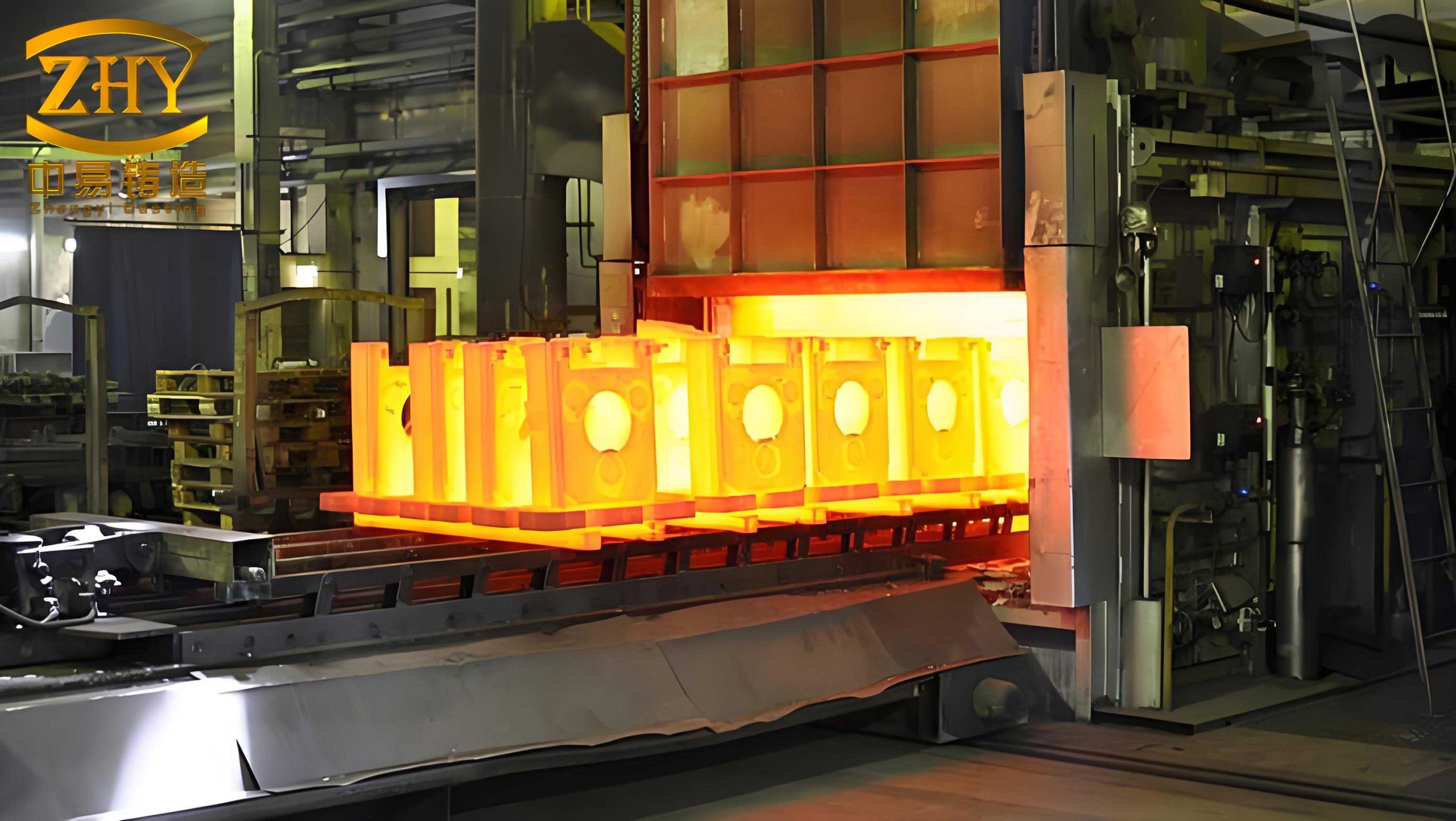
- Stress-Relief Annealing: A subset of samples was subjected to a deliberate heat treatment in a box furnace at 600°C for 1 hour, followed by furnace cooling.
- Natural Aging: Another set of as-cast samples was stored at ambient room temperature conditions for extended periods of 6 months and 12 months to simulate real-world storage prior to machining.
The properties of these treated samples were then compared against the baseline as-cast condition.
2. Results and Discussion
2.1 Microstructural Evolution with Thickness and Heat Treatment
The fundamental characteristic of CGI is its graphite morphology. Analysis revealed that the graphite structure was predominantly vermicular (Type III) with minor fractions of spheroidal and compacted/aggregated graphite, and a complete absence of flake graphite. The key finding was a strong dependence of the vermicularity rate on the casting section thickness. Quantitative image analysis yielded the following vermicularity percentages:
| Section Thickness (mm) | Vermicularity Rate (%) | Dominant Graphite Features |
|---|---|---|
| 10 | 81.3 | Higher fraction of spheroidal graphite; shorter vermicular graphite. |
| 20 | 83.2 | Transitional, with decreasing spheroidal count. |
| 30 | 88.9 | Predominantly well-developed vermicular graphite. |
| 40 | 91.8 | Highest vermicularity; some spheroidal graphite shows distortion towards vermicular shape. |
This trend can be modeled by considering the cooling rate ($\frac{dT}{dt}$) as a function of thickness ($t$) and its inverse relationship with the time available for diffusion-driven growth of vermicular graphite:
$$ \text{Vermicularity} \propto \int_{T_{\text{liq}}}^{T_{\text{sol}}} \frac{1}{\frac{dT}{dt}(t)} \, dT \approx f(t) $$
Where a larger $t$ leads to a slower $\frac{dT}{dt}$, providing more time for the vermicularizing elements (Mg, Ce) to act and for carbon to diffuse, favoring the formation and growth of vermicular graphite over spheroidal nodules. In thin sections (e.g., 10 mm), rapid cooling “freezes” a higher population of spheroidal graphite and results in shorter vermicles.
The matrix in the as-cast state consisted of over 90% pearlite with the remaining ferrite forming a “bull’s-eye” structure surrounding the graphite particles. SEM analysis confirmed a tight, void-free interface between the graphite and the metal matrix. The pearlite interlamellar spacing was measured to be below 0.65 µm, contributing to the high base strength of the material. EDS mapping showed a uniform distribution of alloying elements without significant segregation, indicating a sound casting process.
The application of stress-relief annealing at 600°C induced subtle but important microstructural changes. While the overall vermicularity rate remained largely unaffected, the heat treatment promoted the decomposition of pearlite, increasing the amount of ferrite, particularly around the graphite nodules (enhancing the bull’s eye structure). This process involves the dissolution of cementite (Fe$_3$C) in the pearlite and subsequent precipitation of carbon as graphite on existing particles:
$$ \text{Fe}_3\text{C} (\text{in pearlite}) \rightarrow 3\text{Fe} (\alpha) + \text{C} (\text{graphite}) $$
This graphitization reaction, even if partial, refines the graphite particles and softens the matrix. Excessive annealing time or temperature can lead to a heat treatment defect known as over-softening, where a drastic reduction in pearlite content unacceptably lowers the strength and hardness of the casting.
2.2 Residual Stress State: As-Cast, Aged, and Annealed
Residual stresses are locked into the casting due to non-uniform cooling and associated thermal gradients. X-ray stress analysis of the as-cast surfaces revealed a state of compressive residual stress. The magnitude of this compressive stress exhibited a clear positive correlation with the sample thickness:
| Condition | 10 mm (MPa) | 20 mm (MPa) | 30 mm (MPa) | 40 mm (MPa) |
|---|---|---|---|---|
| As-Cast | ~20 | ~40 | ~80 | ~106 |
| After 600°C Anneal | ~5 | ~8 | ~15 | ~18 |
The relationship can be conceptually described by a simplified model where the surface compressive stress ($\sigma_{rs}$) is proportional to the thermal gradient ($\nabla T$) and the constrained contraction, both of which are greater in thicker sections:
$$ \sigma_{rs} \approx -E \cdot \alpha \cdot \Delta T_{\text{eff}} \cdot g(t) $$
where $E$ is Young’s modulus, $\alpha$ is the coefficient of thermal expansion, $\Delta T_{\text{eff}}$ is an effective temperature difference, and $g(t)$ is a function increasing with thickness $t$. The negative sign denotes compressive stress.
Both natural aging and annealing were effective in relieving these stresses, but their efficiencies differed markedly. Natural aging reduced stresses gradually over 12 months, relying on slow, room-temperature creep and microplasticity. In contrast, the 600°C anneal achieved a significantly greater stress reduction in just one hour by thermally activating dislocation motion and stress relaxation mechanisms. Incomplete stress relief, whether from insufficient aging time or an improper annealing cycle, is itself a critical heat treatment defect. It can lead to dimensional instability during subsequent machining, where the removal of stressed material causes part distortion, or create a predisposition to stress-corrosion cracking in service.
2.3 Hardness Profile: Influence of Thickness, Layer, and Thermal History
The Brinell hardness of the CGI displayed a consistent decreasing trend with increasing section thickness. This can be attributed to two synergistic factors: the increase in softer vermicular graphite (which has a higher surface area and potentially more potent weakening effect than spheroidal graphite) and the decreased cooling rate in thicker sections, which typically leads to a slightly coarser pearlitic matrix. The residual compressive stress also contributes marginally to higher surface hardness.
A notable gradient was observed between the surface and the mid-thickness layer, with the core region being consistently 5-10 HBW softer. This “skin effect” arises from the even faster cooling at the surface, leading to a higher concentration of pearlite and possibly a finer graphite structure immediately at the casting mold interface.
The effect of thermal treatments on hardness is summarized below:
| Treatment | Effect on Surface Hardness | Primary Mechanism | Potential Defect Link |
|---|---|---|---|
| Natural Aging (12 months) | Minor decrease (2-4 HBW) | Relaxation of residual compressive stress. | Insignificant for properties. |
| 600°C Annealing (1 hour) | Moderate decrease (5-10 HBW) | Pearlite decomposition (ferrite increase) + full stress relief + possible graphite spheroidization. | Over-softening if parameters are excessive. |
The annealing-induced softening, primarily due to ferrite formation, is a deliberate and controlled outcome for improving machinability. However, it must be carefully balanced against the required minimum strength specifications. An uncontrolled or unintended shift in matrix phase balance is a common heat treatment defect that directly impacts functional performance.
2.4 Tensile Properties and Fracture Behavior
Tensile testing corroborated the microstructural observations. The strength parameters showed an inverse relationship with thickness and vermicularity:
| Thickness (mm) | Vermicularity (%) | UTS (MPa) | YS (MPa) | E (GPa) |
| 10 | 81.3 | 518.3 | 385.7 | 115.5 |
| 40 | 91.8 | 502.5 | 382.1 | 116.5 |
| 40 (Annealed) | 91.8 | 487.1 | 383.3 | 113.8 |
The slightly higher strength in thinner sections is due to the combined effect of more pearlite and a higher fraction of spheroidal graphite, which is less prone to initiating cracks than the sharper tips of vermicular graphite. The elastic modulus ($E$) remained largely unaffected by thickness but showed a slight decrease after annealing, consistent with the increased ferrite content and stress relaxation. The annealing treatment caused a mild but measurable decrease in UTS (about 3%), while the yield strength remained virtually unchanged, indicating the treatment successfully relieved internal stresses without grossly altering the dislocation substructure responsible for yielding.
Fractographic analysis via SEM revealed a predominantly brittle, transgranular cleavage fracture mode in the as-cast condition, characterized by river patterns and cleavage steps. The vermicular graphite particles were well-bonded to the matrix, and no casting porosity was evident, contributing to good overall strength. After annealing, the fracture surface exhibited indications of improved micro-ductility, with the appearance of small dimples or micro-voids alongside the cleavage features. This suggests that the annealing treatment, while reducing strength slightly, enhanced the material’s ability to undergo limited plastic deformation before fracture, a beneficial effect for toughness. Conversely, if heat treatment introduced surface oxidation, decarburization, or excessive grain growth, it would manifest as a severe heat treatment defect, drastically embrittling the material and changing the fracture mode to intergranular or forming brittle surface layers.
3. Conclusions and Implications for Processing
This investigation systematically delineates the profound influence of casting geometry and post-casting thermal history on the properties of RuT450 Compacted Graphite Iron. The key conclusions are:
- Microstructure is Thickness-Dependent: The vermicularity rate increases significantly with section thickness (from ~81% at 10 mm to ~92% at 40 mm) due to slower cooling rates, which favor the growth of vermicular graphite over spheroidal nodules. The as-cast matrix is highly pearlitic.
- Residual Stresses are Manageable: As-cast surfaces are in a state of compressive residual stress, the magnitude of which scales with thickness. Both prolonged natural aging and, more efficiently, a 600°C stress-relief anneal can effectively mitigate these stresses. Inadequate stress relief is a critical heat treatment defect with implications for machining distortion and in-service integrity.
- Hardness and Strength Exhibit Gradients: Hardness and tensile strength decrease with increasing thickness and associated vermicularity. A consistent through-thickness gradient exists, with the surface layer being harder than the core. Stress-relief annealing produces a controlled reduction in hardness (5-10 HBW) primarily through pearlite decomposition into ferrite.
- Annealing Balances Properties: A properly executed annealing treatment (e.g., 600°C for 1 hour) optimally releases residual stresses with only a minor sacrifice in tensile strength (~3% UTS reduction) while potentially improving micro-ductility. It is markedly more time-efficient than natural aging.
The practical implications for manufacturing are substantial. The inherent property variation across a complex CGI casting must be accounted for in machining process design. Cutting parameters (speed, feed, depth of cut) may need adjustment for different wall thicknesses to account for varying hardness and the abrasive nature of the graphite. The “skin” of the casting will be more abrasive and harder, demanding tool materials with high flank wear resistance. The primary benefit of stress-relief annealing is the stabilization of the workpiece, minimizing the risk of distortion during heavy machining operations, which is a major cost-saving factor. Process planners must weigh the efficiency of annealing against the minor strength reduction it causes, ensuring the final part meets all mechanical specifications while being stable for precision machining. Finally, rigorous control of annealing parameters (temperature, time, atmosphere) is essential to avoid the heat treatment defects discussed, such as over-softening, oxidation, or inadequate stress relief, which would compromise the quality and performance of the finished engine component.