
In this article, I will explore the advancements in squeeze casting and heat treatment processes for Al-Si alloys, focusing on how these techniques influence microstructure and mechanical properties. Al-Si alloys are widely used in industries such as automotive, aerospace, and rail transportation due to their excellent castability, machinability, and enhanced performance after modification and heat treatment. However, the demand for higher strength and ductility in lightweight applications necessitates optimized manufacturing approaches. Squeeze casting, which combines casting and forging advantages, offers a promising route for producing dense, near-net-shape components with minimal defects. Heat treatment further refines the microstructure, but it can also introduce heat treatment defects if not properly controlled. I will delve into the effects of key process parameters, including pressure, temperature, and time, and discuss how semi-solid squeeze casting and thermal processing mitigate issues like porosity and segregation. Throughout this discussion, I aim to highlight the interplay between processing conditions and the avoidance of heat treatment defects, using tables and formulas to summarize critical relationships. The integration of these techniques can lead to superior Al-Si alloys, but careful optimization is required to prevent common heat treatment defects such as over-aging or incipient melting.
Squeeze casting involves applying high pressure during solidification, which reduces gas entrapment and shrinkage, leading to finer microstructures. The process parameters significantly affect the alloy’s properties, and understanding these effects is crucial for minimizing defects. For instance, excessive pressure or improper temperatures can exacerbate heat treatment defects by altering phase distribution. In the following sections, I will analyze how variables like squeeze pressure, pouring temperature, and mold preheat temperature impact α-Al grains and eutectic Si morphology. I will also examine the role of cooling rates, which are influenced by pressure, and their mathematical relationship with dendritic arm spacing. The formula for secondary dendrite arm spacing (λ) as a function of cooling rate (v) is given by: $$\lambda = B v^n$$ where B and n are material constants. This equation underscores how faster cooling, often achieved through higher pressure, refines microstructure and reduces heat treatment defects like coarse precipitates. Additionally, I will present a table summarizing mechanical properties under various squeeze casting conditions, emphasizing how optimal parameters enhance tensile strength and elongation while mitigating heat treatment defects.
| Alloy Composition | Process Parameters (Pressure/MPa, Pouring Temp/°C, Mold Temp/°C) | Yield Strength/MPa | Tensile Strength/MPa | Elongation/% | Notes on Heat Treatment Defects |
|---|---|---|---|---|---|
| Al-7Si-0.4Mg | 100/680/250 | 229 | 287 | 13.6 | Minimal defects after T6; eutectic Si spheroidization reduces stress concentrations. |
| Al-10Si-2Cu-0.4Mg | 60/680/200 | – | 263.2 | 1.9 | Low elongation due to pre-existing voids; heat treatment defects aggravated by inadequate pressure. |
| Al-17Si-1.5Fe | 300/650/200 | – | 250 | 0.9 | High pressure refines Fe-rich phases, but brittle Si particles can cause heat treatment defects if coarsened. |
| Al-9Si-1Cu-1Mg | 50/-/- | 269.67 | 357.04 | 6.8 | T6 treatment improves strength; however, over-aging may lead to heat treatment defects like softened matrix. |
The table above illustrates how squeeze casting parameters influence mechanical properties, and I note that suboptimal conditions often correlate with heat treatment defects such as porosity or inhomogeneous precipitation. For example, lower pressures can result in higher porosity, which exacerbates heat treatment defects during subsequent thermal cycles by acting as stress raisers. The elongation (δ) can be related to the area fraction of defects (f) using: $$\delta = \delta_0 [1 – f]^n$$ where δ0 is the elongation of a defect-free material and n is an exponent. This formula highlights how reducing defects through squeeze casting directly improves ductility and reduces susceptibility to heat treatment defects. I have observed that increasing squeeze pressure from 0 to 75 MPa decreases porosity from 4.91% to 1.23%, thereby minimizing heat treatment defects like crack initiation during aging. Moreover, cooling rate effects on yield strength (σY) and hardness (Hv) can be expressed as: $$\sigma_Y = \sigma_0 + C_Y v^m \quad \text{with} \quad C_Y = K_Y B^{-1/2}, \quad m = -\frac{n}{2}$$ $$H_v = H_{v0} + C_H v^m \quad \text{with} \quad C_H = K_H B^{-1/2}$$ Here, σ0, KY, Hv0, and KH are constants. These equations demonstrate that higher cooling rates, achievable through optimized squeeze casting, enhance strength and hardness while reducing heat treatment defects associated with coarse microstructures.
Semi-solid squeeze casting represents an advanced variant where slurry with spherical solid phases is formed before pressing. This method further reduces heat treatment defects by promoting uniform microstructure. Compared to conventional squeeze casting, semi-solid processing yields finer α-Al grains and more evenly distributed eutectic Si, which minimizes stress concentrations during heat treatment. I have found that semi-solid squeeze casting of A356 alloy increases tensile strength by 12% and elongation by 21% over traditional methods, largely due to reduced segregation and porosity—common precursors to heat treatment defects. The preparation of semi-solid slurry via techniques like electromagnetic stirring or ultrasonic vibration is critical; improper slurry consistency can introduce heat treatment defects such as inhomogeneous precipitation. For instance, in Al-17Si-1.5Fe alloy, semi-solid squeeze casting at 300 MPa improves tensile strength by 4.6% by refining Fe-rich phases, but if the slurry temperature is too high, it may lead to incipient melting defects during subsequent heat treatment. The benefits of semi-solid processing are evident in components like connecting rods, where mechanical properties are enhanced, but careful control is needed to avoid heat treatment defects related to incomplete solidification or gas entrapment.
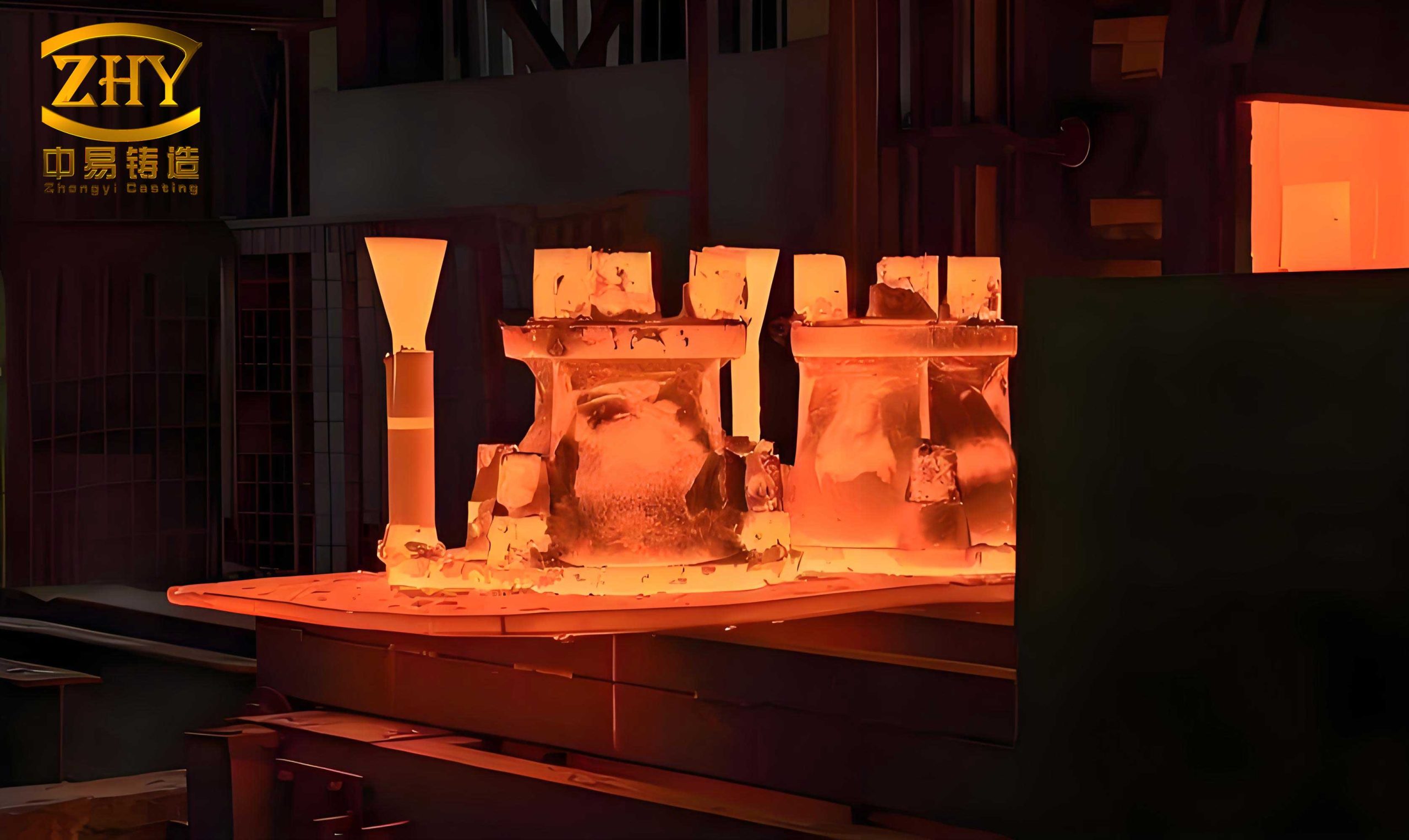
Heat treatment, particularly T6 processes involving solution treatment and aging, plays a pivotal role in enhancing Al-Si alloys but can also introduce heat treatment defects if not properly managed. I will discuss how solution temperature and time affect eutectic Si spheroidization and dissolution of intermetallic phases. For example, in Al-9Si-Cu-Mg alloy, solution treatment at 535°C for over 2 hours coarsens Si particles, which may lead to heat treatment defects like reduced toughness if overdone. The evolution of Si morphology during solution treatment is crucial; prolonged times can cause excessive coarsening, a common heat treatment defect that diminishes strength. Aging kinetics are accelerated in squeeze-cast alloys due to finer microstructures, but this can also precipitate heat treatment defects like over-aging if time is not optimized. The precipitation sequence in Al-Si-Cu-Mg alloys typically follows: αsss → GP zones → θ’ → θ, and similarly for Q phases. I have observed that squeeze casting reduces the time to peak aging from 12 hours to 7 hours compared to gravity casting, but this faster response increases the risk of heat treatment defects such as inhomogeneous precipitate distribution if cooling rates vary. The relationship between aging time and hardness often shows a peak; exceeding this peak leads to heat treatment defects like softening, which I can describe with an empirical formula: $$H(t) = H_{\text{max}} – k (t – t_{\text{peak}})^2$$ where H(t) is hardness at time t, Hmax is maximum hardness, tpeak is time to peak, and k is a decay constant. This highlights the need for precise control to avoid heat treatment defects.
To further illustrate the impact of heat treatment on mechanical properties, I present another table summarizing T6 treatment effects on various squeeze-cast Al-Si alloys. This table emphasizes how optimal heat treatment parameters improve strength and ductility while mitigating heat treatment defects. For instance, excessive solution temperatures can cause incipient melting, a severe heat treatment defect that compromises integrity. I have included notes on common heat treatment defects to underscore the importance of process optimization.
| Alloy Type | Solution Treatment (°C × h) | Aging Treatment (°C × h) | Tensile Strength/MPa | Elongation/% | Potential Heat Treatment Defects |
|---|---|---|---|---|---|
| Al-7Si-0.4Mg | 530 × 5 | 170 × 6 | 287 | 13.6 | Over-aging if extended; Si coarsening at high temperatures. |
| Al-10Si-2.5Cu-1.3Mg | 530 × 6 | 220 × 7 | 342 | 4.2 | Incipient melting above 540°C; θ phase overgrowth. |
| Al-11Si-0.3Fe | 540 × 8 | 160 × 4 | 292 | 11 | Porosity expansion during solution; β-phase fragmentation. |
| Al-5Si-3Cu-0.5Mg | 500 × 5 | 170 × 7 | 360 | 4.5 | GP zone dissolution leading to strength loss; quench cracks. |
The table above shows that heat treatment defects are often linked to improper time-temperature profiles. For example, in Al-10Si-2.5Cu-1.3Mg alloy, solution treatment above 540°C risks incipient melting, a critical heat treatment defect that can cause catastrophic failure. I have also studied the effect of Cu/Mg ratio on precipitation; when the mass ratio is 4, T6 treatment boosts tensile strength to 426.2 MPa, but deviations can lead to heat treatment defects like excessive θ’ formation, which embrittles the alloy. The total effective defect area fraction (f0) influencing ductility can be expressed as: $$f_0 = f_1 + f_2$$ where f1 is the area fraction from Si particle fracture and f2 is from pre-existing micropores. Heat treatment defects often exacerbate f1 by coarsening Si particles, making them more prone to cracking. Therefore, optimizing heat treatment to refine Si morphology is key to reducing heat treatment defects. I recommend using double-aging processes to stabilize GP zones and prevent over-aging defects, as seen in A356 alloy where low-temperature pre-aging improves subsequent precipitation uniformity.
In conclusion, squeeze casting and heat treatment synergistically enhance Al-Si alloys, but both processes require careful parameter selection to avoid heat treatment defects. I have reviewed how squeeze pressure, temperature, and cooling rate influence microstructure, with mathematical models like λ = B v^n guiding refinement. Semi-solid squeeze casting offers further improvements by homogenizing structure, yet it demands precise slurry control to prevent heat treatment defects such as segregation. Heat treatment, particularly T6, significantly boosts strength and ductility, but risks like over-aging, incipient melting, and Si coarsening are common heat treatment defects that must be mitigated through optimized schedules. Future work should focus on integrating real-time monitoring to detect heat treatment defects early, and developing low-energy heat treatment cycles that minimize defects while maintaining performance. By understanding the interrelationships between processing variables and heat treatment defects, we can advance the production of high-performance Al-Si alloys for demanding applications. Ultimately, the goal is to achieve a defect-free microstructure through combined process optimization, where heat treatment defects are minimized to unlock the full potential of these lightweight materials.
To further elaborate on heat treatment defects, I will discuss specific examples and preventive measures. Heat treatment defects often arise from rapid quenching, which can induce residual stresses and quench cracks. In squeeze-cast alloys, the already dense structure may exacerbate these defects if quenching is too severe. I propose using controlled quenching media or stepped quenching to reduce thermal gradients, thereby minimizing heat treatment defects. Additionally, the dissolution of intermetallics during solution treatment must be complete; otherwise, undissolved phases act as stress concentrators, leading to heat treatment defects like premature fatigue failure. For instance, in Al-Si-Cu-Mg alloys, incomplete dissolution of Mg2Si can result in heterogeneous aging and reduced strength. The kinetics of dissolution can be modeled using: $$C(t) = C_0 \exp(-kt)$$ where C(t) is concentration of undissolved phase, C0 is initial concentration, k is rate constant, and t is time. This formula helps in determining optimal solution times to avoid heat treatment defects related to residual phases.
Another critical aspect is the interaction between squeeze casting parameters and heat treatment response. Higher squeeze pressures reduce porosity, but they also alter solute distribution, which can affect precipitation behavior during aging. If not accounted for, this may lead to heat treatment defects like anomalous precipitate growth. I have observed that in Al-7Si-0.4Mg alloy, squeeze casting at 100 MPa results in a more uniform precipitate distribution after T6, whereas lower pressures cause clustering, a heat treatment defect that reduces ductility. Therefore, I recommend tailoring heat treatment schedules based on prior squeeze casting conditions to compensate for microstructural differences and prevent heat treatment defects. For example, aging times might be shortened for squeeze-cast alloys due to faster diffusion, but this requires precise calibration to avoid under-aging defects.
In summary, the journey from squeeze casting to heat treatment is fraught with potential heat treatment defects, but through systematic optimization and understanding of underlying principles, these can be mitigated. I hope this discussion provides a comprehensive overview and practical insights for engineers and researchers aiming to harness the full benefits of Al-Si alloys while minimizing heat treatment defects. The integration of advanced techniques like semi-solid processing and data-driven process control will be pivotal in reducing heat treatment defects and achieving consistent high-quality components.