
In the realm of modern manufacturing, die casting stands as a pivotal process for producing high-volume, complex components with excellent dimensional accuracy and surface finish. As an engineer deeply involved in this field, I have witnessed firsthand the challenges posed by casting defects, particularly porosity in casting and fracture issues, which can compromise the structural integrity and performance of critical parts. The drive towards lightweight design in industries such as automotive has intensified the demand for aluminum alloys, yet their inherent susceptibility to defects like gas entrapment and cold shuts necessitates innovative solutions. Through my experience, I have leveraged simulation tools like MAGMA software to predict, analyze, and mitigate these defects, transforming the development and production cycles. In this article, I will delve into a comprehensive case study involving a bracket component, exploring how simulation-driven optimization eradicated porosity in casting and fracture problems, while underscoring the broader implications for die casting practices. The discussion will be enriched with theoretical insights, empirical data, tables, and mathematical formulations to provide a holistic perspective on defect elimination.
Porosity in casting is a pervasive issue that arises primarily from gas entrapment during the high-speed filling phase of die casting. When molten metal is injected into a mold cavity at velocities exceeding several meters per second, it can trap air or other gases, leading to voids within the solidified component. This porosity in casting not only reduces the effective load-bearing area but also serves as stress concentrators, potentially initiating cracks under mechanical loads. The formation of such defects is governed by complex fluid dynamics and thermal interactions. For instance, the pressure distribution during filling can be described by the Navier-Stokes equations, which account for momentum conservation in a viscous fluid. In the context of die casting, these equations are often simplified to analyze gas entrapment. The pressure gradient $\nabla P$ relates to the velocity field $\vec{v}$ and density $\rho$ as follows:
$$ \rho \left( \frac{\partial \vec{v}}{\partial t} + \vec{v} \cdot \nabla \vec{v} \right) = -\nabla P + \mu \nabla^2 \vec{v} + \vec{f} $$
where $\mu$ is the dynamic viscosity and $\vec{f}$ represents body forces. When the flow front encounters obstacles or changes direction abruptly, local pressure spikes can occur, promoting gas compression and entrapment. This directly contributes to porosity in casting, as trapped gases cannot escape before solidification. Additionally, thermal effects play a crucial role; cold shuts form when two streams of molten metal meet without sufficient fusion due to temperature differences, often exacerbated by premature cooling. The energy equation governing temperature $T$ distribution is:
$$ \rho c_p \left( \frac{\partial T}{\partial t} + \vec{v} \cdot \nabla T \right) = k \nabla^2 T + \dot{q} $$
Here, $c_p$ is specific heat capacity, $k$ is thermal conductivity, and $\dot{q}$ represents heat sources or sinks. In die casting, the rapid heat loss to the mold walls can create cold zones, leading to poor bonding and fracture initiation. Addressing these issues requires a deep understanding of the interplay between flow behavior, thermal history, and solidification kinetics—areas where simulation software like MAGMA excels.
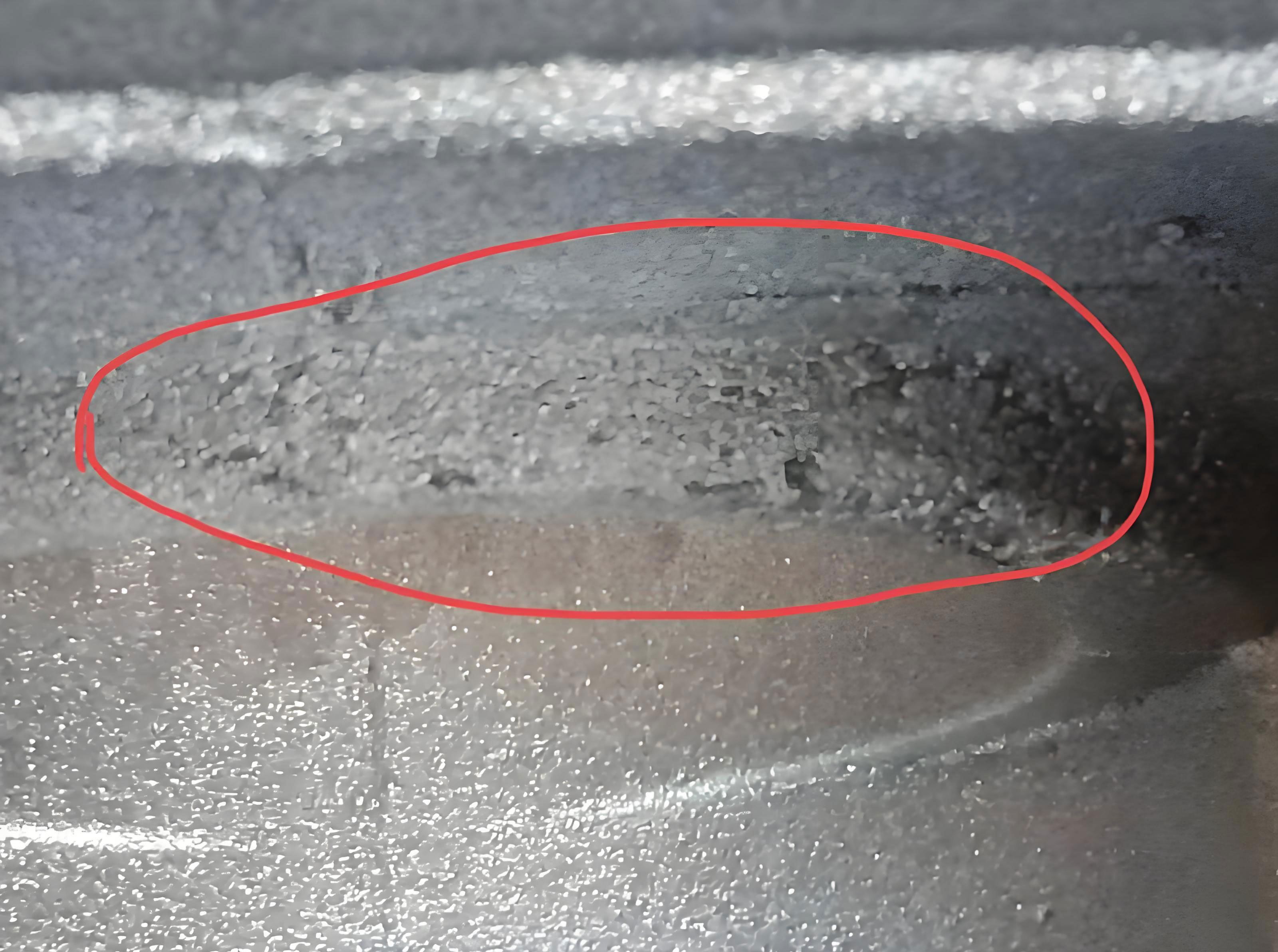
The bracket component under consideration, utilized for connecting an engine to a vehicle frame, exemplifies the criticality of defect-free production. With a weight of 895g and dimensions of 224.5mm × 117.6mm × 99.8mm, it features an average wall thickness of 4.17mm and is made from EN AC-46000 aluminum alloy. The part demands high mechanical properties, with specific regions such as four bosses and two threaded holes requiring stringent internal quality standards per ASTM E505 Level 2. Initial production trials revealed significant porosity in casting within the boss areas, as detected by X-ray inspection, along with fracture tendencies during pressure testing. Fractographic analysis indicated a mixed microstructure on the fracture surface—partly smooth and partly coarse—suggesting the presence of cold shuts due to inadequate metal fusion. This real-world scenario prompted a simulation-based investigation to root out the causes and implement effective countermeasures.
Employing MAGMA software, we first simulated the initial die casting setup, which involved a two-cavity mold on a 400-ton machine. The process parameters included a pouring temperature of 640°C, mold temperature of 220°C, slow shot velocity of 0.25 m/s, fast shot velocity of 4.5 m/s, and intensification pressure of 60 MPa. The filling analysis revealed critical insights into the origin of porosity in casting. The gas pressure distribution showed localized peaks around the problematic bosses, reaching approximately 3 MPa, compared to lower pressures elsewhere. Particle tracking simulations illustrated that molten metal flow created gas entrapment zones in these regions, where air became trapped due to unfavorable flow paths. Additionally, the temperature field indicated cold spots at the fracture-prone area, with temperature differentials exceeding 50°C between converging streams, confirming the cold shut formation. These simulations aligned perfectly with empirical observations, validating the software’s predictive capability for porosity in casting and related defects.
To quantify the severity of gas entrapment, we analyzed the volume fraction of trapped gas $V_g$ as a function of flow front velocity $v_f$ and cavity geometry. A simplified model for gas entrapment probability $P_e$ can be expressed as:
$$ P_e = 1 – \exp\left(-\frac{v_f \cdot A_c}{Q_g}\right) $$
where $A_c$ is the cross-sectional area of the gas pocket and $Q_g$ is the gas evacuation rate. For the initial design, $P_e$ was estimated to be high in the boss regions, leading to significant porosity in casting. The table below summarizes key simulation outcomes for the initial scheme, highlighting parameters correlated with defect formation.
| Parameter | Value in Initial Scheme | Defect Correlation |
|---|---|---|
| Maximum Gas Pressure (MPa) | 3.0 | High porosity in casting risk |
| Trapped Gas Volume (cm³) | 0.15 | Direct indicator of porosity |
| Temperature Differential at Fracture Zone (°C) | 55 | Cold shut and fracture propensity |
| Filling Time (ms) | 120 | Affects gas evacuation and thermal loss |
Building on this analysis, we embarked on a two-pronged optimization strategy: first, to alleviate porosity in casting by modifying the gating system, and second, to eliminate cold shuts by enhancing overflow design. For the gas entrapment issue, we introduced an auxiliary runner directed toward the boss areas. This addition aimed to redirect flow dynamics, pushing trapped gases outward into overflow wells while simultaneously raising local metal temperatures. The modified design was simulated, revealing a marked reduction in gas pressure peaks—now below 1.5 MPa—and a decrease in trapped gas volume to 0.05 cm³. The gas entrapment probability $P_e$ dropped proportionally, as per the revised flow conditions. X-ray inspection of physical samples produced with this change confirmed a drastic improvement, with no detectable porosity in casting at the previously problematic locations. This outcome underscores how targeted flow alterations can mitigate porosity in casting effectively.
However, the fracture issue persisted despite the gating modification, as cold material accumulation remained evident in simulations. We then transformed the auxiliary runner into a dedicated overflow pocket, increasing its volume by 30% and thickening the gate connection by 0.2 mm to enhance cold material evacuation. The thermal analysis showed a partial reduction in cold spots, but not sufficient to guarantee defect-free parts. Consequently, we further enlarged the overflow volume by 50% and added 0.1 mm to the gate thickness, optimizing the balance between metal delivery and waste material removal. The final simulation demonstrated that most cold material was successfully diverted into the overflow, with temperature differentials at the fracture zone reduced to less than 10°C. The solidification sequence also improved, promoting directional solidification and minimizing isolated liquid pools that could lead to shrinkage porosity—a common companion to gas porosity in casting. The effectiveness of these steps is summarized in the following table, comparing defect metrics across design iterations.
| Design Iteration | Max Gas Pressure (MPa) | Trapped Gas Volume (cm³) | Temperature Differential (°C) | Porosity in Casting Severity | Fracture Risk |
|---|---|---|---|---|---|
| Initial Scheme | 3.0 | 0.15 | 55 | High | High |
| With Auxiliary Runner | 1.5 | 0.05 | 50 | Low | High |
| Overflow Modification 1 | 1.2 | 0.03 | 30 | Very Low | Medium |
| Overflow Modification 2 (Final) | 1.0 | 0.01 | 10 | Negligible | Low |
The final optimized design was put into production, and the resulting castings underwent rigorous testing. X-ray inspection revealed no internal gas pores, confirming the elimination of porosity in casting. Destructive fracture tests showed uniform, fine microstructures across the fracture surface, with no evidence of cold shuts or brittle zones. Pressure testing up to the specified limits yielded no failures, demonstrating enhanced mechanical integrity. These empirical results validated the simulation predictions, highlighting the power of computational tools in resolving porosity in casting and fracture defects.
Beyond this case, the principles gleaned have broader applications. Porosity in casting is often influenced by factors such as injection velocity, gate design, and venting efficiency. We can model the optimal gate velocity $v_g$ to minimize gas entrapment using empirical relations derived from Bernoulli’s principle and conservation of mass. For a given cavity volume $V_c$ and fill time $t_f$, the gate area $A_g$ should satisfy:
$$ v_g = \frac{V_c}{A_g \cdot t_f} $$
Maintaining $v_g$ within a critical range—typically 20-50 m/s for aluminum die casting—helps balance fill completeness and gas entrapment. Furthermore, the role of overflows in reducing porosity in casting can be quantified by their capacity to capture contaminated metal. The overflow volume $V_{of}$ should be proportional to the volume of metal prone to defect formation, often expressed as a percentage of the shot volume. Simulation allows for precise sizing, avoiding unnecessary material waste while ensuring quality.
Another aspect worth exploring is the interaction between porosity in casting and mechanical properties. The presence of voids can degrade tensile strength $\sigma_t$ according to models like the Griffith criterion for brittle materials, adapted for metals:
$$ \sigma_t = \sqrt{\frac{2 E \gamma}{\pi a}} $$
where $E$ is Young’s modulus, $\gamma$ is surface energy, and $a$ is the equivalent pore radius. In ductile materials like aluminum, pores act as stress raisers, reducing fatigue life. Simulation software can incorporate such models to predict performance losses due to porosity in casting, enabling proactive design adjustments.
In conclusion, the journey from defect-ridden to robust castings underscores the transformative impact of simulation in die casting. Through MAGMA software, we successfully diagnosed and eradicated porosity in casting and fracture issues in a critical bracket component. The key takeaways are multifold: first, porosity in casting can be mitigated by optimizing gating to reduce gas entrapment pressures; second, cold shuts and fractures require adequate overflow design to purge cold material and ensure thermal homogeneity; and third, simulation provides a virtual testing ground that accelerates development while curtailing costly trial-and-error. As industries continue to push the boundaries of lightweight and high-performance components, embracing such technologies will be paramount. Future work could integrate machine learning with simulation data to predict porosity in casting across diverse geometries, further refining the art and science of die casting. Ultimately, the battle against defects like porosity in casting is won through a blend of theoretical insight, computational prowess, and empirical validation—a testament to modern engineering’s capabilities.
Reflecting on this experience, I am convinced that proactive defect management via simulation is indispensable for advancing die casting quality. The case study detailed here serves as a blueprint for addressing porosity in casting and related failures, with implications spanning automotive, aerospace, and consumer electronics. By leveraging tools like MAGMA, engineers can not only solve existing problems but also preempt them, fostering innovation and reliability in manufactured parts. As we move forward, continuous improvement in simulation algorithms and material models will further enhance our ability to tackle porosity in casting, ensuring that die casting remains a cornerstone of efficient manufacturing.