
In the field of metal casting, porosity in casting remains a pervasive and critical defect that compromises the mechanical integrity, durability, and performance of components. As a practitioner deeply involved in advancing die-casting methodologies, I have observed that traditional approaches often fall short in addressing this issue comprehensively. This article delves into the mechanisms behind porosity formation and presents a detailed exploration of high-vacuum technology as a superior solution. By integrating rigorous scientific principles, empirical data, and practical insights, I aim to elucidate how this technology can virtually eliminate porosity in casting, thereby enhancing product quality and economic efficiency. Throughout this discussion, the term ‘porosity in casting’ will be frequently referenced to underscore its significance and the targeted mitigation strategies.
Porosity in casting primarily arises from trapped air or gases within the molten metal during the die-casting process. In conventional die casting, the rapid injection of molten aluminum alloy into a mold cavity often entrains air, leading to voids or pores upon solidification. These defects not only reduce the load-bearing capacity but also impair the material’s resistance to fatigue and corrosion. The fundamental challenge lies in the interplay between process parameters and gas behavior, which can be modeled using physical equations. For instance, the ideal gas law provides a basis for understanding gas entrapment: $$PV = nRT$$ where \(P\) is pressure, \(V\) is volume, \(n\) is the amount of gas, \(R\) is the gas constant, and \(T\) is temperature. During injection, if the pressure \(P\) in the cavity is insufficient to compress or expel air, the gas volume \(V\) remains, resulting in porosity in casting. Additionally, the kinetics of gas dissolution and release can be described by Henry’s law: $$C = k_H P$$ where \(C\) is the concentration of dissolved gas, \(k_H\) is Henry’s constant, and \(P\) is the partial pressure. This relationship highlights how pressure variations during casting influence gas retention and, consequently, porosity in casting.
The formation of porosity in casting can be segmented into distinct phases of the die-casting cycle, each contributing to gas entrapment. In the ladling phase, when molten alloy is transferred into the shot sleeve, air is inevitably incorporated due to turbulent flow and surface agitation. This introduces initial gas content that propagates through subsequent stages. During slow injection, the plunger moves at a low velocity, allowing air to mix with the molten metal and form pockets that are difficult to eliminate. As the process transitions to fast injection, the high-speed advancement of the plunger forces the alloy into the cavity, but the rapid filling often traps air before it can escape through vents. Finally, in the intensification phase, pressure is applied to compress the solidifying metal, which may reduce pore size but fails to remove gas entirely. These stages collectively exacerbate porosity in casting, as summarized in the table below:
| Phase | Description | Contribution to Porosity in Casting |
|---|---|---|
| Ladling | Transfer of molten alloy into shot sleeve; air entrainment due to turbulence. | Introduces initial gas bubbles (e.g., 10-20 mL per 100 g of aluminum). |
| Slow Injection | Plunger moves slowly, mixing air with molten metal. | Forms dispersed gas pockets that persist into the cavity. |
| Fast Injection | High-speed filling of cavity; air trapped due to inadequate venting. | Generates macroscopic pores and voids in the casting. |
| Intensification | Application of pressure during solidification to densify metal. | Compresses pores but does not eliminate gas, leaving residual porosity in casting. |
To quantify the gas content and its impact, the porosity fraction \(\phi\) can be expressed as: $$\phi = \frac{V_g}{V_t} \times 100\%$$ where \(V_g\) is the volume of gas pores and \(V_t\) is the total volume of the casting. In conventional die casting, \(\phi\) typically ranges from 2% to 10%, depending on process conditions, which significantly degrades mechanical properties. For example, the tensile strength \(\sigma\) of a casting with porosity can be approximated by: $$\sigma = \sigma_0 (1 – \phi)^m$$ where \(\sigma_0\) is the strength of pore-free material and \(m\) is an empirical constant (often around 1.5-2 for aluminum alloys). This underscores the detrimental effect of porosity in casting on performance and the need for advanced mitigation techniques.
Traditional methods to reduce porosity in casting include slow-speed casting, chlorine flushing, and standard vacuum-assisted die casting. While these approaches can partially evacuate air from the mold cavity, they often fail to achieve the required low gas levels. For instance, ordinary vacuum systems may reduce the gas content to 5-15 mL per 100 g of aluminum, but this is insufficient for high-integrity applications such as automotive components. The limitation stems from inadequate vacuum levels, slow evacuation rates, and air leakage during the process. As a result, porosity in casting persists, leading to rejects and increased costs. In contrast, high-vacuum technology offers a paradigm shift by creating near-total vacuum conditions in the cavity before injection, thereby preventing gas entrapment at its source.
The high-vacuum process involves a meticulously coordinated sequence of steps designed to eliminate air from the system entirely. First, after mold clamping, a high-performance vacuum pump rapidly evacuates the cavity through dedicated ports, achieving vacuum levels below 10 mbar within milliseconds. This rapid evacuation is critical to prevent air ingress and can be modeled by the exponential decay equation: $$P(t) = P_0 e^{-t/\tau}$$ where \(P(t)\) is the pressure at time \(t\), \(P_0\) is the initial atmospheric pressure, and \(\tau\) is the time constant dependent on pump capacity and system geometry. By minimizing \(\tau\), the pressure drops swiftly, reducing the gas content to 5-10 mL per 100 g of aluminum or lower. Simultaneously, molten alloy is drawn into the shot sleeve via a preheated suction tube, ensuring that the metal is transferred without exposure to air. The plunger then advances to seal the sleeve, isolating the cavity from the atmosphere. Under this high-vacuum and sealed condition, the alloy is injected at high velocity into the cavity, filling it completely before solidification. The absence of air during filling means that porosity in casting is virtually nonexistent, as confirmed by microstructural analysis.
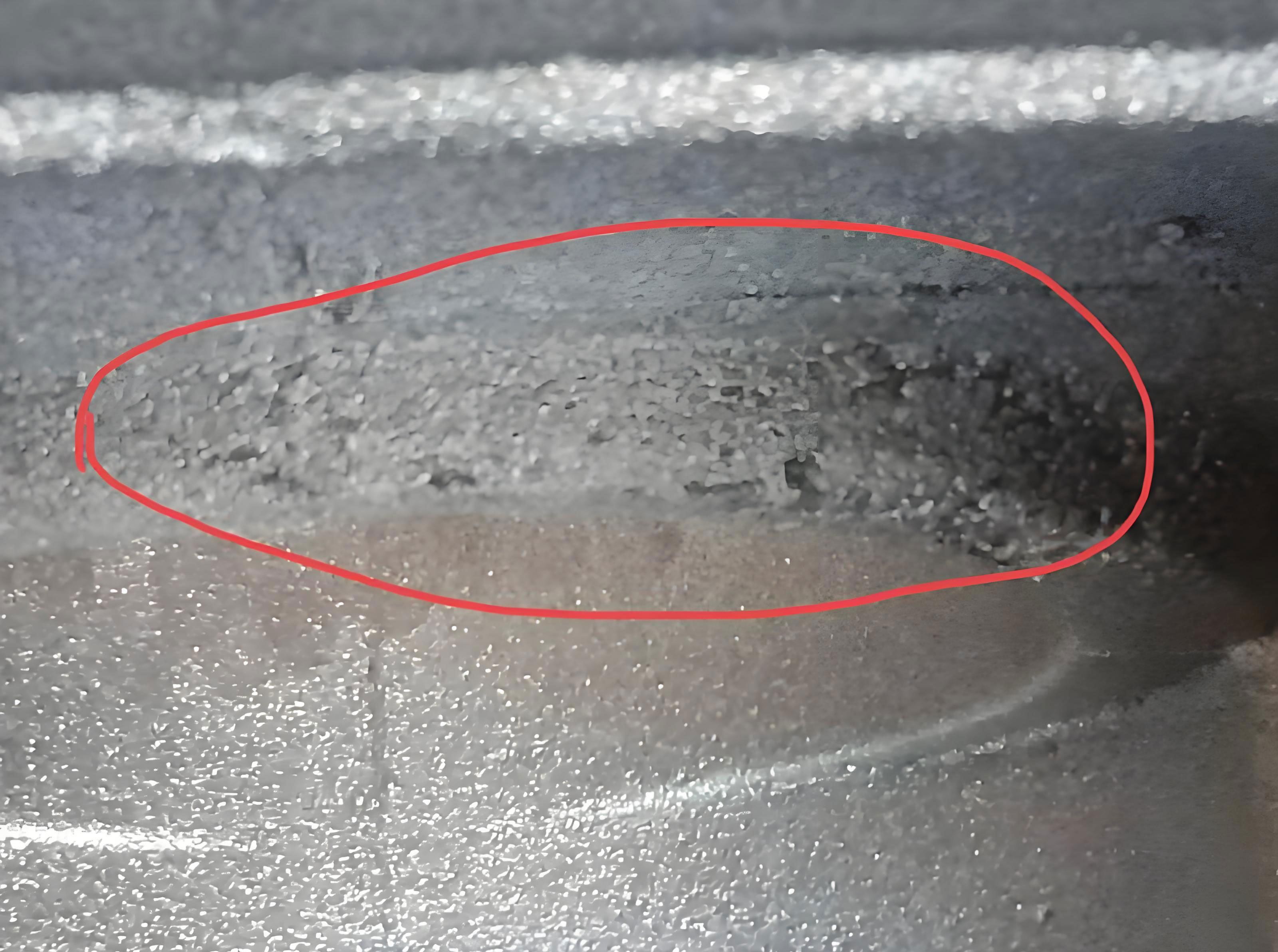
The microstructural comparison between conventional and high-vacuum die castings reveals stark differences in porosity in casting. In conventional castings, optical microscopy shows numerous irregular pores distributed throughout the matrix, often aligned with flow lines or trapped at grain boundaries. These pores act as stress concentrators, initiating cracks under load. In high-vacuum castings, however, the microstructure appears dense and homogeneous, with minimal to no visible pores. This enhancement is quantified by measuring pore density and size distribution, which can be summarized in the following table:
| Parameter | Conventional Die Casting | High-Vacuum Die Casting |
|---|---|---|
| Average Pore Size (μm) | 50-200 | <10 (often negligible) |
| Pore Density (pores/mm²) | 10-100 | 0-5 |
| Gas Content (mL per 100 g Al) | 10-20 | 5-10 |
| Porosity Fraction \(\phi\) | 2-10% | 0.1-1% |
Such improvements directly translate to superior mechanical properties. For instance, the yield strength \(\sigma_y\) and elongation \(\epsilon\) of high-vacuum castings can be 20-30% higher than those of conventional counterparts, as described by the Hall-Petch relationship and pore-sensitive models: $$\sigma_y = \sigma_0 + k d^{-1/2} – \alpha \phi$$ where \(d\) is the grain size, \(k\) is a material constant, and \(\alpha\) is a factor accounting for porosity in casting. By minimizing \(\phi\), the strength approaches that of pore-free material, enabling the use of die castings in critical structural applications.
The efficacy of high-vacuum technology in eliminating porosity in casting hinges on several key factors that must be rigorously controlled. First, vacuum level is paramount; the system must achieve and maintain a pressure below 10 mbar to ensure effective air removal. This requires high-capacity pumps with fast response times, often utilizing multi-stage rotary vane or diffusion pumps. The vacuum efficiency can be assessed using the conductance equation for flow: $$Q = C (P_1 – P_2)$$ where \(Q\) is the gas flow rate, \(C\) is the conductance of the vacuum path, and \(P_1\) and \(P_2\) are pressures at different points. Maximizing \(C\) through large-diameter ports and short tubing minimizes pressure differentials, facilitating rapid evacuation. Second, preheating of the suction tube to above 600°C is essential to prevent premature solidification of the molten alloy during transfer. If the tube temperature is too low, the alloy freezes at the inlet, clogging the passage and disrupting the vacuum cycle. The heat transfer during this phase can be modeled by Fourier’s law: $$q = -k \frac{dT}{dx}$$ where \(q\) is the heat flux, \(k\) is thermal conductivity, and \(\frac{dT}{dx}\) is the temperature gradient. Maintaining a high \(T\) at the tube wall ensures smooth metal flow.
Third, sealing integrity is critical to prevent air leakage, which could reintroduce gas and cause porosity in casting. The shot sleeve and suction tube connection must be hermetically sealed using high-temperature gaskets or mechanical locks. Similarly, the mold parting lines require robust sealing with silicone or rubber strips to withstand the vacuum force. Any leakage, even minor, can compromise the vacuum level, as described by the leakage rate equation: $$L = \frac{V \Delta P}{\Delta t}$$ where \(L\) is the leakage rate, \(V\) is the system volume, \(\Delta P\) is the pressure rise, and \(\Delta t\) is the time interval. Keeping \(L\) near zero through meticulous assembly and maintenance is non-negotiable. Fourth, debris management, such as removing flash or burrs from the mold surfaces, is vital to maintain seal contact and prevent vacuum delays. These factors collectively ensure that the high-vacuum process operates optimally, thereby minimizing porosity in casting.
A comparative analysis of different die-casting methods further highlights the advantages of high-vacuum technology in addressing porosity in casting. The table below expands on the performance metrics, incorporating additional parameters such as heat treatability and weldability, which are influenced by pore content:
| Method | Molten Metal Transfer | Gas Content (mL per 100 g Al) | Porosity in Casting State | T6 Heat Treatment Feasibility | Weldability | Relative Cost |
|---|---|---|---|---|---|---|
| Conventional Die Casting | Ladling with scoop | 10-20 | High, with large pores | Not feasible (pores expand) | Poor (cracking risk) | Low |
| Standard Vacuum Die Casting | Ladling with scoop | 5-15 | Moderate, reduced pores | Partially feasible | Moderate | Medium |
| High-Vacuum Die Casting | Vacuum suction via tube | 5-10 | Low to none, fine pores | Fully feasible | Good (minimal defects) | High (offset by yield) |
From this comparison, it is evident that high-vacuum die casting significantly reduces porosity in casting, enabling post-casting treatments like T6 aging, which enhances strength through precipitation hardening. The ability to weld components without pore-induced cracks expands design possibilities, particularly in automotive and aerospace assemblies. Economically, while the initial investment in high-vacuum systems is higher, the reduction in scrap rates and improved product quality often yield a favorable return on investment by lowering rework costs and warranty claims.
The underlying physics of porosity formation and elimination can be further elaborated through mathematical models. For example, the kinetics of gas bubble nucleation and growth during solidification follow the classical theory: $$\frac{dR}{dt} = \frac{D (C_s – C_0)}{R \rho} – \frac{2\gamma}{R \eta}$$ where \(R\) is the bubble radius, \(D\) is the diffusion coefficient, \(C_s\) is the gas concentration at the bubble surface, \(C_0\) is the initial concentration, \(\rho\) is density, \(\gamma\) is surface tension, and \(\eta\) is viscosity. In high-vacuum conditions, \(C_0\) is drastically reduced due to prior air removal, stifling bubble nucleation and thus preventing porosity in casting. Additionally, the filling process can be simulated using computational fluid dynamics (CFD) models that solve the Navier-Stokes equations: $$\rho \left( \frac{\partial \mathbf{u}}{\partial t} + \mathbf{u} \cdot \nabla \mathbf{u} \right) = -\nabla P + \mu \nabla^2 \mathbf{u} + \mathbf{f}$$ where \(\mathbf{u}\) is velocity, \(\mu\) is dynamic viscosity, and \(\mathbf{f}\) represents body forces. By incorporating vacuum boundary conditions, these simulations predict minimized air entrapment and uniform filling, corroborating the experimental reduction in porosity in casting.
In practice, implementing high-vacuum technology requires careful attention to process parameters beyond vacuum and sealing. The injection speed profile must be optimized to balance filling time and turbulence. Too high a speed can cause splashing even in a vacuum, while too low a speed may allow partial air ingress. The optimal velocity \(v_{opt}\) can be derived from Bernoulli’s principle adapted for viscous flow: $$v_{opt} = \sqrt{\frac{2(P_{vac} – P_{cav})}{\rho} + \frac{2\gamma}{\rho R}}$$ where \(P_{vac}\) is the vacuum pressure, \(P_{cav}\) is the cavity pressure, and \(R\) is the hydraulic radius of the gate. Moreover, the alloy temperature plays a crucial role; superheating can increase fluidity but also gas solubility, potentially exacerbating porosity in casting if not controlled. The relationship between temperature \(T\) and gas solubility \(S\) is given by: $$S = S_0 e^{-\Delta H / RT}$$ where \(S_0\) is a pre-exponential factor and \(\Delta H\) is the enthalpy of dissolution. Maintaining \(T\) within a narrow window (e.g., 660-680°C for aluminum) ensures adequate flow while limiting gas uptake.
Another aspect is the design of the vacuum ports and runner system to facilitate efficient air evacuation. The port diameter \(d_p\) and number \(n_p\) can be calculated based on the required conductance: $$C_{total} = n_p \cdot \frac{\pi d_p^4}{128 \mu L} \cdot \frac{P_{avg}}{2}$$ where \(L\) is the port length, \(\mu\) is the gas viscosity, and \(P_{avg}\) is the average pressure. Increasing \(C_{total}\) accelerates evacuation, further reducing the risk of porosity in casting. Additionally, real-time monitoring using pressure and temperature sensors allows for closed-loop control, adjusting vacuum levels and injection parameters dynamically to compensate for variations in molten metal quality or mold conditions.
The benefits of eliminating porosity in casting extend beyond mechanical properties to include enhanced aesthetic quality and dimensional accuracy. Surface finish improvements reduce the need for machining, lowering production costs and material waste. Furthermore, the absence of internal pores allows for effective anodizing or coating processes, which are often hampered by pore-induced blistering. In terms of sustainability, high-vacuum die casting contributes to resource efficiency by minimizing scrap and enabling lightweight designs through higher strength-to-weight ratios, aligning with industry trends toward eco-friendly manufacturing.
To illustrate the economic impact, consider a scenario where a conventional die-casting process yields 15% scrap due to porosity-related defects, whereas high-vacuum technology reduces this to 2%. The cost savings \(\Delta C\) can be estimated as: $$\Delta C = N \cdot (C_m + C_p) \cdot (f_{scrap, conv} – f_{scrap, vac})$$ where \(N\) is the annual production volume, \(C_m\) is the material cost per part, \(C_p\) is the processing cost per part, and \(f_{scrap}\) are the scrap fractions. For high-volume automotive parts, \(\Delta C\) can amount to millions of dollars annually, justifying the capital expenditure on high-vacuum systems. Moreover, the ability to produce near-net-shape components with consistent quality reduces downstream operations, shortening supply chains and improving time-to-market.
In conclusion, porosity in casting is a formidable challenge in die casting, but high-vacuum technology offers a robust solution by fundamentally altering the process environment. Through rapid evacuation, sealed transfer, and controlled injection, it achieves unprecedented reductions in gas content, resulting in castings with minimal to no porosity. The key success factors—vacuum level, preheating, sealing, and debris management—require diligent application but yield substantial rewards in product performance and profitability. As industries demand higher-integrity components for advanced applications, adopting high-vacuum methods will become increasingly imperative. This technology not only addresses the immediate issue of porosity in casting but also paves the way for innovations in lightweight materials and complex geometries, reinforcing die casting’s role in modern manufacturing.