
As a steel castings manufacturer, optimizing energy consumption is not merely a cost-saving initiative but a fundamental pillar of operational efficiency and environmental responsibility. Foundries are inherently energy-intensive, with melting processes constituting the largest share of total energy use. Based on extensive industry surveys and operational data, this analysis details the most effective energy-saving measures, emphasizing practices that deliver significant returns for a steel castings manufacturer.
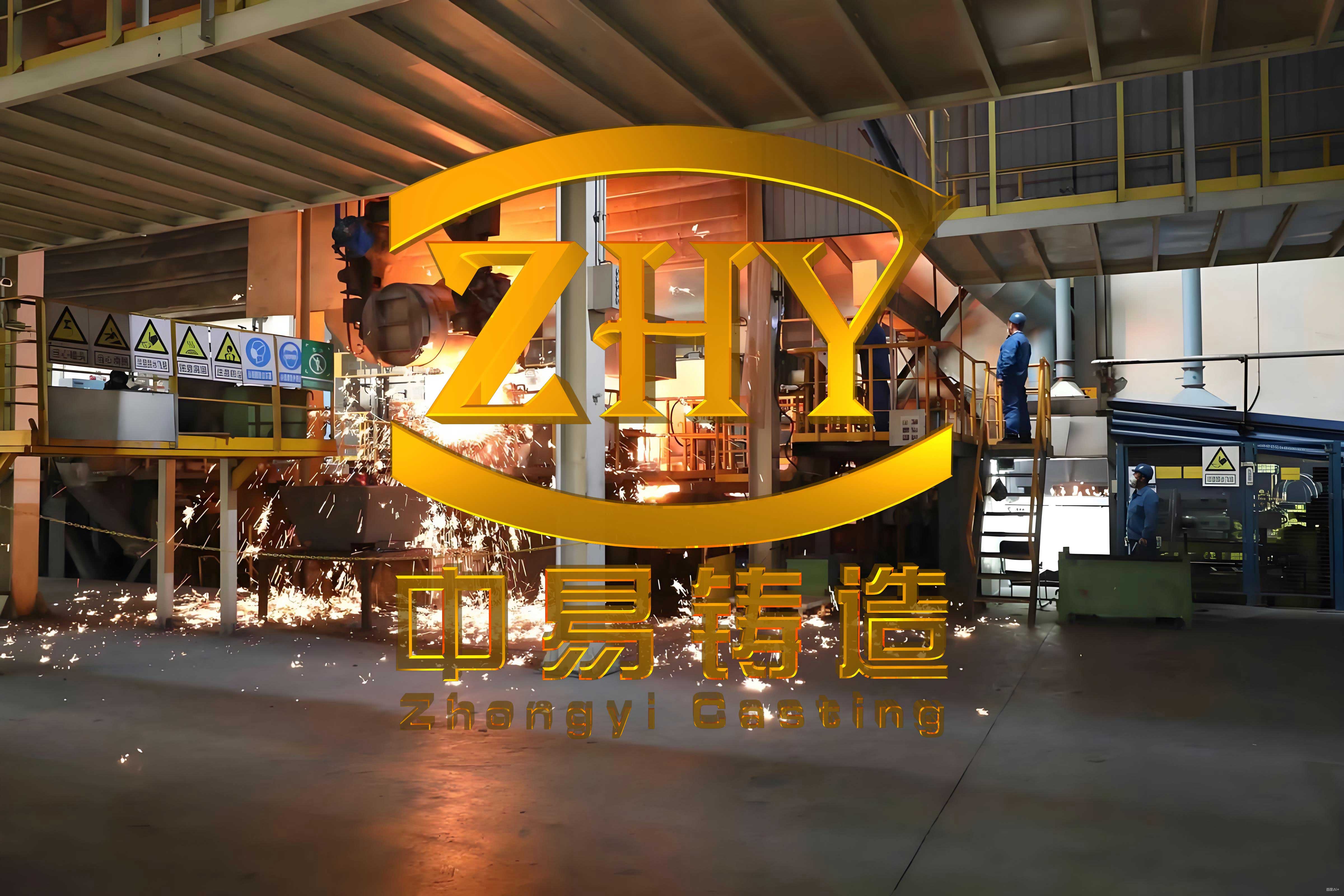
1. Energy Consumption Profile in a Foundry
The primary energy sources in a typical foundry, especially for a steel castings manufacturer, are electricity and coke. The distribution of energy consumption across major production stages can be summarized as follows:
| Process Stage | Approx. Energy Share (%) |
|---|---|
| Melting | 55 – 70 |
| Molding & Core Making | 10 – 15 |
| Heat Treatment | 10 – 20 |
| Cleaning & Finishing | 5 – 10 |
| Auxiliary Equipment | 5 – 10 |
This profile underscores that the melting department offers the greatest potential for energy savings. The choice and operation of melting equipment—Electric Arc Furnaces (EAF), Induction Furnaces, and Cupolas—directly determine a plant’s energy efficiency. For a steel castings manufacturer, selecting the right melting technology is critical.
2. Core Strategies for Energy Savings in Melting
The thermal efficiency of modern melting furnaces varies significantly between melting and holding/superheating phases. Generally accepted efficiencies are:
- Melting Efficiency: Cupola/Induction Furnace ~60%, EAF ~70%.
- Superheating/Holding Efficiency: Induction Furnace ~60%, EAF ~50%, Cupola ~40%.
This disparity makes duplex melting highly advantageous. Common combinations like Cupola + Channel Induction Furnace or Coreless Induction Furnace + Channel Induction Furnace leverage the strengths of each unit, optimizing overall energy use—a key strategy for a cost-conscious steel castings manufacturer.
2.1 Optimizing Coreless Induction Furnace Startup with Start-Up Blocks
In a coreless mains-frequency (50/60 Hz) induction furnace, the induced current density follows a skin-effect distribution, being highest at the periphery and decaying exponentially towards the center: $$J(r) = J_0 e^{-d/\delta}$$ where $J(r)$ is the current density at radius $r$, $J_0$ is the surface density, $d$ is the depth from the surface, and $\delta$ is the penetration depth. Placing a cylindrical steel “start-up block” inside the crucible significantly improves the initial power coupling and reduces melt-down time. For a furnace with a 1200mm inner diameter and 5-ton capacity, a typical block might have the following specifications:
| Parameter | Value |
|---|---|
| Outer Diameter (mm) | 1000 |
| Height (mm) | 800 |
| Wall Thickness (mm) | 20-30 |
| Approx. Weight (kg) | 800-1200 |
The furnace is charged with the block and supplementary scrap. Once the block begins to melt, the remaining charge is added. This method can reduce the initial melting period by approximately 30 minutes, offering immediate energy savings for the steel castings manufacturer. Medium/High-frequency coreless furnaces, due to their shallower skin depth, can often start with loose scrap and typically do not require such blocks, and they can be shut down completely during non-production periods without holding power.
2.2 Charge Preheating for Induction Furnaces
Preheating charge materials (scrap, returns) recovers energy from exhaust gases and reduces the sensible heat required in the furnace. However, excessive preheat temperature leads to increased oxidation (scale) loss, which is counterproductive. The relationship is critical for a steel castings manufacturer managing yield. Oxidation loss $L_{ox}$ can be modeled as a function of temperature $T$ and time $t$: $$L_{ox} \propto k \cdot t^{1/2} \cdot e^{-E_a/(RT)}$$ where $k$ is a constant, $E_a$ is activation energy, and $R$ is the gas constant. To limit oxidation loss to below 1%, preheat temperature should not exceed 500°C. The benefits are clear: preheating to 400°C can increase the effective melting rate by 15-20% or allow a lower tap temperature for the same rate, directly saving electrical energy.
2.3 Transitioning from Mains-Frequency to Medium-Frequency Induction Furnaces
Medium-frequency (MF: 150-1000 Hz) induction furnaces offer higher power density compared to mains-frequency (MF: 50/60 Hz) units. The maximum specific power input $P_{max}$ (kW/tonne) before causing excessive turbulence or metallurgical issues is higher for higher frequencies $f$: $$P_{max} \propto \sqrt{f}$$ This means for the same melting capacity, an MF furnace can be physically smaller than a mains-frequency furnace. A smaller furnace has less surface area, reducing standby heat losses $Q_{loss}$: $$Q_{loss} = A \cdot U \cdot (T_{in} – T_{amb})$$ where $A$ is surface area, $U$ is overall heat transfer coefficient, and $T$ is temperature. Therefore, for a steel castings manufacturer aiming for high productivity with flexible batch sizes, MF induction furnaces present a superior, energy-efficient solution.
2.4 Hot Blast for Cupolas
Preheating the blast air supplied to a cupola significantly reduces coke consumption. The heat required to raise the iron temperature is partially supplied by the hot blast, reducing the endothermic coke combustion needed. The reduction in coke ratio $CR$ (coke:metal) can be approximated as a function of hot blast temperature $T_{blast}$: $$\Delta CR \approx \alpha \cdot (T_{blast} – T_{amb})$$ where $\alpha$ is an empirical coefficient (~0.0005-0.001 °C⁻¹). While savings increase with temperature, gains diminish above 500-600°C, and economic feasibility must consider the capital cost of the preheater (recuperative or regenerative).
2.5 Dehumidified Blast for Cupolas
Moisture in the blast air is detrimental. The dissociation of water vapor $H_2O \rightarrow H_2 + \frac{1}{2}O_2$ is highly endothermic, cooling the combustion zone. Furthermore, hydrogen can dissolve into the iron, potentially causing defects. By maintaining a consistently low moisture level year-round (e.g., 4-8 g/Nm³), a steel castings manufacturer using cupolas achieves stable operation and lower coke consumption. Dehumidification methods include:
1. Adsorption: Using desiccants like silica gel.
2. Absorption: Using hygroscopic liquid sorbents (e.g., lithium chloride).
3. Refrigeration: Cooling air below its dew point.
The relationship between absolute humidity $H$ and coke ratio $CR$ is nearly linear in the operational range: $$CR(H) = CR_0 + \beta \cdot H$$ where $CR_0$ is the base coke ratio and $\beta$ is a positive constant.
2.6 Staged/Twin Blast for Cupolas
This involves introducing blast air at two or more vertically separated rows of tuyeres. The primary blast is at the lower level, and a secondary, smaller blast is introduced higher up. This configuration optimizes the combustion zone, creating a more uniform and extended high-temperature region. It promotes better coke utilization and can reduce the coke ratio by 10-15% compared to a single-row design for a steel castings manufacturer, while also improving iron temperature consistency.
2.7 Oxygen Enrichment for Cupolas
Enriching the blast air with oxygen reduces the volume of inert nitrogen, which carries heat away. This intensifies combustion, raising flame temperature and melting rate. The approximate effect on tap temperature $\Delta T_{tap}$ or coke ratio $\Delta CR$ for a given oxygen enrichment level $[O_2]$ is: $$\Delta T_{tap} \approx \gamma \cdot [O_2] \quad \text{or} \quad \Delta CR \approx -\eta \cdot [O_2]$$ where $\gamma$ (~1-2 °C per %O₂) and $\eta$ are positive constants. Traditionally limited by oxygen cost, the advent of Pressure Swing Adsorption (PSA) and Vacuum Pressure Swing Adsorption (VPSA) systems providing lower-purity (90-95%) oxygen at a lower cost has made this technology more accessible for a steel castings manufacturer.
3. Energy Savings in Molding and Core Making
Improving metal yield—the ratio of good casting weight to total metal poured—is a profound energy saver, as it reduces the amount of metal that needs to be melted. For a steel castings manufacturer, every kilogram of saved melt translates directly to saved energy.
3.1 Process Optimization
- Gating & Risering Design: Use simulation software to optimize feed paths and minimize riser size, moving from conventional to yielding/insulating sleeves.
- Pouring Cup Design: Improved designs reduce turbulence and metal loss during pouring.
3.2 The Cold Box Process
This core-making process uses gas-catalyzed resins (e.g., amine-cured phenolic/polyurethane) that harden at room temperature. It eliminates the energy-intensive heating required by traditional shell or hot box processes. The energy consumption comparison per ton of cores is stark:
| Core Making Process | Energy for Binder Production | Energy for Core Hardening | Total Relative Energy |
|---|---|---|---|
| Phenolic Hot Box | Medium | Very High | 100 (Baseline) |
| Furan Hot Box | Medium | Very High | 95 |
| Cold Box (Phenolic/Urethane) | Medium-High | Very Low | 60-70 |
| Oil Sand (Baked) | Low | High | 80-90 |
Additionally, the Cold Box process offers faster cycle times and superior dimensional accuracy, benefiting the overall efficiency of a steel castings manufacturer.
4. Energy Savings in Heat Treatment Furnaces
Heat treatment furnaces are major energy consumers. Heat loss $Q_{total}$ occurs through steady-state conduction and intermittent operation losses: $$Q_{total} = Q_{steady} + Q_{intermittent} = [A \cdot U \cdot (T_{in}-T_{amb}) \cdot t] + [m_{lin} \cdot c_p \cdot (T_{in}-T_{amb})]$$ where $m_{lin}$ is the liner mass and $c_p$ its specific heat. The adoption of ceramic fiber insulation (e.g., alumina-silicate) revolutionizes furnace efficiency. Compared to traditional firebrick or castable linings, ceramic fiber offers:
- Thermal conductivity (~0.1 W/m·K at 1000°C) 3-4 times lower than insulating brick.
- Heat capacity per unit volume 5-10 times lower, drastically reducing $Q_{intermittent}$.
- Excellent thermal shock resistance, reducing maintenance.
- Lighter weight, allowing simpler furnace structure.
For a steel castings manufacturer performing normalizing, quenching, tempering, or stress relieving, retrofitting or purchasing furnaces with ceramic fiber linings can cut energy use by 20-40%.
5. Summary of Impact for a Steel Castings Manufacturer
Implementing a holistic energy conservation program is non-negotiable for a modern, competitive steel castings manufacturer. The measures outlined here target the largest consumption centers. A strategic approach often yields synergistic benefits; for example, an optimized melting practice (like duplex melting with charge preheating) improves metal quality, which can reduce heat treatment time or scrap, creating a compounding positive effect on the plant’s total energy footprint. Continuous monitoring, data collection, and employee engagement are vital to sustain these gains. The pursuit of energy efficiency is a continuous journey that strengthens the operational resilience and environmental stewardship of any forward-looking steel castings manufacturer.