
As a professional in the casting industry, I have witnessed firsthand the escalating costs of water, electricity, and natural gas. These energy price hikes have significantly squeezed profit margins for foundries, which are inherently energy-intensive operations. In this challenging landscape, ensuring sustainable development and enhancing both corporate and employee benefits hinges on one critical strategy: deriving profit from energy conservation and consumption reduction. This article delves into the methods and measures for achieving these goals in casting factories, with a particular focus on practices relevant to steel castings manufacturers. Through detailed analysis, tables, and formulas, I aim to provide a roadmap for industry peers.
The imperative for energy saving in foundries cannot be overstated. Historically, casting facilities in many regions, including China, have operated with low starting points, irrational structures, extensive production modes, and outdated equipment. Key melting equipment like cupolas often exhibit high costs, high energy consumption, and high pollution. In casting production, energy and material inputs account for approximately 55% to 70% of output value, making foundries the largest energy consumers in the mechanical industry—consuming 23% to 62% of its total energy. However, energy utilization efficiency remains dismally low at 15% to 25%. For instance, the energy required per ton of castings in some regions is 2 to 3 times that of industrially developed countries. Producing one ton of qualified iron castings consumes 500–700 kg of standard coal, representing about 15% of production costs, whereas in Japan, it is merely 4.3%. Similarly, for steel castings, energy consumption ranges from 800–1000 kg of standard coal per ton domestically, compared to 500–800 kg internationally. This disparity poses a severe threat to sustainable economic growth. With national calls for a resource-conserving society and tightening energy supplies, coupled with relentless price increases, foundries—especially steel castings manufacturers—must prioritize节能降耗 to survive and thrive in competitive markets. Energy consumption levels are a core component of corporate competitiveness, reflecting technological innovation and advanced processes. Thus, energy conservation is not just an option but a necessity. By leveraging technological advancements, foundries can adjust economic structures, improve quality and效益, and make技术降耗 a primary driving force.
To address these challenges, I propose several methods and measures, supported by data and technical insights.
1. Advanced Cupola Technologies
Promoting hot-blast, water-cooled, long-campaign cupolas is a pivotal step. The trend toward larger, continuously operated cupolas is inevitable. Overseas foundries have adopted this as a key energy-saving measure, and domestic practices are catching up, yielding significant results. For example, using double-row spaced blast cupolas can save 20%–30% in coke, reduce defect rates by 5%, and decrease Si and Mn burn-off by 5%–10%. Water-cooled, lining-free or thin-lined cupolas enable extended operation, achieving over 30% energy savings. Hot-blast cupolas further enhance efficiency and environmental performance. The energy balance of a cupola can be expressed as:
$$ \eta = \frac{Q_{\text{useful}}}{Q_{\text{total}}} \times 100\% $$
where \( \eta \) is thermal efficiency, \( Q_{\text{useful}} \) is heat utilized for melting (38%–43%), and \( Q_{\text{total}} \) is total heat input. Losses include flue gas heat (7%–16%), incomplete combustion gases (20%–25%), and solid incomplete combustion (3%–5%), totaling 30%–45% recoverable waste heat. For steel castings manufacturers, optimizing cupola operations is crucial, as melting constitutes a major energy sink. The following table summarizes potential savings:
| Technology | Coke Saving (%) | Defect Reduction (%) | Key Benefit |
|---|---|---|---|
| Double-row Blast Cupola | 20–30 | 5 | Reduced element burn-off |
| Water-cooled Lining-free Cupola | >30 | N/A | Long campaign life |
| Hot-blast Cupola | 15–25 | 3–7 | Improved thermal efficiency |
Implementing these technologies allows steel castings manufacturers to cut melting costs substantially. The energy savings \( S \) can be calculated as:
$$ S = E_{\text{baseline}} \times (1 – \eta_{\text{new}} / \eta_{\text{old}}) $$
where \( E_{\text{baseline}} \) is baseline energy consumption, and \( \eta_{\text{old}} \) and \( \eta_{\text{new}} \) are old and new efficiencies, respectively.
2. Heat Treatment Process Optimization
Heat treatment in foundries primarily relies on resistance furnaces, which generate heat via resistive elements and transfer it to workpieces. Enhancing insulation, improving heating element efficiency, and minimizing heat loss are key avenues for节能. In my experience, retrofitting resistance furnaces can double thermal efficiency from 25% to 40%–50%. Specific measures include: first, lining furnace walls with ceramic fiber blankets and lightweight insulating bricks to reflect heat and prevent dissipation; second, replacing resistance wires with resistance bands coated with infrared涂料 to enhance radiative heat transfer and protect elements. The heat transfer equation for a furnace is:
$$ Q = k A \Delta T / d $$
where \( Q \) is heat loss, \( k \) is thermal conductivity, \( A \) is surface area, \( \Delta T \) is temperature difference, and \( d \) is insulation thickness. By reducing \( k \) and increasing \( d \), losses are curtailed. For steel castings manufacturers, precise heat treatment is vital for product quality, and energy savings here directly lower unit costs. A comparative analysis is shown below:
| Retrofit Measure | Thermal Efficiency Before (%) | Thermal Efficiency After (%) | Estimated Energy Saving (%) |
|---|---|---|---|
| Ceramic Fiber Insulation | 25 | 35–40 | 10–15 |
| Resistance Bands + Infrared Coating | 25 | 40–50 | 15–25 |
These modifications not only save energy but also improve temperature uniformity, critical for steel castings.
3. Structural Adjustment and Growth Mode Transformation
Adjusting industrial structure is fundamental. Foundries should leverage产权 and ownership reforms to optimize organization. By grouping production based on similarity in size, wall thickness, material, and complexity—or by casting method—specialization can be achieved through重组 and兼并, forming a foundation for energy-efficient economies. For steel castings manufacturers, this means consolidating operations to reduce redundant energy use. Additionally, energy consumption structure must be optimized. Currently, many heating furnaces rely on coal, with low utilization rates (<30%), poor parameter control, and environmental pollution. Switching to electric, natural gas, or oil furnaces can enhance quality, reduce emissions, and boost efficiency. The energy content of fuels is given by:
$$ E_{\text{fuel}} = m \times CV $$
where \( m \) is mass and \( CV \) is calorific value. For example, natural gas has a higher \( CV \) (~50 MJ/kg) than coal (~30 MJ/kg), leading to better efficiency. A transition table highlights the benefits:
| Energy Source | Typical Efficiency (%) | CO₂ Emissions (kg/GJ) | Suitability for Steel Castings |
|---|---|---|---|
| Coal | 25–35 | 90–100 | Low |
| Natural Gas | 50–60 | 50–55 | High |
| Electricity | 70–80* | Variable | Very High |
*Depending on generation source. For a steel castings manufacturer, adopting cleaner energy aligns with global sustainability trends.
4. Waste Heat Recovery and Comprehensive Utilization
Cupola flue gas contains recoverable heat and combustibles, representing both an environmental hazard and a wasted resource. As noted, 30%–45% of input heat is lost through flue gas, incomplete combustion, and solids. Implementing waste heat recovery systems—such as using exhaust to preheat air or generate hot water—can significantly cut energy use. The recoverable heat \( Q_{\text{recover}} \) is:
$$ Q_{\text{recover}} = Q_{\text{total}} \times f_{\text{loss}} \times \eta_{\text{recovery}} $$
where \( f_{\text{loss}} \) is the fraction of losses (0.3–0.45) and \( \eta_{\text{recovery}} \) is recovery efficiency (typically 50–70%). For steel castings manufacturers, this translates to reduced fuel consumption and improved molten metal quality. A case in point is the integration of heat exchangers to capture flue gas heat at temperatures exceeding 300°C, which can be repurposed for space heating or process water. The table below quantifies potential gains:
| Recovery Method | Heat Source | Recovery Efficiency (%) | Annual Savings per Ton of Castings (kg标煤) |
|---|---|---|---|
| Air Preheating | Flue Gas | 60–70 | 50–100 |
| Hot Water Generation | Flue Gas | 50–60 | 30–80 |
| Combustible Gas Reburning | Incomplete Combustion | 70–80 | 70–120 |
By adopting these, foundries move toward clean production and energy conservation.
5. Case Study: A Model for Steel Castings Manufacturers
To illustrate practical application, consider a hypothetical steel castings manufacturer—let’s call it “Advanced Casting Co.”—that embarked on a comprehensive节能降耗 initiative. This firm, producing thousands of tons of alloy steel castings annually, faced rising energy costs. In response, it set a goal to reduce unit product energy consumption by 10% across water, electricity, and gas. Key projects included variable frequency drive (VFD) retrofits on die-casting machines,熔炼烟气余热改造, and hydraulic oil filtration recycling. The VFD改造 alone demonstrated over 30% energy savings in trials, leading to monthly electricity reductions of 30,000 kWh and cost savings of $2,100. Moreover, the company partnered with energy service firms to implement a waste heat recovery system for melting furnaces, capturing exhaust heat for use in热水锅炉 and aging processes. This project slashed natural gas consumption by 40,000 cubic meters monthly, saving $9,000. Management emphasized operational tweaks: matching air compressor output to equipment demand, boosting shift output to lower per-unit energy, and curbing leaks. Employee engagement campaigns promoted simple habits like turning off lights, water, and fans when not in use. These efforts underscore how a steel castings manufacturer can achieve tangible results through technology and management. For visual context, here is an image depicting modern casting facilities that embody such innovations:
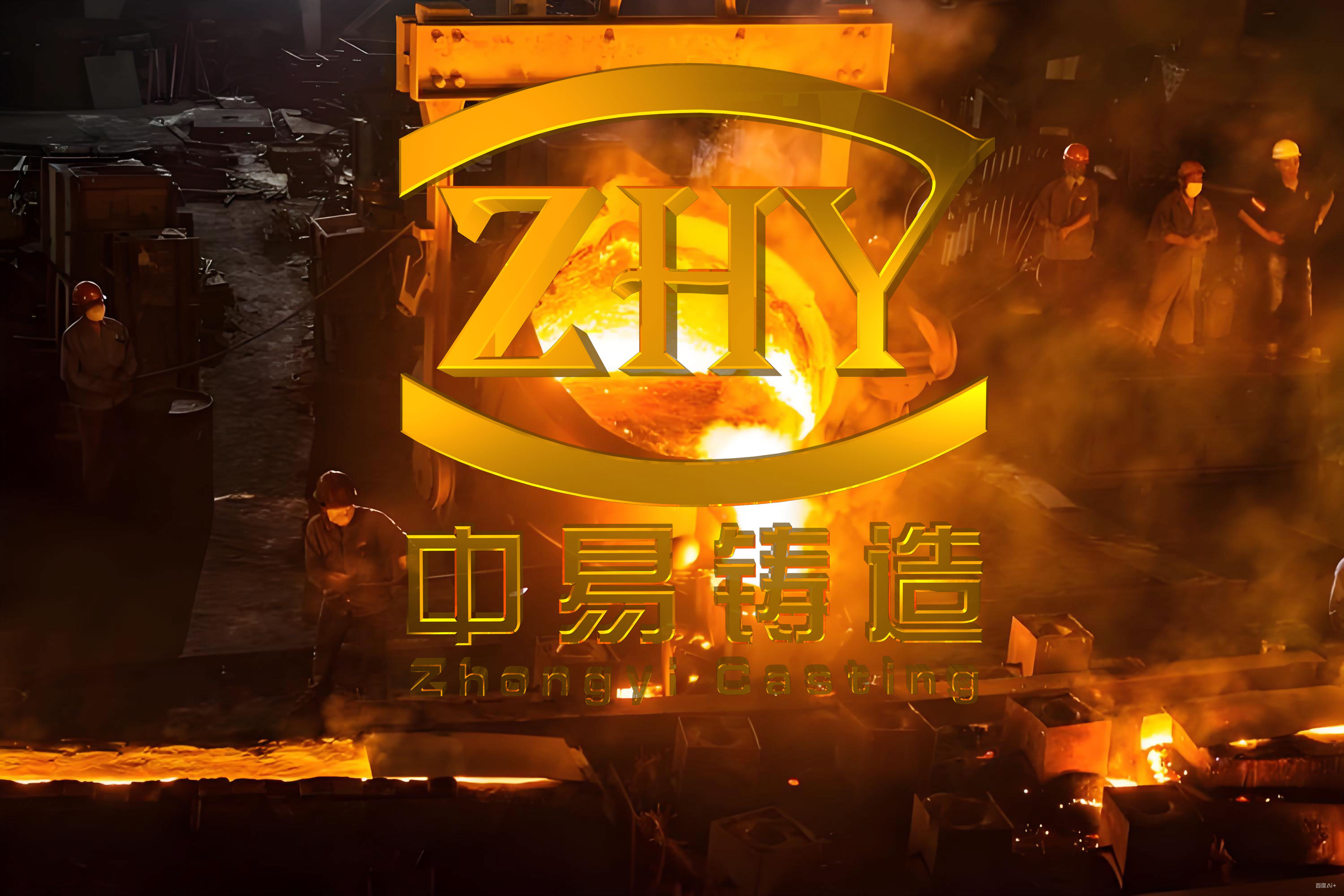
This image represents the advanced infrastructure that steel castings manufacturers can adopt to enhance energy efficiency. The integration of automated systems and heat recovery units, as shown, is critical for modern foundries.
6. Mathematical Modeling for Energy Optimization
To deepen the analysis, I propose a mathematical model for optimizing energy use in foundries. The total energy consumption \( E_{\text{total}} \) for producing \( n \) tons of castings can be expressed as:
$$ E_{\text{total}} = \sum_{i=1}^{m} (E_{\text{melting},i} + E_{\text{heat treatment},i} + E_{\text{auxiliary},i}) $$
where \( m \) is the number of processes. For a steel castings manufacturer, melting and heat treatment dominate. By applying节能 measures, each component can be reduced. For instance, if cupola efficiency improves from \( \eta_1 \) to \( \eta_2 \), the melting energy becomes:
$$ E_{\text{melting, new}} = E_{\text{melting, old}} \times \frac{\eta_1}{\eta_2} $$
Similarly, waste heat recovery adds a negative term to auxiliary energy. Optimizing production schedules can minimize idle energy, modeled via linear programming:
$$ \text{Minimize } Z = \sum_{j} c_j x_j $$
subject to \( \sum_{j} a_{ij} x_j \leq b_i \), where \( c_j \) is energy cost per activity \( x_j \), \( a_{ij} \) are resource constraints, and \( b_i \) are limits. This approach helps steel castings manufacturers plan energy-intensive tasks during off-peak hours or integrate renewable sources.
7. Future Directions and Industry Implications
The path forward for foundries involves continuous innovation. Emerging technologies like induction melting, which offers efficiencies over 75% for steel castings, and additive manufacturing (3D printing) that reduces material waste, are promising. Digital twins—virtual replicas of physical processes—can simulate energy flows and identify savings opportunities. For steel castings manufacturers, investing in smart grids and energy management systems (EMS) is crucial. EMS can monitor real-time consumption using IoT sensors, with data analyzed via machine learning algorithms to predict and adjust loads. The energy intensity \( I \) of casting production should trend downward:
$$ I(t) = I_0 e^{-kt} $$
where \( I_0 \) is initial intensity, \( k \) is improvement rate, and \( t \) is time. Industry-wide collaboration, as seen in energy performance contracting (EPC), can accelerate adoption. In EPC, third-party financiers cover upfront costs and share savings, reducing risk for foundries.
In conclusion, as a practitioner in this field, I firmly believe that energy conservation and consumption reduction are not mere cost-cutting exercises but strategic imperatives for铸造工厂. By embracing advanced cupola designs, optimizing heat treatment, restructuring operations, recovering waste heat, and leveraging mathematical models, foundries—especially steel castings manufacturers—can navigate energy crises and enhance competitiveness. The case of Advanced Casting Co. exemplifies how integrated efforts yield substantial savings. We must tailor these methods to specific contexts, confront challenges head-on, and strengthen management. With persistence, the energy management of casting factories will undoubtedly embark on a sustainable development path, ensuring resilience in an ever-evolving industrial landscape. Let us remember that every drop of water, every kilowatt-hour of electricity, and every cubic meter of gas conserved contributes to the foundational效益 of enterprises and the enduring hope of our industry.