
In my extensive work with ferrous alloys, I have consistently found that the performance of gray cast iron, particularly in demanding applications like engine cylinder blocks, is profoundly influenced by its microstructure. The flake graphite morphology intrinsic to gray cast iron provides excellent damping capacity and machinability, but it can also act as a stress concentrator, limiting tensile strength. To bridge this gap between inherent machinability and required mechanical integrity, foundry metallurgists, including myself, rely heavily on the process of inoculation. This practice involves the deliberate addition of small amounts of specific elements to the molten iron just before casting to control graphite nucleation and refine the matrix structure. The quest for the optimal inoculant—one that simultaneously maximizes strength, minimizes section sensitivity (the variation in hardness across different casting thicknesses), and delivers exceptional machining performance—is a central challenge. This article details my systematic investigation into the effects of single and, more importantly, compound inoculants on these critical properties of gray cast iron, presenting a comprehensive analysis aimed at identifying the most effective formulations.
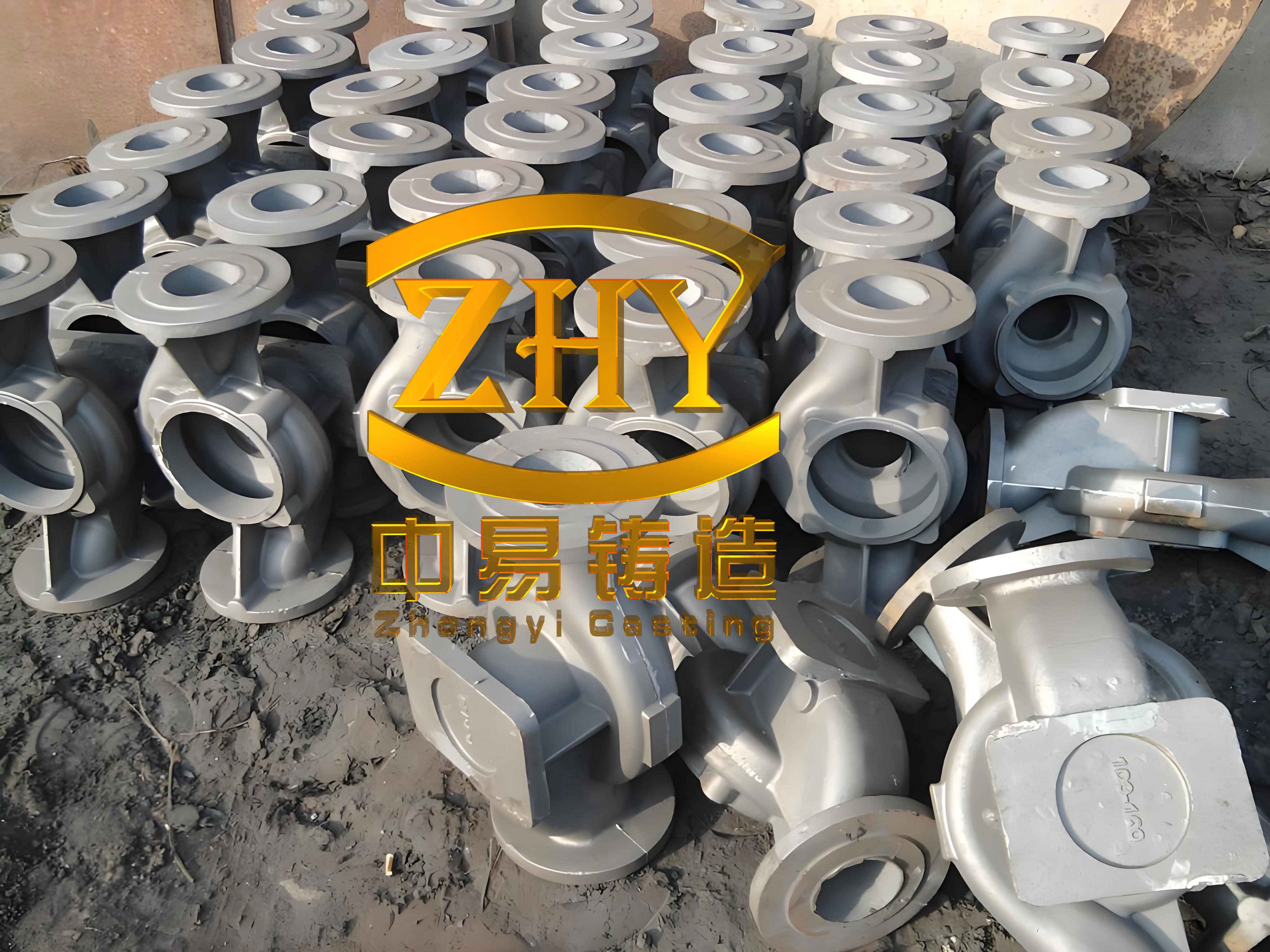
The fundamental issue with un-inoculated or poorly inoculated gray cast iron is undercooling, which leads to the formation of superfine undercooled graphite (Type D) and a hard, pearlitic matrix with potential iron carbides. This structure is detrimental to machinability and promotes high section sensitivity. Inoculation works by providing heterogeneous nucleation sites for graphite precipitation, promoting the formation of larger, well-distributed Type A graphite flakes within a finer pearlitic matrix. While traditional inoculants like 75% Ferrosilicon (75SiFe) are effective, my research and industry experience have shown that compound inoculants, which combine the strengths of different active elements, often yield superior and more balanced results. For this study, I focused on three primary inoculating agents: conventional 75SiFe, Strontium (Sr)-based inoculant, and a Rare Earth (RE) mixture. The chemical composition of these base materials is summarized in the table below.
| Name | Si | Al | Ca | Ce | Mn | Sr | P | Ti | Fe |
|---|---|---|---|---|---|---|---|---|---|
| 75SiFe | 74.60 | 1.30 | – | – | 0.33 | – | 0.08 | 0.44 | Bal. |
| Rare Earth (RE) | 41.10 | 0.35 | 0.96 | 9.08 | 0.41 | – | 0.99 | 0.028 | Bal. |
| Strontium (Sr) | 46.59 | 0.36 | 0.014 | – | – | 0.08 | – | – | Bal. |
The experimental methodology was designed to simulate industrial conditions for producing cylinder block-grade gray cast iron. I used a 100 kg medium-frequency induction furnace with an acidic lining. The base charge consisted of 50% pig iron, 30% returns, and 20% steel scrap, alloyed with chromium, copper, and silicon to achieve a target composition. The key targeted chemical range for the final gray cast iron was: 3.2–3.4% C, 1.8–2.0% Si, 0.8–1.0% Mn, P≤0.08%, S<0.1%, 0.2–0.3% Cr, and 0.6–0.8% Cu. The melting temperature was 1510°C. The inoculation treatment was performed at 1480°C with the compound inoculants added at a total rate of 0.3–0.6% of the molten metal weight. After stirring, the ladle was held for 5 minutes before pouring to ensure proper dissolution and reaction.
To comprehensively evaluate the effects, I cast two types of test samples for each experiment: a round disc specimen (Ø200mm x 20mm) for machining tests and a step-bar specimen with varying thicknesses (e.g., 8mm, 11mm, 17mm, 30mm, 45mm) for assessing section sensitivity. The mechanical properties, specifically tensile strength and Brinell hardness, were measured on standard test bars poured from the same heat. Furthermore, I employed several calculated quality indices to quantitatively assess the effectiveness of the inoculation. The eutectic saturation ($S_c$) is a fundamental parameter calculated as:
$$
S_c = \frac{C_{actual}}{4.26 – 0.31(\%Si) – 0.27(\%P)}
$$
Based on $S_c$, the maturity degree ($R_G$), which indicates how close the achieved strength is to the theoretical maximum for that composition, and the hardening degree ($H_G$), which does the same for hardness, were determined:
$$
R_G = \frac{\sigma_{b (actual)}}{981 – 785 \times S_c}, \quad H_G = \frac{HB_{ (actual)}}{530 – 344 \times S_c}
$$
Finally, the quality coefficient ($Q_i$), defined as the ratio $R_G / H_G$, provides a single metric for the combined quality; a value closer to or above 1.0 is generally desirable, indicating high strength relative to hardness.
My investigation proceeded in two main phases. First, I examined binary compound inoculants based on Strontium and Rare Earths in varying proportions. Subsequently, based on the insights gained, I conducted a more detailed comparative study of 75SiFe-RE compounds. The specific blends and their effects on the fundamental properties of the gray cast iron are detailed in the following table.
| Inoculant Blend (Ratio) | Tensile Strength (MPa) | Hardness (HB) | Maturity ($R_G$) | Hardening ($H_G$) | Quality Coeff. ($Q_i$) |
|---|---|---|---|---|---|
| 60% Sr + 40% RE | 277 | 218 | 1.02 | 1.00 | 1.02 |
| 50% Sr + 50% RE | 284 | 223 | 1.05 | 1.02 | 1.03 |
| 40% Sr + 60% RE | 291 | 227 | 1.07 | 1.03 | 1.04 |
| 80% 75SiFe + 20% RE | 267 | 232 | 0.98 | 1.06 | 0.92 |
| 60% 75SiFe + 40% RE | 295 | 229 | 1.09 | 1.05 | 1.04 |
| 40% 75SiFe + 60% RE | 276 | 222 | 1.02 | 1.01 | 1.04 |
| 20% 75SiFe + 80% RE | 270 | 226 | 1.00 | 1.03 | 0.97 |
Analyzing these results reveals several critical trends. First, all inoculated gray cast iron specimens exceeded the 250 MPa tensile strength benchmark. Notably, the blend of 60% 75SiFe and 40% RE yielded the highest tensile strength at 295 MPa and also the highest maturity degree ($R_G$ = 1.09). The 40% Sr + 60% RE blend also showed excellent strength (291 MPa) and the highest quality coefficient among the Sr-RE series. This demonstrates that compound inoculation can effectively push the mechanical performance of gray cast iron to higher levels. Interestingly, while RE-rich compounds generally increase strength and hardness, an optimal balance with other elements (like Si from 75SiFe or Sr) is crucial to avoid excessive hardening which can be detrimental to machinability.
A paramount concern in the production of complex castings like cylinder blocks is section sensitivity. Variations in cooling rate from thin to thick sections can lead to significant differences in microstructure and hardness, complicating machining and affecting performance uniformity. My evaluation of the step-bar specimens provided clear data on this attribute. The maximum difference in average hardness ($\Delta HB_{max}$) between the hardest and softest sections of the step-bar is a direct measure of this sensitivity.
| Inoculant Blend | $\Delta HB_{max}$ |
|---|---|
| 80% 75SiFe + 20% RE | 35 |
| 60% 75SiFe + 40% RE | 30 |
| 40% 75SiFe + 60% RE | 21 |
| 20% 75SiFe + 80% RE | 19 |
| 60% Sr + 40% RE | 20 |
| 50% Sr + 50% RE | 25 |
| 40% Sr + 60% RE | 27 |
The data in Table 3 presents a compelling finding. For the 75SiFe-RE series, the section sensitivity decreases monotonically as the proportion of RE increases, with the 20%75SiFe+80%RE blend yielding the lowest $\Delta HB_{max}$ of 19 HB. This suggests that a higher RE content promotes more uniform graphite nucleation across different cooling rates. In the Sr-RE series, the 60%Sr+40%RE blend showed the best uniformity ($\Delta HB_{max}$ = 20 HB). Comparing the two best from each series, the Sr-RE compound appears to have a slight, consistent edge in promoting structural uniformity in gray cast iron, though the 75SiFe-RE high-RE blend is nearly equivalent.
However, the ultimate test for a cylinder block material often lies in its machinability. High tool wear during high-volume machining operations like drilling, boring, and milling directly impacts production cost and efficiency. To quantitatively assess this, I conducted a controlled drilling test on the disc specimens. A standard drill bit was used to machine a set number of holes in each disc, after which the wear width on the drill’s flank face (VB) was meticulously measured using a toolmaker’s microscope. A smaller VB indicates better machinability of the gray cast iron. The results, plotted against the RE content in the compound inoculants, revealed a significant and non-linear relationship.
For the Sr-RE series, tool wear initially decreased with the addition of RE, reaching a minimum for the 40% RE + 60% Sr blend, before increasing again for higher RE concentrations. This indicates an optimal synergistic point. For the 75SiFe-RE series, the trend was even more pronounced. The minimum tool wear was observed not at the highest or lowest RE content, but for the blend containing 20% RE and 80% 75SiFe. This particular composition resulted in the lowest measured tool wear across all experiments. This is a critical result, demonstrating that machinability does not simply correlate with lower hardness. The 80%75SiFe+20%RE gray cast iron had a relatively high hardness (232 HB, see Table 2) yet exhibited the best machining performance. This can be attributed to its optimized microstructure. Metallographic examination confirmed that this blend promoted a uniform distribution of medium-sized Type A graphite flakes within a fine, fully pearlitic matrix, free of hard carbides. The graphite acts as a chip-breaker and lubricant during cutting, while the uniform, carbide-free matrix allows for consistent and predictable tool engagement, minimizing abrasive and adhesive wear.
To synthesize these findings into practical guidelines, we can rank the performance of the leading compound inoculant blends for gray cast iron across the three key criteria:
| Performance Criteria | 1st Rank (Best) | 2nd Rank | Key Trade-off / Note |
|---|---|---|---|
| Maximized Tensile Strength & Maturity | 60% 75SiFe + 40% RE | 40% Sr + 60% RE | Both achieve >290 MPa and $R_G$ > 1.07. |
| Minimized Section Sensitivity | 60% Sr + 40% RE | 20% 75SiFe + 80% RE | Both achieve $\Delta HB_{max}$ ~20 HB, ensuring uniformity. |
| Optimized Machinability (Lowest Tool Wear) | 80% 75SiFe + 20% RE | 60% Sr + 40% RE | Machinability is a complex function of microstructure, not just hardness. |
This ranking elucidates the concept of a “performance triangle” for engineering gray cast iron. There is no single universal “best” inoculant; rather, the choice depends on the property prioritization for the specific component. For a cylinder block where high-volume machining is the primary cost driver, the 80%75SiFe+20%RE blend is unequivocally superior, offering outstanding machinability with acceptable strength and good section uniformity. If the design calls for maximizing tensile strength and structural integrity, perhaps for a heavily loaded component, the 60%75SiFe+40%RE or 40%Sr+60%RE blends are preferable. For applications requiring extreme consistency in properties across variable sections, the Sr-RE based compounds, particularly 60%Sr+40%RE, show an advantage.
In conclusion, my investigation substantiates that moving beyond single-element inoculants to carefully formulated compound inoculants is a powerful strategy for tailoring the properties of gray cast iron. The synergy between elements like Silicon, Strontium, and Rare Earths allows for precise control over graphite morphology and matrix structure. This control directly translates into customizable balances of tensile strength, section sensitivity, and—most critically for automotive applications—machinability. The 80% 75SiFe + 20% RE compound emerged as a standout for machining-critical applications like cylinder blocks, achieving a unique microstructure that minimizes tool wear. This work underscores that the development of advanced gray cast iron is a nuanced science, where understanding and manipulating nucleation through compound inoculation is key to unlocking performance potentials that meet the ever-increasing demands of modern engineering.