
The pursuit of superior mechanical and functional properties in gray iron castings is a continuous endeavor within the foundry industry. My research and practical exploration focus on the strategic modification of conventional gray iron through the addition of trace amounts of rare earth (RE) elements. This treatment represents a significant advancement, moving beyond simple silicon inoculation to leverage the unique metallurgical effects of rare earths. The primary objective is to systematically investigate the influence of these additions on the microstructure, mechanical properties, and special service characteristics, such as thermal fatigue and oxidation resistance, ultimately establishing a reliable process for producing high-performance gray iron castings.
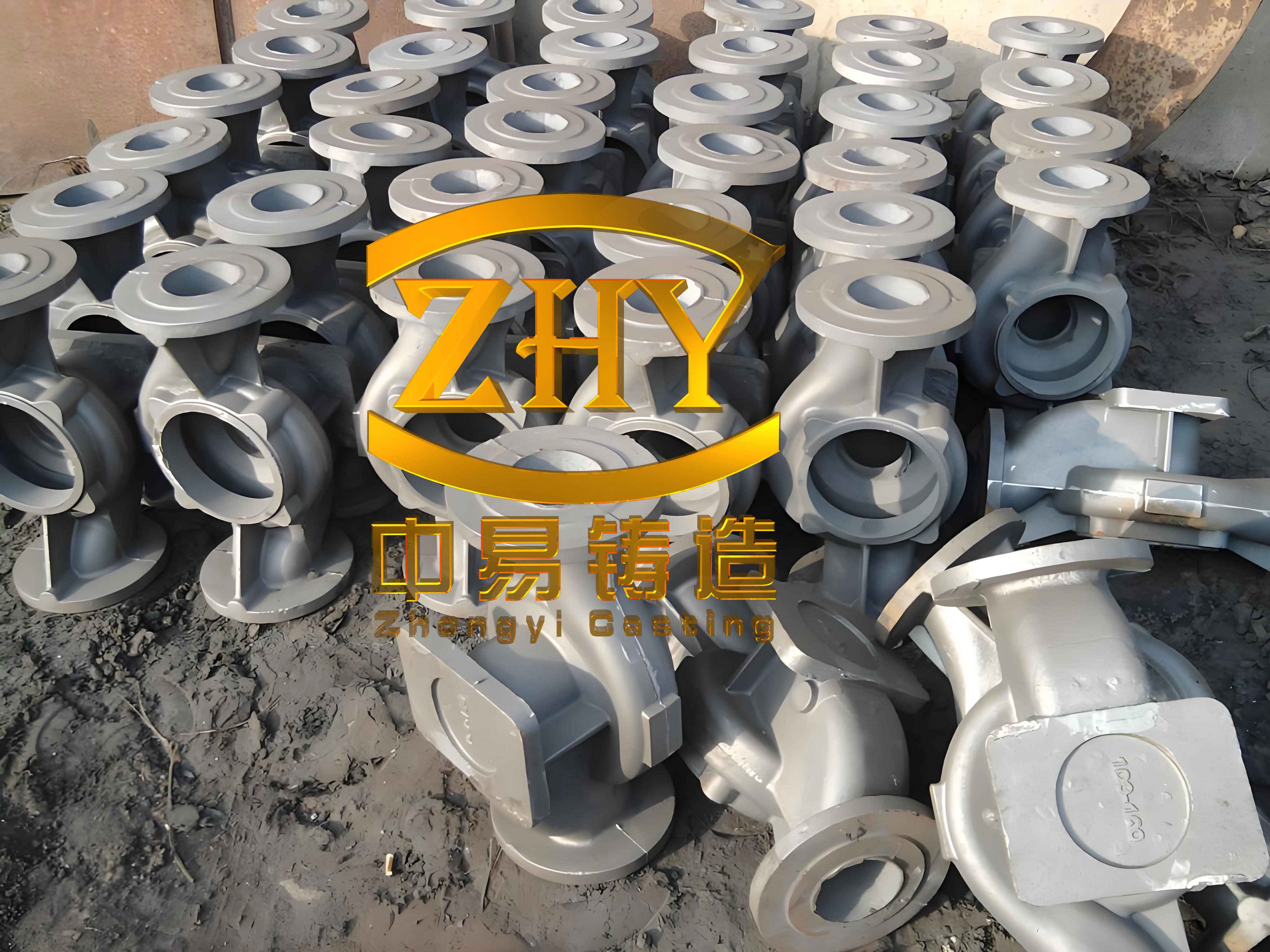
The core mechanism by which rare earth elements enhance gray iron castings is multifaceted, primarily involving deoxidation, desulfurization, and microstructural refinement. Rare earths possess a high chemical affinity for oxygen and sulfur. When introduced into molten iron, they form stable, high-melting-point compounds such as RE-oxides and RE-sulfides. This reaction effectively purifies the melt, reducing the content of dissolved gases and harmful impurities that often act as nucleation sites for detrimental phases or initiate cracks. The newly formed compounds themselves serve as potent, exogenous nuclei for graphite precipitation during solidification. This effect is more powerful than traditional ferrosilicon inoculation. It promotes the formation of a finer and more uniform graphite structure, increases the eutectic cell count, and significantly reduces the chilling tendency and the amount of free carbides. The refined microstructure directly translates to improved machinability and mechanical integrity in the final gray iron castings.
The beneficial effects extend to the matrix as well. Rare earths have a limited solid solubility in iron, leading to a subtle solid-solution strengthening effect. Furthermore, the purification of the melt enhances the overall density and soundness of the casting. A comparative analysis of key properties clearly demonstrates the advantage of RE-treated gray iron castings. For melts with a temperature above 1420°C and an initial sulfur content below 0.08%, the addition of approximately 0.2 wt.% RE-silicon alloy via the ladle inoculation method yields consistent improvements.
| Property | Regular Gray Iron | RE-Treated Gray Iron | Improvement |
|---|---|---|---|
| Tensile Strength (σb) | ~250 MPa | ~290 MPa | Increase of ~40 MPa (16%) |
| Deflection (δ) | ~2.0 mm | ~3.5 mm | Increase of ~1.5 mm (75%) |
| Hardness (HB) | ~200 | ~195 | Similar or Slight Decrease |
| Chill Depth (White Iron) | Pronounced | Significantly Reduced | Greatly Improved |
| Eutectic Cell Count | ~200 cells/cm² | ~400-500 cells/cm² | Increase of 200-300 cells/cm² |
The performance under thermal cycling is crucial for applications like ingot molds and engine components. In a simulated test where specimens were cycled 30 times between 900°C and 200°C, RE-treated gray iron castings exhibited dramatically superior resistance to thermal growth and cracking compared to their regular counterparts.
| Cast Iron Type | Surface Condition After 30 Thermal Cycles |
|---|---|
| RE-Treated Gray Iron | End faces crack-free; side surfaces smooth and intact; no severe oxidation spalling. |
| Regular Gray Iron | End faces with large cracks; severe axial cracking on sides; pronounced oxidation and spalling. |
Oxidation resistance is another key metric, especially for high-temperature service. Tests conducted at 850°C revealed a stark contrast. The oxidation weight gain, a measure of material loss, was substantially lower for RE-modified gray iron castings. The beneficial effect is synergistic with silicon content, but the RE treatment itself provides a distinct advantage.
| Cast Iron Type (Si Content) | Average Oxidation Rate (g/m²·h) | Relative Performance |
|---|---|---|
| Regular Gray Iron (Si ~1.8%) | ~5.2 | Baseline |
| RE-Treated Gray Iron (Si ~1.8%) | ~3.1 | ~40% lower rate |
| RE-Treated Gray Iron (Si ~2.4%) | ~2.5 | ~52% lower rate |
The underlying reason for improved oxidation resistance is linked to the purification effect. The oxygen content in molten regular gray iron is typically between 40-60 ppm. After RE treatment, this level can be reduced to 20-30 ppm. The refined and purified microstructure, with finer pearlite and more dispersed phosphide eutectic, forms a more stable and protective oxide scale. The graphite morphology also shifts from coarse type A flakes to finer, more compact forms (often type D or modified type A), which are less likely to act as pathways for oxidative attack. This comprehensive enhancement makes RE-treated gray iron castings ideal for demanding applications.
Based on practical trials using a cupola melting system, a robust production process has been established. The targeted chemical composition for optimal RE-modified gray iron castings is carefully balanced:
$$
\text{C: } 3.2-3.6\%,\quad \text{Si: } 1.6-2.0\%,\quad \text{Mn: } 0.6-1.0\%,\quad \text{P: } <0.15\%,\quad \text{S: } <0.12\%,\quad \text{RE}_{residual}: 0.01-0.03\%
$$
The process mandates a tap temperature exceeding 1420°C. For a batch size of approximately 500 kg, 0.15-0.25% of a RE-silicon alloy (RE content ~20%) is added. Two reliable inoculation methods are employed:
Method 1 (Stream Inoculation): The pre-heated RE alloy is added directly into the metal stream as the iron flows from the spout into the ladle. After the ladle is full, slag is removed, and the melt is covered with insulating material like expanded perlite. The total time from treatment to pour completion should not exceed 15 minutes.
Method 2 (Ladle Bottom Inoculation): For smaller batches, the RE alloy is placed at the bottom of a preheated ladle. The molten iron is then poured over it. After filling, the ladle is stirred thoroughly for homogenization, followed by slag removal and covering.
The effectiveness of this process is unequivocally demonstrated in direct comparative casts. The mechanical property data from test bars and the chill tendency observed on wedge (triangular) test samples provide clear evidence of the enhancement in gray iron castings.
| Sample Set (Type) | Tensile Strength, σb (MPa) | Deflection, δ (mm) | Hardness, HB |
|---|---|---|---|
| Regular Gray Iron (Avg. of 5) | 248 | 2.1 | 207 |
| RE-Treated Gray Iron (Avg. of 5) | 292 | 3.4 | 198 |
| Improvement | +44 MPa | +1.3 mm | Slight Decrease |
| Sample ID (Type) | Chill Formation (Tip of Wedge) | Interpretation |
|---|---|---|
| R-1 (Regular) | Distinct white iron zone (chill) | High chilling tendency, requires high carbon equivalent. |
| RE-1 (Treated) | Mottled zone (half-chill) | Chilling tendency significantly reduced. |
| RE-3 (Treated) | No chill, fully gray structure | Excellent inoculation effect, ideal for thin sections. |
The transition from laboratory validation to industrial application validates the economic and technical merits of this approach. A prime application is in the manufacture of ingot molds for steelmaking. These components endure severe thermal shock cycles above 1000°C. Field data from various steel plants consistently shows that RE-modified gray iron castings for ingot molds outperform standard ones. Documented results include a service life extension of 3-5 heats and a reduction in mold consumption per ton of steel by 10-20%. The refined structure and improved thermal fatigue resistance are direct contributors to this performance leap.
Beyond ingot molds, the scope for RE-treated gray iron castings is vast. They are exceptionally suitable for engine blocks and cylinder heads, where a combination of good strength, thermal conductivity, and machinability is critical. The enhanced wear resistance and oxidation stability also make them candidates for brake discs, pump housings, and various high-temperature furnace parts. The production of these upgraded gray iron castings adds minimal cost—primarily the small amount of RE alloy—while delivering significant value through extended service life and reliability.
For specific high-temperature applications like ingot molds, runners, and bottom plates, I recommend the following optimized composition to maximize the benefit of rare earth treatment in gray iron castings:
$$
\text{C: } 3.3-3.8\%,\quad \text{Si: } 1.4-1.8\%,\quad \text{Mn: } 0.8-1.2\%,\quad \text{P: } <0.12\%,\quad \text{S: } <0.10\%,\quad \text{Cr: } 0.15-0.35\%
$$
The carbon-to-silicon ratio (C/Si) should be carefully controlled, typically between 1.8 and 2.2, to ensure the desired graphite structure is achieved in conjunction with the RE treatment. In conclusion, the micro-alloying of conventional gray iron with trace rare earths is a transformative yet economically feasible process. It systematically enhances the mechanical properties, refines the microstructure, and dramatically improves functional characteristics like thermal fatigue and oxidation resistance. This technology provides a powerful tool for foundries to produce a new generation of superior, durable, and reliable gray iron castings for the most demanding industrial applications.