
The extensive adoption of wind energy as a key component of the global renewable energy portfolio necessitates the development of highly reliable and durable components. Critical structural parts for wind turbines, such as hubs, main shafts, and planetary carriers, are predominantly manufactured from ductile iron, specifically the grade QT400-18L. This spheroidal graphite cast iron offers an excellent combination of castability, mechanical strength, and toughness, making it suitable for these demanding applications. However, the operational environment for many wind farms, particularly those installed offshore or in coastal regions, presents a severe challenge. Constant exposure to saline atmospheres, sea spray, and high humidity accelerates corrosion processes. Given the design requirement for these components to remain maintenance-free for operational lifetimes exceeding 20 years, enhancing the corrosion resistance of spheroidal graphite cast iron without compromising its mechanical properties has become a critical research focus. This study investigates a novel approach to improve the atmospheric corrosion resistance of QT400-18L by inoculating the melt with multi-scale ceramic particles (MSCP). The research specifically examines the effect under cyclic humidity conditions, explores the underlying corrosion mechanisms, and aims to provide a new reference for improving the longevity of wind power components in aggressive coastal environments.
The base material used in this investigation was spheroidal graphite cast iron QT400-18L. Its chemical composition, determined by spectral analysis, is summarized in Table 1. The inoculant, Multi-Scale Ceramic Particles (MSCP), consisted of surface-activated, multi-scale composite silicon carbide (SiC) particles. The particle size distribution and specific surface area were characterized using a Mastersizer 2000 laser particle size analyzer. The MSCP were added to the molten iron in varying mass fractions: 0.05%, 0.10%, and 0.15%. For comparison, a baseline specimen without any MSCP addition was also prepared under identical melting and casting conditions.
| Element | C | Si | Mn | P | S | Mg | RE | Fe |
|---|---|---|---|---|---|---|---|---|
| Content | 3.56-3.68 | 2.19-2.40 | 0.148-0.150 | 0.030-0.032 | 0.010-0.012 | 0.029-0.062 | 0.032-0.047 | Bal. |
Corrosion test specimens were machined from the central portion of the cast Y-blocks into discs with dimensions of ø25 mm × 3 mm. The “constant temperature, variable humidity” corrosion test was conducted in accordance with the national standard GB/T4797.1-2018, utilizing a programmable climate chamber (HS-100A). The total test duration for all conditions was 168 hours (7 days) at a constant temperature of 60°C. The humidity was varied according to the experimental matrix shown in Table 2. For statistical reliability, three parallel specimens were tested under each condition, and the reported results represent the average of these replicates.
| MSCP Addition (wt.%) | Specimen Code | Relative Humidity (%) | Specimen Code | Relative Humidity (%) | |
|---|---|---|---|---|---|
| 0.00 (Reference) | Ref-1 | 60 | – | – | |
| Ref-2 | 80 | – | – | ||
| Ref-3 | 90 | – | – | ||
| Ref-4 | 98 | – | – | ||
| 0.05 | A-1 | 60 | 0.10 | B-1 | 60 |
| A-2 | 80 | B-2 | 80 | ||
| A-3 | 90 | B-3 | 90 | ||
| A-4 | 98 | B-4 | 98 | ||
| 0.15 | C-1 | 60 | – | – | – |
| C-2 | 80 | – | – | – | |
| C-3 | 90 | – | – | – | |
| C-4 | 98 | – | – | – |
The corrosion rate was evaluated using a full-immersion mass-loss method, adapted for the condensed water film in the humidity chamber. The specimens were meticulously cleaned, dried, and weighed before and after the exposure test. The corrosion rate (V) was calculated using the following formula:
$$ V = \frac{M_1 – M_2}{A \cdot t} $$
where \( V \) is the corrosion rate in g/(m²·h), \( M_1 \) and \( M_2 \) are the masses of the specimen before and after corrosion in grams, \( A \) is the total exposed surface area in square meters, and \( t \) is the exposure time in hours.
Post-corrosion analysis included examination of the corrosion product morphology and layer thickness using a ZEISS SUPRA55 field emission scanning electron microscope (FE-SEM). Energy dispersive X-ray spectroscopy (EDS) attached to the SEM and X-ray diffraction (XRD) using an Empyrean diffractometer were employed to determine the composition and phases of the corrosion products. Furthermore, the microstructure of the un-corroded spheroidal graphite cast iron specimens—specifically graphite nodule characteristics (size, shape, nodularity) and matrix phase fractions (ferrite, pearlite)—was quantified using image analysis software according to the standard GB/T9441-2021.
Influence of MSCP on the Microstructure of Spheroidal Graphite Cast Iron
The microstructure of the cast material is fundamental to its properties. Analysis revealed that the addition of Multi-Scale Ceramic Particles significantly refined and improved the graphite morphology in the QT400-18L spheroidal graphite cast iron. The reference specimen (0% MSCP) exhibited a mix of spheroidal graphite with non-uniform size distribution and moderate roundness, alongside some vermicular (worm-like) graphite. Inoculation with MSCP promoted the formation of more numerous, smaller, and significantly more spherical graphite nodules. The nodularity and the graphite size grade were improved, as quantified in Table 3. The optimal graphite morphology, corresponding to a Grade 2 nodularity, was achieved with a 0.10% MSCP addition. This refinement is attributed to the activated MSCP particles acting as potent heterogeneous nucleation sites for graphite during solidification, reducing the undercooling required for nodule formation.
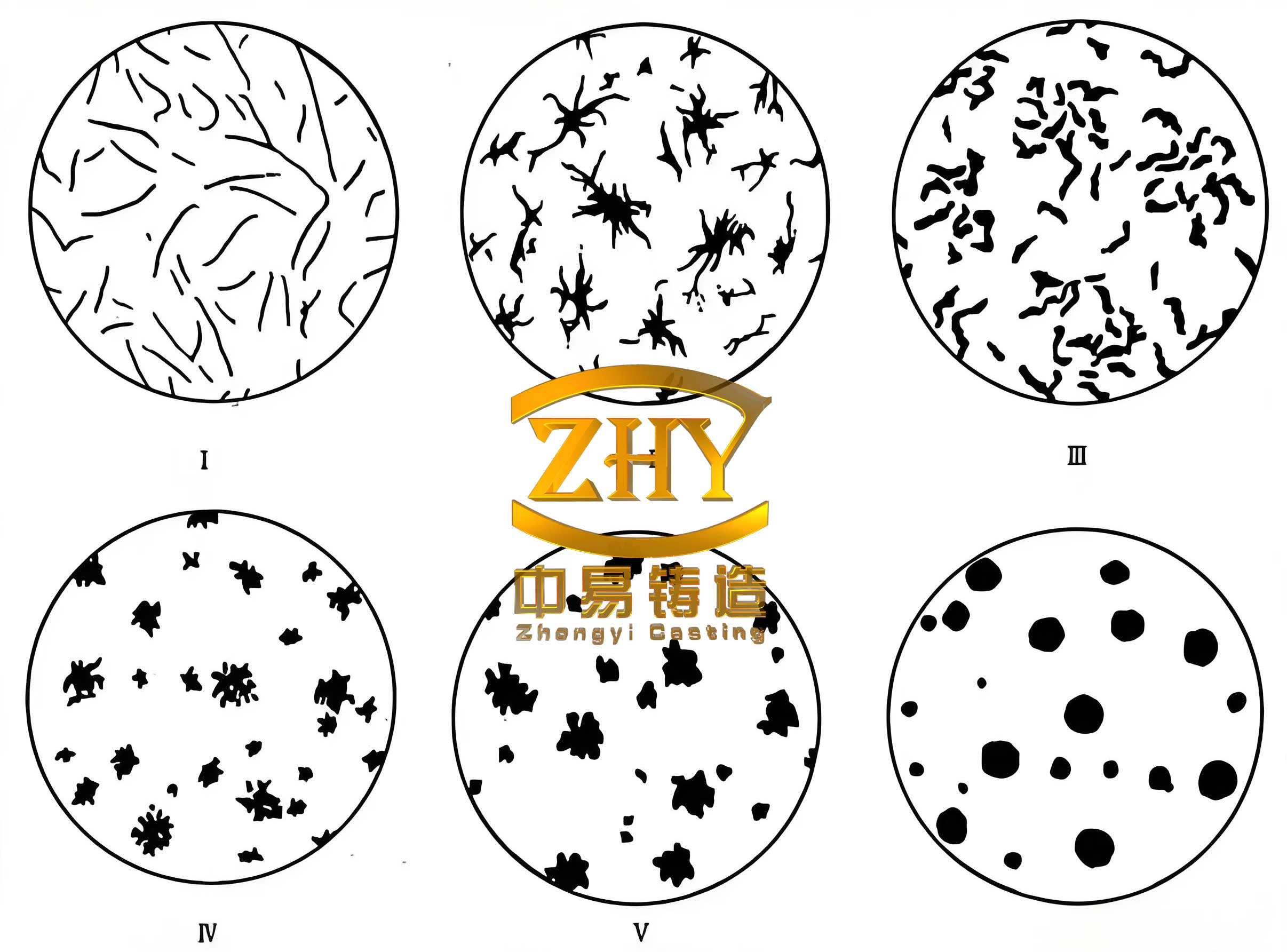
| MSCP Addition (wt.%) | Nodularity Grade | Nodularity (%) | Graphite Size Number |
|---|---|---|---|
| 0.00 | 4 | 79 | 6 |
| 0.05 | 3 | 82 | 7 |
| 0.10 | 2 | 91 | 7 |
| 0.15 | 3 | 86 | 7 |
The matrix of all QT400-18L specimens was predominantly ferritic, with small amounts of pearlite, consistent with the grade specification. Image analysis indicated that the MSCP inoculation also influenced the matrix phase balance. The ferrite content increased from approximately 79.16% in the reference specimen to an average of about 86% in the inoculated specimens (ranging from 85.84% to 86.95%). This suggests that the MSCP may slightly influence the solid-state transformation kinetics, favoring ferrite formation over pearlite, potentially by affecting carbon diffusion or providing additional nucleation sites for ferrite.
Corrosion Rate Under Variable Humidity Conditions
The corrosion rates calculated for all specimens across the different humidity levels are plotted in Figure 1 (conceptually described). As expected, the corrosion rate for all variants of spheroidal graphite cast iron increased with rising relative humidity (RH). However, the response of the MSCP-inoculated materials diverged significantly from the reference material at higher humidity levels. Below 80% RH, the corrosion rates for all specimens, regardless of MSCP content, were relatively low and increased at a similar, gradual rate. A distinct inflection point is observed at approximately 80% RH. Beyond this critical humidity, the corrosion rate accelerated markedly for all samples, but the magnitude of this acceleration was substantially lower for the spheroidal graphite cast iron containing MSCP.
This divergence is clearly quantified in the data. At 90% RH, the corrosion rates for specimens with 0.05%, 0.10%, and 0.15% MSCP were lower than the reference. The most significant improvement was observed at 98% RH. Compared to the reference spheroidal graphite cast iron, the corrosion rates for specimens with 0.05%, 0.10%, and 0.15% MSCP addition were reduced by 10.10%, 21.21%, and 29.29%, respectively. The specimen with 0.15% MSCP exhibited the lowest overall corrosion rate under the most severe condition (60°C, 98% RH). This demonstrates that MSCP inoculation is an effective method for enhancing the atmospheric corrosion resistance of spheroidal graphite cast iron, particularly in high-humidity environments typical of coastal areas.
Analysis of Corrosion Products and Morphology
Examination of the corroded surfaces revealed distinct morphological features. A prevalent characteristic was the localization of corrosion products around the graphite nodules. In many instances, these products formed distinctive “double-ring” patterns encircling the graphite sites, as seen in SEM micrographs. EDS analysis conducted on these corrosion products consistently identified the presence of Carbon (C), Oxygen (O), Iron (Fe), and trace Silicon (Si). XRD phase analysis confirmed that the corrosion products were primarily iron oxides, including Wüstite (FeO), Hematite (Fe₂O₃), and Magnetite (Fe₃O₄). The relative intensity of the XRD peaks, which correlates with the quantity of the respective phase, was notably higher for the reference specimen compared to the MSCP-inoculated ones. This directly corroborates the mass-loss data, indicating that less corrosion product formed on the improved spheroidal graphite cast iron.
The formation of the “double-ring” corrosion pattern can be explained by micro-droplet phenomena and localized electrochemical activity. In atmospheric corrosion, water vapor initially condenses preferentially at surface heterogeneities and defects, which possess higher surface energy. The interface between the graphite nodule and the ferritic matrix in spheroidal graphite cast iron is one such active site. A primary micro-droplet forms over this area. Due to concentration gradients and surface tension effects, this primary droplet can induce the formation of smaller satellite micro-droplets in its immediate periphery, a process first documented in corrosion science. This sets up a localized galvanic cell where the ferritic matrix (anode) undergoes dissolution, and the periphery or the graphite itself (cathode) supports the oxygen reduction reaction. The corrosion products precipitate at the anodic sites, initially outlining the primary and secondary droplet regions, hence forming the observed rings. With prolonged exposure, the entire region between and around these rings becomes active, leading to more generalized corrosion product accumulation around the graphite.
Mechanistic Interpretation of Corrosion Improvement by MSCP
The enhancement in atmospheric corrosion resistance of spheroidal graphite cast iron due to MSCP inoculation is attributed to a synergistic combination of microstructural refinement and electrochemical modification.
1. Microstructural Refinement and Barrier Effect: The primary role of the activated MSCP is to refine the microstructure. By providing abundant nucleation sites, they lead to a larger population of smaller, more spherical graphite nodules. A finer and more uniform graphite distribution creates a less continuous and more tortuous path for corrosion propagation. Furthermore, the interface between a perfectly spherical graphite nodule and the matrix is more regular and potentially less chemically active compared to an irregular or vermicular graphite interface. This reduces the number and potency of preferred sites for water condensation and anodic dissolution initiation. The increase in ferrite content, while generally more corrosion-prone than pearlite in isolated tests, contributes here by creating a more homogeneous matrix. This homogeneity reduces the number of micro-galvanic couples within the matrix itself (e.g., between ferrite and pearlite colonies), which are known to accelerate corrosion in cast irons.
2. Electrochemical Potential Modification: The corrosion of spheroidal graphite cast iron in a thin electrolyte film is fundamentally an electrochemical process. A macro-galvanic cell is established where the graphite nodules (cathode) are coupled with the surrounding ferritic matrix (anode). The driving force for corrosion is the potential difference (\( \Delta E \)) between these two phases:
$$ I_{corr} \propto \frac{\Delta E}{R} $$
where \( I_{corr} \) is the corrosion current and \( R \) is the system resistance. The MSCP, particularly the activating elements on their surface, can dissolve into the iron melt during processing. These elements may subsequently partition into the ferrite matrix during solidification. If these alloying elements have a nobler electrode potential than iron, they can elevate the electrochemical potential of the ferrite phase. This reduction in the potential difference (\( \Delta E \)) between the ferrite (anode) and the graphite (cathode) directly decreases the driving force for the galvanic corrosion process, thereby lowering the corrosion rate. This effect complements the microstructural refinement to improve the overall performance of the spheroidal graphite cast iron.
Conclusion
This investigation demonstrates that inoculation with Multi-Scale Ceramic Particles (MSCP) is a viable and effective method for significantly enhancing the atmospheric corrosion resistance of QT400-18L spheroidal graphite cast iron, a material critically important for coastal wind turbine components. The improvements are multifactorial:
- The MSCP acts as a potent microstructure refiner for the spheroidal graphite cast iron, enhancing graphite nodularity, increasing nodule count, and reducing nodule size.
- It promotes a slight increase in the ferrite fraction within the matrix, leading to greater microstructural homogeneity.
- A critical humidity inflection point around 80% RH was identified. Below this point, corrosion rates are low and minimally affected by MSCP. Above it, where corrosion accelerates rapidly, the MSCP-inoculated spheroidal graphite cast iron shows dramatically lower corrosion rates, with a 0.15% addition providing a reduction of nearly 30% at 98% RH.
- Corrosion initiates preferentially at the graphite-matrix interface. The refined and spherical graphite morphology resulting from MSCP inoculation creates less active interfaces, hindering the initiation and spread of corrosion.
- The improvement mechanism combines physical barrier effects from a refined microstructure with electrochemical effects, likely a reduction in the galvanic potential difference between the graphite and the alloyed ferrite matrix.
Therefore, the use of MSCP inoculation presents a promising foundry practice for producing spheroidal graphite cast iron components with extended service life in highly corrosive marine atmospheres, directly contributing to the reliability and reduced lifecycle costs of wind energy systems.