
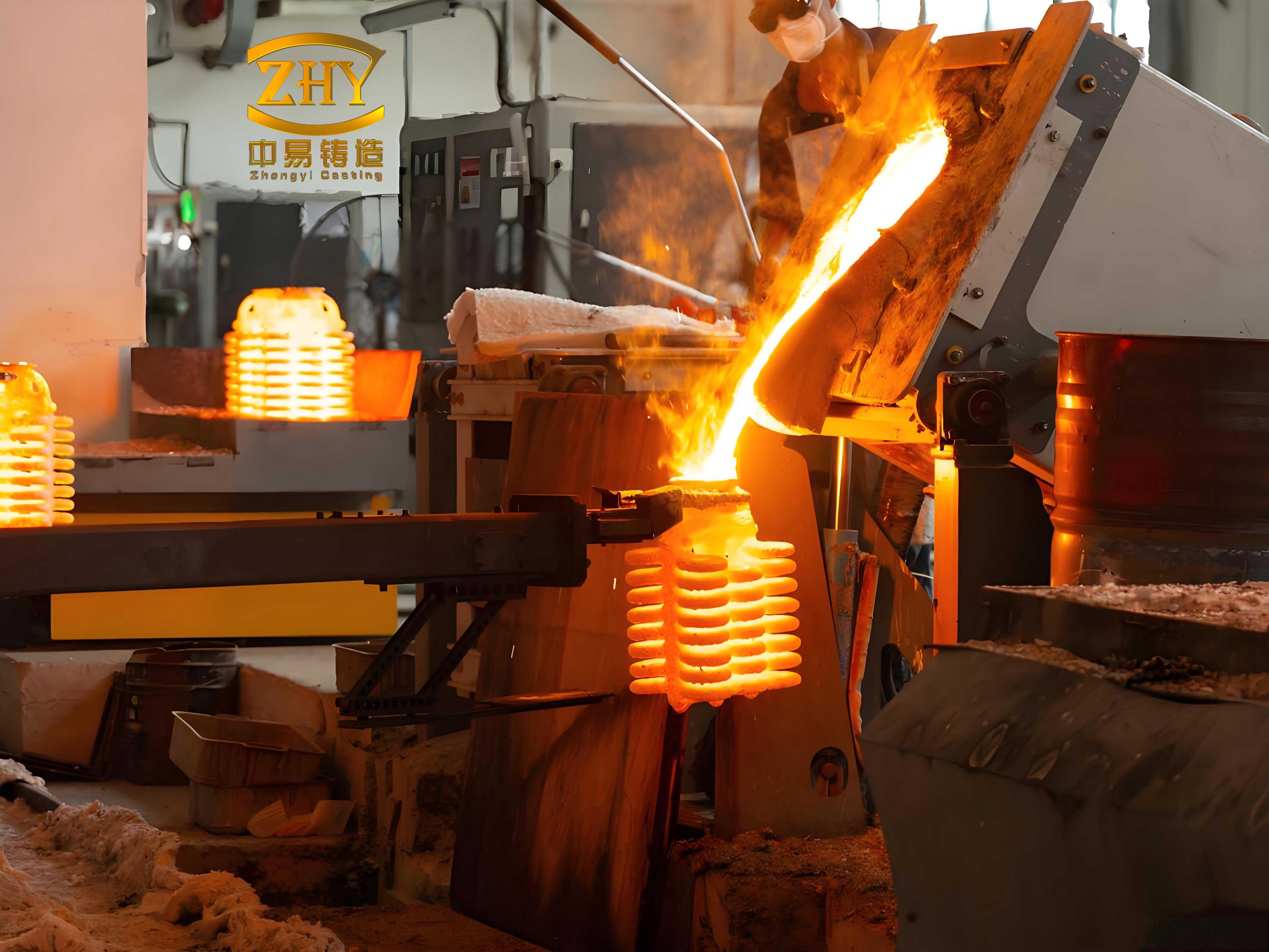
The investment casting process, a sophisticated evolution of the ancient lost-wax method, stands as a cornerstone in modern precision manufacturing. This intricate metal-forming technique involves creating a disposable wax or polymer pattern, building a refractory ceramic shell around it, removing the pattern via melting or dissolution, and subsequently pouring molten metal into the resulting hollow mold. The primary advantage of the investment casting process lies in its ability to produce components with exceptional dimensional accuracy, superior surface finish, and complex geometries that are often unattainable through other manufacturing routes. As such, it has become indispensable in high-value industries including aerospace, power generation, medical implants, and automotive engineering. However, the complexity of the investment casting process—encompassing patternmaking, shell building, dewaxing, firing, and pouring—introduces multiple variables that can significantly impact final casting quality, driving continuous research and innovation.
Analyzing patent filings provides a robust, quantifiable lens through which to view the trajectory of technological advancement. This article examines the global patent landscape for the investment casting process over a thirty-year period from 1991 to 2020. The data was compiled by searching major patent databases using a combination of International Patent Classification (IPC) codes, such as B22C, and relevant keywords including “investment casting,” “lost wax casting,” and “precision casting.” After consolidation to remove simple patent families, the global dataset comprised 7,684 unique patent documents, with 1,965 filings originating within China. This analysis delves into the temporal trends of patenting activity, the geographical origins of innovation, the key players driving development, and the core technological themes that have defined progress in the investment casting process.
A Thirty-Year Overview of Patenting Activity
The evolution of patent filings for the investment casting process reveals distinct phases of development on a global scale and within China. For nearly a decade and a half, from 1991 until approximately 2005, global patent activity was in a state of steady, incremental growth. The annual number of patent applications globally and within China remained relatively low and stable, indicative of a mature field undergoing gradual refinement rather than disruptive change.
A pivotal shift occurred around 2005, marking the beginning of a sustained period of accelerated innovation. Global patent applications began a pronounced upward trajectory, growing from just over 100 filings per year to exceeding 500 annually by 2020. This surge can be attributed to several converging factors: increasing performance demands from end-use industries like aerospace (for lighter, stronger turbine blades) and biomedicine (for complex orthopedic implants), the push for more sustainable and cost-effective manufacturing, and the integration of new digital tools. The growth pattern for Chinese patents followed a similar but slightly delayed curve. China’s investment casting process patent activity remained in a nascent stage until around 2008, with annual filings consistently below 20. From 2009 onward, however, Chinese innovation entered a period of explosive growth, with annual application volumes increasing more than tenfold to reach 236 by 2020. This remarkable expansion underscores China’s strategic focus on advancing high-end manufacturing capabilities, supported by national policy incentives and the formation of specialized industrial clusters dedicated to precision casting.
Global Innovation Origins and Key Contributors
The geographical distribution of patent filings highlights the centers of gravity for innovation in the investment casting process. Over the thirty-year period, China emerged as the undisputed leader in terms of patent application volume, accounting for nearly half of all global filings. This places China in a tier of its own, reflecting a massive concentration of research and development activity.
| Technology Source Country/Region | Approximate Share of Global Applications | Tier |
|---|---|---|
| China | ~50% | 1 |
| United States | ~17% | 2 |
| Japan | ~15% | 2 |
| United Kingdom | ~9% | 3 |
| USSR/Russia | ~7% | 3 |
| Germany, South Korea, WIPO, EPO | ~2-3% each | 4 |
The United States and Japan form a strong second tier, contributing significant and historically deep portfolios. A review of the top 15 global patent applicants reveals that 11 are Chinese entities, dominated by research institutes and aerospace-focused manufacturers. However, the remaining spots are held by long-established industrial giants from the US and Japan, such as General Electric Company and United Technologies Corporation (now part of Raytheon Technologies). These corporations, while having lower application volumes than the top Chinese applicants, often hold patents with extensive international patent families, indicating high-value inventions and strategic global IP protection. This landscape illustrates that while China leads in the quantity of patent filings for the investment casting process, Western and Japanese firms remain formidable forces with considerable qualitative influence and technological depth.
The Chinese Domestic Landscape: Clusters and Players
Within China, patenting activity in the investment casting process is not uniformly distributed but is heavily concentrated in specific regional hubs that have evolved into mature industrial ecosystems. Eastern and central provinces, benefiting from favorable policies, supply chain integration, and proximity to major manufacturing centers, account for the majority of innovation output.
The province of Jiangsu leads by a significant margin, responsible for roughly one-fifth of all national patent applications. It is followed closely by the provinces of Anhui, Zhejiang, and Shandong, each contributing between 12% and 15% of the total. These regions have developed robust clusters specializing in the production of precision components, fostering intense local competition and collaboration that drives incremental and applied innovation in the investment casting process. Other provinces like Liaoning, Beijing, Guizhou, and Shaanxi, though representing smaller shares (5%-9%), are home to nationally leading enterprises, often in strategic sectors like aviation and power generation. Furthermore, while the volume of patent filings from foreign entities in China is comparatively modest, primarily originating from the US and Japan, these patents frequently cover foundational or cutting-edge aspects of the investment casting process, granting their owners significant leverage in the high-technology segments of the market.
Core Technological Themes in Patent Filings
A thematic analysis of patent documents reveals the principal research and development directions within the investment casting process. Innovations can be broadly categorized into four interconnected domains: casting process methodologies, gating and mold design, shell fabrication, and facecoat materials. The distribution of patent focus across these areas highlights the industry’s priorities.
| Core Technology Theme | Approximate Share of Focus | Primary Innovation Drivers |
|---|---|---|
| Casting Process Methodologies | ~35% | Application-specific optimization, new alloy processing, defect reduction. |
| Gating and Mold Design | ~28% | Thermal management, yield improvement, simulation-driven design. |
| Facecoat & Binder Materials | ~22% | Shell stability, surface finish, reactivity control for active alloys. |
| Shell Fabrication Techniques | ~15% | Process speed, dimensional accuracy, integration with additive manufacturing. |
1. Casting Process Methodologies: This largest category encompasses application-specific refinements of the investment casting process. A major trend is the development of specialized techniques for challenging alloys. Titanium and aluminum alloys, prized for their high strength-to-weight ratios, are prone to reaction with traditional ceramic molds. Patents in this area focus on inert environment processing, the use of proprietary facecoats, and novel melting/pouring practices to produce sound castings. Similarly, the investment casting process for thin-walled structures and components with complex internal features (like cooled turbine blades) is a hotbed of innovation, addressing issues of mold filling and solidification integrity.
2. Gating and Mold Design: The design of the gating system—the channels that deliver molten metal to the part cavity—is critical for quality. Advanced gating design, often aided by computational simulation, aims to achieve directional solidification, minimize turbulence, and reduce shrinkage porosity. The goal is to optimize the thermal gradient during cooling, which can be conceptualized through the fundamental heat transfer equation governing solidification:
$$ \frac{\partial T}{\partial t} = \alpha \nabla^2 T $$
where \( T \) is temperature, \( t \) is time, and \( \alpha \) is thermal diffusivity. Effective gating design manipulates the boundary conditions for this equation to produce a desired solidification front.
3. Shell Fabrication and Materials: The ceramic shell is the heart of the investment casting process. Innovations here are twofold. First, the integration of Additive Manufacturing (AM) or 3D Printing is revolutionary. AM allows for the direct printing of complex ceramic molds or cores, eliminating the need for a physical wax pattern for certain geometries. This hybrid “AM + investment casting” process dramatically expands design freedom and shortens lead times for prototypes and complex parts. Second, continuous improvement in shell materials—the refractory fillers (e.g., alumina, zirconia) and chemical binders (e.g., silica sol, ethyl silicate)—seeks to enhance shell strength, permeability, and thermal shock resistance. The interaction between the facecoat and the molten metal, especially for reactive alloys, is governed by interfacial phenomena that can be modeled to predict reactivity:
$$ \Delta G = \Delta H – T \Delta S $$
where a negative Gibbs Free Energy (\( \Delta G \)) change indicates a spontaneous reaction between the metal and the ceramic, which innovators strive to prevent through material selection.
4. Simulation and Digitalization: A cross-cutting theme is the use of simulation software for virtual process engineering. This includes predicting pattern wax deformation to apply compensatory reverse engineering, simulating fluid flow to optimize gate placement, and modeling thermal stresses during cooling to prevent hot tearing. This digital thread reduces the need for costly physical trials and enables first-time-right manufacturing in the investment casting process.
Notable Patents and Forward Trajectory
An examination of high-impact patents, measured by citation frequency and the breadth of international family members, offers insight into landmark innovations. Patents from major Western corporations, such as those for “cooled turbine airfoils” or “composite cores for precision investment casting,” often boast extensive patent families (e.g., 12+ member families), underscoring their perceived global commercial value and the strategic importance of protecting core technologies in all key markets. Within the Chinese patent corpus, highly cited documents frequently cover practical, application-driven advancements. These include novel shell-making methods for titanium aluminide (TiAl) alloys, specialized investment casting process flows for specific automotive or turbine components, and techniques leveraging 3D printing for mold or pattern creation. The high citation counts for these patents indicate their influence on subsequent research and development within the local and global technical community.
Looking ahead, the trajectory of the investment casting process is clear. Patent analysis confirms that the field is vibrant and growing. While foundational aspects like shell technology and gating design remain perennial areas for improvement, the dominant future trend is convergence. The integration of digital tools—from AI-driven design optimization to in-process monitoring with IoT sensors—will make the investment casting process more predictable and efficient. More profoundly, the synergy with additive manufacturing is blurring the lines between traditional pattern-based casting and direct digital fabrication. This hybrid approach leverages the geometric freedom of AM with the superior surface finish and material properties of investment casting. Furthermore, as sustainability pressures mount, innovations aimed at reducing material waste, recycling ceramic shell materials, and lowering the energy intensity of the process will move to the forefront of patenting activity. In conclusion, the investment casting process, as evidenced by three decades of global patent innovation, is not a static technology but a dynamic one, continuously evolving through the integration of new materials, digital intelligence, and advanced fabrication techniques to meet the ever-increasing demands of modern precision engineering.