
In the realm of engineering machinery, such as excavators and bulldozers used in construction and mining, track shoes—often produced through steel casting processes—play a pivotal role in ensuring operational safety and reliability. With the trend toward larger and heavier-duty equipment, the service conditions for these components have become increasingly harsh, involving direct contact with abrasive materials like sand, soil, rocks, and minerals. This exposes them to severe abrasive wear, high transverse tensile stresses, and longitudinal shear forces, leading to significant wear and consumption. Therefore, the development of high-strength, high-toughness steel casting materials for track shoes is imperative. My research focuses on leveraging rare earth elements as alloy additives to enhance the properties of steel castings, aiming to meet the demands of modern engineering applications.
Rare earth elements have gained prominence in steel metallurgy due to their unique physico-chemical characteristics. When incorporated into steel castings, they purify the molten steel, modify the morphology and distribution of non-metallic inclusions, refine the microstructure, and improve impact toughness, particularly at low temperatures. In this study, I build upon existing E-grade steel standards by optimizing alloy compositions and employing rare earth microalloying techniques to develop a superior steel casting material, designated as EL-grade steel, specifically for track shoe applications. This article details my experimental approach, results, and analysis, emphasizing the role of steel casting in achieving enhanced performance.
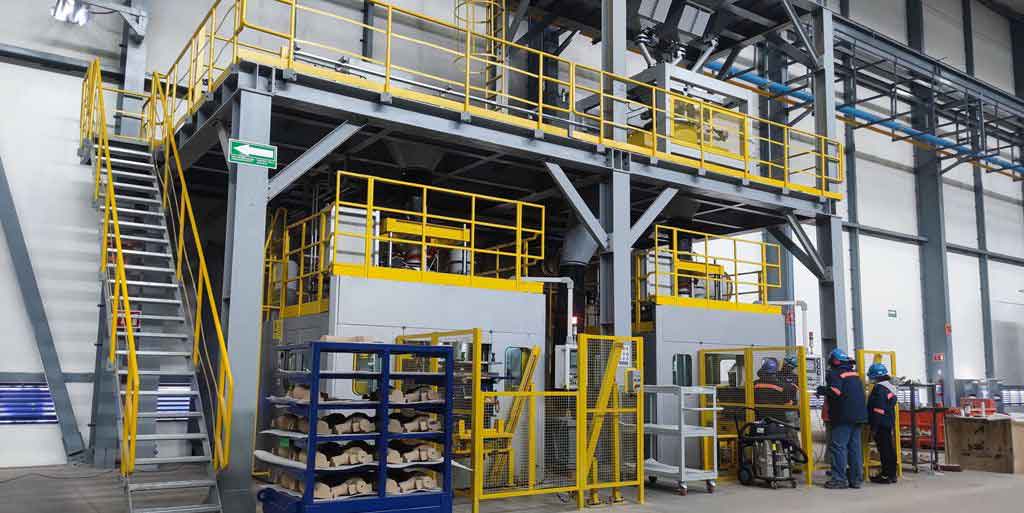
The primary objective of my work is to produce a steel casting material that combines high strength with adequate plasticity and toughness, thereby preventing early brittle cracking and fracture, improving safety, and extending service life. To achieve this, I utilized a duplex melting process involving an electric arc furnace (EAF) followed by ladle furnace (LF) refining. This method effectively reduces harmful impurities such as nitrogen, oxygen, sulfur, and phosphorus, enabling the production of cleaner molten steel. By adjusting alloying elements and implementing rare earth microalloying, I aimed to enhance the strength, toughness, and low-temperature impact properties of the steel casting through subsequent heat treatments.
The technical specifications for the EL-grade steel casting are stringent. As outlined in Table 1, the material must exhibit a tensile strength of at least 1000 MPa, yield strength of 900 MPa, elongation of 14%, reduction of area of 30%, and -40°C impact energy of 33 J, with a hardness range of 270-320 HBW. Additionally, samples taken from the actual casting body must meet slightly reduced but still demanding requirements, as shown in Table 2, ensuring consistency in real-world applications. These targets guide my compositional design and processing strategies.
| Grade | Tensile Strength (MPa) | Yield Strength (MPa) | Elongation (%) | Reduction of Area (%) | -40°C Impact Energy (J) | Hardness (HBW) |
|---|---|---|---|---|---|---|
| EL Steel | ≥ 1000 | ≥ 900 | ≥ 14 | ≥ 30 | ≥ 33 | 270-320 |
| Grade | Tensile Strength (MPa) | Yield Strength (MPa) | Elongation (%) | Reduction of Area (%) | -40°C Impact Energy (J) | Hardness (HBW) |
|---|---|---|---|---|---|---|
| EL Steel | ≥ 910 | ≥ 800 | ≥ 11 | ≥ 25 | ≥ 27 | 270-320 |
My experimental methodology revolves around a systematic approach to steel casting development. I began by designing the chemical composition of EL-grade steel, drawing from existing E-grade steel but with modifications to enhance performance. The key changes include increased contents of manganese, nickel, chromium, and molybdenum, along with reduced sulfur and phosphorus levels. Furthermore, I introduced rare earth elements via microalloying to leverage their beneficial effects. The steel casting process involved melting in a 20-ton EAF, refining in a 25-ton LF, and adding rare earth silicide alloy via an immersion method after final deoxidation, followed by argon stirring for at least 3 minutes. This ensures homogeneous distribution and effective reaction of rare earth elements in the molten steel.
The chemical composition design for EL-grade steel casting is detailed in Table 3. This formulation aims to improve hardenability, reduce high-temperature embrittlement, and refine grain structure. The use of rare earth elements, with an addition limit of 0.15 wt%, is critical for modifying inclusion characteristics and enhancing low-temperature toughness. To validate this design, I conducted three trial heats with compositions at the mid-range, upper limit, and lower limit, as summarized in Table 4. These trials allowed me to assess the robustness of the steel casting process across varying compositions.
| Element | C | Si | Mn | S | P | Cu | Ni | Cr | Mo | RE (Added) |
|---|---|---|---|---|---|---|---|---|---|---|
| Range | 0.24-0.30 | 0.30-0.50 | 1.35-1.55 | ≤ 0.020 | ≤ 0.020 | ≤ 0.30 | 0.45-0.60 | 0.50-0.60 | 0.25-0.40 | ≤ 0.15 |
| Heat No. | C | Si | Mn | S | P | Cu | Ni | Cr | Mo | RE |
|---|---|---|---|---|---|---|---|---|---|---|
| 1# | 0.27 | 0.43 | 1.44 | 0.009 | 0.008 | 0.089 | 0.55 | 0.54 | 0.30 | 0.013 |
| 2# | 0.29 | 0.47 | 1.53 | 0.011 | 0.008 | 0.096 | 0.58 | 0.56 | 0.37 | 0.015 |
| 3# | 0.24 | 0.33 | 1.38 | 0.009 | 0.009 | 0.11 | 0.47 | 0.53 | 0.26 | 0.011 |
Gas content analysis is essential in steel casting to ensure purity. As shown in Table 5, the oxygen and nitrogen levels in the trial heats are low, typically below 0.028‰ and 0.069‰, respectively, indicating effective degassing during LF refining. This contributes to the cleanliness of the steel casting, which is vital for mechanical properties. The low gas content minimizes porosity and inclusion-related defects, enhancing the integrity of the final cast components.
| Heat No. | Oxygen [O] | Nitrogen [N] |
|---|---|---|
| 1# | 0.028 | 0.069 |
| 2# | 0.027 | 0.066 |
| 3# | 0.025 | 0.068 |
Heat treatment is a critical step in optimizing the microstructure and properties of steel castings. For EL-grade steel, I employed a two-stage process: normalizing followed by quenching and tempering. The parameters are listed in Table 6. Normalizing at 900-920°C refines the grain structure, while quenching in water and tempering at 540-560°C produce a tempered martensitic or bainitic structure, balancing strength and toughness. This regimen is tailored to the thick-section nature of track shoe castings, ensuring uniform properties throughout the component.
| Process | Charging Temp. (°C) | Holding Temp. (°C) | Heating Time (min) | Holding Time (min) | Cooling Medium | Cooling Time (min) |
|---|---|---|---|---|---|---|
| Normalizing | ≤ 700 | 900-920 | 180-600 | 180-240 | Air | ≥ 120 |
| Quenching | ≤ 500 | 900-920 | 180-720 | 210-270 | Water | ≥ 10 |
| Tempering | ≤ 500 | 540-560 | ≥ 150 | 210-270 | Air | ≥ 120 |
After heat treatment, I evaluated the mechanical properties of samples from each trial heat. The results, presented in Table 7, demonstrate that all heats meet or exceed the EL-grade requirements. For instance, Heat 1# achieved a tensile strength of 1045 MPa, yield strength of 950 MPa, elongation of 18%, reduction of area of 51%, and -40°C impact energy of 54-60 J. These values highlight the effectiveness of the steel casting process and composition design. Additionally, metallographic analysis revealed a tempered microstructure with fine grain sizes (approximately 8.5 ASTM grain number) and low inclusion ratings, as shown in Table 8. The non-metallic inclusions are predominantly Type III, fine series, at levels of 0.5 to 1, indicating the beneficial role of rare earths in modifying inclusions into harmless forms.
| Heat No. | Tensile Strength (MPa) | Yield Strength (MPa) | Elongation (%) | Reduction of Area (%) | -40°C Impact Energy (J) | Hardness (HBW) |
|---|---|---|---|---|---|---|
| 1# | 1045 | 950 | 18.0 | 51 | 54, 58, 60 | 301 |
| 2# | 1100 | 975 | 16.0 | 40 | 38, 38, 40 | 317 |
| 3# | 1010 | 910 | 19.5 | 53 | 66, 66, 62 | 277 |
| Heat No. | Metallographic Structure | Non-Metallic Inclusions | Grain Size (ASTM No.) |
|---|---|---|---|
| 1# | Tempered, Grade 6 | Type III Fine, Grade 1 | 8.5 |
| 2# | Tempered, Grade 6 | Type III Fine, Grade 1 | 8.5 |
| 3# | Tempered, Grade 6 | Type III Fine, Grade 0.5 | 8.5 |
To ensure real-world applicability, I also tested mechanical properties on samples extracted from the actual track shoe castings. As shown in Table 9, the casting body properties align well with the specifications in Table 2. For example, Heat 1# exhibited a tensile strength of 970 MPa, yield strength of 890 MPa, elongation of 17%, reduction of area of 45%, and -40°C impact energy of 54-56 J. This consistency validates that the steel casting process yields uniform properties even in complex geometries, which is crucial for durability in service.
| Heat No. | Tensile Strength (MPa) | Yield Strength (MPa) | Elongation (%) | Reduction of Area (%) | -40°C Impact Energy (J) | Hardness (HBW) |
|---|---|---|---|---|---|---|
| 1# | 970 | 890 | 17.0 | 45 | 54, 54, 56 | 294 |
| 2# | 1010 | 920 | 15.5 | 38 | 36, 36, 37 | 311 |
| 3# | 920 | 815 | 17.5 | 51 | 60, 62, 62 | 275 |
Impact toughness at various temperatures was assessed to evaluate the low-temperature performance of the steel casting. Using V-notch Charpy specimens, I tested at room temperature, -20°C, -40°C, and -60°C. The results, summarized in Table 10, indicate excellent toughness retention at sub-zero conditions. For instance, Heat 1# showed impact energies of 110 J at room temperature, 97 J at -20°C, 58 J at -40°C, and 27 J at -60°C. This demonstrates that the EL-grade steel casting maintains adequate ductility and fracture resistance in cold environments, a key requirement for machinery operating in diverse climates.
| Heat No. | Room Temp. Impact Energy (J) | -20°C Impact Energy (J) | -40°C Impact Energy (J) | -60°C Impact Energy (J) |
|---|---|---|---|---|
| 1# | 110, 108, 106 | 97, 97, 98 | 56, 58, 58 | 28, 27, 27 |
| 2# | 98, 96, 96 | 85, 85, 82 | 42, 42, 40 | 24, 25, 24 |
| 3# | 118, 116, 112 | 101, 99, 98 | 66, 68, 66 | 28, 30, 30 |
The enhanced properties of EL-grade steel casting can be attributed to the multifaceted effects of rare earth elements. In steel casting, rare earths act as powerful deoxidizers and desulfurizers. For example, the deoxidation reaction can be represented as:
$$2[RE] + 3[O] \rightarrow RE_2O_3$$
where [RE] and [O] denote dissolved rare earth and oxygen in the molten steel. Similarly, desulfurization occurs via:
$$[RE] + [S] \rightarrow RES$$
These reactions reduce the oxygen and sulfur content, purifying the steel casting and minimizing the formation of harmful inclusions. Moreover, rare earths modify the morphology of remaining inclusions, transforming them from angular, stress-concentrating types into spherical or elliptical shapes that are less detrimental to toughness. This modification is crucial for improving the low-temperature impact performance of steel castings.
Another significant aspect is grain refinement. Rare earth elements segregate at grain boundaries during solidification, inhibiting grain growth and promoting a finer microstructure. The Hall-Petch relationship illustrates how grain size affects yield strength:
$$\sigma_y = \sigma_0 + k_y d^{-1/2}$$
where $\sigma_y$ is the yield strength, $\sigma_0$ is the friction stress, $k_y$ is the strengthening coefficient, and $d$ is the grain diameter. By refining grains through rare earth addition, the steel casting achieves higher strength without compromising toughness. Additionally, rare earths enhance hardenability by delaying transformation kinetics, allowing for more uniform microstructures in thick-section castings.
The optimization of alloy composition also plays a vital role. Increasing manganese, nickel, chromium, and molybdenum contents improves the strength and hardenability of the steel casting. For instance, nickel contributes to toughness, while chromium and molybdenum form carbides that enhance wear resistance. The balanced composition ensures that the steel casting meets the demanding mechanical requirements. Furthermore, the reduction of sulfur and phosphorus to below 0.020% minimizes hot shortness and embrittlement, contributing to better ductility and impact properties.
From a processing perspective, the duplex melting route (EAF + LF) is essential for producing high-quality steel castings. The LF refining step allows for precise control over composition, temperature, and inclusion morphology. Argon stirring after rare earth addition ensures homogeneous mixing and effective inclusion modification. This integrated approach underscores the importance of process optimization in advanced steel casting manufacturing.
In terms of heat treatment, the normalizing step prior to quenching and tempering is critical for achieving a uniform microstructure in cast components. Normalizing homogenizes the cast structure and refines grains, while subsequent quenching and tempering develop the desired strength-toughness balance. The tempering temperature of 540-560°C is chosen to precipitate fine carbides and relieve stresses without causing excessive softening. This regimen is particularly effective for steel castings with complex shapes, such as track shoes.
The successful application of EL-grade steel casting in track shoes has been demonstrated through field trials. Components manufactured using this material have shown improved wear resistance and durability under heavy-load conditions, with no reported failures due to brittle fracture. This validates the practical benefits of incorporating rare earth microalloying in steel casting processes for engineering machinery.
Looking forward, there are opportunities to further optimize the steel casting formulation. For example, adjusting the rare earth content based on casting thickness or exploring combinations with other microalloying elements like niobium or vanadium could yield additional improvements. Moreover, advanced characterization techniques, such as electron microscopy and computational modeling, can provide deeper insights into the mechanisms of rare earth action in steel castings.
In conclusion, my research on high-strength track steel casting materials highlights the transformative potential of rare earth elements. By purifying molten steel, modifying inclusions, refining grains, and enhancing low-temperature toughness, rare earths enable the development of EL-grade steel castings that surpass conventional materials. The experimental results confirm that this steel casting meets stringent mechanical property requirements, offering a reliable solution for large-scale, heavy-duty engineering applications. As the demand for robust machinery grows, continued innovation in steel casting technology will be essential to support infrastructure development and global initiatives.
The integration of rare earth microalloying into steel casting practices not only improves performance but also contributes to cost-effectiveness by allowing leaner alloy designs. This aligns with sustainable manufacturing goals, reducing material usage while extending component life. I believe that the insights gained from this study will inspire further advancements in the field of steel casting, paving the way for next-generation materials that meet the evolving challenges of the engineering sector.