
In modern industrial processes, the reliability and efficiency of machine tool casting operations are paramount. As a researcher focused on advanced manufacturing systems, I have extensively studied fault detection and diagnosis (FDD) methods, particularly for nonlinear systems prevalent in machine tool casting environments. The integration of robust residual generation techniques is crucial to ensure minimal downtime and high-quality output in machine tool casting. This article delves into the theoretical foundations and practical applications of these methods, emphasizing their relevance to machine tool casting systems. I will explore residual generation, robustness strategies, and adaptive thresholds, all while incorporating formulas and tables to summarize key concepts. Throughout, I will highlight the importance of machine tool casting in driving these technological advancements.
The core of FDD lies in residual generation, which involves comparing actual system outputs with estimated ones. For nonlinear systems, such as those in machine tool casting, Zhang and Basseville (1998) proposed an effective method where residuals include gradients of prediction errors with respect to parameter vectors. This ensures that any small variations in identified parameters lead to changes in residual means, enhancing sensitivity to faults in machine tool casting equipment. The general structure of residuals, as noted by Ding, can be expressed as:
$$ r_L(s) = Q(s)(y_L(s) – \hat{y}_L(s)) $$
Here, \( r_L(s) \) is the residual in the Laplace domain, \( y_L(s) \) is the actual output, \( \hat{y}_L(s) \) is the estimated output from an observer, and \( Q(s) \) is a filter designed to improve robustness. This formulation is pivotal for monitoring machine tool casting processes, where output estimates must account for dynamic behaviors. Essentially, every residual generator is an output estimation error, possibly filtered for noise reduction in machine tool casting applications.
To illustrate the components of residual generation in machine tool casting, consider the following table summarizing key elements:
| Component | Description | Role in Machine Tool Casting |
|---|---|---|
| Residual \( r_L(s) \) | Difference between actual and estimated outputs | Detects anomalies in casting parameters like temperature or pressure |
| Filter \( Q(s) \) | Frequency-domain filter to enhance signal-to-noise ratio | Reduces noise from vibrations in machine tool casting equipment |
| Observer Output \( \hat{y}_L(s) \) | Estimated output based on system model | Provides reference for normal operation in machine tool casting processes |
Robustness is inevitable in real-world systems due to uncertainties like process noise, modeling errors, and parameter perturbations. In machine tool casting, these uncertainties arise from material variations and environmental factors. Robust fault detection algorithms must withstand such influences, and I have explored multiple approaches, including statistical data processing, pattern recognition, fuzzy logic, and adaptive thresholds. For instance, adaptive thresholds dependent on system inputs and fuzzy decision methods were employed by researchers to handle uncertainties in machine tool casting. The goal is to maximize the sensitivity of residuals to faults while minimizing the impact of disturbances, often quantified by a feature index:
$$ J = \frac{|\partial r / \partial f|}{|\partial r / \partial d|} \quad \text{or} \quad J = \frac{|\partial r_L / \partial f_L|}{|\partial r_L / \partial d_L|} $$
This index represents the ratio of residual sensitivity to faults \( f \) versus disturbances \( d \), crucial for isolating faults in machine tool casting systems. For unstructured model uncertainties, optimal approximation methods using singular value decomposition have been proposed to achieve disturbance decoupling. A common pitfall in machine tool casting is the selection of fixed thresholds: too low increases false alarms, while too high reduces fault detection efficiency. Adaptive thresholds, introduced by Clark (1989), address this by dynamically adjusting based on residual estimates. The root mean square (RMS) is a widely used residual evaluation function, with time-domain and frequency-domain forms:
$$ |r(t)|_e = J(\tau) = \left( \tau^{-1} \int_0^\tau r^T(t) r(t) dt \right)^{1/2} $$
$$ |r_L(j\omega)|_e = J(\varepsilon) = \left( \varepsilon^{-1} \int_{\omega_1}^{\omega_2} r_L^*(j\omega) r_L(j\omega) d\omega \right)^{1/2}, \quad \varepsilon = \omega_2 – \omega_1 $$
These functions help in setting thresholds for machine tool casting by quantifying residual magnitudes over time or frequency ranges. To compare robust methods applicable to machine tool casting, I present the following table:
| Method | Description | Advantages for Machine Tool Casting | Limitations |
|---|---|---|---|
| Adaptive Thresholds | Thresholds adjust based on system inputs or residuals | Reduces false alarms in dynamic casting environments | Requires accurate model of uncertainties |
| Fuzzy Logic | Uses fuzzy sets for decision-making under uncertainty | Handles vague data in machine tool casting sensor readings | Complex to tune for nonlinear systems |
| Unknown Input Observers | Decouples unknown disturbances from residuals | Effective for isolating faults in casting equipment with noise | Difficult to design for highly nonlinear processes |
| Singular Value Decomposition | Optimizes residual generation via matrix approximations | Improves robustness in machine tool casting parameter estimation | Computationally intensive for real-time applications |
In machine tool casting, nonlinearities are significant due to complex material behaviors and thermal dynamics. Traditional state observer-based methods face challenges in handling general nonlinear systems and ensuring robustness against uncertainties. Two primary approaches exist: unknown input observer decoupling for systems with unknown disturbances, and threshold limiting techniques for bounded unknown functions. For additive faults, extensive research exists, but multiplicative faults—common in component failures in machine tool casting—are less studied. Nonlinear adaptive observers and decoupling techniques have emerged for FDD in such contexts. The integration of these methods into machine tool casting requires careful consideration of real-time implementation and computational efficiency.
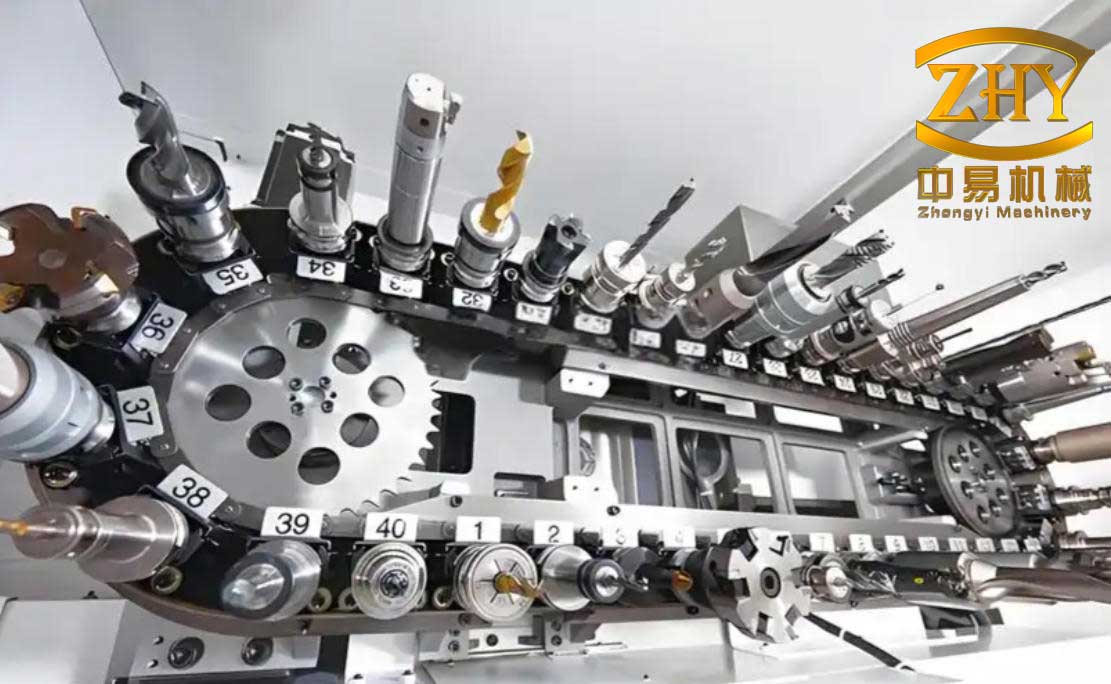
The application of these FDD techniques to machine tool casting involves modeling the casting process as a nonlinear dynamic system. For example, consider a machine tool casting system where output \( y(t) \) represents casting quality metrics, and inputs include temperature and pressure controls. A nonlinear observer can estimate outputs, and residuals are generated to detect faults like mold cracks or temperature deviations. The residual dynamics for a machine tool casting system can be described by:
$$ \dot{x} = f(x, u, \theta) + d(t), \quad y = h(x) + f_a(t) $$
$$ \hat{\dot{x}} = f(\hat{x}, u, \hat{\theta}) + L(y – \hat{y}), \quad \hat{y} = h(\hat{x}) $$
$$ r(t) = y(t) – \hat{y}(t) $$
Here, \( x \) is the state vector (e.g., material properties in machine tool casting), \( u \) is the input, \( \theta \) represents parameters, \( d(t) \) is disturbance, and \( f_a(t) \) is additive fault. The observer gain \( L \) is designed to ensure stability and robustness. For machine tool casting, adaptive thresholds can be derived from the RMS function to account for varying operating conditions. The effectiveness of this approach is summarized in the table below, which outlines fault types and detection methods in machine tool casting:
| Fault Type | Description in Machine Tool Casting | Detection Method | Residual Evaluation |
|---|---|---|---|
| Sensor Fault | Inaccurate temperature or pressure readings | Observer-based residual generation with \( Q(s) \) filter | Threshold on \( |r(t)|_e \) exceeding adaptive limits |
| Actuator Fault | Malfunction in control valves or heaters | Unknown input observer for decoupling disturbances | Feature index \( J \) maximization for sensitivity |
| Process Fault | Material defects or cooling irregularities | Nonlinear adaptive observer with parameter estimation | Frequency-domain analysis using \( |r_L(j\omega)|_e \) |
| Multiplicative Fault | Component degradation in casting machinery | Robust residual generation via singular value decomposition | Fuzzy logic decision system for uncertainty handling |
Looking ahead, the challenges in FDD for machine tool casting include the need for faster detection and diagnosis, especially in high-speed casting processes. Theoretical advancements must be translated into practical applications, considering computational constraints and integration with existing control systems. Nonlinear models are becoming a trend for machine tool casting due to inherent nonlinearities, and robustness against model uncertainties remains a key research area. Techniques like nonlinear decoupling and adaptive observers show promise, but their real-time implementation in machine tool casting requires further study. Additionally, the rise of smart manufacturing and Industry 4.0 emphasizes the integration of FDD with data-driven approaches, such as machine learning, to enhance predictive maintenance in machine tool casting facilities.
In conclusion, the evolution of fault detection and diagnosis methods has significant implications for machine tool casting systems. By leveraging robust residual generation and adaptive thresholds, we can improve the reliability and efficiency of casting operations. The continuous emphasis on machine tool casting underscores the importance of tailored solutions for industrial applications. As research progresses, the fusion of nonlinear adaptive techniques with real-time monitoring will drive advancements in machine tool casting, ensuring higher quality outputs and reduced downtime. This journey from theory to practice highlights the dynamic nature of FDD, with machine tool casting serving as a critical domain for innovation and application.