
In modern manufacturing, the reliability and precision of machine tool castings are paramount. As an engineer specializing in fault detection and diagnosis (FDD), I have observed that the integrity of these castings directly impacts the performance of industrial machinery. Therefore, developing robust FDD methodologies is crucial for ensuring quality and preventing failures in machine tool castings. This article explores advanced residual generation and robustness techniques, with a focus on their application to nonlinear systems commonly encountered in casting processes. I will elaborate on theoretical frameworks, practical implementations, and the integration of these methods to enhance the durability and accuracy of machine tool castings.
The foundation of FDD lies in residual generation, which involves creating signals that indicate deviations from normal operation. For machine tool castings, residuals can detect defects like cracks, porosity, or dimensional inaccuracies during production. In 1998, a significant advancement was proposed for nonlinear systems, where residuals incorporate the gradient of parameter estimation errors. This approach ensures that even minor changes in identified parameters lead to variations in residual means, enhancing sensitivity to faults in machine tool castings. The general structure of residual generators, as noted in literature, is given by:
$$ r_L(s) = Q(s)(y_L(s) – \hat{y}_L(s)) $$
Here, \( r_L(s) \) represents the residual in the Laplace domain, \( y_L(s) \) is the measured output, \( \hat{y}_L(s) \) is the estimated output from an observer, and \( Q(s) \) is a filter designed to improve robustness. This formulation highlights that every residual generator essentially computes the output estimation error, possibly filtered, making it applicable to monitoring systems for machine tool castings. To summarize key residual generation methods, consider Table 1, which contrasts different approaches and their relevance to casting processes.
| Method | Key Feature | Application to Machine Tool Castings |
|---|---|---|
| Gradient-based Residuals | Incorporates parameter error gradients; sensitive to small changes | Detects gradual wear or material degradation in castings |
| Observer-based Residuals | Uses output estimators like Kalman filters | Monitors dimensional accuracy during casting solidification |
| Parity Space Methods | Relies on singular value decomposition in parity space | Identifies sensor faults in temperature or pressure sensors |
Robustness in FDD is essential because systems, including those for producing machine tool castings, inevitably face uncertainties such as process noise, modeling errors, and parameter variations. A robust fault detection algorithm must withstand these factors to reduce false alarms and missed detections. I have explored various techniques to achieve robust residual estimation, including statistical data processing, pattern recognition, fuzzy logic, and adaptive thresholds. For instance, adaptive thresholds that depend on system inputs can dynamically adjust to changing conditions in casting environments, while fuzzy decision methods provide flexibility in interpreting residuals for machine tool castings.
In the frequency domain, robustness can be quantified by maximizing the feature index, which balances sensitivity to faults against sensitivity to disturbances. The index is defined as:
$$ J = \frac{|\partial r / \partial f|}{|\partial r / \partial d|} $$
or, in Laplace form,
$$ J = \frac{|\partial r_L / \partial f_L|}{|\partial r_L / \partial d_L|} $$
where \( f \) represents faults and \( d \) denotes disturbances. For machine tool castings, this maximizes the detection of defects like inclusions or shrinkage while ignoring noise from vibration or thermal fluctuations. Another strategy for unstructured model uncertainties involves computing distribution matrices to achieve optimal approximate disturbance decoupling, solved via singular value decomposition of triangular matrices. This is particularly useful for complex casting systems where exact models are unavailable.
Residual evaluation functions play a critical role in robustness. Common metrics include the root mean square (RMS) in both time and frequency domains. For time-domain analysis, applied to continuous monitoring of machine tool castings:
$$ |r(t)|_e = J(\tau) = \left( \tau^{-1} \int_0^{\tau} r^T(t) r(t) \, dt \right)^{1/2} $$
In the frequency domain, useful for analyzing periodic defects in castings:
$$ |r_L(j\omega)|_e = J(\varepsilon) = \left( \varepsilon^{-1} \int_{\omega_1}^{\omega_2} r_L^*(j\omega) r_L(j\omega) \, d\omega \right)^{1/2}, \quad \varepsilon = \omega_2 – \omega_1 $$
These functions help set adaptive thresholds, reducing false alarms in fault detection for machine tool castings. Table 2 compares robustness techniques and their effectiveness in casting applications.
| Technique | Description | Benefits for Machine Tool Castings |
|---|---|---|
| Adaptive Thresholds | Thresholds adjust based on system inputs and operating conditions | Minimizes false alarms due to environmental changes in foundries |
| Fuzzy Logic | Uses fuzzy sets for decision-making under uncertainty | Handles vague fault indicators like surface roughness variations |
| Unknown Input Observers | Decouples unknown disturbances from residuals | Isolates casting defects from measurement noise |
| Singular Value Decomposition | Approximates optimal disturbance decoupling | Improves detection of subtle flaws in large-scale castings |
The application of these FDD methods to machine tool castings involves addressing nonlinearities and multiplicative faults. Traditional approaches often focus on additive faults in linear systems, but machine tool castings exhibit nonlinear behaviors due to material properties and manufacturing processes. For example, thermal stresses during cooling can lead to nonlinear deformations, requiring adaptive observers for accurate fault diagnosis. I emphasize that multiplicative faults, which are common in component failures beyond sensors and actuators, must be considered for comprehensive quality control of machine tool castings.
Nonlinear decoupling techniques and adaptive observers have been developed for FDD in nonlinear systems. These methods enhance robustness by accounting for model uncertainties, which are prevalent in casting operations. For instance, an unknown input observer can decouple disturbances like fluctuating melt temperatures, while threshold limiting techniques bound uncertainties in material composition. Integrating these approaches ensures reliable fault detection in machine tool castings, even under harsh industrial conditions.
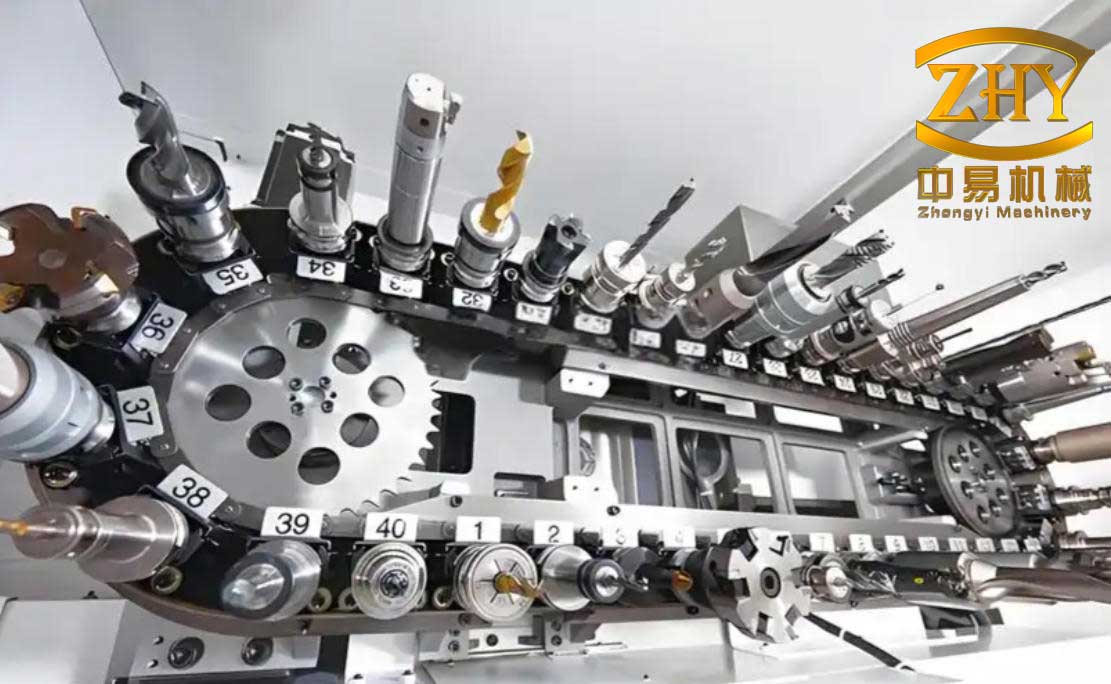
In practice, implementing FDD for machine tool castings requires careful consideration of real-time constraints and system integration. The dynamic nature of casting processes, such as pouring and solidification, demands fast detection and diagnosis to prevent defects from propagating. I have found that combining residual generation with robust evaluation functions significantly improves the efficiency of fault isolation in machine tool castings. For example, using frequency-domain analysis can quickly identify periodic vibrations indicative of mold misalignment, while time-domain methods monitor gradual wear in casting equipment.
To illustrate the mathematical framework, consider a nonlinear model for a casting process, where the state equations involve temperature and pressure variables. The residual generator can be designed using an adaptive observer, with robustness ensured by optimizing the feature index. Let the system be represented by:
$$ \dot{x} = f(x, \theta) + g(x)u + d, \quad y = h(x) + f_s $$
where \( x \) is the state vector, \( \theta \) denotes parameters related to machine tool castings, \( u \) is the input, \( d \) is disturbance, and \( f_s \) represents sensor faults. The residual \( r \) is computed as \( r = y – \hat{y} \), with \( \hat{y} \) estimated by an observer. By tuning \( Q(s) \) in the residual generator, we can enhance sensitivity to faults in machine tool castings while attenuating disturbances.
Future research directions include extending these methods to networked systems for smart foundries, where multiple machine tool castings are monitored simultaneously. Additionally, integrating machine learning with traditional FDD could further improve robustness by learning from historical data on casting defects. I believe that advancing nonlinear adaptive observers will be key to handling the complexities of modern machine tool castings, leading to higher quality and reduced downtime.
In conclusion, fault diagnosis in machine tool castings is a critical area that blends theoretical innovation with practical application. Through robust residual generation and evaluation techniques, we can achieve reliable detection of defects, ensuring the longevity and precision of these essential components. As manufacturing evolves, continued refinement of FDD methodologies will play a vital role in maintaining the integrity of machine tool castings across industries.