
In my extensive experience within precision manufacturing, particularly for aerospace components, the fine-hole casting process for aluminum alloy shell castings represents a transformative approach to producing complex internal channels. Shell castings, such as those used in engine regulators and hydraulic systems, often require intricate networks of fine holes, typically 3–6 mm in diameter, for conveying high-pressure fluids like oil, fuel, or lubricants. Traditional machining methods for these shell castings involve drilling multiple intersecting bores, which is time-consuming, prone to errors, and leads to issues like burrs and poor concentricity, often resulting in high scrap rates and extended lead times of three to five months. By adopting fine-hole casting, we can directly form smooth, continuous passages within the shell castings, enhancing fluid dynamics, structural integrity, and production efficiency. This article delves into the comprehensive methodology, from core fabrication to post-casting treatments, emphasizing practical insights and technical nuances that ensure success for aluminum alloy shell castings.
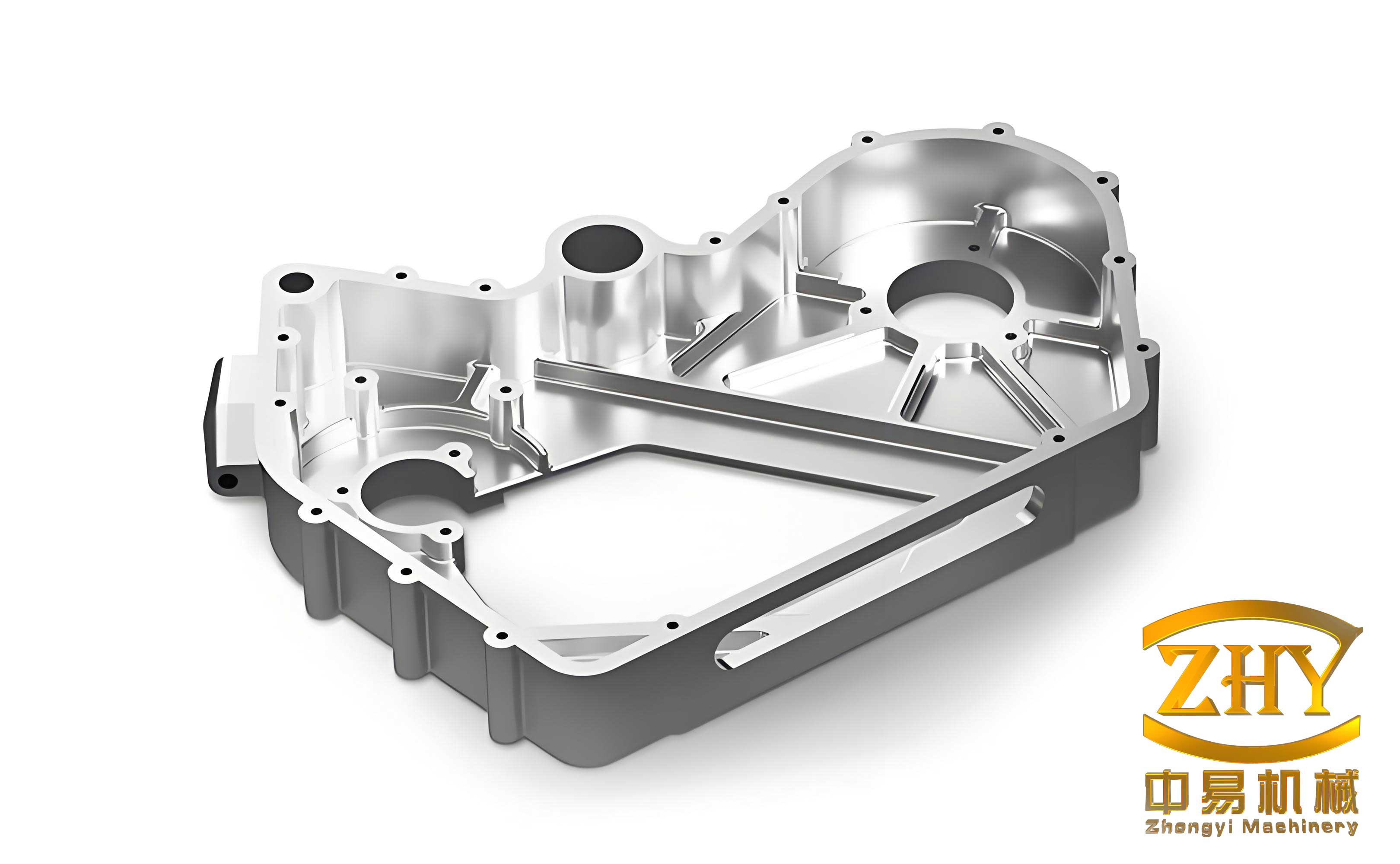
The fundamental principle of fine-hole casting for shell castings involves using metallic cores, typically copper tubes, to define the internal channels during the casting process. These cores are assembled into a framework, coated with a protective layer, and embedded in the mold before pouring molten aluminum alloy. After solidification, the cores are chemically dissolved, leaving behind precise holes with smooth surfaces. This method not only reduces machining workload by 30–60% but also improves the performance of shell castings due to better flow characteristics and pressure retention. In this discussion, I will explore each step in detail, supported by tables and formulas, to provide a robust guide for implementing this process in industrial settings, particularly for high-value aluminum alloy shell castings.
Core Material Selection and Fabrication for Shell Castings
The choice of core material is critical for fine-hole casting in aluminum alloy shell castings. I recommend using copper tubes, either pure copper (C11000) or brass (C26000), in annealed (M) condition to ensure ductility and ease of manipulation. These tubes should conform to standard dimensions, with outer diameters matching the desired hole sizes in the shell castings, typically 3–6 mm. The cores can be straight or bent, depending on the channel geometry required in the final shell castings.
For straight cores, simple cutting and deburring suffice. However, bent cores necessitate a meticulous four-step process: First, fill the tubes with rosin to prevent collapse during bending—this is essential for maintaining the integrity of fine holes in shell castings. Second, perform bending using pliers for prototyping or dedicated jigs for mass production; the bend radius should be smooth to avoid stress concentrations. Third, drill vent holes every 10–15 mm along the core, with diameters of 0.4–0.5 mm, positioned on the upper side relative to the pouring orientation to allow gas escape during casting. If rosin interferes with drilling, remove it post-bending. Fourth, prepare connection points, such as drilled holes or shaped ends, for assembly into larger units. After fabrication, all cores must be cleaned to remove contaminants that could affect coating adhesion. I have developed a standardized cleaning sequence, as summarized in Table 1, which ensures optimal surface conditions for aluminum alloy shell castings.
| Step | Bath Type and Requirements | Solution Composition | Immersion Time (s) | Remarks |
|---|---|---|---|---|
| 1 | Alkaline bath, heated to boiling | 1–2% Na2SiO3, 2–2.5% Na2CO3, 5–7% Na3PO4 by weight | 60 | Agitate after immersion; rinse with cold water for 1–2 min post-treatment. |
| 2 | Acid bath | 35–50% HCl by volume | 10 | Agitate; rinse thoroughly with cold water. |
| 3 | Brightening bath | 15–20% Cr2O3 by weight, 4–6% H2SO4 by volume | 10–20 | Rinse with hot water (~80°C), dry with compressed air, and bake at 80–100°C. |
Cleaning is vital to prevent defects in aluminum alloy shell castings, as residues can lead to poor coating adherence or core-melt issues. Once cleaned, the cores are assembled into a core framework. Individual cores or sub-assemblies are joined using gas welding with a silver-based solder (e.g., HIAgDu26-4) and a flux containing 40% KF, 40% H3BO3, and 20% Na2B2O7·10H2O. Welding should be guided by templates to ensure dimensional accuracy for the shell castings. After welding, the framework is boiled in water for 30 minutes to remove flux residues and dried. This assembly, known as the core bracket, is crucial for positioning the channels within the mold for aluminum alloy shell castings.
Coating and Drying of Core Brackets for Shell Castings
Coating the core bracket serves dual purposes: enhancing the surface finish of the holes in shell castings and protecting the copper cores from molten aluminum attack. Without coating, the interface between copper and aluminum can form brittle intermetallic compounds like CuAl2, which melts at 548°C, leading to core erosion and defects such as aluminum penetration (where molten metal enters the core tubes). To mitigate this, I apply a two-layer ceramic coating via spraying. The composition and parameters are detailed in Table 2, tailored for aluminum alloy shell castings.
| Layer | Composition (Weight %) | Coating Thickness (mm) | Application Temperature (°C) |
|---|---|---|---|
| First | 9–13% ZnO, 7–10% sodium silicate, balance water | 0.03–0.06 | 250–350 |
| Second | 8–9% colloidal graphite, 5–6% sodium silicate, balance water | 0.05–0.09 | 250–350 |
Spraying is performed with auxiliary heating (e.g., using a torch) to prevent rapid cooling of the core bracket, which could cause coating cracks. The first layer, rich in zinc oxide, provides a refractory barrier, while the second graphite layer improves lubricity and surface smoothness for the shell castings. After coating, the bracket is dried in an electric furnace at 420–430°C for 1–1.5 hours to remove moisture and solidify the coating. Simultaneously, the mold and gating system for the aluminum alloy shell castings are thoroughly dried to prevent gas-related defects. This step ensures that the cores remain intact during pouring, preserving the fine-hole geometry in the final shell castings.
Chemical Corrosion for Core Removal in Shell Castings
After the aluminum alloy shell castings solidify, the copper cores must be removed without damaging the casting. I employ chemical corrosion using concentrated nitric acid (HNO3), which selectively dissolves copper while passivating aluminum. The reaction proceeds as follows, with copper oxidizing to copper(II) nitrate and releasing nitrogen dioxide:
$$ \text{Cu} + 4\text{HNO}_3 \rightarrow \text{Cu}(\text{NO}_3)_2 + 2\text{NO}_2 + 2\text{H}_2\text{O} $$
Aluminum, however, forms a protective oxide layer (Al2O3) that inhibits further attack, provided the temperature is controlled. The corrosion process is exothermic, and excessive heat can compromise the passivation, leading to unintended etching of the aluminum alloy shell castings. Therefore, I monitor the bath temperature closely, keeping it below 50°C to prevent defects. The corrosion is conducted in acid-resistant vessels (e.g., plastic or stainless steel tanks), with shell castings oriented uniformly to ensure even exposure. For a typical regulator housing shell casting weighing 9 kg, the initial corrosion period is 40–45 minutes, after which the castings are removed and flushed with water and compressed air through the hole openings to dislodge debris. The orientation is changed every 15–20 minutes, and the process continues until gas evolution ceases—usually within 2 hours for such shell castings. Completion is indicated by the absence of bubbles, signaling full core dissolution. Finally, the shell castings are rinsed, neutralized in a 5–8% Na2CO3 solution for 3–5 minutes, washed again, and dried. This method efficiently removes cores while maintaining the dimensional accuracy of the fine holes in aluminum alloy shell castings.
Advantages and Challenges of Fine-Hole Casting for Shell Castings
The fine-hole casting process offers significant benefits for aluminum alloy shell castings. Firstly, it eliminates the need for complex drilling operations, reducing machining time by 30–60% and lowering tooling costs. The cast holes feature smooth bends and continuous paths, enhancing fluid flow and pressure performance in shell castings—critical for aerospace applications. Moreover, this process improves product yield by avoiding concentricity errors common in drilled intersections. From my observations, shell castings produced this way exhibit higher structural integrity and fewer defects. However, challenges persist: each shell casting consumes 1.5–1.6 kg of copper tubing, adding material costs; the process requires additional steps like bending, welding, and corrosion, necessitating specialized facilities; and corrosion must be done in ventilated areas due to toxic NO2 emissions. Additionally, inspecting the internal surface quality of fine holes in shell castings is difficult without advanced tools like borescopes, and the waste Cu(NO3)2 solution requires recycling to minimize environmental impact. Despite these drawbacks, the overall efficiency gain makes fine-hole casting viable for high-value aluminum alloy shell castings.
Technical Extensions and Optimization for Shell Castings
To further refine the fine-hole casting process for aluminum alloy shell castings, I have explored various optimizations. For instance, the coating thickness can be modeled to balance protection and dimensional tolerance. Using heat transfer analysis, the temperature at the core-melt interface during pouring can be estimated to prevent erosion. Consider the Fourier heat conduction equation for a cylindrical core in a shell casting:
$$ \frac{\partial T}{\partial t} = \alpha \left( \frac{\partial^2 T}{\partial r^2} + \frac{1}{r} \frac{\partial T}{\partial r} \right) $$
where \( T \) is temperature, \( t \) is time, \( \alpha \) is thermal diffusivity, and \( r \) is radial distance. By setting boundary conditions, we can predict if the interface exceeds 548°C, prompting adjustments in coating or cooling rates for shell castings. Additionally, the corrosion kinetics can be described by an Arrhenius-type rate law for copper dissolution in HNO3:
$$ k = A e^{-E_a / (RT)} $$
where \( k \) is the rate constant, \( A \) is the pre-exponential factor, \( E_a \) is activation energy, \( R \) is the gas constant, and \( T \) is absolute temperature. This helps optimize corrosion time for different shell casting geometries. I also recommend statistical process control for shell castings, monitoring variables like core alignment and coating uniformity using design of experiments (DoE). For example, a factorial study on factors affecting hole quality in aluminum alloy shell castings might include variables such as pouring temperature (650–750°C), coating thickness (0.05–0.10 mm), and corrosion concentration (50–70% HNO3). Response surface methodology can then identify optimal settings to minimize defects in shell castings.
Another key aspect is the recycling of corrosion waste. The Cu(NO3)2 solution can be processed to recover copper, reducing costs and environmental impact for shell casting production. A simple precipitation reaction with sodium hydroxide yields copper hydroxide, which can be converted to copper oxide:
$$ \text{Cu}(\text{NO}_3)_2 + 2\text{NaOH} \rightarrow \text{Cu}(\text{OH})_2 + 2\text{NaNO}_3 $$
$$ \text{Cu}(\text{OH})_2 \xrightarrow{\Delta} \text{CuO} + \text{H}_2\text{O} $$
This reclaimed copper can be reused in core manufacturing, creating a sustainable loop for shell castings. Furthermore, advancements in additive manufacturing could allow 3D-printed ceramic cores for even more complex hole designs in aluminum alloy shell castings, though this remains experimental.
Case Study and Practical Implementation for Shell Castings
In a practical application, I oversaw the production of an aluminum alloy regulator housing shell casting using fine-hole casting. The part weighed 9 kg and required a network of 4-mm-diameter channels for oil passage. Traditional machining involved three separate drilling operations with multiple plugs, leading to a 40% scrap rate. By switching to fine-hole casting, we assembled a core bracket from bent and straight copper tubes, coated it as per Table 2, and cast the part in a sand mold with A356 aluminum alloy. After corrosion, the shell casting exhibited smooth, burr-free holes, and the scrap rate dropped to below 10%. The production cycle shortened from four months to six weeks, demonstrating the efficacy for such shell castings. We also implemented quality checks using ultrasonic testing to verify internal integrity of the shell castings, though visual inspection of holes remained limited. This case underscores the importance of process control for aluminum alloy shell castings, where even minor deviations in core alignment or coating can lead to leaks or blockages.
To ensure consistency, I developed a checklist for fine-hole casting of shell castings: verify core dimensions within ±0.1 mm, maintain coating thickness uniformity, control pouring temperature at 720±10°C, and monitor corrosion bath concentration weekly. These steps help achieve high-quality aluminum alloy shell castings with reliable fine holes. Additionally, finite element analysis (FEA) can simulate fluid flow through the cast channels to optimize geometry for minimal pressure drop in shell castings. For example, the pressure loss \( \Delta P \) in a bent tube within a shell casting can be approximated using the Darcy-Weisbach equation:
$$ \Delta P = f \frac{L}{D} \frac{\rho v^2}{2} $$
where \( f \) is the friction factor, \( L \) is length, \( D \) is diameter, \( \rho \) is density, and \( v \) is velocity. Smoother bends from casting reduce \( f \), enhancing performance of shell castings.
Future Directions and Conclusion for Shell Castings
The fine-hole casting process for aluminum alloy shell castings is poised for further innovation. Research into alternative core materials, such as soluble ceramics or coated steels, could reduce copper usage and costs for shell castings. Automated spraying and robotics could improve coating consistency, while real-time monitoring during corrosion might prevent over-etching. Environmental regulations will also drive closed-loop systems for waste management in shell casting production. In conclusion, fine-hole casting offers a robust solution for manufacturing complex internal channels in aluminum alloy shell castings, balancing performance gains with practical challenges. By adhering to detailed procedures in core fabrication, coating, and corrosion, manufacturers can produce high-integrity shell castings with significant time and cost savings. As technology advances, this process will likely become even more integral to aerospace and automotive industries, where precision shell castings are paramount. My experience confirms that with careful execution, fine-hole casting can transform the production landscape for aluminum alloy shell castings, delivering superior products efficiently and reliably.
Ultimately, the success of shell castings hinges on interdisciplinary knowledge—materials science, chemistry, and engineering—applied through a methodical approach. I encourage practitioners to document their processes, share insights, and continuously refine techniques for aluminum alloy shell castings, ensuring that this valuable method reaches its full potential in modern manufacturing.