
As a professional involved in industrial design and engineering, I have dedicated years to understanding the intricacies of foundry plant design, particularly focusing on fire safety aspects. The casting industry, which includes a diverse range of enterprises from large-scale steel castings manufacturers to smaller China casting manufacturers, forms the backbone of metal processing. In my experience, designing a foundry plant is not merely about layout and production efficiency; it encompasses critical safety measures, especially fire protection for both the manufacturing facilities and the finished casting warehouses. This analysis delves into the fundamental requirements, structural considerations, and fire safety protocols that every steel casting manufacturers must integrate into their designs to ensure operational integrity and risk mitigation.
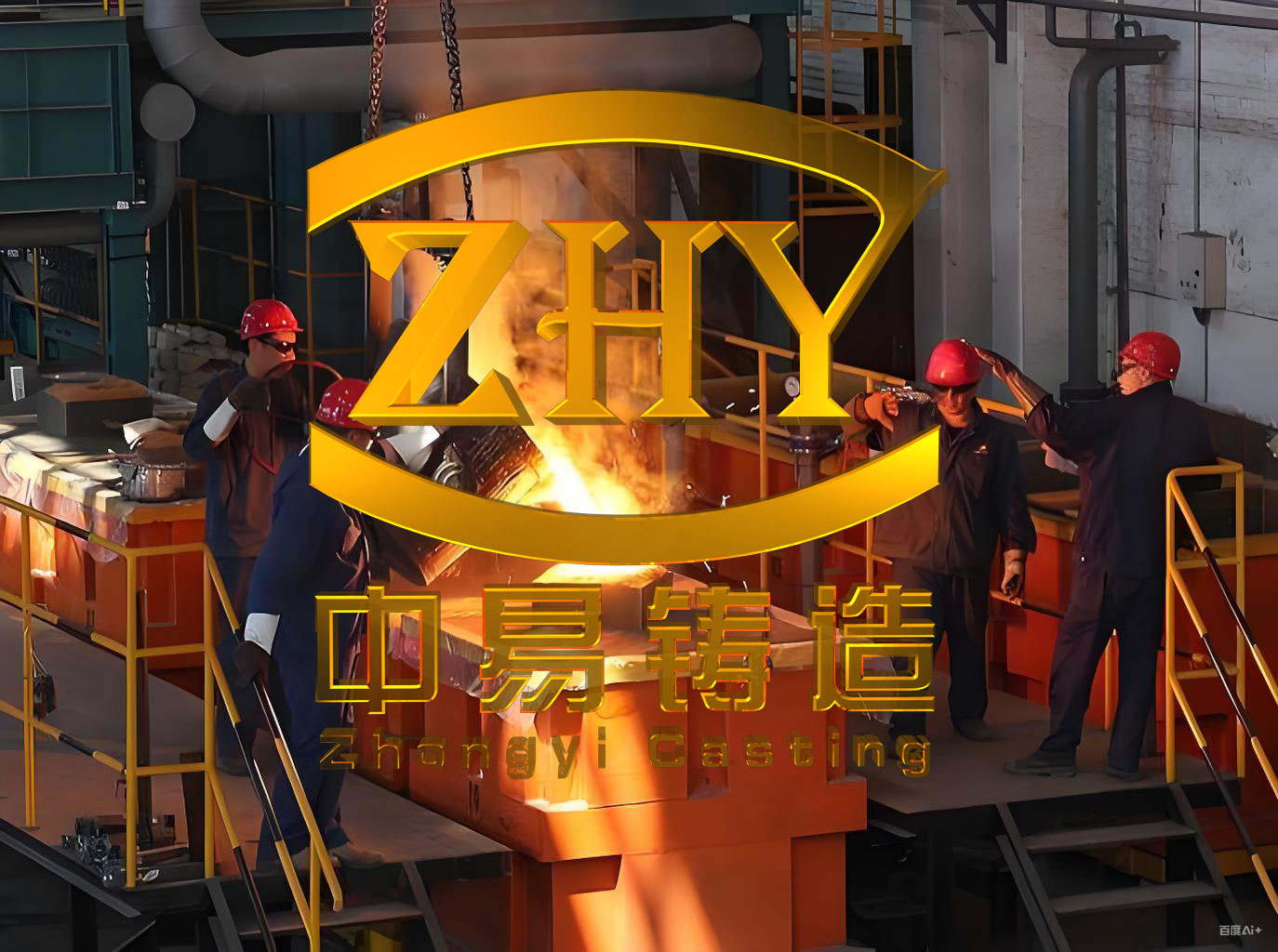
The design of a foundry plant begins with a thorough understanding of production needs. For instance, as a steel castings manufacturer, the facility must accommodate heavy machinery, high-temperature processes, and the handling of molten metals. This requires a design that prioritizes safety, durability, and efficiency. Below is a table summarizing the core design requirements based on my observations and industry standards:
| Design Aspect | Key Requirements | Considerations for Steel Casting Manufacturers |
|---|---|---|
| Production Processing | Must support melting, molding, and cooling processes | Ensure layouts minimize heat exposure and facilitate smooth material flow |
| Structural Form | Selection between reinforced concrete or steel frameworks | Reinforced concrete offers fire resistance, while steel provides flexibility for large spaces |
| Environmental Control | Ventilation, lighting, noise reduction, and temperature regulation | Implement forced ventilation to expel heat and fumes; avoid natural light in critical areas |
| Layout Planning | Integration of administrative and auxiliary spaces | Align with production workflows to reduce congestion and enhance safety |
In my work with various China casting manufacturers, I have found that the structural integrity of a foundry plant is paramount. The choice between reinforced concrete and steel structures depends on factors like cost, durability, and fire resistance. For example, reinforced concrete is widely used due to its high durability and inherent fire-resistant properties, which can be modeled using the formula for stress-strain behavior under heat: $$ \sigma = E \cdot \epsilon $$ where \(\sigma\) is stress, \(E\) is the modulus of elasticity, and \(\epsilon\) is strain. This equation helps in predicting how materials will perform in fire scenarios, ensuring that designs meet safety standards. Additionally, as a steel castings manufacturer, it is crucial to consider the load-bearing capacity of structures, which can be evaluated using: $$ P = \frac{F}{A} $$ where \(P\) is pressure, \(F\) is force, and \(A\) is area. This calculation aids in determining the suitability of materials for withstanding heavy loads and high temperatures.
Environmental factors play a significant role in foundry plant design. Unlike residential buildings, industrial facilities like those operated by steel casting manufacturers require controlled lighting and ventilation to manage heat and pollutants. For instance, natural lighting is often avoided in production areas to prevent glare and maintain consistent conditions. Instead, artificial lighting systems are designed with intensity levels calculated using: $$ I = \frac{P}{A} $$ where \(I\) is illuminance, \(P\) is luminous flux, and \(A\) is area. Ventilation systems must handle the expulsion of excess heat and smoke, which can be quantified through airflow equations: $$ Q = v \cdot A $$ where \(Q\) is the volumetric flow rate, \(v\) is velocity, and \(A\) is cross-sectional area. These principles ensure that the working environment remains safe and efficient, reducing the risk of fire hazards from accumulated heat or combustible dust.
When it comes to layout planning, I have observed that many China casting manufacturers prioritize a holistic approach. The overall平面设计 must align with production工艺流程, incorporating factors like utility configurations and pollution control. For example, the spatial arrangement should facilitate the smooth transition of materials from melting zones to cooling areas, minimizing the potential for accidents. The relationship between the foundry plant and the finished casting warehouse is symbiotic; both must be designed to support each other. As a steel castings manufacturer, it is essential to integrate storage solutions that prevent congestion and allow for easy access to finished products. This not only enhances operational efficiency but also reduces fire risks by maintaining clear pathways and organized spaces.
The integration of inventory management systems is another critical aspect I have emphasized in my projects with steel casting manufacturers. These systems, often database-driven, help track the production, sales, and storage of castings, ensuring optimal stock levels. For instance, the economic order quantity (EOQ) model can be applied to minimize costs: $$ EOQ = \sqrt{\frac{2DS}{H}} $$ where \(D\) is annual demand, \(S\) is ordering cost, and \(H\) is holding cost per unit. This formula assists in determining the ideal order size, reducing the risk of overstocking, which can lead to fire hazards if materials are stored improperly. Additionally, inventory management methods, such as channel storage and height-based stacking, are employed to maintain dryness and ventilation, crucial for preventing moisture-related corrosion or ignition in warehouses.
Fire protection design is, without a doubt, the most vital component in foundry plant engineering. Based on my experience, fires in casting facilities often originate from thermal processes, such as molten metal handling. Therefore, as a China casting manufacturer, it is imperative to adhere to national fire safety codes. The design of fire hydrant systems, for example, requires precise calculations to ensure adequate water supply. The flow rate can be determined using: $$ Q = C \cdot A \cdot \sqrt{2g \cdot h} $$ where \(Q\) is flow rate, \(C\) is discharge coefficient, \(A\) is area, \(g\) is gravity, and \(h\) is head. This ensures that in the event of a fire, the system can deliver sufficient water to suppress flames. Moreover, the placement of fire-resistant materials and barriers follows principles of heat transfer, modeled by: $$ q = k \cdot A \cdot \frac{\Delta T}{d} $$ where \(q\) is heat flux, \(k\) is thermal conductivity, \(A\) is area, \(\Delta T\) is temperature difference, and \(d\) is thickness. These equations guide the selection of materials that can withstand high temperatures, protecting both personnel and assets.
In the context of finished casting warehouses, fire safety measures must be even more stringent. As a steel castings manufacturer, I recommend implementing automated sprinkler systems and smoke detectors, whose effectiveness can be evaluated using probability models. For instance, the reliability of a fire detection system can be expressed as: $$ R(t) = e^{-\lambda t} $$ where \(R(t)\) is reliability at time \(t\), and \(\lambda\) is failure rate. This highlights the importance of regular maintenance to prevent system failures. Furthermore, storage practices should include segregation of hazardous materials and the use of fire-resistant containers. The table below outlines key fire protection strategies for casting warehouses:
| Fire Hazard | Protection Measure | Implementation for Steel Casting Manufacturers |
|---|---|---|
| Heat from Molten Processes | Install heat shields and ventilation ducts | Use materials with high melting points and regular inspections |
| Combustible Dust | Implement dust collection systems | Schedule frequent cleaning and monitor air quality |
| Electrical Faults | Use circuit breakers and insulated wiring | Conduct thermal imaging scans to detect hotspots |
| Storage Congestion | Maintain clear aisles and limit stack heights | Apply inventory turnover ratios to reduce overcrowding |
The relationship between civil engineering and foundry plant design cannot be overstated. In my collaborations with various China casting manufacturers, I have seen how design blueprints serve as the foundation for construction, influencing everything from material selection to project timelines. The construction process often involves complex calculations, such as those for foundation loads: $$ F = m \cdot a $$ where \(F\) is force, \(m\) is mass, and \(a\) is acceleration, adapted for static loads in buildings. This ensures that structures can support heavy machinery without compromising safety. Additionally, the classification of industrial buildings into single-layer, multi-layer, or mixed-layer types affects the design of fire escape routes and load-bearing walls, which must comply with spatial geometry principles: $$ V = l \cdot w \cdot h $$ where \(V\) is volume, \(l\) is length, \(w\) is width, and \(h\) is height. These formulas help in optimizing space while maintaining safety standards.
Inventory management methods in casting warehouses require meticulous planning. As a steel castings manufacturer, I advocate for practices like channel storage, where castings are placed near ventilation points to avoid humidity, and height-based stacking to maximize space efficiency. The economic impact of inventory management can be analyzed using the carrying cost formula: $$ CC = \frac{Q}{2} \cdot H $$ where \(CC\) is carrying cost, \(Q\) is order quantity, and \(H\) is holding cost. This emphasizes the need to balance stock levels to prevent financial losses from overstocking or stockouts. Moreover, categorizing castings by type and frequency of use streamlines operations, reducing the time spent on retrieval and minimizing fire risks associated with disorganized storage.
In conclusion, the design of foundry plants and casting warehouses is a multifaceted endeavor that demands a balance between production efficiency and safety. As a professional engaged with steel casting manufacturers, I stress the importance of integrating fire protection measures from the initial design phase. By leveraging structural calculations, environmental controls, and advanced inventory systems, China casting manufacturers can achieve sustainable operations. The repeated emphasis on terms like steel castings manufacturer, steel casting manufacturers, and China casting manufacturers underscores the global relevance of these practices. Ultimately, a well-designed foundry not only enhances productivity but also safeguards human lives and economic investments, ensuring that the industry continues to thrive amidst evolving challenges.
Throughout my career, I have witnessed how innovations in fire safety, such as smart sensors and automated suppression systems, are transforming the landscape for steel castings manufacturer. By adhering to mathematical models and empirical data, designers can create resilient facilities that withstand the test of time and hazards. The journey from blueprint to operational foundry is complex, but with a focus on comprehensive fire protection, it becomes a testament to engineering excellence and proactive risk management.