
The aerospace industry stands as a paramount symbol of national strategic capability and technological prowess. Within this high-stakes ecosystem, companies that master the art and science of advanced engineering solutions not only thrive but also define the pace of progress. Howmet Aerospace Inc. exemplifies such a leader, its trajectory offering a masterclass in strategic evolution, technological dominance, and global execution. For enterprises specializing in the critical niche of aerospace precision manufacturing—particularly those focused on prototype investment casting—dissecting Howmet’s integrated strategy provides invaluable blueprints for navigating complexity, accelerating innovation, and securing a competitive foothold in the global market.
Howmet’s financial resilience and growth, especially through the post-pandemic recovery, underscore a fundamentally robust strategic position. Revenue surged from $5.7 billion in 2022 to approximately $6.6 billion in 2023, driven primarily by a 24% growth in the commercial aerospace segment. This performance is not serendipitous but the result of a deliberate, multi-axis strategy intertwining deep technological roots with expansive market reach. For a precision casting house, these numbers translate to a clear market signal: the demand for advanced, lightweight, and high-integrity components, often first realized through prototype investment casting, is on a sustained upward trajectory. The company’s ability to convert this demand into profitable growth points to operational excellence and strategic pricing power in advanced manufacturing.
The Integrated Strategic Framework: A Triad of Capabilities
Howmet’s ascendancy can be deconstructed into a reinforcing triad of core strategies: a closed-loop innovation engine, a globally optimized production and supply web, and a forward-leaning digital transformation. This framework is highly relevant for a precision casting business, where the journey from a prototype investment casting to a certified, volume-produced component is fraught with technical and logistical challenges.
| Strategic Pillar | Core Manifestation | Direct Implication for Precision Casting |
|---|---|---|
| Innovation & Technology | “Institutionalized” R&D, Material Genome, Co-development with OEMs. | Shortens prototype investment casting lead time, de-risks new alloy introduction, ensures design-for-manufacturability. |
| Globalization & Operations | 21 plants across 3 continents, regional specialization, integrated supply chain. | Enables local prototype investment casting support for global customers, optimizes cost for low-volume/high-mix production. |
| Digitalization & Talent | Digital Thread, Predictive Analytics, “Project-Based” Global Talent Networks. | Enables first-time-right prototype investment casting via simulation, predicts casting defects, manages specialized knowledge. |
Deconstructing the Innovation Engine: Beyond R&D Spend
Sustained investment in Research & Development (R&D) is the lifeblood of aerospace manufacturing. Howmet’s consistent allocation of 6-8% of its revenue to R&D funds a systematic, multi-layered approach to innovation that is directly applicable to the domain of prototype investment casting.
1. Material-Centric Innovation: At the foundation is advanced material science. The development of next-generation nickel-based superalloys (e.g., 3rd generation single-crystal alloys), titanium aluminides, and high-temperature intermetallics is often the primary driver for new prototype investment casting projects. Howmet’s purported “Material Genome” database, containing thousands of alloy performance parameters, is a strategic asset. It allows for computational materials design, significantly accelerating the alloy development cycle. For a casting specialist, this implies that the initial prototype investment casting for a new engine blade is not a shot in the dark but is informed by predictive models of grain structure, creep resistance, and thermal fatigue life. The relationship between alloy composition (C), processing parameters (P), and final properties (Π) can be modeled as an optimization function:
$$\Pi_{target} = f(C, P) = \arg\min_{C, P} \left[ \mathcal{L}_{mechanical} + \lambda \mathcal{L}_{castability} \right]$$
where $\mathcal{L}_{mechanical}$ is the loss function related to mechanical property targets (e.g., yield strength, creep life) and $\mathcal{L}_{castability}$ penalizes compositions and processes that lead to casting defects, with $\lambda$ as a weighting factor.
2. Process Innovation and Co-Development: Innovation extends beyond the material to the process itself. Howmet’s collaboration with OEMs like GE Aerospace, Rolls-Royce, and Pratt & Whitney is not merely a supplier-client relationship but a deep technical partnership. These partnerships often originate at the prototype investment casting stage. Engineers from both sides collaborate on design iterations, gating and risering design for the wax pattern, and solidification modeling to achieve the desired metallurgical structure. This co-development model ensures that the prototype investment casting is not just a geometric replica but a process-validated component, dramatically reducing the time from prototype to production certification. The value of such collaboration (V) can be expressed as a function of shared knowledge (K), aligned objectives (O), and iterative learning loops (L):
$$V_{collab} = \alpha \int_{t_0}^{t_{cert}} K_{shared}(t) \cdot O(t) \, dt + \beta \sum_{n=1}^{N} L_{n}^{-\gamma}$$
where $\alpha$ and $\beta$ are scaling constants, and $\gamma$ represents the efficiency of learning from each prototype iteration \(n\).
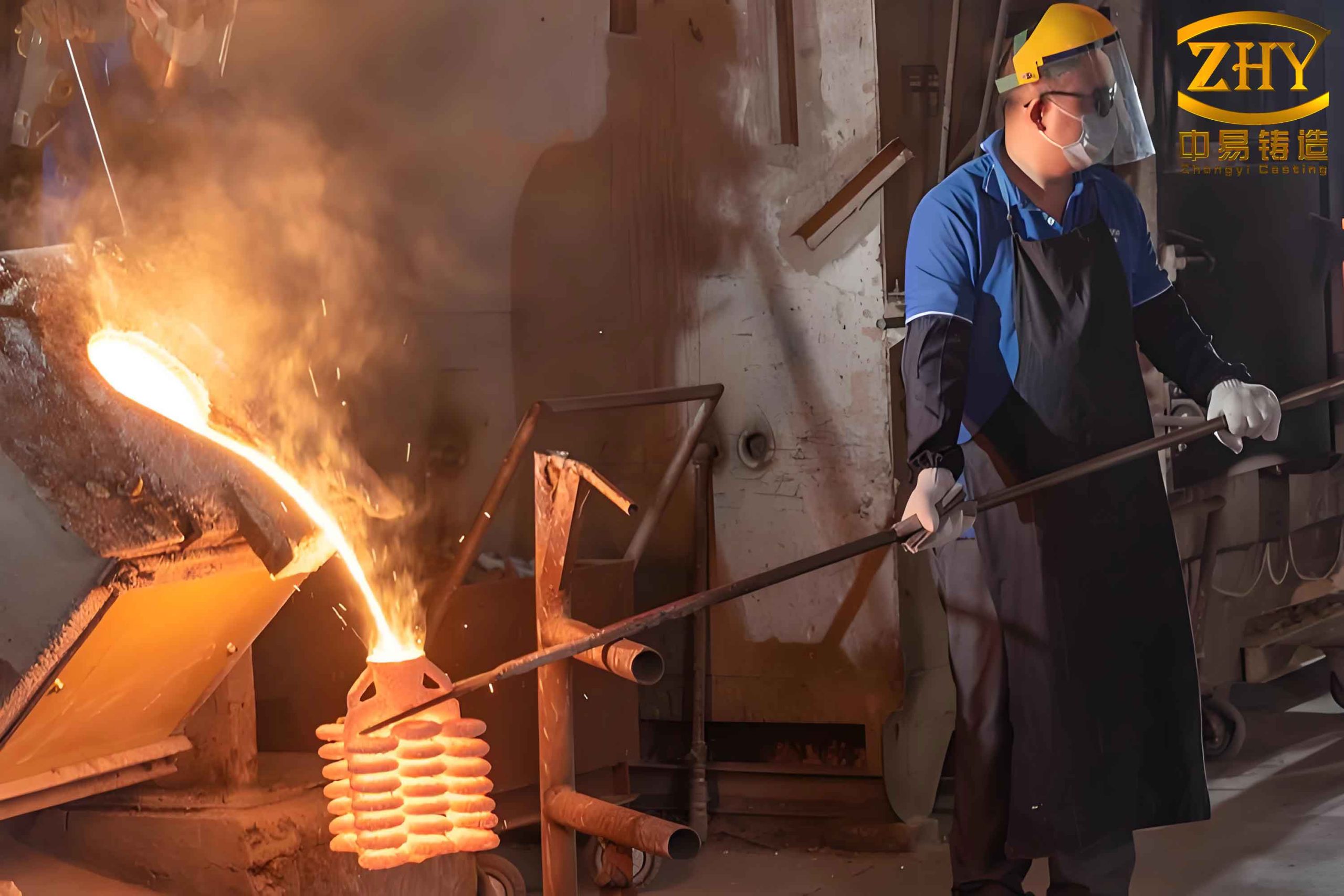
3. The “Innovation Flywheel” for Casting: This creates a virtuous cycle. Proprietary material data feeds into process simulation tools. Simulations guide the design of the prototype investment casting mold and process parameters. Data from the actual prototype investment casting build (e.g., thermal profiles, defect maps) is fed back to calibrate and improve the simulation models. This closed-loop, data-informed approach is key to achieving “first-time-right” casting for increasingly complex geometries, a critical capability for reducing lead times and development costs.
Global Strategic Layout: Enabling Complex Prototype Flows
Howmet’s global footprint of 21 manufacturing facilities is not merely about geographic presence; it is a meticulously designed operational network that supports its technological ambitions, particularly for low-volume, high-complexity work that includes prototype investment casting.
| Region | Strategic Role | Relevance to Prototype/Pre-Series Casting |
|---|---|---|
| Americas (US, Mexico) | Core technology & high-complexity production, cost-effective volume support. | US sites likely host advanced prototype investment casting cells for engine OEMs. Mexico supports pre-series and initial ramp-up. |
| Europe (UK, France, Italy) | Deep heritage in engine & airframe casting, collaborative R&D with European OEMs. | Centers of excellence for specific component families (e.g., turbine blades, structural fittings), facilitating local prototype development. |
| Asia-Pacific | High-growth market access, emerging MRO network, potential future tech hubs. | Growing demand for local prototype investment casting capabilities to support regional aircraft programs and MRO innovation. |
This layout offers several key advantages for managing prototype investment casting programs: Proximity to OEM Design Centers: Having technical and production resources near major OEMs (e.g., in the US Midwest, UK, or France) allows for rapid iteration cycles during the prototype investment casting phase. Physical proximity reduces logistics time for design reviews and sample delivery. Risk Mitigation and Business Continuity: A distributed network provides redundancy. If a natural disaster or disruption affects a primary prototype investment casting facility, the program knowledge and similar capabilities can be mobilized at another site within the network. Market-Specific Responsiveness: The ability to conduct initial prototype investment casting and validation in the same region as the end-customer (e.g., for a Chinese or Indian aircraft program) builds trust and aligns with local content aspirations.
The Digital Thread: Weaving Data from Prototype to Product
Digital transformation is the connective tissue that binds Howmet’s innovation engine to its global operations. For a process as intricate as prototype investment casting, digital tools are transformative, moving the discipline from an experience-based art to a data-driven science.
1. Digital Twin and Simulation-Driven Prototyping: The use of digital twins for casting simulation (e.g., using software like ProCAST, MAGMASOFT) is paramount. Before any wax is injected or alloy melted, the entire casting process is simulated. The software solves the fundamental governing equations for fluid flow, heat transfer, and stress during solidification:
$$\rho C_p \frac{\partial T}{\partial t} = \nabla \cdot (k \nabla T) + \dot{q}_{latent}$$
$$\rho \frac{\partial \mathbf{u}}{\partial t} + \rho (\mathbf{u} \cdot \nabla) \mathbf{u} = -\nabla p + \mu \nabla^2 \mathbf{u} + \rho \mathbf{g} + \mathbf{S}_{mushy}$$
where $T$ is temperature, $\mathbf{u}$ is fluid velocity, $p$ is pressure, and $\mathbf{S}_{mushy}$ represents momentum sinks in the mushy zone. This predicts potential defects like shrinkage porosity, hot tears, and inclusion entrapment in the prototype investment casting. Engineers can then iteratively optimize the mold design, pouring temperature, and cooling rates in the virtual environment, saving enormous cost and time compared to physical trial-and-error.
2. Additive Manufacturing (AM) for Rapid Tooling and Prototypes: While Howmet is known for conventional casting, the integration of AM is crucial for agility. 3D printing of sand molds or ceramic cores directly from CAD data drastically compresses the lead time for producing a prototype investment casting tool. This is especially valuable for complex internal geometries that are impossible or prohibitively expensive to machine into traditional tooling. The formula for lead time reduction (ΔL) through AM tooling can be conceptualized as:
$$\Delta L = L_{conv} – L_{AM} = (t_{pattern+mold}^{mach} + t_{lead}^{proc}) – (t_{print} + t_{post})$$
where $t_{pattern+mold}^{mach}$ is the time for machining wax patterns and metal dies, $t_{lead}^{proc}$ is the processing lead time for traditional tooling shops, $t_{print}$ is the AM build time, and $t_{post}$ is post-processing. For one-off or low-volume prototype investment casting, ΔL is significantly positive.
3. Data Analytics and Predictive Quality: During the production of a prototype investment casting series, sensors can collect data on furnace temperatures, pour rates, and cooling zone conditions. This data, when coupled with non-destructive testing (NDT) results (X-ray, CT scan) of the final castings, can be analyzed using machine learning algorithms to build predictive quality models. For instance, a model could predict the probability of a defect based on real-time process deviations, allowing for corrective actions even before the casting solidifies. A simplified logistic regression model could look like:
$$P(Defect) = \frac{1}{1 + e^{-(\beta_0 + \beta_1 \Delta T_{pour} + \beta_2 \sigma_{cool} + \beta_3 \cdot Interaction)}}$$
where $\Delta T_{pour}$ is the deviation from optimal pouring temperature, $\sigma_{cool}$ is the variance in cooling rate across the mold, and $Interaction$ represents cross-terms between parameters.
4. Blockchain-Enabled Supply Chain for Special Alloys: The pedigree of raw materials—especially the master alloys and reactive metals used in prototype investment casting—is critical. A blockchain-based traceability system can provide an immutable record from ore smelting to the delivery of a specific alloy ingot to the casting furnace, ensuring quality and compliance with OEM specifications.
Strategic Imperatives for the Precision Casting Enterprise
Synthesizing the Howmet case study yields clear, actionable imperatives for aerospace-focused precision casting companies aiming to elevate their role from job shops to strategic partners.
Imperative 1: Institutionalize “Full-Spectrum” Innovation. Move beyond executing customer prints. Build a material and process data warehouse. Invest in multi-physics simulation software and the expertise to use it. Establish formal co-development agreements with key customers, embedding your engineers in their prototype investment casting design phases. The goal is to make your technical capability a non-negotiable part of their development value chain.
Imperative 2: Cultivate a Hybrid Global-Local Footprint. Even smaller enterprises must think globally. This may not mean owning factories abroad, but it can involve: establishing technical sales and engineering support offices near key global aerospace clusters; forming strategic alliances with complementary foundries in other regions to offer coordinated prototype investment casting and production capacity; and developing a logistics strategy that ensures rapid, secure shipment of sensitive prototypes worldwide.
Imperative 3: Execute a Phased Digital Maturity Roadmap. Digitalization is not an all-or-nothing proposition. A pragmatic roadmap is essential:
| Phase | Focus | Key Actions for Casting |
|---|---|---|
| Foundation (0-18 months) | Data Capture & Process Control | Digitize traveler sheets, implement MES for lot tracking, install sensors on key furnaces and pour lines. |
| Integration (18-36 months) | Digital Thread & Simulation | Integrate CAD-Simulation-MES data flow. Implement casting process simulation as a standard for every prototype investment casting. |
| Advancement (36+ months) | Predictive Analytics & AI | Develop ML models for defect prediction. Explore digital twins for real-time process adjustment. Integrate CT scan data with design models. |
Imperative 4: Forge an “Ecosystem” Rather Than a Supply Chain. Your network should include: Upstream: Tight relationships with premium alloy producers and AM service bureaus for rapid tooling. Horizontal: Partnerships with specialized NDT labs, heat treaters, and surface coating companies that understand the unique requirements of aerospace prototype investment casting. Downstream: Direct links to OEM engineering teams and MRO operators, creating a feedback loop from service experience back to future prototype design improvements.
Imperative 5: Re-conceptualize Talent Strategy. The future foundry requires a new blend of skills. Alongside master pattern-makers and metallurgists, you need: Computational Material Scientists who can operate simulation software and interpret results. Data Analysts who can extract insights from process data. Applications Engineers with deep customer knowledge and fluency in digital collaboration tools. Invest in continuous upskilling and create career paths that blend traditional craftsmanship with digital proficiency.
Conclusion: The Path to Strategic Indispensability
The journey from a component manufacturer to a provider of advanced engineering solutions, as exemplified by Howmet Aerospace, is fundamentally a journey of deepened integration. For the precision casting enterprise, the path forward is not merely about purchasing newer furnaces or expanding floor space. It is about strategically layering capabilities that make the firm indispensable at the earliest, most critical stages of aerospace innovation—the prototype investment casting phase.
By building a closed-loop innovation system rooted in materials science and digital simulation, companies can de-risk and accelerate the development of next-generation components. By adopting a globally aware, digitally connected operational model, they can deliver this capability reliably to OEMs worldwide. Ultimately, the goal is to ensure that when an aerospace engineer envisions a breakthrough component, the expertise required to translate that vision into a viable, high-integrity prototype investment casting is inherently linked to your firm’s technological and strategic fabric. This is the essence of moving up the value chain: becoming not just a supplier of parts, but a foundational enabler of flight itself.