
In my extensive experience working with magnesium alloy castings, I have encountered numerous challenges in production, with slag inclusion defects being one of the most persistent and problematic issues. Slag inclusion, often referred to as flux entrapment, is a type of non-metallic inclusion that significantly compromises the integrity and performance of cast components. This defect arises primarily from improper handling during melting and casting processes, leading to entrapment of flux residues within the metal matrix. Understanding the root causes and implementing effective preventive measures is crucial for achieving high-quality castings. Through this article, I aim to share insights into the characteristics, origins, and mitigation strategies for slag inclusion defects, supported by technical analyses, tables, and formulas to enhance clarity and depth.
Slag inclusion defects manifest in various forms, depending on their location and severity. I have observed that these defects can be broadly categorized into surface slag inclusion and internal slag inclusion. Surface slag inclusion is often visible to the naked eye after shakeout, appearing as irregular dark brown patches on the casting surface. In some cases, smaller, dispersed slag inclusions may lie just beneath the skin, becoming apparent only after acid washing and oxidation, where they develop dark brown spots over 8 to 12 hours, eventually growing white fibrous deposits. Internal slag inclusion, on the other hand, is hidden within the casting and typically requires X-ray inspection for detection. On X-ray films, these appear as irregular white spots, and upon machining, the exposed surfaces reveal brownish stains within 1 to 4 hours, followed by white growths over time. Slag inclusions tend to accumulate in areas such as the lower sections of the casting relative to the pouring position, near gates, and in dead zones where fluid flow is stagnant. To summarize these observations, I present the following table:
| Type | Appearance | Detection Method | Typical Locations |
|---|---|---|---|
| Surface Slag Inclusion | Dark brown irregular patches; white growth after exposure | Visual inspection, acid wash | Outer surfaces, shallow subsurface |
| Internal Slag Inclusion | Irregular white spots on X-ray; brown stains on machining | X-ray radiography, machining | Lower casting regions, gate areas, dead zones |
The formation of slag inclusion defects is multifaceted, stemming from both melting process operations and casting design inadequacies. In my practice, I have identified several key factors contributing to slag inclusion. During melting, the use of inadequately dried or dehydrated flux is a common pitfall. Fluxes are essential for covering and refining magnesium alloys, but if they contain moisture, their effectiveness diminishes, leading to poor slag removal and increased entrapment. The refining process relies on the density difference between the flux and the alloy melt to separate impurities. The density of a typical flux, such as dehydrated carnallite, is approximately 1.598 g/cm³ at 700°C, while that of pure magnesium is 1.54 g/cm³ and ZM5 alloy is about 1.61 g/cm³. The small density difference, denoted as Δρ, can be expressed as:
$$\Delta \rho = \rho_{\text{flux}} – \rho_{\text{alloy}}$$
For ZM5 alloy, Δρ ≈ 1.598 – 1.61 = -0.012 g/cm³, indicating a minimal separation force. This small Δρ hinders effective slag flotation or settling, promoting slag inclusion. Additionally, insufficient settling time after refining is critical. Alloy melts require adequate static holding to allow inclusions to float or sink; otherwise, suspended slag particles are carried into the mold. I recommend a minimum settling time of 15 minutes, based on Stokes’ law for particle settling velocity:
$$v = \frac{2r^2 (\rho_p – \rho_m)g}{9\eta}$$
where \(v\) is the settling velocity, \(r\) is the particle radius, \(\rho_p\) is the particle density, \(\rho_m\) is the melt density, \(g\) is gravitational acceleration, and \(\eta\) is the melt viscosity. For small Δρ and high η, \(v\) decreases, necessitating longer settling times to reduce slag inclusion risk.
Another significant cause of slag inclusion relates to tool washing practices. In my observations, washing tools in flux pots at temperatures below 750°C leads to viscous flux adherence, which is then introduced into the alloy. The viscosity of flux, η_flux, decreases with temperature, and below 750°C, it becomes too high for effective cleaning, exacerbating slag inclusion. For zirconium-containing magnesium alloys, the challenge intensifies due to high-temperature processing with extensive flux protection. Reactions between potassium zirconium fluoride and flux generate slag primarily composed of potassium chloride, which has low viscosity and density, increasing fluidity and making complete removal difficult. Similarly, in rare-earth magnesium alloys, reactions forming RECl₃ compounds contribute to slag inclusion. To encapsulate these melting-related causes, I have compiled the following table:
| Factor | Description | Impact on Slag Inclusion | Recommended Mitigation |
|---|---|---|---|
| Undried Flux | Flux with moisture reduces refining efficiency | Increases slag entrapment | Use fully dehydrated flux |
| Insufficient Settling | Short static holding time after refining | Suspended slag enters mold | Minimum 15 minutes settling |
| Low Washing Temperature | Tool washing below 750°C | Flux adheres to tools, contaminates melt | Maintain ≥750°C washing temperature |
| Zirconium Alloy Processing | Reactions generate low-density slag | Slag hard to remove, increases inclusion | Use specialized high-density flux |
| Rare-Earth Alloy Reactions | Formation of RECl₃ compounds | Adds to slag content |
On the casting design front, improper gating and riser systems are major contributors to slag inclusion. In my work, I have seen that poorly designed systems fail to facilitate slag flotation, leading to entrapment in thick sections, dead corners, and risers. Magnesium alloys benefit from bottom gating, open systems, and progressive solidification to minimize turbulence and slag inclusion. The use of filters or steel wool for slag trapping is common, but incorrect placement or loose packing renders them ineffective. Additionally, low pouring temperatures reduce fluidity, causing slag particles to solidify before escaping. The relationship between pouring temperature T_p and slag inclusion probability P_s can be approximated as:
$$P_s \propto e^{-k(T_p – T_s)}$$
where \(k\) is a constant and \(T_s\) is the solidification temperature. Lower \(T_p\) increases \(P_s\), emphasizing the need for optimal temperature control. To illustrate casting-related factors, here is a summary table:
| Factor | Description | Effect on Slag Inclusion | Optimal Practice |
|---|---|---|---|
| Gating System Design | Non-bottom gating, turbulent flow | Traps slag in mold | Bottom gating, open systems |
| Riser Design | Inadequate size for slag flotation | Slag accumulates in risers/casting | Large risers for slag removal |
| Filter Usage | Misplaced or loose filters | Ineffective slag trapping | Proper insertion, tight packing |
| Pouring Temperature | Too low for slag separation | Slag solidifies in casting | Maintain recommended temperature range |
Preventing slag inclusion defects requires a holistic approach integrating process controls and design optimizations. Based on my experience, I advocate for several key measures. First, after refining, allow at least 15 minutes of static settling, followed by covering the melt with a sulfur-boric acid mixture instead of flux to avoid contamination. Second, ensure washing flux pots maintain a temperature no lower than 750°C, and thoroughly clean all tools and ladles, inverting them to drain residual flux before pouring. Third, use alloy-specific fluxes; for instance, zirconium-containing alloys require specialized fluxes with added CaF₂ and BaCl₂ to increase density and viscosity, enhancing slag separation. The density of such a flux, ρ_special, can be adjusted as:
$$\rho_{\text{special}} = \rho_{\text{base}} + \Delta \rho_{\text{additives}}$$
where \(\Delta \rho_{\text{additives}}\) accounts for contributions from BaCl₂ and CaF₂. However, excessive BaCl₂ can reduce covering ability, so balance is crucial. All fluxes must be fully dehydrated before use to eliminate moisture-related issues. In casting design, prioritize bottom-gated sequential solidification with open systems, adequate risers for slag collection, and proper filter placement. Pouring temperatures should be optimized based on alloy specifications to ensure sufficient fluidity for slag flotation. To encapsulate these preventive strategies, I present a comprehensive table:
| Measure | Implementation | Mechanism | Expected Outcome |
|---|---|---|---|
| Adequate Settling Time | ≥15 minutes static holding after refining | Allows slag flotation/settling via Stokes’ law | Reduced suspended slag |
| Proper Tool Washing | Wash at ≥750°C, drain tools completely | Minimizes flux adherence and contamination | Cleaner melts, lower slag inclusion |
| Alloy-Specific Fluxes | Use tailored fluxes (e.g., for Zr alloys) | Increases density/viscosity for better separation | Improved slag removal |
| Casting Design Optimization | Bottom gating, open systems, large risers | Promotes calm filling and slag trapping | Minimized entrapment in critical areas |
| Temperature Control | Maintain optimal pouring temperature | Ensures fluidity for slag escape | Lower solidification-related slag inclusion |
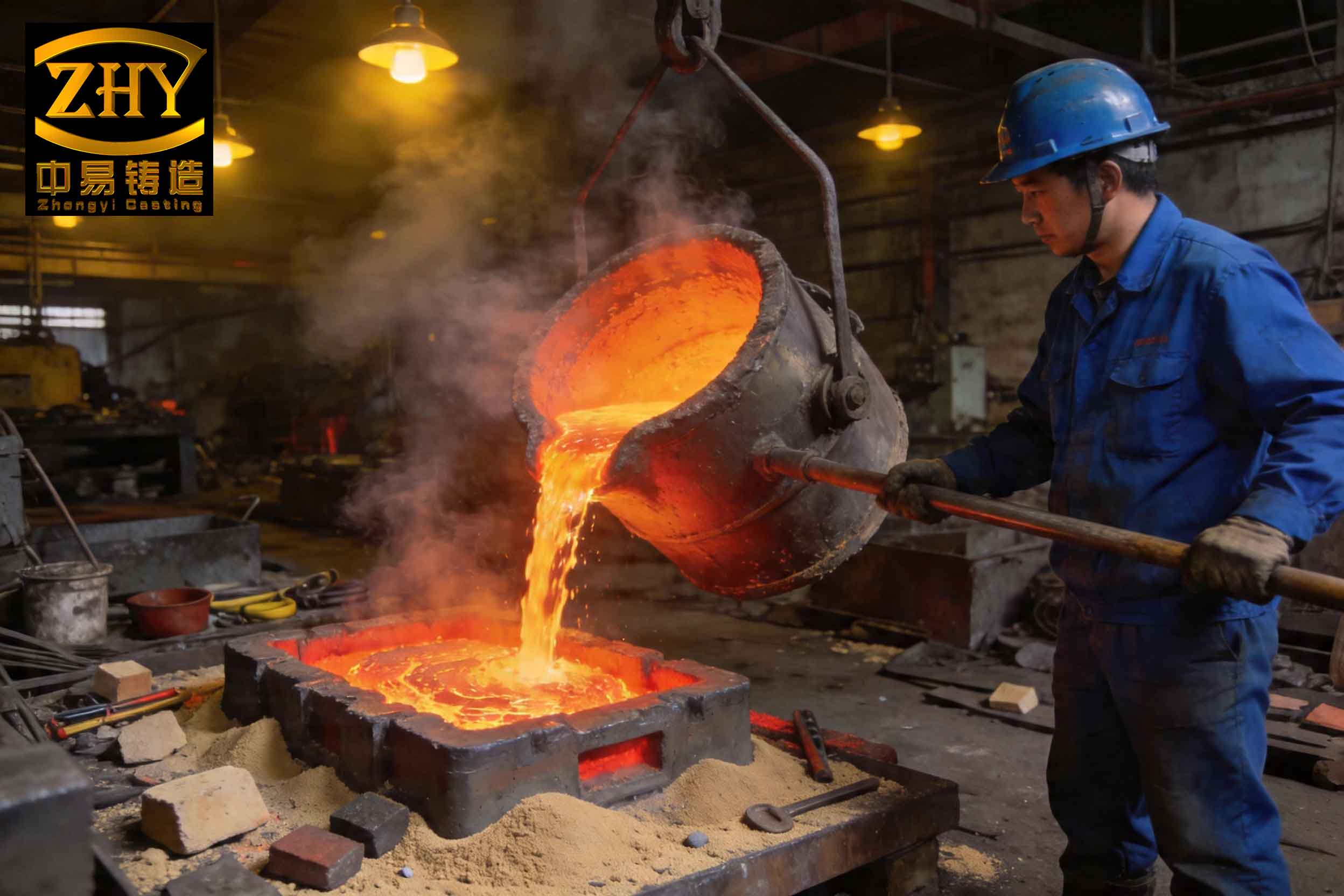
To visually reinforce the impact of slag inclusion, consider the following image, which illustrates typical slag inclusion manifestations in magnesium alloy castings. This depiction aligns with my observations of surface and internal defects, highlighting the importance of stringent process controls.
In conclusion, slag inclusion defects in magnesium alloy castings are a complex issue rooted in both melting and casting practices. Through my work, I have learned that preventing slag inclusion demands attention to detail: from using dry, alloy-specific fluxes and maintaining proper temperatures to designing gating systems that facilitate slag removal. The key lies in understanding the interplay between density differences, viscosity, and fluid dynamics, as captured in formulas and tables. By implementing these measures, foundries can significantly reduce the incidence of slag inclusion, enhancing casting quality and reliability. Continuous monitoring and adaptation based on alloy behavior are essential, as each magnesium alloy system presents unique challenges in managing slag inclusion. I hope this detailed analysis provides a practical framework for addressing slag inclusion defects, ultimately contributing to more efficient and high-quality magnesium casting production.