
In a recent provincial casting process experience exchange conference, we engaged in extensive discussions on four key areas: the production of motor castings, diesel engine castings, machine tool castings, and improvements in furnace designs. This comprehensive report synthesizes the collective insights and practical experiences shared during these对口 exchanges, aiming to serve as a valuable reference for relevant units. The emphasis throughout our dialogue was on addressing common defects, optimizing工艺, and enhancing overall quality in casting operations. Particularly, the challenges and solutions surrounding machine tool castings were a recurrent theme, given their critical role in industrial manufacturing.
The conference highlighted that many issues in casting production stem from deviations from fundamental工艺 principles, material inconsistencies, and equipment limitations. By systematically examining each category, we can derive actionable strategies. This document is structured to reflect the four main themes, incorporating detailed analyses, comparative tables, and relevant mathematical formulations to encapsulate the technical depth of our discussions. Our first-person perspective as participants allows us to convey these findings with practical immediacy.
I. Production of Motor Castings
Motor castings, especially motor housings (机座), present significant challenges in terms of dimensional accuracy, surface quality, and defect率. A prevalent issue identified is the neglect of conventional工艺 in molding motor housings, leading to high scrap rates and poor surface finish. For instance, the散热片 sections often exhibit undesirable geometries such as “肥头大耳” (bulging) and “鱼肚” (bellying) due to inadequate compaction. One effective经验 emphasized is the “挞” (tamping or compacting) method, which involves vigorous sand ramming to ensure proper density and contour fidelity. This approach, as implemented by某些 units, significantly reduces voids and improves surface integrity.
Furthermore, the use of green sand molding for large motor housings was affirmed as viable, provided that工艺 parameters are strictly controlled. Cracking and shrinkage porosity in端盖 components are also critical concerns. Micro-cracks are primarily attributed to internal stresses, which can be mitigated by enhancing the mechanical properties of the material and increasing the yielding capacity of cores. The relationship between residual stress and cracking can be expressed through thermal stress formulas. For example, the thermal stress $\sigma$ induced during cooling can be approximated by:
$$\sigma = E \cdot \alpha \cdot \Delta T$$
where $E$ is Young’s modulus, $\alpha$ is the coefficient of thermal expansion, and $\Delta T$ is the temperature gradient. To prevent micro-cracks, we recommend optimizing alloy composition to improve ductility and using core sands with higher退让性, such as those with organic additives that burn out during pouring.
The following table summarizes key issues and solutions for motor casting production:
| Issue | Root Cause | Recommended Solutions | Expected Outcome |
|---|---|---|---|
| High scrap rate in motor housings | Inadequate sand compaction,忽视常规工艺 | Implement “挞” sand method; optimize molding parameters | Improved surface quality, reduced defects |
| Micro-cracks in housings | Internal stresses from uneven cooling | Enhance material机械性能; increase core退让性; control cooling rate | Minimized cracking, higher structural integrity |
| Shrinkage porosity in端盖 | Insufficient feeding during solidification | Use of chills, improved gating design, controlled pouring temperature | Reduced porosity, better pressure tightness |
Additionally, the solidification time $t_s$ for a casting section can be estimated using Chvorinov’s rule:
$$t_s = k \left( \frac{V}{A} \right)^2$$
where $V$ is volume, $A$ is surface area, and $k$ is a mold constant. By applying this, we can design feeders to ensure adequate补缩 for motor housing sections prone to shrinkage.
II. Production of Diesel Engine Castings
Diesel engine castings, particularly cylinder heads, are prone to defects like shrinkage porosity and gas holes, which compromise performance and durability. A common problem across various models (e.g., 190, 195, 290, 490) is缩松渗漏 around喷油咀孔 after machining. This is fundamentally due to significant壁厚差, where thick sections solidify last without proper feeding. Multiple solutions were proposed based on production scale,工艺, and equipment. For example, controlling phosphorus content in iron melt (P < 0.15%) can reduce shrinkage tendency, as phosphorus promotes脆性 and segregation. Alternatively, external chills,吊泥芯 techniques to minimize壁厚差, and regulating pouring temperature are effective measures.
Gas孔 formation is another widespread issue, often resulting from multiple factors: low melt temperature, high sand moisture, excessive gas-generating materials in core sands, and inadequate venting. Key measures to mitigate gas孔 include:
- Increasing melt temperature: Higher superheat improves fluidity and reduces gas solubility. The ideal temperature can be derived from the铁水 quality index $Q$, defined as:
$$Q = T_{pour} – T_{liquidus}$$
where $T_{pour}$ is pouring temperature and $T_{liquidus}$ is the liquidus temperature. Aim for $Q > 50^\circ C$ to minimize gas entrapment.
- Accelerating filling speed: This prevents气体析出 from mold materials before the metal skin forms. The filling time $t_f$ can be approximated by:
$$t_f = \frac{V_{casting}}{A_{gating} \cdot v}$$
where $V_{casting}$ is casting volume, $A_{gating}$ is gating area, and $v$ is flow velocity. Reducing $t_f$ through larger gating helps.
- Controlling sand moisture and reducing发气材料: Use of low-moisture sands and minimal binders in cores is crucial. In mass production, sand cooling systems are essential to prevent temperature buildup that exacerbates gas evolution.
- Proper core drying and venting: Cores must be thoroughly dried and designed with explicit气路 to allow gas escape. For cylinder heads, venting channels are critical.
The table below outlines solutions for diesel engine casting defects:
| Defect Type | Primary Causes | Mitigation Strategies | Technical Basis |
|---|---|---|---|
| Shrinkage porosity in cylinder heads | Large壁厚差, inadequate feeding | Control P content; use chills;吊泥芯; optimize pouring temperature | Solidification control, alloy modification |
| Gas holes | Low melt temp, high sand moisture, poor venting | Increase superheat; accelerate filling; control sand; ensure core drying and venting | Gas solubility kinetics, mold material properties |
Moreover, the gas pressure $P_g$ in molds can be modeled as:
$$P_g = P_{atm} + \rho g h – \frac{\sigma}{r}$$
where $P_{atm}$ is atmospheric pressure, $\rho$ is melt density, $g$ is gravity, $h$ is head height, $\sigma$ is surface tension, and $r$ is pore radius. By managing these factors, we can reduce gas孔 incidence.
III. Production of Machine Tool Castings and Large Castings
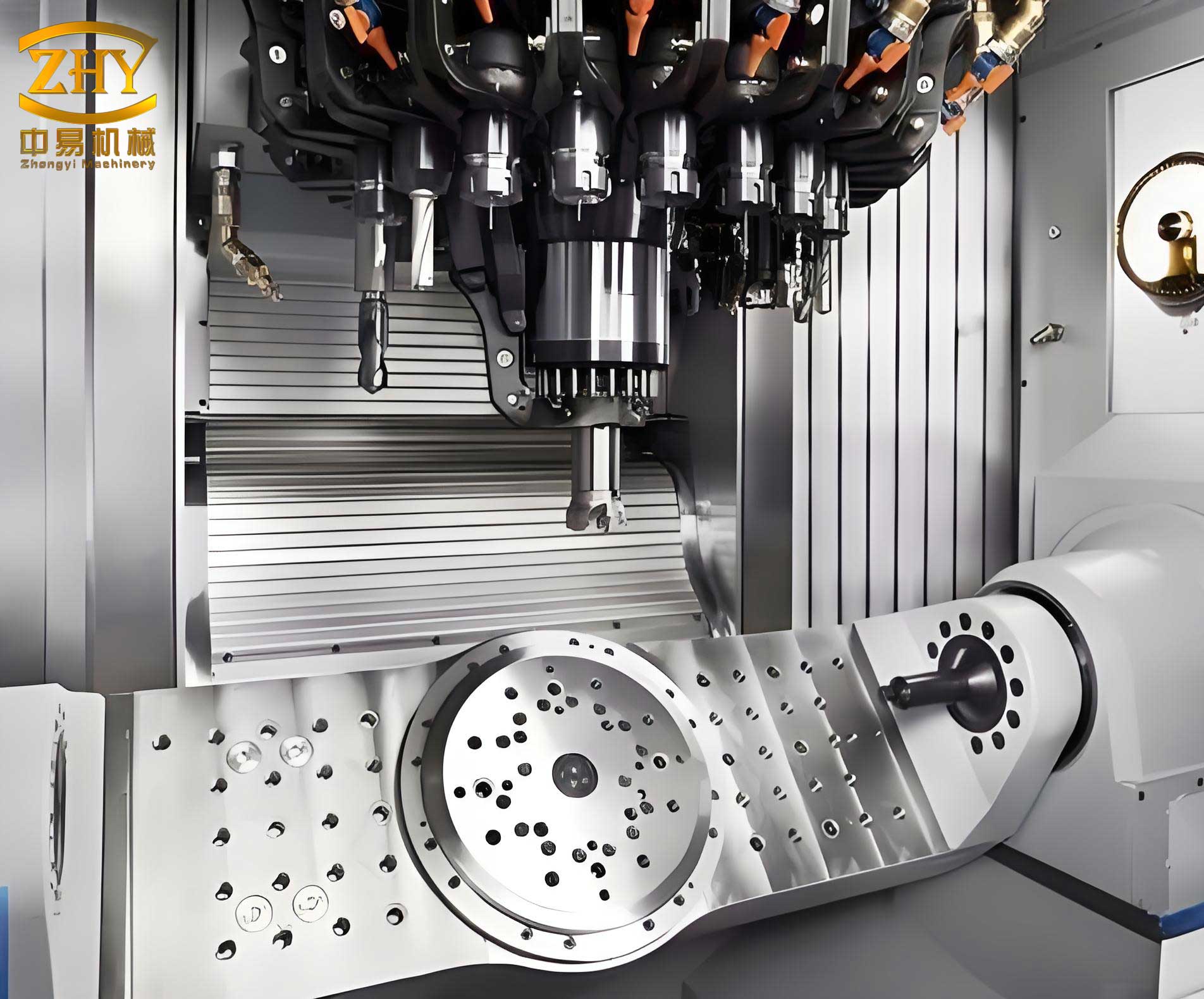
The production of machine tool castings, such as bed plates,横梁, and缸体, demands precise工艺 control to ensure dimensional stability, wear resistance, and minimal defects. These components are integral to the accuracy and longevity of machine tools, making their quality paramount. Our discussions focused on three sub-areas:缸体类铸件 for forging equipment, bed/横梁 castings for machine tools, and castings with embedded metal tubes.
For缸体类铸件 like a 75 kg air hammer cylinder, the工艺 design should prioritize vertical pouring with horizontal molding (开边平做) for efficiency and quality. However, horizontal pouring is feasible if conditions are met: sufficient melt superheat, dry molds and cores, clean cavities, effective slag-trapping gating systems, and平稳浇注 with proper venting. The gating ratio, often expressed as $A_{sprue}:A_{runner}:A_{ingate}$, should be optimized to minimize turbulence. A typical ratio for iron castings is 1:2:1.5.
Regarding machine tool castings, such as a 3.4-meter vertical lathe横梁, the use of external chills on guide rails is essential to enhance耐磨性 through rapid solidification. However, improper chill arrangement can cause局部裂纹 due to excessive激冷. The cooling rate $\dot{T}$ near a chill is given by:
$$\dot{T} = \frac{k_{mold} (T_{melt} – T_{mold})}{\rho_{melt} c_p \delta^2}$$
where $k_{mold}$ is mold thermal conductivity, $T_{melt}$ and $T_{mold}$ are temperatures, $\rho_{melt}$ is melt density, $c_p$ is specific heat, and $\delta$ is boundary layer thickness. To prevent cracks, chills should be spaced to avoid stress concentration, and their size should match the section modulus.
For castings with embedded metal tubes, such as water-cooled furnace doors, gas evolution from tube surfaces can cause large bubbles. Key处理 steps include: acid cleaning and tin-plating of tubes, or sandblasting followed by heating and coating with良油. This eliminates rust and prevents re-oxidation during pouring. The gas generation rate $\dot{G}$ from a tube surface can be modeled as:
$$\dot{G} = A_t \cdot k_g \cdot (C_{eq} – C_0)$$
where $A_t$ is tube area, $k_g$ is gas evolution coefficient, $C_{eq}$ is equilibrium gas concentration, and $C_0$ is initial concentration. Pre-treatment reduces $k_g$ significantly.
The importance of machine tool castings cannot be overstated, as they form the backbone of precision manufacturing. Repeated emphasis on machine tool castings in our discussions underscored their sensitivity to工艺 variations. Below is a table summarizing工艺 considerations for machine tool castings:
| Component Type | Key Challenges | Optimal工艺 | Quality Metrics |
|---|---|---|---|
| 缸体 (e.g., air hammer) | Slag inclusion, shrinkage, gas holes | Vertical pouring with dry molds; controlled gating; venting | Pressure tightness, dimensional accuracy |
| Bed plates/横梁 (machine tool castings) | Wear resistance, cracking from chills | Strategic chill placement; stress relief design; proper alloy selection | Hardness, residual stress, surface finish |
| Embedded tube castings | Gas porosity from tubes | Tube pre-treatment (acid wash/coating); optimized pouring speed | Gas-free structure, bonding integrity |
Furthermore, the solidification morphology in machine tool castings can be analyzed using the Fourier number $Fo$:
$$Fo = \frac{\alpha t}{L^2}$$
where $\alpha$ is thermal diffusivity, $t$ is time, and $L$ is characteristic length. By controlling $Fo$ through chill design, we can achieve desired microstructure for耐磨性 in machine tool castings.
IV. Improvements in Furnace Designs
Furnace炉型改进 is crucial for enhancing melting efficiency, reducing costs, and addressing environmental concerns. Common innovations include curved hearths (曲线炉膛),卡腰炉膛 with inverted main/auxiliary air vents, multi-row small vents, secondary air supply, and密筋炉胆 hot blast cupolas. These designs improve coke-to-iron ratio (焦铁比) and compensate for lower coke calorific value. However, economic factors like element burn loss, repair time, and melt temperature must be balanced.
For instance, the thermal efficiency $\eta$ of a cupola can be expressed as:
$$\eta = \frac{Q_{iron}}{Q_{coke} + Q_{air}}$$
where $Q_{iron}$ is heat absorbed by iron, $Q_{coke}$ is heat from coke combustion, and $Q_{air}$ is heat input from air.炉型 modifications aim to maximize $\eta$ while maintaining adequate wind intensity for熔化.
Heavy oil化铁 furnaces offer an alternative amid coke shortages, with advantages like lower pollution, cleaner operation, and savings in fluxes and scrap steel. Their melting rate is higher than coal powder furnaces. However, challenges persist: unresolved oil storage and保温 issues, significant过桥烧损, and repair difficulties that limit daily operation. The oil consumption rate $\dot{m}_{oil}$ can be related to melting rate $\dot{m}_{iron}$ by:
$$\dot{m}_{oil} = \frac{\dot{m}_{iron} \cdot c_{iron} \cdot \Delta T}{HV_{oil} \cdot \eta_{oil}}$$
where $c_{iron}$ is specific heat of iron, $\Delta T$ is temperature rise, $HV_{oil}$ is heating value of oil, and $\eta_{oil}$ is oil furnace efficiency. Optimizing $\eta_{oil}$ is key to economic viability.
The table below compares furnace types:
| Furnace Type | Key Features | Benefits | Challenges |
|---|---|---|---|
| Curved hearth cupola | Improved combustion, better heat transfer | Higher焦铁比,适应低质焦炭 | Complex repair, potential wind intensity loss |
| Heavy oil化铁 furnace | Oil-fueled, clean operation | Reduced pollution, faster melting, saves scrap | Oil storage,过桥烧损, daily operation limits |
In conclusion, furnace炉型改进 should be tailored to local conditions, ensuring that modifications do not compromise melting performance. Continuous experimentation and adaptation are necessary, especially for expanding heavy oil furnace applications.
Overall Recommendations and Future Directions
Based on our exchanges, we recommend a holistic approach to casting production that integrates工艺 optimization, material science, and equipment innovation. For motor castings, emphasize conventional methods like “挞” sand; for diesel engines, focus on feeding design and gas control; for machine tool castings, prioritize chill management and pre-treatment of embedded components; for furnaces, adopt efficient designs while addressing practical constraints. The recurring theme of machine tool castings highlights their criticality, and future research should delve deeper into their solidification behavior and stress management.
Mathematical modeling and empirical data should guide decisions. For example, the defect probability $P_d$ can be approximated using a multivariate model:
$$P_d = f(T_{pour}, t_{solidification}, C_{gas}, S_{sand})$$
where parameters include pouring temperature, solidification time, gas content, and sand properties. By minimizing $P_d$ through controlled variables, we can achieve consistent quality across all casting types, especially for precision-demanding machine tool castings.
This report synthesizes collective wisdom, but ongoing collaboration and knowledge sharing are vital. We encourage units to adapt these insights to their specific contexts, continually refining processes for motor, diesel engine, and machine tool castings, while advancing furnace technologies for sustainable foundry operations.