
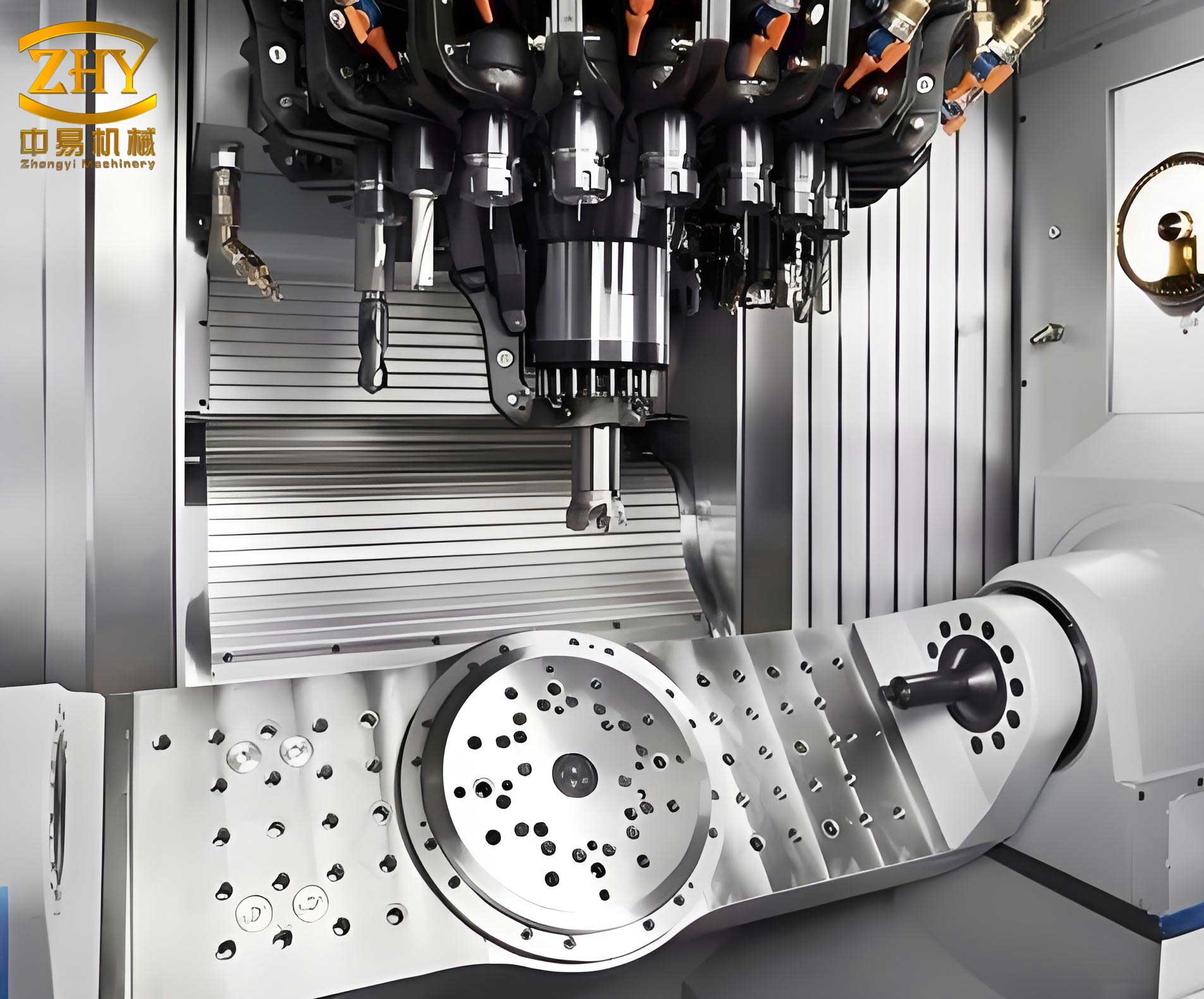
The pursuit of higher speed, precision, and reliability in modern machine tools imposes stringent requirements on the structural components that form their backbone. Among these, machine tool castings, particularly large crossbeams and beds, are critical. Their static and dynamic stiffness, governed by the material’s elastic modulus and strength, directly influences machining accuracy and long-term dimensional stability. While various grades of cast iron are employed, gray cast iron remains a cornerstone material for many machine tool castings due to its excellent castability, damping capacity, and cost-effectiveness. The performance of these machine tool castings, however, is intrinsically linked to the morphology of the graphite phase within their metallic matrix. This article, from a practitioner’s perspective, delves into an experimental investigation of how flake graphite characteristics—influenced by casting parameters and composition—affect the tensile strength and elastic modulus of gray iron, with direct implications for the design and production of high-performance machine tool castings.
1. Introduction: The Central Role of Graphite
Gray cast iron derives its name and key properties from the presence of graphite in the form of flakes or plates. These graphite flakes are essentially voids or cracks within the continuous metallic matrix, which is typically pearlitic. The size, distribution, amount, and morphology of these graphite flakes are the primary determinants of the material’s mechanical properties. For critical applications like machine tool castings, achieving a high elastic modulus (stiffness) and sufficient tensile strength is paramount to resist deflection under load and ensure precision.
The challenge in producing large, heavy-section machine tool castings lies in counteracting the natural tendency of the microstructure to coarsen with slower cooling rates. Slower cooling, inherent in thick sections, promotes the growth of larger, straighter graphite flakes. Similarly, higher carbon equivalent (CE) compositions, which improve castability and reduce shrinkage defects, also encourage graphite precipitation and growth. Both factors can detrimentally impact the final mechanical properties required for the machine tool casting’s function. This study systematically examines these relationships to provide a foundation for process control.
2. Experimental Methodology
The investigation focused on a standard grade of gray iron, HT300, commonly specified for machine tool castings requiring high strength and stiffness. The target component was a large crossbeam, a quintessential machine tool casting. To isolate and study the effects of cooling rate and composition, two types of test specimens were employed concurrently with production castings.
2.1 Materials and Melting
The base iron was melted in a medium-frequency induction furnace with a capacity of 20 tons. A tapping temperature exceeding 1460°C was maintained, followed by inoculation with 0.3-0.5% barium-silicon inoculant to promote a uniform, Type A graphite distribution. Pouring temperatures were carefully controlled: 1360-1380°C for test blocks and 1300-1340°C for the actual machine tool castings to minimize shrinkage and stress.
2.2 Specimen Design and Analysis
Two specimen geometries were used to capture the behavior of the material in the machine tool casting:
- Step Blocks: These blocks, with sections varying from 40 mm to 200 mm in thickness, were cast separately. They simulate the range of cooling rates experienced in different sections of a complex machine tool casting.
- Attached Test Bars: Cylindrical test bars (ϕ30 mm) were cast attached to the side walls of the actual crossbeam castings, ensuring they solidified under cooling conditions representative of the casting itself.
Chemical composition was verified via spectroscopy. Mechanical testing included tensile tests according to GB/T 9439-2010 and measurement of Elastic Modulus via the static method outlined in GB/T 22315-2008. Metallographic analysis was performed on all specimens, and advanced image analysis software was used to quantitatively characterize the graphite phase across multiple fields of view. The measured parameters included:
- Graphite Count (Number of flakes per unit area)
- Average Graphite Length
- Total Graphite Area
- Graphite Area Percentage
- Maximum Graphite Length and Area
The chemical composition ranges for the HT300 grade studied are summarized in Table 1.
| Grade | C | Si | Mn | S | P | Cr | Cu | Sn |
|---|---|---|---|---|---|---|---|---|
| HT300 | 2.9-3.2 | 1.7-2.1 | 0.5-1.3 | ≤0.12 | ≤0.12 | 0.1-0.6 | ≤0.8 | ≤0.08 |
3. Results and Data Presentation
The results from the step blocks and attached test bars provide a comprehensive dataset linking process, composition, microstructure, and properties relevant to machine tool castings.
3.1 Effect of Section Size (Cooling Rate)
The data from the step blocks, all with a nearly constant chemical composition, clearly demonstrates the sensitivity of gray iron properties to section thickness. As the section thickness increases, the cooling rate decreases, leading to a significant deterioration in both tensile strength and elastic modulus. This is a critical consideration for designers of heavy machine tool castings.
| Sample ID | Section Thickness (mm) | Tensile Strength (MPa) | Elastic Modulus (GPa) | Carbon Equivalent (CE)* |
|---|---|---|---|---|
| H-1 | 40 | 230 | 96 | 3.74 |
| H-2 | 80 | 229 | 96 | 3.74 |
| H-3 | 100 | 204 | 84 | 3.74 |
| H-4 | 150 | 165 | 67 | 3.74 |
| H-5 | 200 | 166 | 49 | 3.74 |
*CE = %C + 0.33(%Si) + 0.33(%P) – 0.027(%Mn)
3.2 Effect of Carbon Equivalent
The attached test bars, representing a constant section size (ϕ30 mm) but from castings with varying chemistry, show the influence of carbon equivalent. Despite the similar cooling condition, a lower carbon equivalent consistently results in higher tensile strength and elastic modulus, underscoring the importance of composition control for achieving high-performance specifications in machine tool castings.
| Sample ID | C.E. | Tensile Strength (MPa) | Elastic Modulus (GPa) | C (wt.%) |
|---|---|---|---|---|
| SH-5 | 3.62 | 320 | 109 | 3.00 |
| SH-4 | 3.70 | 271 | 98 | 3.07 |
| SH-1 | 3.78 | 260 | 89 | 3.15 |
| SH-3 | 3.68 | 305 | 88 | 3.09 |
| SH-2 | 3.75 | 256 | 73 | 3.10 |
3.3 Quantitative Graphite Analysis
Metallographic analysis and subsequent software-based quantification directly link the property changes to the evolution of the graphite microstructure. The key trends are consolidated in Table 4, ordered by descending Elastic Modulus.
| Sample ID | Avg. Graphite Length (mm) | Graphite Area % | Graphite Count | Max. Graphite Length (µm) | Tensile Strength (MPa) | Elastic Modulus (GPa) |
|---|---|---|---|---|---|---|
| SH-5 | 0.0524 | 9.92 | 83 | 224.8 | 320 | 109 |
| H-1 | 0.0767 | 12.56 | 50 | 289.6 | 230 | 96 |
| SH-4 | 0.0618 | 12.94 | 80 | 239.1 | 271 | 98 |
| SH-1 | 0.0635 | 14.33 | 75 | 275.5 | 260 | 89 |
| SH-3 | 0.0615 | 13.96 | 72 | 237.8 | 305 | 88 |
| H-2 | 0.0994 | 14.47 | 31 | 299.2 | 229 | 96 |
| H-3 | 0.1009 | 14.71 | 30 | 327.6 | 204 | 84 |
| SH-2 | 0.0649 | 15.12 | 73 | 273.3 | 256 | 73 |
| H-4 | 0.1018 | 14.73 | 30 | 376.8 | 165 | 67 |
| H-5 | 0.1047 | 16.42 | 26 | 406.2 | 166 | 49 |
4. Discussion: Interpreting the Microstructural Mechanics
The data unequivocally demonstrates that for gray iron machine tool castings, both tensile strength and elastic modulus are highly sensitive to microstructural details, primarily graphite morphology, which is controlled by cooling rate and composition.
4.1 The Detrimental Effect of Coarse Graphite
Examining the step block series (H-1 to H-5), the progressive increase in section thickness (decrease in cooling rate) results in:
- Increased average and maximum graphite length.
- Decreased graphite count (fewer, larger flakes).
- A tendency for flakes to become longer and straighter (reduced curvature).
From a mechanics perspective, each flake graphite acts as a pre-existing crack or void within the matrix. The stress concentration factor (Kr) at the tip of an elliptical flaw is given by:
$$K_r = 1 + 2\sqrt{\frac{a}{b}}$$
where \(a\) is the flaw length (half the major axis of the graphite flake) and \(b\) is the flaw width (related to the flake thickness). As cooling slows, the increase in flake length \(a\) is far more pronounced than any increase in thickness \(b\), leading to a significant rise in \(K_r\). This greatly amplifies local stresses under load, promoting earlier crack initiation and propagation, thereby reducing both strength and stiffness. The effective load-bearing cross-sectional area of the metal matrix is also reduced as graphite flakes coarsen.
4.2 The Role of Carbon Equivalent and Graphite Amount
For the attached test bars of similar diameter (SH-series), a lower carbon equivalent consistently yielded superior properties. A lower CE, primarily driven by lower carbon content, reduces the total amount of graphite that forms during eutectic solidification. This leads to:
- A higher population of smaller, more curved graphite flakes (higher graphite count).
- A lower total graphite area percentage.
- Reduced maximum graphite size.
This finer, more dispersed graphite structure creates a less severe stress concentration network. The relationship between elastic modulus and composition can be approximated by empirical formulas such as:
$$E_0 = 313,175 – 49,014(\%C) – 14,082(\%Si)$$
This formula highlights the direct, negative linear influence of carbon and silicon content on stiffness. While actual values may vary with microstructure, the trend is clear: reducing carbon equivalent is a powerful lever for increasing the elastic modulus of machine tool castings.
4.3 Solidification Mechanism and Its Consequence
The eutectic solidification of gray iron occurs as a cooperative growth of graphite and austenite. Graphite forms first, and the austenite grows enveloping the graphite branches. When solidification conditions promote coarse graphite (slow cooling or high CE), the resulting graphite flakes are fewer and larger. This coarse graphite structure not only severely cuts through the matrix but also dictates the formation of a correspondingly coarse austenite structure, which later transforms to pearlite. This dual effect—severe matrix discontinuity and coarse matrix grains—synergistically degrades mechanical properties. Conversely, rapid cooling or a lower CE promotes a finer eutectic cell structure with intertwined, finely spaced graphite and austenite, resulting in a more continuous and stronger matrix with less severe stress raisers. Achieving this refined structure is the key metallurgical goal in producing high-integrity machine tool castings.
5. Conclusions and Implications for Foundry Practice
This investigation into the properties of gray iron, with a focus on applications for machine tool castings, leads to several definitive conclusions that should guide material specification and foundry process control:
- Section Sensitivity: The tensile strength and elastic modulus of gray iron machine tool castings exhibit high sensitivity to section thickness (cooling rate). Properties can decline dramatically in heavier sections due to graphite coarsening.
- Cooling Rate Effect: For a fixed chemical composition, decreasing cooling rate (increasing wall thickness) leads to an increase in flake graphite length, a decrease in graphite curvature and population, and the formation of coarse graphite clusters. This directly causes a reduction in both tensile strength and elastic modulus.
- Composition Effect: For a given section size, increasing the carbon equivalent (primarily carbon content) increases the amount and size of flake graphite, reduces graphite curvature, and similarly leads to a decrease in tensile strength and elastic modulus.
- Microstructural Control is Paramount: The performance of gray iron machine tool castings is predominantly controlled by graphite morphology. Achieving a fine, well-dispersed, and highly curved Type A graphite structure through a combination of lower carbon equivalent, effective inoculation, and optimized cooling is essential for maximizing stiffness and strength.
Therefore, the production of high-performance machine tool castings requires a balanced approach. While higher carbon equivalents improve fluidity and reduce foundry defects, they compromise stiffness and strength. The foundry engineer must select the lowest practical carbon equivalent that still ensures sound castings, employ powerful inoculation practices to refine graphite even in slower-cooling sections, and consider design modifications or chilling techniques to manage cooling rates in critical, heavy sections of the machine tool casting. This integrated understanding of the process-structure-property relationship is fundamental to manufacturing machine tool castings that meet the escalating demands of modern precision manufacturing.