
Reflecting on my years within the foundry industry, the evolution of sodium silicate-based precision investment casting in our country presents a compelling narrative of adaptation and challenge. From its initial research and production application in the mid-1950s, this process has traversed over six decades. Its early ascendancy was built upon significant advantages in material cost and production cycle time, propelling it to become the mainstream process within China’s precision investment casting sector. This was particularly evident in its widespread adoption across critical industries such as automotive, agricultural machinery, construction machinery, rail transit, and pumps & valves, marking a period of rapid expansion. Today, it’s estimated that annual production of castings using the water glass process stands at approximately 1.5 million tons, produced by over 1,500 enterprises, representing its peak. However, the path forward is now defined by a critical juncture. Increasing environmental regulations, demands for higher product quality, and constraints from manufacturing costs and production efficiency signal an inevitable, gradual shift. The future will see sodium silicate processes progressively being supplanted by silica sol-based precision investment casting or other advanced forming technologies.
The landscape for enterprises specializing in sodium silicate precision investment casting is fraught with systemic challenges. Typically characterized by small scale, low industrial concentration, weak independent innovation capabilities, and outdated equipment and processes, many operate within the middle-to-low end of the industrial value chain. A heavy reliance on manual labor is pervasive, making the growing shortage of skilled workers an increasingly acute problem. Furthermore, as societal priorities evolve, the manufacturing sector faces a new imperative: “green manufacturing and clean production.” The “Thirteenth Five-Year Plan” period was a pivotal phase for transforming our economic development model, and manufacturing, including precision investment casting, entered a critical era of transition and breakthrough. Confronting the current state of sodium silicate casting and the gap with developed nations, the entire industry has reached a consensus under this new context. We must accelerate the elimination of the chloride salt-hardening process for water glass binders and fundamentally change the perception that water glass casting is not truly “precise.” We must hasten the replacement of manual and heavy labor with automation, achieve efficient, green, and intelligent manufacturing, transform the labor-intensive model, and expedite the establishment of robust environmental, occupational health, and safety management systems to practice true sustainable development.
This collective awakening crystallized into a formal consensus back in 2016. Initiated by relevant industry associations and leading enterprises, and shaped through the broad participation of scholars, experts, and dedicated professionals, we established a framework for the green and sustainable development of the sodium silicate precision investment casting sector, aiming to foster collective progress.
Core Consensus for Green Development in Sodium Silicate Precision Investment Casting
1. Promoting Technological Advancement in the Process
The cornerstone of our consensus is technological modernization. We are committed to a multi-faceted upgrade of the core precision investment casting process:
- Eliminating Outdated Hardening: Phasing out the chloride salt-hardening shell-making process is non-negotiable. Concurrently, we are actively promoting the application of alternative binders like silica sol to replace traditional water glass systems in suitable applications.
- Innovating Materials: Developing and applying low-cost, environmentally friendly pattern waxes and refractory materials is crucial. Improving acid-based wax treatment methods and leveraging advanced technologies from related industries will drive the upgrade of pattern-making and shell-building processes.
- Upgrading Ancillary Processes: We are accelerating the technological overhaul of supporting operations such as dewaxing, shell removal, knockout, shot blasting, and passivation through the adoption of advanced, often automated, solutions.
2. Driving Quality and Market Upgradation
Quality is the ultimate measure of any manufacturing process. For sodium silicate precision investment casting to remain relevant, we must:
- Focus on Selectivity: Strategically choose markets, clients, and products to specialize and excel in specific niches, moving away from low-value, high-volume competition.
- Deepen Quality Systems: Vigorously implement and certify against international standards, cultivating distinctive quality management systems and a pervasive quality culture within organizations.
- Execute “Excellence Projects”: Actively pursue initiatives that elevate the tangible quality of castings, thereby shattering the stereotype of “investment casting without precision” often associated with the older water glass methods.
3. Catalyzing Manufacturing Efficiency
Efficiency gains are essential for competitiveness and sustainability. Our path forward includes:
- Embracing Digital Integration: Fostering a mindset of “Precision Casting + Internet,” and accelerating the application of mechanization, automation, and intelligent technologies. We aim to promote the evolution towards integrated “one-line” manufacturing units for the investment casting process.
- Implementing Machine Substitution: Replacing manual and strenuous physical labor with robotics and automated systems is a priority, fundamentally transforming the labor-intensive nature of the traditional model.
- Optimizing Processes: Actively re-engineering workflow, adopting short-flow, unit-based, and standardized operations to achieve management-led efficiency improvements.
4. Upholding the Industry’s Reputation
Sustainable development extends beyond the factory floor. We recognize the need to:
- Build Trust: Establish an image of “integrity in operation,” insisting on ethical practices at every stage to foster a healthy market environment for the entire precision investment casting industry.
- Foster Collaboration: Actively participate in intra-industry cooperation and exchanges, exploring platforms like technical alliances for shared learning and problem-solving.
- Prioritize Safety and Environment: Strengthen awareness and action on environmental protection and production safety, speeding up the implementation of certified management systems for environment, occupational health, and safety.
- Practice Resource Stewardship: Conserve resources and energy, reduce emissions, and steadfastly commit to green, sustainable development in all facets of precision investment casting operations.
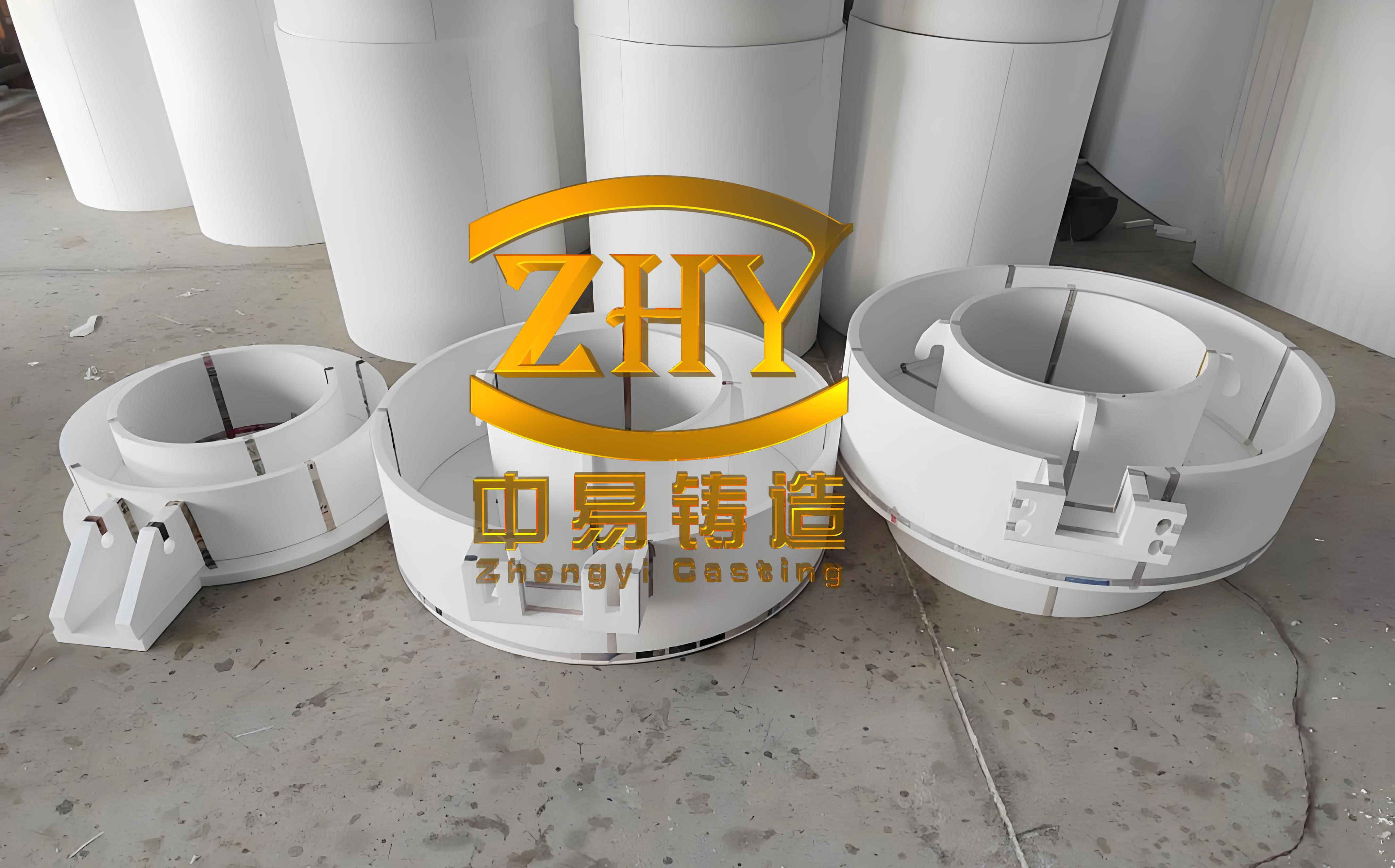
The transition in shell-making technology, moving from thick, manually built chloride-hardened shells to faster, automated, and thinner shell systems using advanced binders, represents a visual metaphor for this upgrade path.
Strategic Initiatives for the “Fourteenth Five-Year Plan” and Beyond
Aligning with the “new era” requirements for environmental protection, “green foundry” is no longer an option but a mandate. This necessitates enterprise self-inspection and rectification of obsolete processes and equipment, intensified treatment of wastewater, waste gas, noise, solid waste, and dust (“water, air, sound, slag, and dust”), a complete halt to irregular emissions, and a full-speed drive toward realizing a truly “Green Precision Investment Casting” industry.
1. Achieving Industry-Standard Industrial Emissions
Our initiatives are targeted and measurable, focusing on compliance with increasingly stringent standards:
- Wastewater Compliance: Upgrading to acid-free wax treatment technologies, environmentally friendly thin-shell rapid silica sol shell-building techniques, and green post-processing methods for castings like acid pickling and passivation.
- Solid Waste Compliance: Upgrading refractory materials, applying material reduction strategies, and enhancing recycling and reusability technologies. A key goal is to achieve a 35%–50% recycle/reuse rate for waste shell sand, with the remaining 100% being industrially repurposed, drastically reducing virgin sand consumption.
- Waste Gas & Particulate Compliance: Implementing green energy upgrades, advancing roasting and melting furnace technologies, and enforcing organized collection and treatment of emissions. Performance-based differentiated controls are becoming the norm in key regions, with emission source and limit management growing ever stricter.
The emission limits we must adhere to are clearly defined. The following tables summarize the atmospheric pollutant emission limits for the foundry industry, including precision investment casting processes, for general areas (Level 1) and key areas (Level 2), as well as unorganized emission limits within plant boundaries.
| No. | Pollutant | Metal Melting | Molding | Knockout/Cleaning | Core Making | Pouring Area | Sand Processing/Regen. | Heat Treatment | Surface Coating | Monitoring Point |
|---|---|---|---|---|---|---|---|---|---|---|
| 1 | Particulate Matter | 30-40 | 30 | 30 | 30 | 30 | 30 | 30 | 30 | Exhaust stack of workshop or production facility |
| 2 | SO₂ | 100-200 | – | – | – | – | 150* | 100 | – | |
| 3 | NOx | 300-400 | – | – | – | – | 300* | 300 | – | |
| 4 | Pb & Compounds | 2** | – | – | – | – | – | – | – | |
| 5 | Benzene | – | – | – | – | – | – | – | 1 | |
| 6 | BTEX† | – | – | – | – | 40‡ | – | – | 60 | |
| 7 | Triethylamine | – | – | – | 20§ | – | – | – | – | |
| 8 | NMHC | – | – | – | – | 40‡ | – | – | 100 | |
| 9 | TVOC¶ | – | – | – | – | – | – | – | 120 | |
| * Applicable to thermal regeneration furnaces. ** For Pb-based & Pb-bronze alloy melting. † Benzene, Toluene, Ethylbenzene, Xylenes. ‡ For lost foam/EPC pouring. § For triethylamine core making. ¶ To be implemented upon release of national monitoring standard. | ||||||||||
| No. | Pollutant | Metal Melting | Molding | Knockout/Cleaning | Core Making | Pouring Area | Sand Processing/Regen. | Heat Treatment | Surface Coating | Monitoring Point |
|---|---|---|---|---|---|---|---|---|---|---|
| 1 | Particulate Matter | 20-30 | 20 | 20 | 20 | 20 | 20 | 20 | 20 | Exhaust stack of workshop or production facility |
| 2 | SO₂ | 100 | – | – | – | – | 150* | 100 | – | |
| 3 | NOx | 300 | – | – | – | – | 300* | 300 | – | |
| 4 | Pb & Compounds | 2** | – | – | – | – | – | – | – | |
| 5 | Benzene | – | – | – | – | – | – | – | 1 | |
| 6 | BTEX† | – | – | – | – | 20‡ | – | – | 40 | |
| 7 | Triethylamine | – | – | – | 10§ | – | – | – | – | |
| 8 | NMHC | – | – | – | – | 20‡ | – | – | 60 | |
| 9 | TVOC¶ | – | – | – | – | – | – | – | 80 | |
| * Applicable to thermal regeneration furnaces. ** For Pb-based & Pb-bronze alloy melting. † Benzene, Toluene, Ethylbenzene, Xylenes. ‡ For lost foam/EPC pouring. § For triethylamine core making. ¶ To be implemented upon release of national monitoring standard. | ||||||||||
| Pollutant | Emission Limit | Special Emission Limit | Meaning of Limit | Monitoring Location |
|---|---|---|---|---|
| Particulate Matter | 5 | 5 | 1-hour average concentration at monitoring point | Monitoring point set outside the workshop building |
| NMHC | 10 | 6 | 1-hour average concentration at monitoring point | |
| 30 | 20 | Any one-time concentration at monitoring point |
Furthermore, a comprehensive “Upgrade, Reduce, Recycle” strategy must be universally implemented. This involves conscious efforts to reduce consumption and emissions across the board in precision investment casting. Key performance indicators include:
- Energy Efficiency in Melting: Primary melting equipment must meet strict energy consumption standards. For instance, the specific energy consumption for melting cast iron in induction furnacles can be modeled as a function of furnace capacity (V in tons), aiming for a target limit (E in kWh/ton):
$$
E_{\text{iron}} \leq a – b \times \ln(V)
$$
Where for typical targets at 1500°C, the constants define the descending limit curve as capacity increases, as illustrated in the derived table below.
| Furnace Capacity V (ton) | ≤ 1.0 | 1.5 | 2.0 | 3.0 | ≥ 3.5 |
|---|---|---|---|---|---|
| Max. Energy Consumption E (kWh/ton metal) | 630 | 620 | 610 | 600 | 590 |
Similarly, for carbon steel melting in induction furnaces at 1600°C, the relationship follows a similar logarithmic decay trend:
$$
E_{\text{steel}} \leq c – d \times \ln(V)
$$
| Furnace Capacity V (ton) | ≤ 0.5 | 1.0 | 2.0 | 3.0 | ≥ 5.0 |
|---|---|---|---|---|---|
| Max. Energy Consumption E (kWh/ton metal) | 730 | 720 | 710 | 700 | 690 |
- Clean Energy for Roasting: Adopting natural gas, electricity, biomass, or other clean energy sources for shell roasting furnaces, utilizing high-efficiency, energy-saving kilns.
- Shell Material Reduction: Applying fast-drying and thin-shell/layer-reduction technologies with silica sol systems tailored to specific products, lowering consumption of refractory sands and stuccoes.
- Post-Processing Green Chemistry: Implementing new environmentally friendly processes for edge operations like stainless steel casting pickling and passivation, ensuring harmless treatment of waste acid and heavy metals.
2. Accelerating the Shift Towards Automation, Digitization, and Intelligence
This is the pathway to achieving not just “Green Precision Investment Casting,” but also “Intelligent Precision Investment Casting” and “Human-Centric Precision Investment Casting.”
- Upgrading On-site Operations: Implementing mechanized shell-making, online shell removal and knockout, robotic grinding/fettling, etc., to dramatically improve the working environment and reduce physical and noise hazards.
- Embracing the Digital Thread: Through comprehensive automation, digitization, and intelligent transformation, we can leapfrog towards a smart, data-driven precision investment casting industry that is inherently green.
- Cultivating a Positive Ecosystem: By creating “beautiful factories,” refining corporate culture, and focusing on employee well-being, we can realize the vision of a “human-centric” foundry that attracts and retains talent.
As we stand today, our economic and social development has entered a critical phase of transformational growth. “Innovation-driven development, quality as the priority, green development, structural optimization, and talent as the foundation” have become the core themes for the survival and advancement of manufacturing in this new era. Within this context, accelerating the transformation, upgrading, and high-quality development of sodium silicate precision investment casting, promoting the modernization of manufacturing models, and fully implementing green and sustainable strategies are not just inevitable trends; they represent the profound responsibility and mission of every practitioner in the field of precision investment casting. The consensus is formed, the initiatives are clear; the time for concerted action is now.