
In recent years, as a foundry engineer specializing in the production of high-quality machine tool castings, I have explored the application of high carbon equivalent (CE) gray iron to achieve superior mechanical properties. This approach has proven effective in manufacturing high-strength machine tool castings, such as those used in precision grinding machines. Through practical experience, I have found that adjusting the carbon equivalent value allows for consistent production of high-grade gray iron with excellent performance, ease of furnace control, reduced section sensitivity, uniform hardness, and lower rejection rates. This method is particularly advantageous for factories with access to scrap steel resources, offering cost-effective solutions for machine tool castings. In this article, I will detail my methodology, from chemical composition selection to production processes, emphasizing the benefits for machine tool castings.
The foundation of producing high-strength gray iron for machine tool castings lies in the careful selection of chemical composition. Carbon equivalent (CE) is a critical parameter that influences the fluidity, strength, and machinability of castings. For machine tool castings, I typically target a CE value in the range of 4.2 to 4.5, which ensures a balance between castability and mechanical integrity. The CE can be calculated using the standard formula that accounts for carbon, silicon, and phosphorus contributions:
$$CE = C + \frac{Si}{3} + \frac{P}{3}$$
In my practice, the specific chemical composition for high carbon equivalent gray iron is optimized as follows: carbon (C) around 3.8%, silicon (Si) between 1.6% and 1.8%, and phosphorus (P) kept below 0.1%. This composition promotes graphite formation while minimizing chill tendencies, which is crucial for the dimensional stability of machine tool castings. To illustrate, Table 1 summarizes the target chemical ranges for producing high-strength machine tool castings.
| Element | Target Range (%) | Role in Castings |
|---|---|---|
| Carbon (C) | 3.7–3.9 | Enhances fluidity and graphite formation |
| Silicon (Si) | 1.5–1.9 | Promotes graphitization and strength |
| Manganese (Mn) | 0.6–0.9 | Improves hardness and pearlite formation |
| Phosphorus (P) | < 0.1 | Reduces brittleness in machine tool castings |
| Sulfur (S) | < 0.1 | Minimizes impurities for better performance |
These ranges are derived from extensive trials aimed at optimizing the properties of machine tool castings, ensuring they meet rigorous standards for precision and durability.
The production conditions play a pivotal role in achieving consistent quality for machine tool castings. I utilize a large duplex hot-blast cupola furnace for melting, which provides efficient heat transfer and compositional control. The molten iron is tapped at temperatures between 1380°C and 1420°C, with pouring temperatures maintained above 1300°C. This high pouring temperature is essential for filling thin sections and complex geometries common in machine tool castings, reducing defects like cold shuts or misruns. The thermal dynamics of the process can be modeled using heat transfer equations, such as:
$$Q = m \cdot c_p \cdot \Delta T$$
where \(Q\) is the heat input, \(m\) is the mass of the metal, \(c_p\) is the specific heat capacity, and \(\Delta T\) is the temperature change. By monitoring these parameters, I ensure the molten iron retains adequate superheat for successful casting of machine tool components.
Charge material proportions are carefully designed to achieve the desired chemical composition and carbon equivalent. In my experience, a charge mix comprising 40–50% scrap steel, 10–20% pig iron, and 30–40% returns (such as gates and risers) yields optimal results for machine tool castings. The high scrap steel content leverages available resources, reducing material costs while maintaining quality. However, the quality of scrap steel must be controlled to avoid excessive impurities that could compromise the integrity of machine tool castings. The charge calculation is based on the target CE value, with silicon additions adjusted via ferrosilicon inoculants. Table 2 outlines a typical charge composition for producing high carbon equivalent gray iron for machine tool castings.
| Material | Percentage (%) | Purpose |
|---|---|---|
| Scrap Steel | 45 | Provides base iron and controls carbon |
| Pig Iron | 15 | Enhances carbon and silicon levels |
| Returns | 35 | Recycles material, reduces waste |
| Ferrosilicon | 5 (as additive) | Adjusts silicon for CE value |
To compensate for the high scrap ratio, I increase the coke addition rate in the cupola by approximately 10–15%, ensuring sufficient melting temperature and carbon pickup. This balance is critical for maintaining the fluidity and composition needed for intricate machine tool castings.
Furnace control and inoculation are key steps in refining the microstructure of gray iron for machine tool castings. I employ stream inoculation during tapping, where inoculants are added directly into the molten iron flow. This method enhances graphite nucleation, leading to a uniform distribution of fine graphite flakes. The inoculation process can be described by kinetic equations for nucleation rate:
$$N = N_0 \exp\left(-\frac{\Delta G^*}{kT}\right)$$
where \(N\) is the nucleation rate, \(N_0\) is a pre-exponential factor, \(\Delta G^*\) is the activation energy for nucleation, \(k\) is Boltzmann’s constant, and \(T\) is the temperature. By optimizing inoculation, I achieve consistent results across batches of machine tool castings. The inoculants used vary based on strength requirements and CE values. For graphite-promoting effects, I use ferrosilicon-based inoculants (e.g., FeSi75), while for carbide stabilization, I employ complex inoculants containing elements like calcium and aluminum. The addition rate ranges from 0.2% to 0.4% of the molten iron weight, never exceeding 0.5% to avoid over-inoculation. After inoculation, vigorous stirring and slag removal are performed to ensure homogeneity and cleanliness, which are vital for the surface finish and mechanical properties of machine tool castings.
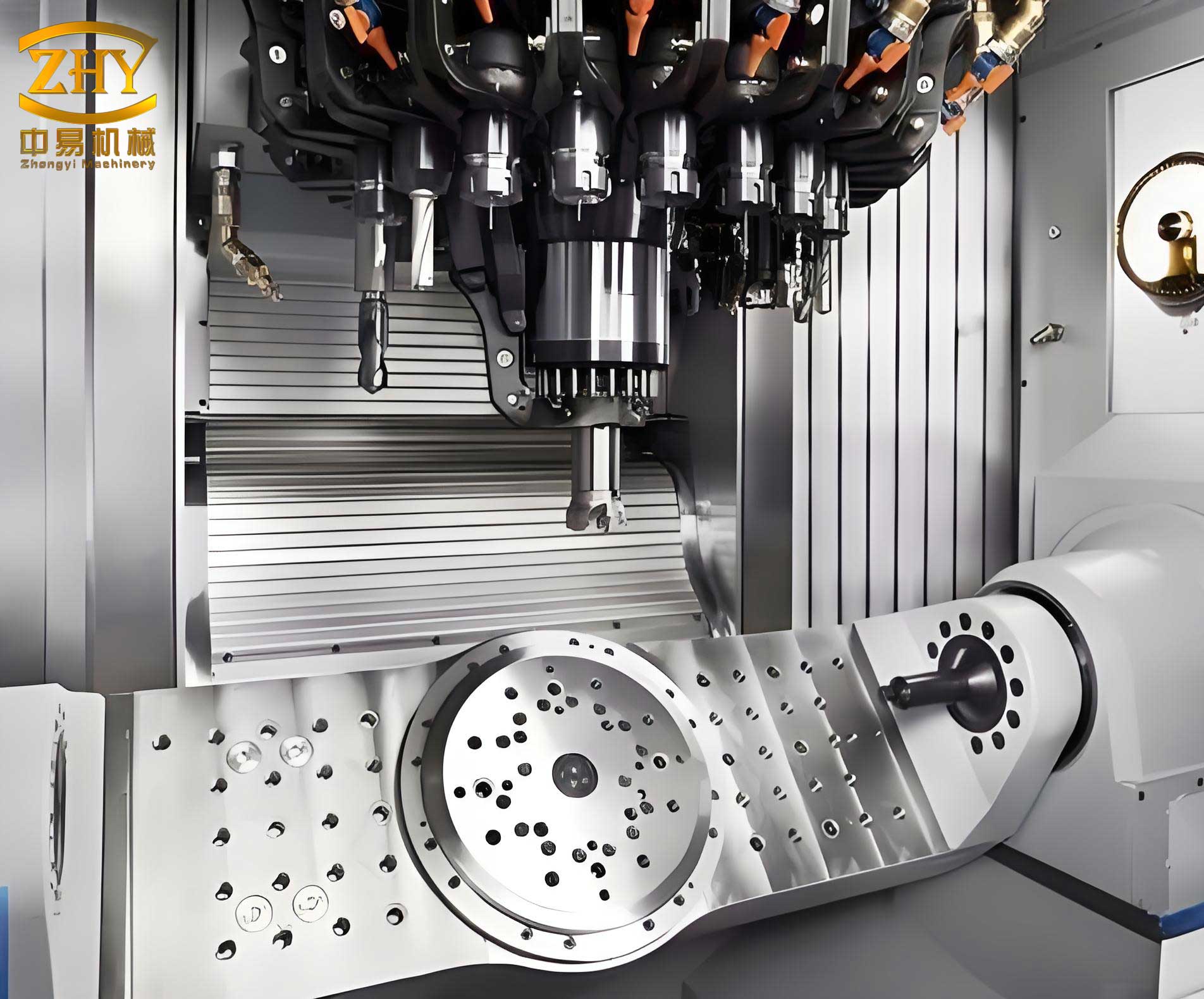
The mechanical properties of high carbon equivalent gray iron for machine tool castings are consistently high, as verified through routine sampling. Tensile strength, hardness, and elongation are measured to ensure compliance with standards such as ASTM A48. In my production, the tensile strength typically ranges from 250 MPa to 350 MPa, depending on the inoculation practice and cooling rates. Table 3 presents actual sampling data from multiple batches of machine tool castings, demonstrating the stability of mechanical properties.
| Sample ID | Tensile Strength (MPa) | Hardness (HB) | Elongation (%) | CE Value |
|---|---|---|---|---|
| MT-001 | 320 | 220 | 1.5 | 4.3 |
| MT-002 | 310 | 215 | 1.4 | 4.2 |
| MT-003 | 335 | 225 | 1.6 | 4.4 |
| MT-004 | 300 | 210 | 1.3 | 4.1 |
| MT-005 | 325 | 222 | 1.5 | 4.3 |
These results highlight the reliability of high carbon equivalent gray iron for producing robust machine tool castings that withstand operational stresses. Furthermore, the effect of different inoculants on properties is summarized in Table 4, showing how tailored inoculation can enhance performance for specific machine tool applications.
| Inoculant Type | Tensile Strength (MPa) | Hardness (HB) | Graphite Morphology |
|---|---|---|---|
| FeSi75 (Graphitizing) | 310–330 | 215–225 | Fine, uniform flakes |
| Complex (Ca-Al based) | 300–320 | 210–220 | Short, distributed flakes |
| None (Baseline) | 250–280 | 190–200 | Coarse, irregular flakes |
The metallurgical structure of high carbon equivalent gray iron is characterized by fine, short graphite flakes evenly dispersed in a pearlitic matrix. This microstructure is achieved through controlled solidification and inoculation, which minimizes chilling in thin sections—a common issue in machine tool castings. The graphite flake size can be quantified using the aspect ratio formula:
$$AR = \frac{L}{W}$$
where \(AR\) is the aspect ratio, \(L\) is the length, and \(W\) is the width of graphite flakes. In my samples, the aspect ratio typically falls between 2 and 4, indicating a favorable morphology for strength and machinability. The pearlite content is maintained above 95%, ensuring high wear resistance essential for machine tool castings. This uniform structure reduces section sensitivity, meaning that properties remain consistent across varying thicknesses in complex machine tool castings. Additionally, the high carbon equivalent suppresses cementite formation, allowing even prone-to-chill areas to solidify as gray iron, which improves the machinability of cast components.
Casting performance and machinability are significant advantages of high carbon equivalent gray iron for machine tool castings. The high carbon content enhances fluidity, reducing defects like shrinkage porosity and hot tears. This results in lower rejection rates, often below 2% in my production, compared to conventional gray iron. The improved machinability stems from the uniform hardness distribution, as shown in Table 5, which compares hardness values at different locations on a typical machine tool casting.
| Location on Casting | Hardness (HB) – High CE Iron | Hardness (HB) – Conventional Iron |
|---|---|---|
| Thick Section (>50 mm) | 210–220 | 190–200 |
| Thin Section (<10 mm) | 215–225 | 180–190 |
| Edge/Corner | 218–228 | 170–185 |
The consistent hardness across sections facilitates easier machining operations, such as milling and drilling, which are critical for precision machine tool castings. Moreover, the reduced brittleness minimizes tool wear during machining, lowering production costs. The thermal conductivity of high carbon equivalent gray iron also benefits machine tool applications, as it can be expressed by Fourier’s law:
$$q = -k \nabla T$$
where \(q\) is the heat flux, \(k\) is the thermal conductivity, and \(\nabla T\) is the temperature gradient. The fine graphite flakes enhance heat dissipation, improving the thermal stability of machine tool castings during operation.
In conclusion, the use of high carbon equivalent gray iron has revolutionized my approach to manufacturing machine tool castings. By optimizing chemical composition, charge proportions, and inoculation practices, I achieve superior mechanical properties, enhanced castability, and excellent machinability. This method not only leverages scrap steel resources for cost efficiency but also ensures high performance in demanding applications. The tables and formulas presented here encapsulate the technical rigor behind producing reliable machine tool castings. As the industry evolves, further refinements in inoculation and process control will continue to advance the quality of machine tool castings, solidifying gray iron’s role in precision engineering.
To delve deeper into the theoretical aspects, the solidification behavior of high carbon equivalent gray iron can be modeled using phase diagram analysis. The iron-carbon-silicon system influences the eutectic temperature, which for typical compositions is around 1150°C. The cooling rate \( \frac{dT}{dt} \) affects graphite formation, and I control it through mold design and pouring parameters to optimize the microstructure for machine tool castings. Empirical relationships, such as the Chvorinov’s rule for solidification time:
$$t = B \left( \frac{V}{A} \right)^2$$
where \(t\) is the solidification time, \(B\) is a mold constant, \(V\) is the volume, and \(A\) is the surface area, guide the design of feeding systems to prevent defects in machine tool castings. Additionally, the inoculation efficiency can be quantified by the graphite nodule count per unit area, which I monitor metallographically to ensure consistency. For instance, a count of 150–200 nodules/mm² is typical for well-inoculated high carbon equivalent gray iron used in machine tool castings.
The economic impact of this methodology is substantial. By reducing scrap rates and improving machinability, the overall cost per unit of machine tool castings decreases by approximately 15–20%. This makes high carbon equivalent gray iron a competitive choice for mass production of machine tool components. Furthermore, the environmental benefits include lower energy consumption due to efficient melting and recycling of returns, aligning with sustainable manufacturing practices for machine tool castings.
In summary, my experience demonstrates that high carbon equivalent gray iron is a versatile and reliable material for machine tool castings. Through careful control of composition, inoculation, and processing, I consistently produce castings that meet stringent performance criteria. The integration of theoretical models with practical insights ensures continuous improvement in the production of machine tool castings, paving the way for innovations in the foundry industry.