
In the production of a specific series of engine block castings at our facility, the occurrence of casting holes on the machined K-face presented a significant quality challenge. Following machining operations, these subsurface defects, commonly referred to as sand holes or blowholes, were exposed, leading to component rejection. The defect rate reached an average of 6.58%, severely impacting the first-pass yield in the machining workshop and jeopardizing production schedules. This paper details a systematic internal攻关 project aimed at identifying the root causes and implementing effective countermeasures to reduce this defect.
The problem emerged under specific circumstances where模具 sets were required to operate beyond their standard design life to fulfill supply commitments. This context heightened the sensitivity of the process to parameter deviations. A cross-functional team was established, adopting a structured problem-solving approach focused on the core elements of the high-pressure die casting (HPDC) process: Man, Machine, Material, Method, and Measurement.
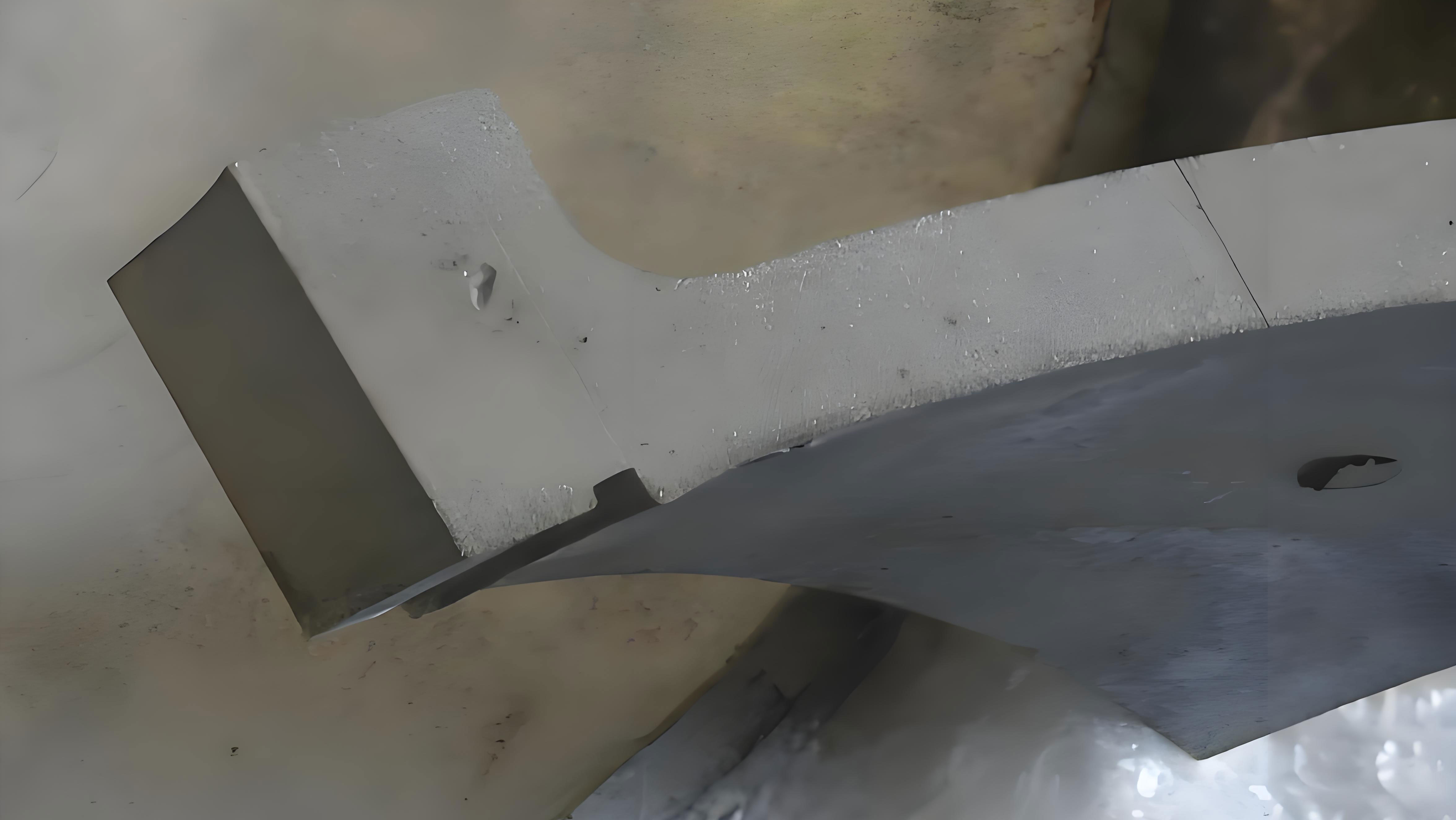
Initial analysis and screening ruled out several potential factors. The aluminum alloy feedstock met all specified chemical and cleanliness standards. Operational personnel and procedures remained consistent, and the die casting machines were functioning within normal parameters without significant downtime. Therefore, the investigation narrowed its focus to process parameters and模具 condition as the most likely contributors to the formation of these casting holes.
The primary mechanism for the formation of casting holes in this context is attributed to gas entrapment or shrinkage porosity localized at the K-face region. Entrapped gas can originate from several sources: air in the die cavity, vapor from lubricants, or gas released from the alloy itself. The flow dynamics of the molten metal during filling are critical. Turbulent flow promotes air entrainment, while premature solidification can block the escape paths for this gas, trapping it within the casting wall. The local thermal gradient and solidification sequence are thus paramount. This can be conceptually described by examining the pressure and temperature history at a point in the casting. The ideal condition for a sound casting requires that the local pressure, \( P_{local} \), remains above the metal’s solidification pressure threshold, \( P_{crit} \), until solidification is complete, while gas porosity nucleates if the partial pressure of dissolved gases exceeds the local metallostatic pressure.
$$P_{local}(t) > P_{crit} \quad \text{for} \quad t < t_{solidification}$$
Conversely, shrinkage porosity forms in regions that are isolated from feeding during solidification. The Niyama criterion, often adapted for die casting, relates the thermal gradient \( G \), the cooling rate \( \dot{T} \), and a critical value \( N_y \) to predict shrinkage porosity.
$$ \frac{G}{\sqrt{\dot{T}}} < N_y $$
Regions with low thermal gradients and high cooling rates are susceptible to shrinkage defects, which can manifest as casting holes after machining. Our hypothesis was that特定 process parameters were creating conditions favorable for either gas entrapment or shrinkage in the K-face region.
A cause-and-effect diagram (Ishikawa diagram) was constructed to visualize all potential contributors, leading to the identification of several key factors for empirical validation:模具 life/condition (representing模具差异), injection velocity, vacuum activation position,模具 temperature, casting pressure, and cooling time. The project’s improvement target was set to reduce the K-face casting holes defect rate to ≤3%.
Validation of Potential Root Causes
Planned experiments were conducted to isolate the effect of each key parameter. For each trial, a controlled batch of castings was produced under a specific parameter setting, followed by complete machining to inspect for K-face casting holes.
1.模具 Condition (模具差异)
The hypothesis was that varying模具 wear (from different service lives) could alter the fill pattern, gate conditions, or local heat transfer, potentially leading to turbulence and defect formation. Castings from three different模具 sets with different operational histories were compared.
| Mold ID | Parts with Casting Holes | Acceptable Parts | Total Parts Machined | Defect Rate |
|---|---|---|---|---|
| 5# | 38 | 538 | 576 | 6.6% |
| 8# | 16 | 236 | 252 | 6.3% |
| 9# | 569 | 7419 | 7488 | 7.6% |
The defect rate remained consistently high across all molds, indicating that while模具 wear might be a background factor, it was not the primary, actionable variable causing the sudden increase in casting holes.
2. Injection Velocity
Injection velocity directly impacts the Reynolds number of the flow and the filling mode. High velocities can cause turbulent breakup of the metal front, entrapping air. Low velocities may allow premature solidification, leading to mist runs or cold shuts. The velocity was tested within the established process window.
| Injection Velocity (m/s) | Parts with Casting Holes | Acceptable Parts | Total Parts Machined | Defect Rate |
|---|---|---|---|---|
| 4.0 | 68 | 857 | 925 | 7.35% |
| 5.0 | 73 | 1012 | 1085 | 6.73% |
| 6.0 | 62 | 798 | 860 | 7.21% |
The results showed minimal, non-systematic variation in the defect rate across the tested range. Therefore, injection velocity was not identified as the key driver for this specific instance of K-face casting holes.
3. Vacuum System Activation Position
This parameter proved to be highly significant. The vacuum system is designed to evacuate air from the cavity before the metal arrives. If activated too early relative to the shot sleeve position, it can draw in air and cold oxides from the front of the shot sleeve (“cold slug”) into the cavity. If activated too late, the cavity is not sufficiently evacuated before filling begins. The position, measured as the plunger tip location from the start of its stroke, was systematically varied.
| Vacuum Start Position (mm) | Parts with Casting Holes | Acceptable Parts | Total Parts Machined | Defect Rate |
|---|---|---|---|---|
| 380 | 40 | 599 | 639 | 6.26% |
| 430 | 63 | 924 | 987 | 6.38% |
| 480 | 50 | 797 | 847 | 5.90% |
| 530 | 45 | 877 | 922 | 4.88% |
| 580 | 37 | 812 | 849 | 4.36% |
| 630 | 27 | 691 | 718 | 3.76% |
| 680 | 19 | 723 | 742 | 2.56% |
| 730 | 25 | 843 | 868 | 2.88% |
| 780 | 22 | 695 | 717 | 3.07% |
| 830 | 28 | 861 | 889 | 3.15% |
| 880 | 28 | 834 | 862 | 3.25% |
The data reveals a clear trend: defect rates for casting holes dropped substantially as the vacuum start position was delayed from very early settings (380-480mm) to a mid-range position (~680mm). This improvement can be modeled as an exponential decay function of the position \( x \):
$$ \text{Defect Rate}(x) \approx A \cdot e^{-kx} + C \quad \text{(for a range)} $$
Where \( A \), \( k \), and \( C \) are constants. The optimal window appears between 580mm and 780mm, minimizing the introduction of early-phase gases/oxides while ensuring adequate evacuation before cavity filling. This was identified as a Key Process Input Variable (KPIV).
4.模具 Temperature
模具 temperature is fundamental as it dictates the heat extraction rate, solidification front progression, and alloy fluidity. Low temperatures increase viscosity and can cause cold flow defects or premature freezing that traps air. Excessively high temperatures can slow solidification, leading to blistering or increased shrinkage porosity, and may also cause soldering or die erosion. A wide range of模具 temperatures was evaluated.
| Mold Temperature (°C) | Parts with Casting Holes | Acceptable Parts | Total Parts Machined | Defect Rate |
|---|---|---|---|---|
| 100 | 77 | 889 | 966 | 7.97% |
| 120 | 59 | 896 | 955 | 6.18% |
| 140 | 32 | 984 | 1016 | 3.15% |
| 160 | 19 | 829 | 848 | 2.24% |
| 180 | 23 | 916 | 939 | 2.45% |
| 200 | 25 | 789 | 814 | 3.07% |
| 220 | 48 | 904 | 952 | 5.04% |
| 240 | 69 | 947 | 1016 | 6.79% |
| 260 | 84 | 969 | 1053 | 7.98% |
The results demonstrate a pronounced “sweet spot”. The rate of casting holes exhibits a parabolic-like dependence on模具 temperature \( T_{mold} \), with a minimum near 160-180°C. This relationship can be approximated by a quadratic function:
$$ \text{Defect Rate}(T_{mold}) \approx a(T_{mold} – T_{optimal})^2 + d_{min} $$
Where \( a \) is a positive coefficient, \( T_{optimal} \) is the optimal模具 temperature (~170°C), and \( d_{min} \) is the minimum achievable defect rate. Temperatures below 140°C and above 200°C led to a sharp increase in defects. Low temperatures likely caused poor venting due to rapid skin formation, while high temperatures promoted shrinkage porosity, both resulting in casting holes.
5. In-Cavity Cooling Time
Cooling time affects the solidification structure and the thermal stress within the casting before ejection. Insufficient time can lead to hot tearing or deformation during ejection, while excessive time reduces cycle time without clear benefit for internal soundness in this context.
| Cooling Time (s) | Parts with Casting Holes | Acceptable Parts | Total Parts Machined | Defect Rate |
|---|---|---|---|---|
| 40 | 194 | 2562 | 2756 | 7.04% |
| 45 | 111 | 1568 | 1679 | 6.61% |
| 50 | 252 | 3517 | 3769 | 6.68% |
| 55 | 107 | 1557 | 1664 | 6.43% |
| 60 | 153 | 2141 | 2294 | 6.67% |
The defect rate remained relatively constant and high across all tested cooling times. This indicates that the formation of these specific casting holes was determined during the filling and initial solidification phases, and was not significantly influenced by the duration of the post-fill cooling phase within the tested window.
Synthesis of Root Causes and Improvement Actions
The validation phase conclusively identified two independent but critical factors governing the formation of K-face casting holes:
- Suboptimal Vacuum Start Position: An early activation position was drawing contaminants and air from the shot sleeve into the cavity, which became entrapped in the casting wall, later manifesting as machining-exposed casting holes.
- Non-Optimal模具 Temperature: The original process窗口 was too wide, allowing operations at temperatures (both low and high) that created conditions favorable for defect formation—either through gas entrapment or shrinkage porosity.
The interaction between these factors can be conceptualized. An early vacuum start introduces gas sources, while a low模具 temperature rapidly freezes the metal around them, preventing their escape. Conversely, a high模具 temperature, even with a better vacuum start, can increase solidification shrinkage, leading to a different type of pore. The combined optimal state minimizes both phenomena.
The improvement strategy was straightforward: implement and control the optimal parameters identified. The following corrective actions were standardized:
- Action 1: Adjust and fix the vacuum system activation position to 680 mm from the start of the plunger stroke. This position was chosen from the center of the optimal range identified (580-780mm), providing a robust operating point with minimal defect rate for casting holes.
- Action 2: Tighten the模具 temperature control specification. The target was set at 170°C with a controlled window of ±10°C (160°C to 180°C). This required enhanced monitoring and adjustments to the die thermal management system (e.g., optimizing coolant flow and temperature).
Implementation and Results
The two countermeasures were implemented simultaneously on the production line. After the changes were stabilized, a statistical process control (SPC) study was conducted over a subsequent production period. The performance was compared against the baseline and the project target.
| Phase | Key Parameter Settings | Sampled Quantity | Parts with Casting Holes | Defect Rate | Status vs. Target (≤3%) |
|---|---|---|---|---|---|
| Baseline (Pre-Improvement) | Vacuum: ~430mm, Mold Temp: ~120-220°C range | ~15,000 | ~987 | ~6.58% | Fail |
| Post-Improvement | Vacuum: 680mm, Mold Temp: 170°C ±10°C | 5,200 | 112 | 2.15% | Pass |
The results confirmed a dramatic improvement. The defect rate for K-face casting holes fell from an average of 6.58% to 2.15%, well below the 3% project target. This represented a 67% reduction in defect incidence. The improvement was sustained, leading to a significant increase in the machining first-pass yield and reliable fulfillment of production schedules. The capability index for the process regarding this defect improved substantially. Assuming the defect rate follows a binomial distribution, the process capability can be assessed. The reduction in the defect proportion \( p \) from 0.0658 to 0.0215 greatly increases the distance, in terms of standard deviations, from the specification limit (0.03).
Conclusion and Learning
This project successfully addressed a chronic quality issue of casting holes on the machined K-face of engine blocks. Through a disciplined, data-driven approach focusing on process parameters, the root causes were isolated to a non-optimal vacuum system start position and an improperly controlled模具 temperature window.
The key technical learning reinforces fundamental HPDC principles: the precise synchronization of auxiliary systems like vacuum with the main injection phase is critical to prevent defect introduction. Furthermore,模具 temperature is not merely a window for operation but a precise variable that must be optimized and tightly controlled to balance fluidity, venting, and solidification soundness. The formation of casting holes is often the result of a confluence of factors, and a systematic empirical approach is essential to disentangle their effects.
The project also highlighted that while模具 life is a significant factor for overall quality, specific process deviations can induce defect rates that overshadow the gradual degradation from wear. Correcting these process deviations can restore quality even when工具ing is in extended service. The knowledge gained regarding the sensitivity of this particular casting to these parameters has been documented and integrated into the standard operating procedures and control plans, providing a robust framework for preventing the recurrence of such casting holes and guiding future troubleshooting efforts.