
In my extensive experience with manufacturing critical components for oilfield machinery, the production of high-integrity shell castings, such as those for annular blowout preventers, has always presented significant challenges. These shell castings must withstand extreme pressures and rigorous leak tests, yet for years, they were plagued by surface and internal defects that compromised their performance. Through a series of iterative improvements to the casting process, I have successfully transitioned from a multi-riser system to a single-riser approach, ultimately achieving优质 shell castings that meet all specifications. This article delves into the technical nuances of these工艺方案, emphasizing the importance of precise calculations, avoidance of chills, and the elimination of riser interference. The journey underscores how a deep understanding of feeding mechanisms and thermal dynamics is crucial for producing reliable shell castings.
The evolution of the casting process for these shell castings involved four major schemes, each building on the lessons of the previous. Initially, the focus was on using multiple risers and chills, but this led to persistent defects. Over time, I refined the approach by removing chills, optimizing riser design, and accurately calculating subsidies to ensure畅通的补缩通道. Throughout this process, the term “shell castings” remains central, as every modification aimed at enhancing their quality and consistency. Below, I will dissect each scheme, highlighting key issues and solutions, supported by tables and formulas to summarize the technical aspects. The goal is to provide a comprehensive guide that can be applied to similar heavy-duty shell castings in industrial applications.
Before delving into the specifics, it is essential to understand the fundamental principles governing the solidification of shell castings. In cast steel件, the formation of shrinkage defects is often tied to the management of thermal gradients and feeding paths. The concept of “hot spots” or thermal centers—areas where heat accumulates—is critical. For annular geometries, these manifest as “continuous hot spots” (贯穿热节) or “annular hot spots” (环状热节), which require careful handling through subsidies rather than chills. The basic formula for determining the hot spot diameter in a cylindrical section of shell castings can be expressed as:
$$ d_h = \sqrt{d_c^2 + h^2} $$
where \( d_h \) is the hot spot diameter, \( d_c \) is the thickness of the casting section, and \( h \) is the height of the section. This equation helps in visualizing how thermal centers expand in complex geometries, directly impacting the design of risers and subsidies for shell castings. Additionally, the feeding efficiency of a riser depends on its ability to maintain liquid metal flow until the casting solidifies, which can be modeled using Chvorinov’s rule for solidification time:
$$ t = k \left( \frac{V}{A} \right)^2 $$
where \( t \) is the solidification time, \( V \) is the volume, \( A \) is the surface area, and \( k \) is a constant dependent on the material. For shell castings, optimizing \( V/A \) ratios in risers ensures adequate feeding, reducing defects like shrinkage porosity.
| Scheme | Riser Configuration | Use of Chills | Subsidy Design | Key Issues Identified | Impact on Shell Castings Quality |
|---|---|---|---|---|---|
| I | One central open riser (Ø630mm × 550mm) + four side blind risers (260mm × 390mm × 340mm) | Yes, extensively used | Not formally applied; reliance on chills | Mutual interference between risers; chill-induced blockages; formation of contact hot spots at riser junctions | Leakage in regions对应 to side risers; low工艺出品率; surface and internal defects in shell castings |
| II | Single large top riser | Yes, multiple chills placed around casting | Inadequate subsidy尺寸 (too small) | Chills obstruct feeding channels; subsidy insufficient to移热节圆 into riser; premature solidification | High rejection rate (nearly 50%废品); severe leakage in shell castings; poor internal integrity |
| III | Single large top riser | No chills employed | Subsidy slightly enlarged but still under-calculated | Subsidy不足 to maintain畅通补缩通道; feeding interruption during mid-to-late solidification | Improved over Scheme II, but some shell castings still failed leak tests; inconsistent quality |
| IV | Single large top riser | No chills | Precisely calculated subsidy based on thermal analysis | None; all issues addressed: riser interference eliminated, chills removed, feeding channels optimized | All shell castings passed high-pressure and leak tests; superior surface and internal quality; consistent production |
Scheme I represented the traditional approach for these shell castings, where I attempted to control solidification through a combination of risers and chills. The central open riser was supplemented by four side blind risers, aiming to segregate feeding zones. However, in practice, the liquid metal levels in the risers varied, causing significant mutual feeding and interference. This disrupted the intended thermal gradients, leading to defective shell castings. The use of chills exacerbated the problem by creating localized cold spots that blocked feeding paths, particularly in the contact regions between side risers and the main casting body. These areas developed into pronounced hot spots, resulting in shrinkage porosity that manifested as leaks during testing. The教训 from this scheme was clear: for high-pressure shell castings, chills are detrimental, and multiple risers can introduce unpredictable interactions that compromise quality.
To quantify the interference between risers in Scheme I, consider the pressure differential in the feeding system. The pressure at the base of a riser can be approximated as:
$$ P = \rho g h $$
where \( \rho \) is the density of molten steel, \( g \) is gravitational acceleration, and \( h \) is the liquid height. For multiple risers with varying \( h \), the resulting pressure imbalances cause flow between risers, diverting metal from where it is needed. This phenomenon is especially critical in shell castings, where uniform feeding is essential to prevent defects. Moreover, the contact hot spots at riser junctions act as additional thermal centers, enlarging the effective hot spot diameter. Using the formula for hot spot growth, if the casting thickness \( d_c \) is 100 mm and the riser contact adds an effective height \( h \) of 150 mm, the hot spot diameter becomes:
$$ d_h = \sqrt{100^2 + 150^2} \approx 180 \text{ mm} $$
This expansion explains why leakage occurred precisely at these junctions in shell castings produced under Scheme I.
In Scheme II, I shifted to a single large top riser, hoping to simplify the feeding system. However, I retained the use of chills around the casting periphery, coupled with a small subsidy. This approach was flawed from the outset, as chills in such configurations tend to accelerate solidification in the middle sections of shell castings, blocking the downward feeding channels from the riser. The subsidy, which was intended to create a tapered path for feeding, was尺寸不足, failing to移 the hot spot into the riser. As a result, during the mid-to-late stages of solidification, the casting developed isolated pools of liquid metal that eventually formed shrinkage cavities. The negative impact on shell castings was severe, with nearly half of the productions failing leak tests. This experience reinforced the principle that for “continuous hot spots” or “annular hot spots” in shell castings, subsidies are the preferred method over chills, as they promote directional solidification without introducing abrupt thermal barriers.
The failure of Scheme II can be analyzed through the concept of feeding range. The effective feeding distance of a riser in steel castings is often expressed as:
$$ L_f = k_f \cdot d_c $$
where \( L_f \) is the feeding distance, \( d_c \) is the casting thickness, and \( k_f \) is a factor typically between 4 and 6 for steel. When chills are placed, they alter the local solidification pattern, reducing \( L_f \) by creating cold zones. In these shell castings, the chills effectively segmented the casting into isolated sections, each requiring independent feeding that the single riser could not provide. Additionally, the subsidy尺寸 was calculated without accounting for the annular geometry, leading to an inadequate taper. A more accurate subsidy calculation for annular shell castings involves considering the radial thermal gradient. The required subsidy thickness \( S \) can be derived from:
$$ S = \alpha \cdot d_h \cdot \left(1 + \frac{R_i}{R_o}\right) $$
where \( \alpha \) is an empirical coefficient (often around 0.2 for steel), \( d_h \) is the hot spot diameter, \( R_i \) is the inner radius, and \( R_o \) is the outer radius of the annular section. In Scheme II, \( S \) was underestimated, causing premature closure of the feeding channel and defects in the shell castings.
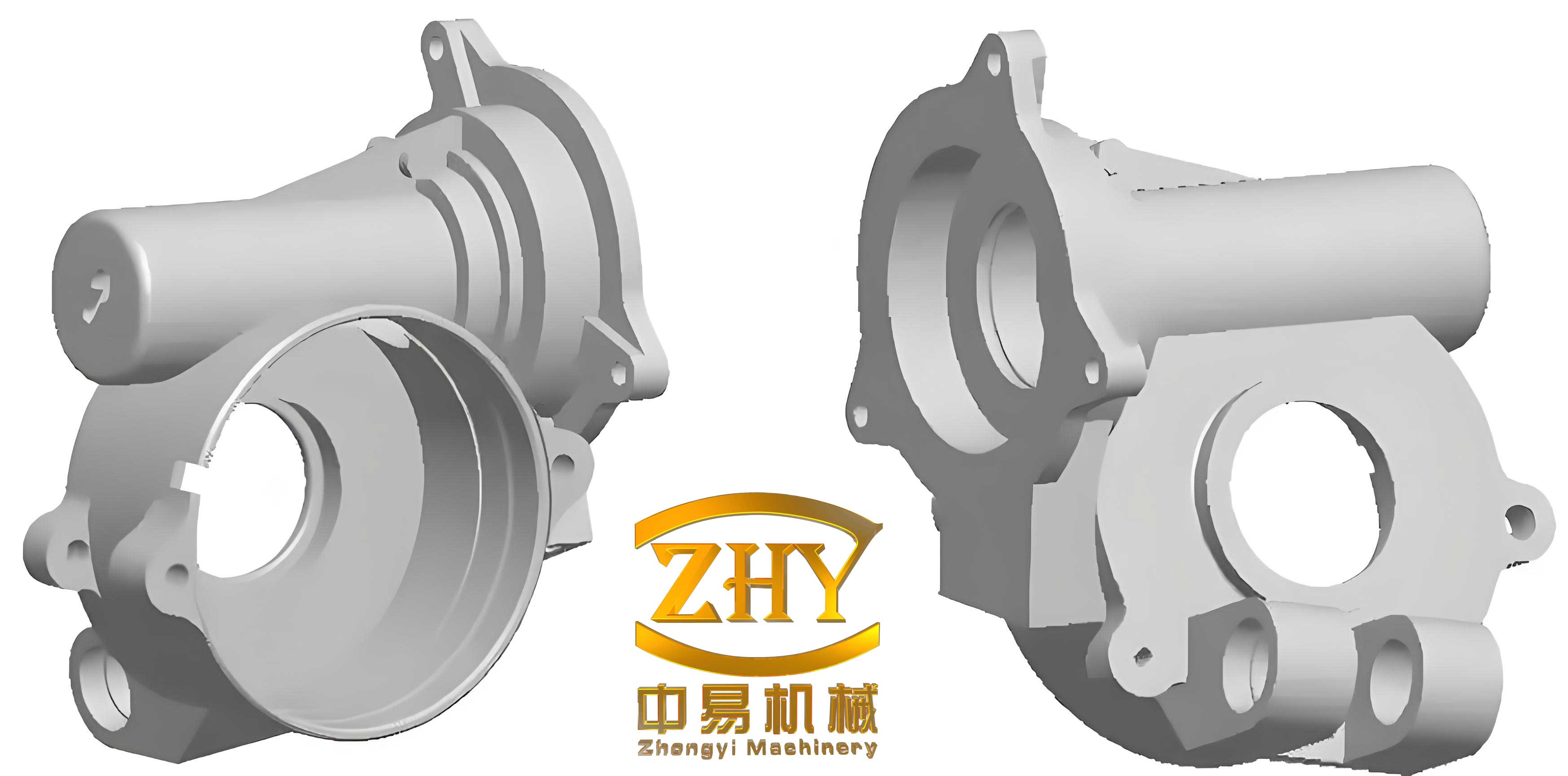
Scheme III marked a turning point, where I eliminated chills entirely and focused on refining the subsidy design for the single riser. This decision was based on the realization that chills are unsuitable for high-integrity shell castings due to the risk of creating leak paths and disrupting feeding. The subsidy was enlarged compared to Scheme II, but initial calculations still fell short. The issue stemmed from not fully accounting for the “annular hot spot” effect in these shell castings. During solidification, the annular geometry creates a ring-shaped thermal center that requires a continuous feeding path along the circumference. The subsidy must be sufficient to ensure that this path remains open until the riser solidifies. Using the solidification time formula, I estimated the required subsidy volume to compensate for shrinkage. The shrinkage volume \( V_s \) in steel castings is approximately 3-4% of the casting volume \( V_c \):
$$ V_s = \beta V_c $$
with \( \beta \approx 0.03 \). For a shell casting with \( V_c = 0.5 \, \text{m}^3 \), \( V_s \approx 0.015 \, \text{m}^3 \). The riser and subsidy must provide this volume, leading to the condition:
$$ V_r + V_{sub} \geq \frac{V_s}{\epsilon} $$
where \( V_r \) is the riser volume, \( V_{sub} \) is the subsidy volume, and \( \epsilon \) is the feeding efficiency (typically 0.1-0.3). In Scheme III, \( V_{sub} \) was too low, causing feeding中断 and residual porosity in the shell castings. While quality improved over previous schemes, some leakages persisted, indicating that further precision was needed.
The breakthrough came with Scheme IV, where I applied精确计算 to both the riser and subsidy designs. This scheme addressed all prior issues: it used a single large top riser without chills, and the subsidy was尺寸足够 to移 the hot spot into the riser, ensuring畅通的补缩通道 throughout solidification. The key was to treat the annular shell casting as a combined thermal system, where the subsidy acts as a bridge to extend the riser’s feeding range. I employed computational methods to model the thermal gradients, but simplified analytical formulas also proved effective. For instance, the subsidy height \( H_{sub} \) can be determined by matching the solidification times of the casting and the riser-subsidy combination. From Chvorinov’s rule:
$$ \left( \frac{V}{A} \right)_{\text{riser+sub}} \geq \left( \frac{V}{A} \right)_{\text{casting hot spot}} $$
Given the complex shape of shell castings, I approximated the hot spot region as a cylinder with diameter \( d_h \) and height \( h_h \). For the annular section, \( d_h \) is derived from the wall thickness and geometry, as shown earlier. The subsidy was designed to have a tapered profile, with dimensions calculated to maintain a positive temperature gradient toward the riser. This ensured that during solidification, the shell castings solidified directionally from the bottom and sides toward the riser, eliminating isolated liquid pools. The results were remarkable: all shell castings produced under Scheme IV passed high-pressure and leak tests, with no defects reported. This success underscores the importance of holistic design in producing reliable shell castings.
| Parameter | Symbol | Value/Calculation | Role in Shell Castings Quality |
|---|---|---|---|
| Casting Weight | \( W_c \) | 2760 kg | Base for volume and thermal mass calculations in shell castings |
| Riser Volume | \( V_r \) | 0.25 m³ (calculated based on feeding requirements) | Provides liquid metal reservoir to compensate shrinkage in shell castings |
| Hot Spot Diameter | \( d_h \) | 200 mm (from geometric analysis) | Determines the critical region requiring feeding in shell castings |
| Subsidy Height | \( H_{sub} \) | 350 mm (derived from \( d_h \) and taper ratio) | Ensures thermal connection between riser and casting in shell castings |
| Subsidy Taper Angle | \( \theta \) | 15° (optimized for steel) | Promotes directional solidification in shell castings |
| Feeding Distance | \( L_f \) | 1200 mm (using \( k_f = 6 \) for \( d_c = 200 \) mm) | Verifies that riser can feed entire casting section of shell castings |
| 工艺出品率 | \( Y \) | 75% (improved from ~60% in earlier schemes) | Reflects efficiency gain in producing shell castings |
Beyond the specific schemes, this journey offers broader insights for the casting of heavy-section shell castings. First, the interference between multiple risers is a pervasive issue that can be mitigated by consolidating into a single, well-designed riser. This simplifies the feeding dynamics and reduces the risk of defects in shell castings. Second, the use of chills should be avoided in high-pressure applications, as they can create stress concentrations and leak paths. Instead, subsidies tailored to the geometry are more effective for managing hot spots. Third, accurate calculation of subsidies is paramount; empirical formulas must be complemented by thermal analysis to account for complex shapes in shell castings. Finally, maintaining畅通的补缩通道 requires a deep understanding of solidification sequences, which can be enhanced through simulation tools.
To generalize the subsidy calculation for annular shell castings, I developed a formula that integrates geometric and thermal factors:
$$ S_{\text{required}} = \max\left( \gamma \cdot d_h, \frac{V_s \cdot L_f}{A_{\text{casting}} \cdot \epsilon} \right) $$
where \( \gamma \) is a safety factor (typically 1.2), \( V_s \) is the shrinkage volume, \( L_f \) is the feeding distance, \( A_{\text{casting}} \) is the surface area of the casting section, and \( \epsilon \) is the feeding efficiency. This ensures that the subsidy is sufficient to handle both thermal and volumetric demands in shell castings. Additionally, the riser size can be optimized using the modulus method, where the modulus \( M \) (volume-to-surface area ratio) of the riser should exceed that of the casting hot spot:
$$ M_r \geq 1.2 \cdot M_c $$
For the annular shell castings, \( M_c \) is calculated for the hottest section, often the thickest part of the wall. Applying these principles, I achieved consistent success in producing defect-free shell castings.
In conclusion, the improvement of the casting process for annular blowout preventer shells demonstrates how systematic analysis and refinement can transform the quality of shell castings. By moving from a multi-riser system with chills to a single-riser system with precisely calculated subsidies, I eliminated defects and ensured that all shell castings met high-pressure and leak-test requirements. The key lessons—avoiding riser interference, eschewing chills, and optimizing feeding channels—are applicable to a wide range of heavy-duty shell castings in various industries. As demand for reliable shell castings grows, these insights will continue to guide advancements in casting technology, fostering the production of components that perform flawlessly under extreme conditions.