
In the demanding world of manufacturing high-integrity aluminum components, the production of reliable shell castings often presents significant challenges. I have frequently encountered a persistent issue in the high-pressure die casting (HPDC) of aluminum alloy shell castings, such as those used for pressurized gas meter housings. These components require exceptional airtightness, typically needing to withstand a pressure of 1.5 MPa without leakage. However, the traditional die-cast parts consistently failed this test. Upon machining, the surfaces revealed a scattering of subsurface porosity, a defect utterly unacceptable for a pressure-containing vessel. This experience led me on a comprehensive journey to analyze the root cause and implement a superior manufacturing process: indirect squeeze casting.
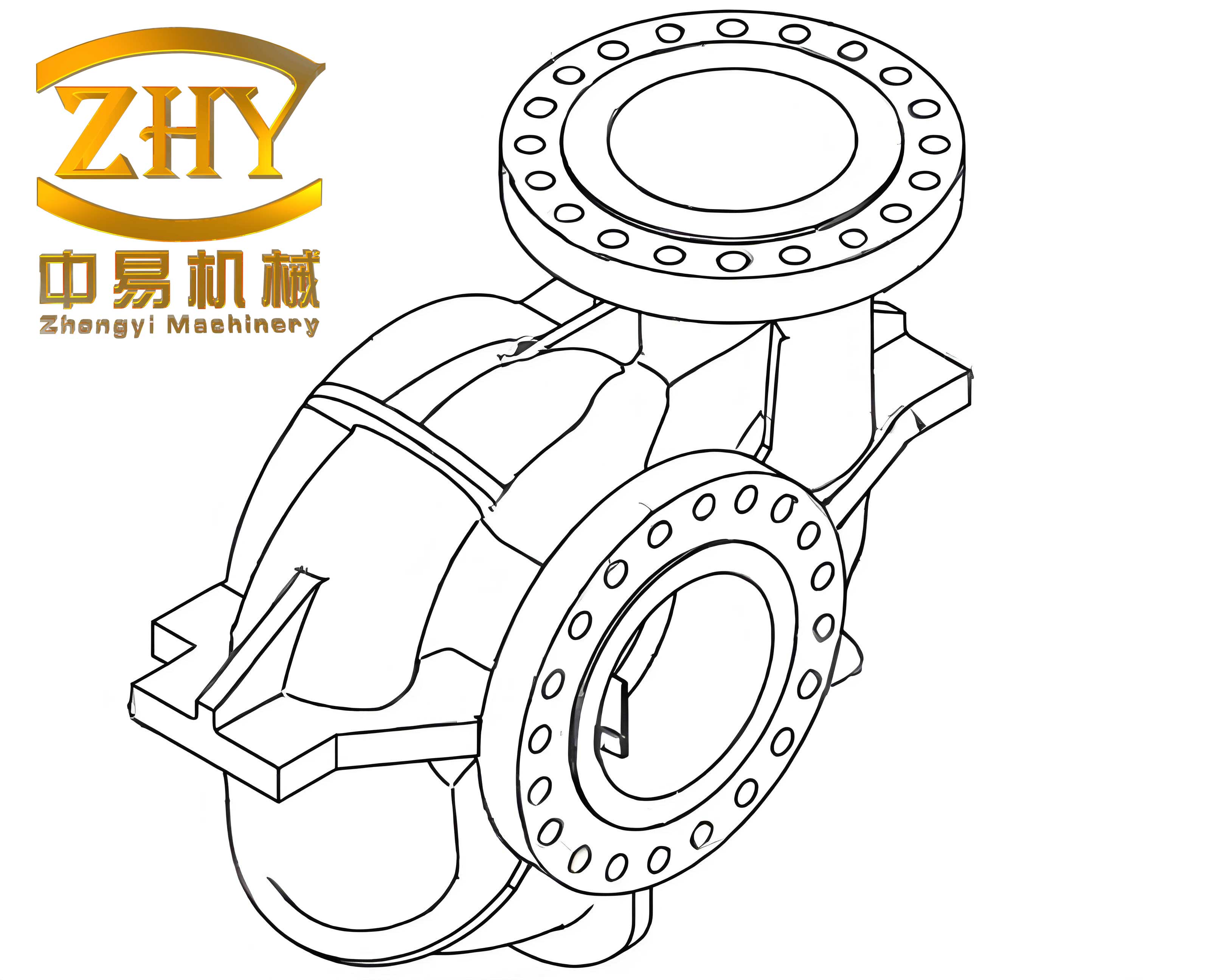
The fundamental flaw in the conventional die casting process for such shell castings lies in its inherent filling dynamics. In HPDC, molten metal is injected into the die cavity at extremely high velocities, typically ranging from 0.5 to over 1.0 m/s. This turbulent flow inevitably entraps air and gases from the mold cavity and the plunger sleeve, trapping them within the casting as the metal rapidly solidifies under intense pressure. While this pressure can compress these gases to some degree, it cannot eliminate them. For a dense, pressure-tight shell casting, this gaseous porosity is a critical failure point. The mechanical properties, particularly elongation, are also severely compromised by these internal defects and the typically entrapped oxide films.
The solution I successfully implemented was a transition from high-pressure die casting to indirect squeeze casting. While both are high-pressure processes, their philosophies are distinct. The core objective of squeeze casting is to achieve a laminar, non-turbulent filling of the cavity followed by sustained high-pressure solidification to eliminate shrinkage and micro-porosity. For the aluminum shell castings in question, this translated into a complete re-engineering of both the tooling and the process parameters.
Tooling Transformation: From Die Cast to Squeeze Cast Mold
The first practical step was to adapt the existing die casting mold for the squeeze casting process. This adaptation is crucial for cost-effectiveness. The primary modifications are summarized in the table below:
| Original Die Cast Mold Feature | Modification for Indirect Squeeze Casting | Rationale |
|---|---|---|
| Horizontal parting line (left-right mold opening). | Rotated 90° to a vertical parting line (top-bottom opening). | Facilitates vertical movement of the injection plunger and aligns with gravity for a more stable fill from below. |
| Side-mounted shot sleeve and horizontal biscuit. | Original ingate blocked. A new vertical shot sleeve (pressure chamber) machined directly below the main cavity in the new bottom mold half. | Enables the metal to be injected upward into the cavity in a controlled manner from a central, integral pressure chamber. |
| Standard H13 die steel components. | New H13 steel shot sleeve and plunger fabricated. A critical clearance of 0.10-0.15 mm (single side) was maintained between them. | The tight clearance prevents excessive metal leakage (‘flash’) past the plunger during the high-pressure intensification phase, which is sustained for a longer duration than in die casting. |
This transformed tooling setup is fundamentally different. The mold closes, molten aluminum is poured into the vertical shot sleeve, and then a hydraulic plunger pushes the metal upwards, through a large gate, to fill the cavity gently. The pressure is then maintained until complete solidification.
Process Parameter Development: The Pillars of Sound Shell Castings
The success of producing flawless shell castings via squeeze casting hinges on the precise selection and control of process parameters. Each parameter interacts with the others to govern the final microstructure and integrity. The optimized set I established for the ZL101A aluminum alloy shell castings is as follows, with a detailed explanation of the underlying principles.
| Process Parameter | Optimized Value | Typical HPDC Value |
|---|---|---|
| Filling Velocity | 0.03 – 0.05 m/s | 0.5 – 1.1 m/s |
| Filling Time | ~0.2 s | ~0.01 – 0.05 s |
| Mold Temperature | 250 – 300 °C | 150 – 200 °C |
| Pouring Temperature | 720 – 740 °C | 680 – 710 °C |
| Intensification Pressure | 150 MPa | 30 – 70 MPa (cavity pressure) |
1. Filling Velocity and Time: This is the most critical distinction from die casting. The filling velocity is reduced by an order of magnitude. The goal is to maintain laminar flow to prevent air entrapment. The Reynolds number ($Re$), which predicts flow regime, illustrates this:
$$Re = \frac{\rho v L}{\mu}$$
where $\rho$ is density, $v$ is velocity, $L$ is characteristic length (gate diameter), and $\mu$ is dynamic viscosity. By reducing $v$ from ~1 m/s to ~0.04 m/s, $Re$ drops drastically, ensuring flow remains in the laminar or very low turbulent range ($Re < 2000$ for pipe flow). The filling time is consequently longer (~0.2s), but this is acceptable as the metal is not at risk of premature freezing due to the higher mold and pouring temperatures.
2. Mold and Pouring Temperature: Higher temperatures are employed for two key reasons. First, they reduce the thermal shock and the formation of a thick solidified ‘skin’ in the shot sleeve, which would act as an insulator and hinder the transmission of the intensification pressure to the liquid metal in the cavity. Second, they improve metal fluidity for the slower fill. The exact temperature balance is crucial; excessive temperatures can lead to soldering, die erosion, and coarse grains. The selected range of 250-300°C for the mold and 720-740°C for the melt proved optimal for these shell castings.
3. Intensification Pressure: The applied pressure of 150 MPa is significantly higher than the effective pressure in a die casting cavity. This high pressure serves multiple vital functions for the quality of the shell casting:
- Suppresses Gas Porosity: According to Boyle’s law ($P_1V_1 = P_2V_2$), the high pressure dramatically reduces the volume of any dissolved or marginally entrapped gases.
- Eliminates Shrinkage Porosity: It forces liquid metal to feed into the interdendritic regions during solidification, compensating for volumetric shrinkage. The pressure required to overcome the feeding resistance through a mushy zone can be related to the dendrite arm spacing and surface tension.
- Improves Metal-to-Die Contact: It ensures intimate contact between the casting and the mold wall, resulting in a very fine-grained, chill zone and excellent heat transfer, leading to faster solidification and better mechanical properties.
The pressure must be applied before the gate solidifies and maintained until the entire casting is solid. The pressure $P$ needed to suppress a pore of radius $r$ is related to the surface tension $\gamma$ by $P > 2\gamma / r$. For micro-porosity with very small $r$, a very high $P$ is necessary.
Microstructural and Mechanical Outcomes for Superior Shell Castings
The implementation of this indirect squeeze casting process yielded transformative results for the aluminum shell castings. The improvement was evident on multiple levels:
1. Defect Elimination: Macroscopic examination of sectioned and polished castings revealed a complete absence of shrinkage cavities or gas pores. The internal soundness was perfect, which is the foundational requirement for a pressure vessel.
2. Enhanced Mechanical Properties: After a standard T6 heat treatment (solutionizing and artificial aging), specimens taken from the squeeze-cast shell castings showed remarkable improvements over their die-cast counterparts. The properties are compared below:
| Property | Squeeze-Cast (ZL101A) + T6 | Typical Die-Cast (ZL101A) | Improvement |
|---|---|---|---|
| Tensile Strength ($\sigma_b$) | 290 – 310 MPa | ~290 MPa | Marginal increase, already high in die casting. |
| Elongation ($\delta$) | 8 – 10 % | ~3 % | Over 200% increase (3x). |
| Brinell Hardness (HB) | 95 – 110 | ~90 | Significant increase. |
The tripling of elongation is particularly significant. It directly results from the elimination of stress-concentrating defects like pores and oxide bifilms, and from the refined, non-dendritic microstructure. The microstructure exhibited a uniform distribution of α-Al solid solution, with the eutectic silicon appearing as fine, spheroidized particles rather than coarse acicular plates. This refined structure is a direct consequence of the high pressure during solidification, which increases the effective undercooling and nucleation rate, and suppresses dendritic growth.
3. Guaranteed Functional Performance: Every single squeeze-cast shell casting successfully passed the 1.5 MPa pneumatic pressure test without leakage. This 100% functional reliability (with a process yield of 98%) was the ultimate validation of the process change.
Theoretical Advantages of Squeeze Casting for Shell Castings
The superiority of squeeze casting for producing high-integrity shell castings can be formalized through several physical and metallurgical principles:
1. Critical Gate Velocity for Turbulence: There exists a critical velocity $v_{crit}$ above which the melt front will transition from laminar to turbulent, causing air entrapment. In die casting, $v_{ingate} >> v_{crit}$. In squeeze casting, we deliberately ensure:
$$v_{fill} \approx 0.05 \text{ m/s} < v_{crit}$$
This is the cornerstone of defect-free filling for complex shell castings.
2. Solidification under High Pressure: The application of pressure $P$ alters the equilibrium phase diagram. It increases the equilibrium freezing temperature $T_f$ of the alloy according to the Clausius-Clapeyron relationship:
$$\frac{dT_f}{dP} = \frac{T_f (V_l – V_s)}{\Delta H_f}$$
where $V_l$ and $V_s$ are the molar volumes of liquid and solid, and $\Delta H_f$ is the latent heat of fusion. While the shift is small for practical pressures, the more significant effect is that the applied pressure $P$ directly counteracts the pressure drop $\Delta P_{shrink}$ required to draw liquid through the porous dendrite network to feed shrinkage. Feeding occurs effectively when:
$$P_{applied} > \Delta P_{shrink} = \frac{4 \gamma}{d} + \frac{180 \mu L^2 \dot{\epsilon}}{d^2}$$
where $d$ is the dendrite arm spacing, $\gamma$ is surface tension, $\mu$ is viscosity, $L$ is feeding distance, and $\dot{\epsilon}$ is volumetric shrinkage rate. The high 150 MPa pressure easily satisfies this condition, leading to pore-free shell castings.
3. Refined Microstructure (Fine Dendrite Arm Spacing): The intense heat extraction promoted by the high pressure leads to a high cooling rate. The secondary dendrite arm spacing (SDAS), $\lambda_2$, which strongly influences mechanical properties, is related to the local solidification time $t_f$ by a relationship of the form:
$$\lambda_2 = k \cdot (t_f)^n$$
where $k$ and $n$ are material constants. The high pressure reduces $t_f$, thereby reducing $\lambda_2$, leading to finer microconstituents and improved strength and ductility in the final shell casting.
Conclusion
The journey from a problematic die-cast component to a flawless squeeze-cast product underscores a fundamental principle in manufacturing: the process defines the product’s potential. For critical aluminum shell castings demanding high pressure tightness and superior mechanical durability, indirect squeeze casting is not merely an alternative but a technologically superior solution. By mastering the transition—strategically modifying tooling and meticulously controlling parameters like filling velocity (0.03-0.05 m/s), intensification pressure (150 MPa), and thermal conditions—it is possible to consistently produce shell castings that are internally sound, mechanically robust, and functionally reliable. This process effectively eliminates the inherent limitations of turbulent filling and inadequate feeding in die casting, unlocking a new level of performance for engineered aluminum components. The success of this project validates squeeze casting as a premier manufacturing route for high-quality, high-integrity aluminum alloy shell castings across demanding automotive, aerospace, and industrial applications.