
In my years of professional engagement with advanced manufacturing, few techniques have demonstrated the consistent capability for producing complex, high-integrity metal components as the investment casting process. This method, often hailed for its precision and versatility, is fundamentally a replicative molding technique. It begins with a disposable wax or polymer pattern, an exact replica of the desired final part. This pattern is then assembled into a cluster, or “tree,” and repeatedly dipped into ceramic slurries and stuccoed with refractory sands to build a robust, multi-layered shell mold. Once the ceramic shell is cured and hardened, the wax pattern is removed via steam or thermal dewaxing, leaving behind a precise negative cavity. Molten metal is subsequently poured into this pre-heated ceramic mold. After solidification and cooling, the ceramic shell is broken away to reveal the cast metal component, which typically requires minimal finishing. The entire investment casting process is a symphony of material science and thermal management, enabling the production of parts with exceptional surface finish, tight dimensional tolerances, and complex geometries that are often impossible or prohibitively expensive to achieve through machining or other casting methods.
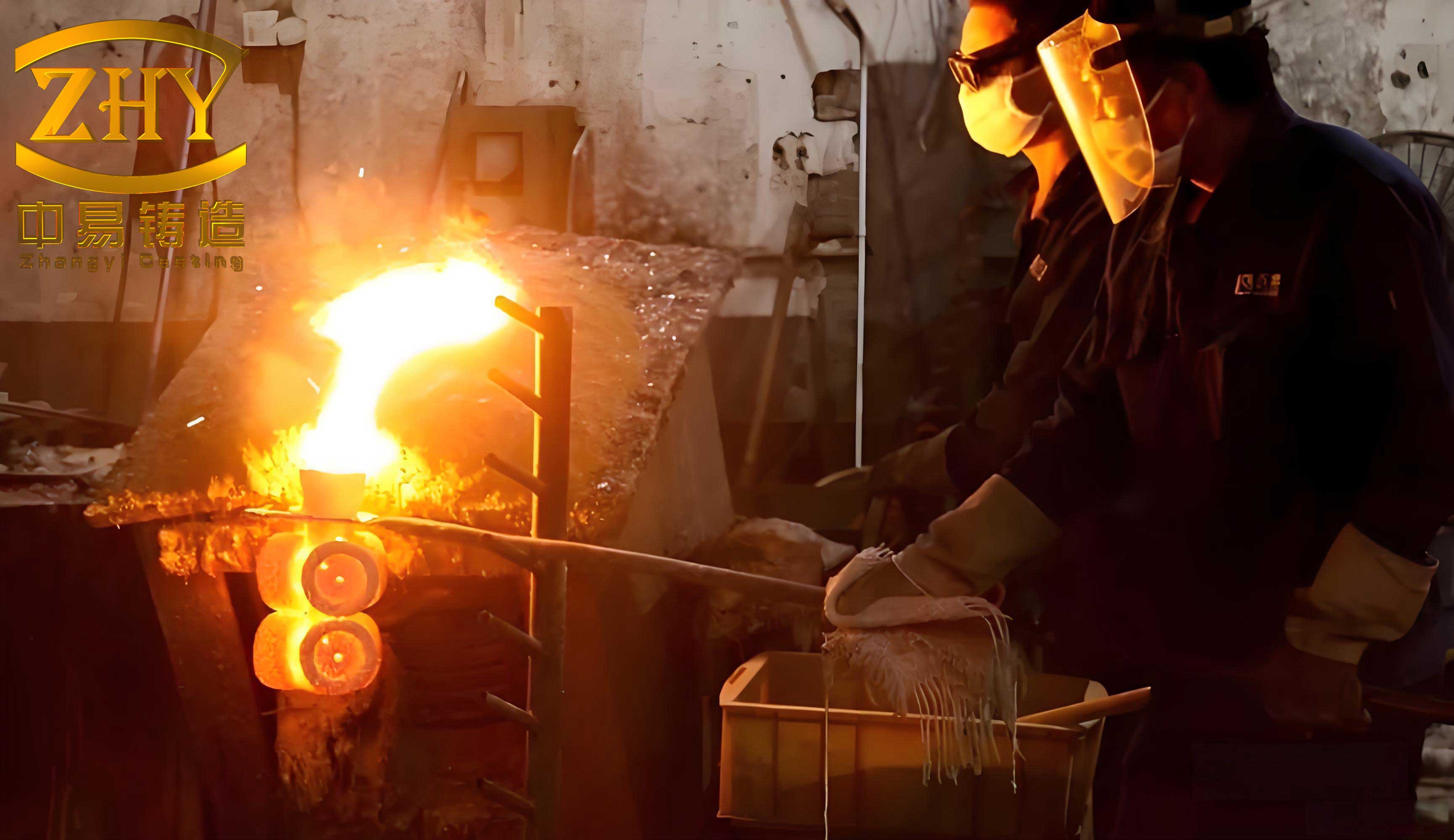
The genesis of the modern investment casting process can be traced back to ancient artisans, but its contemporary industrial form was solidified during the mid-20th century, largely driven by the aerospace industry’s need for complex, high-strength turbine blades. The core principle hinges on the lost-wax technique, but today’s process is governed by precise scientific control over every variable. From the rheology of the ceramic slurry to the thermodynamics of metal solidification, each step is optimized. The fidelity of the final cast metal part is directly contingent upon the quality of the initial pattern and the integrity of the ceramic shell. Therefore, pattern design, including the strategic placement of gates, runners, and risers (feeders), is a critical preliminary phase in the investment casting process. This design must account not only for the shape of the part but also for the physics of mold filling, directional solidification to prevent shrinkage defects, and the eventual removal of the ceramic shell.
A detailed, phase-by-phase breakdown of the investment casting process is essential for understanding its capabilities and complexities. The following table outlines the key stages, their primary activities, and the critical parameters involved.
| Process Stage | Primary Activities & Description | Key Parameters & Controls |
|---|---|---|
| 1. Pattern & Assembly Creation | Injection molding of wax or polymer into an aluminum die. Assembly of individual patterns onto a central wax sprue to form a cluster (tree). | Pattern wax composition, injection temperature and pressure, die temperature, pattern dimensional accuracy, assembly geometry for optimal shell drainage and feeding. |
| 2. Shell Building (Investment) | Repeated dipping of the pattern cluster into ceramic slurry, followed by stuccoing with coarse refractory grains. Drying between each coat to build shell thickness and strength. | Slurry viscosity, density, and pH; binder type (e.g., silica sol, ethyl silicate); stucco sand size and material (e.g., zircon, fused silica, alumina); drying temperature, humidity, and time; number of coats (typically 5-9). |
| 3. Dewaxing & Shell Firing | Removal of the wax pattern cluster from the fired ceramic shell using autoclave (steam) or flash fire furnace. High-temperature firing of the empty shell to develop ceramic strength and remove residues. | Dewaxing method, pressure/temperature ramp rates. Firing temperature (often 870°C – 1100°C), soak time, furnace atmosphere. Critical for shell permeability and hot strength. |
| 4. Melting & Pouring | Melting of the alloy in a vacuum or atmospheric furnace. Pouring the molten metal into the pre-heated ceramic shell. | Alloy superheat temperature, mold pre-heat temperature, pouring speed and technique, atmospheric control (vacuum/inert gas) to prevent oxidation. |
| 5. Solidification & Cooling | Controlled solidification of the metal within the insulated ceramic shell. The shell is often placed in a insulated container or flash to slow cooling. | Directional solidification design (via chills or exothermic toppings), cooling rate critical for microstructure and mechanical properties. |
| 6. Shell Removal & Finishing | Mechanical vibration, water blasting, or chemical stripping to break away the ceramic shell. Cutting off individual castings from the runner system, followed by grinding, shot blasting, and heat treatment. | Decoring method to avoid damaging thin sections. Cut-off techniques, final inspection (X-ray, dye penetrant, CMM). |
The choice of materials is a cornerstone of a successful investment casting process. It is a dual-material system: the pattern material and the alloy being cast. Pattern waxes are engineered blends of natural and synthetic waxes, resins, and fillers to achieve specific properties like hardness, softening point, and expansion coefficient. Modern alternatives include UV-curable polymers and soluble plastics for rapid prototyping applications integrated into the investment casting process. The ceramic shell system is equally sophisticated. The primary slurry, or face coat, often contains extremely fine, refractory materials like zircon flour or fused silica in a colloidal silica binder to capture superb surface detail. Subsequent backup coats use coarser, more economical sands like mullite or alumino-silicates to build thickness and strength. The synergy between the shell’s properties—green strength, fired strength, permeability, and thermal shock resistance—and the thermal characteristics of the metal being poured defines the window for a defect-free casting.
The alloys compatible with the investment casting process are remarkably diverse, spanning from non-ferrous to superalloys. The table below categorizes some common alloy families and their typical applications, highlighting the process’s versatility.
| Alloy Family | Example Alloys | Key Characteristics | Typical Applications |
|---|---|---|---|
| Carbon & Low-Alloy Steels | 1020, 4140, 8630 | Good strength, toughness, machinability; cost-effective. | Industrial components, gears, machinery parts. |
| Stainless Steels | 304, 316, 17-4PH | Excellent corrosion resistance, good mechanical properties over a range of temperatures. | Valves, pumps, chemical processing equipment, marine fittings. (The impeller case study involves a grade like 1.4408/316). |
| Tool Steels | H13, D2 | High hardness, wear resistance, and hot strength. | Dies, molds, cutting tools. |
| Aluminum Alloys | A356, A357, 204.0 | High strength-to-weight ratio, good corrosion resistance, excellent castability. | Aerospace structures, automotive components, electronic enclosures. |
| Cobalt & Nickel-Based Superalloys | Inconel 718, Mar-M247, Haynes 230 | Exceptional high-temperature strength, creep, and oxidation resistance. | Gas turbine blades, vanes, rocket engine components. |
| Titanium Alloys | Ti-6Al-4V, Ti-6Al-2Sn-4Zr-2Mo | Very high strength-to-weight ratio, excellent corrosion resistance, biocompatibility. | Aerospace airframes, medical implants, high-performance automotive. |
Critical Engineering Parameters in the Investment Casting Process
Moving beyond the descriptive steps, the engineering heart of the investment casting process lies in the quantitative control of fluid flow and heat transfer. Successful mold filling and solidification are governed by fundamental principles. The flow of molten metal into the thin sections of a ceramic mold must be rapid and laminar to avoid turbulence, which can entrap gas and oxide films. The velocity at the gate is a critical parameter. It can be derived from the Bernoulli principle and the conservation of mass, considering the effective pressure head \( H \) (often the height of the sprue) and the cross-sectional area of the gate \( A_g \).
The theoretical pouring velocity \( v \) at the gate entrance can be approximated by:
$$ v = \sqrt{2gH} $$
where \( g \) is the acceleration due to gravity. However, this is an idealization. The actual flow is resisted by the viscosity of the metal and the geometry of the runner system. A more practical consideration is ensuring the Reynolds number \( Re \) remains below a critical value (typically 2000) to maintain laminar flow in thin sections:
$$ Re = \frac{\rho v D_h}{\mu} $$
where \( \rho \) is the molten metal density, \( v \) is the velocity, \( D_h \) is the hydraulic diameter of the section, and \( \mu \) is the dynamic viscosity. For a thin wall of thickness \( t \) and width \( w \), the hydraulic diameter \( D_h \) is approximately \( 2t \) for \( t \ll w \). Therefore, for a given alloy (fixed \( \rho, \mu \)) and section thickness \( t \), the maximum allowable filling velocity \( v_{max} \) to ensure laminar flow can be estimated. This directly informs the required gate size and pouring rate in the investment casting process.
Solidification is the next critical phase. To prevent internal shrinkage porosity, the casting must solidify directionally, from the furthest points (the thin sections) back toward the riser (feeder). This is achieved by designing a thermal gradient. Chvorinov’s Rule provides the foundational relationship between solidification time \( t_s \) and the geometry of a casting section:
$$ t_s = B \left( \frac{V}{A} \right)^n $$
where \( V \) is the volume of the section, \( A \) is its surface area through which heat is extracted, \( B \) is a mold constant dependent on mold material, superheat, and metal properties, and \( n \) is an exponent typically close to 2. The ratio \( V/A \) is known as the modulus \( M \). A fundamental rule in the investment casting process is that the riser must have a larger modulus than the casting section it is intended to feed:
$$ M_{riser} > M_{casting} $$
For a cylindrical riser of diameter \( D \) and height \( H \), the modulus is:
$$ M_{cylindrical\ riser} = \frac{V}{A} = \frac{\pi D^2 H / 4}{\pi D H + \pi D^2 / 2} = \frac{D H}{4H + 2D} $$
For a cube of side \( a \), the modulus is \( a/6 \). In the case of the stainless steel impeller, the thick hub represents a local region with a higher modulus than the thin blades and shroud. The annular runner/feeder system designed around it must therefore have a calculated modulus exceeding that of the hub to function effectively as a feeding source during the investment casting process.
Quality Assurance and Defect Mitigation Strategies
No investment casting process is immune to the potential for defects. However, a systematic understanding of their root causes allows for effective prevention. Common defects include misruns (incomplete filling), shrinkage porosity, gas porosity, inclusions (ceramic or slag), and hot tears. Each is linked to specific violations of the process windows discussed earlier. For instance, misruns in thin sections are often a result of inadequate metal fluidity (low superheat) or excessive heat loss to a cold mold (low pre-heat temperature). The relationship between fluidity length \( L_f \) and these parameters can be modeled as:
$$ L_f \propto \frac{\Delta T_{superheat} + \Delta H_f / C_p}{\sqrt{K \rho C_p}} $$
where \( \Delta T_{superheat} \) is the superheat above the liquidus, \( \Delta H_f \) is the latent heat of fusion, \( C_p \) is the specific heat, \( K \) is the thermal conductivity of the mold, and \( \rho \) is its density. This shows why preheating the ceramic shell (reducing its effective \( K \)) is crucial for filling thin sections in the investment casting process.
The following table summarizes major defect types, their primary causes within the investment casting process, and typical corrective actions.
| Defect Type | Primary Causes in Investment Casting | Corrective & Preventive Actions |
|---|---|---|
| Shrinkage Porosity | Inadequate feeding due to incorrect riser design (modulus too small), lack of directional solidification, or low pouring temperature. | Redesign gating/risering to ensure \( M_{riser} > M_{casting} \). Use chills on thick sections to promote directional solidification. Optimize pouring temperature. |
| Gas Porosity (Pinholes) | Entrapment of air during turbulent pouring, gas evolution from shell or alloy, or improper mold venting. | Design gating for laminar flow (control \( Re \)). Ensure proper shell firing to remove volatiles. Use vacuum melting/pouring. Improve permeability of shell backup coats. |
| Inclusions (Ceramic/Slag) | Shell spalling or erosion during metal pour, slag from melting furnace carried over, or contamination. | Improve shell fired strength and erosion resistance. Use ceramic filters in the runner system. Implement effective slag skimming practices. |
| Hot Tear | Thermal stress during cooling exceeds the metal’s hot strength, often due to hindered contraction (e.g., by a rigid ceramic shell or core). | Optimize shell composition for collapsibility. Redesign part geometry to avoid sharp thermal stress concentrators. Adjust alloy composition if possible. |
| Misrun or Cold Shut | Insufficient metal fluidity due to low superheat, low mold temperature, or excessively thin sections. | Increase pouring temperature and mold pre-heat temperature. Redesign part or gating to reduce flow distance or increase section thickness locally. |
Case Studies in Process Application and Adaptation
The true test of any manufacturing process lies in its application to solve real-world engineering challenges. The investment casting process excels here due to its adaptability. Consider the production of a corrosion-resistant stainless steel impeller for a chemical pump. The component, with its complex geometry of thin blades, shroud, and a relatively thick hub, presents classic challenges: ensuring complete fill of the thin sections while adequately feeding the thick hub to prevent shrinkage. As analyzed in a practical case, a horizontal pouring orientation would necessitate long, thin metal flow paths, increasing the risk of mistuns and cold shuts in the blades due to the relatively poor fluidity of stainless steel. The adopted solution was a vertical, “stacked” cluster design. This “one-pattern-two-castings” vertical gating approach drastically shortens the flow path to each blade, aligns the thermal gradient favorably, and allows the central down sprue and annular runner to act as an effective feeder for the hub. This is a brilliant application of fundamental principles within the investment casting process to overcome material-specific limitations. The calculated yield (casting weight vs. total poured weight) for this optimized process reached approximately 75%, a significant figure that highlights the economic efficiency achievable through careful design in the investment casting process.
Another fascinating domain is the repair and enhancement of high-value components, which can be viewed as a localized, additive form of metallurgical processing. While distinct from the mass-replicative nature of standard investment casting, it shares the philosophical core of depositing metal with precision. Techniques like electro-brush plating follow a meticulously controlled sequence: electrochemical cleaning, surface activation, deposition of an adhesive strike layer (e.g., special nickel), and finally, the buildup of a functional layer (e.g., fast nickel) to restore dimensions. The thickness of such a deposit can be precisely predicted and controlled via Faraday’s law of electrolysis. The mass \( m \) of metal deposited is:
$$ m = \frac{Q \cdot M}{z \cdot F} $$
where \( Q \) is the total electrical charge passed (current × time), \( M \) is the molar mass of the metal, \( z \) is the number of electrons in the electrochemical reaction, and \( F \) is Faraday’s constant. In a documented repair, a controlled charge of 220.5 A·min was used to deposit a nickel layer, with the resulting thickness matching the calculated value. This level of control allows for the restoration of worn surfaces or the application of superior surface properties (like higher hardness or corrosion resistance) on a localized basis. While not the classic investment casting process, it underscores the broader theme of precision metal forming and deposition that the investment casting philosophy embodies.
Conclusion: The Enduring Value of Precision
In conclusion, the investment casting process stands as a testament to the power of combining artisanal craftsmanship with rigorous engineering science. It is not merely a series of steps but an integrated system where the behavior of wax, ceramic, and molten metal are intimately linked. From the fluid dynamics governing the quiet fill of a thin section to the thermodynamics ensuring sound feeding of a thick boss, every aspect is quantifiable and controllable. The process’s unparalleled ability to produce net-shape or near-net-shape components from an incredibly wide range of high-performance alloys ensures its continued indispensability in sectors ranging from aerospace and medicine to energy and industrial machinery. The future of the investment casting process lies in further integration with digital technologies—simulation software for predicting fill and solidification, 3D printing for direct pattern or shell fabrication, and advanced sensors for real-time process control. These advancements promise to push the boundaries of complexity, quality, and efficiency even further, solidifying investment casting’s role as a cornerstone of advanced manufacturing. The journey from a wax replica to a high-integrity metal component remains one of the most elegant and effective transformations in the foundry world.