
The investment casting process, also known as the lost-wax process, stands as a pivotal near-net-shape manufacturing technology for producing components with intricate geometries and high dimensional accuracy. Its preeminent application lies in the fabrication of critical high-temperature parts for aerospace and power generation industries, most notably gas turbine blades, vanes, and complex structural housings. The essence of this process involves creating a precise ceramic shell mold around a sacrificial wax or polymer pattern. After the pattern is removed, the resulting hollow ceramic mold is filled with molten metal. Consequently, the properties of this ceramic shell are fundamental determinants of the final casting’s quality, surface finish, dimensional fidelity, and production yield. An ideal shell for the investment casting process must exhibit a delicate balance of often conflicting properties: sufficient green and fired strength to withstand handling and metal pouring, adequate permeability to allow gases to escape during mold fill, appropriate thermal conductivity and expansion characteristics to manage solidification stresses, and good collapsibility for easy shell removal post-casting.
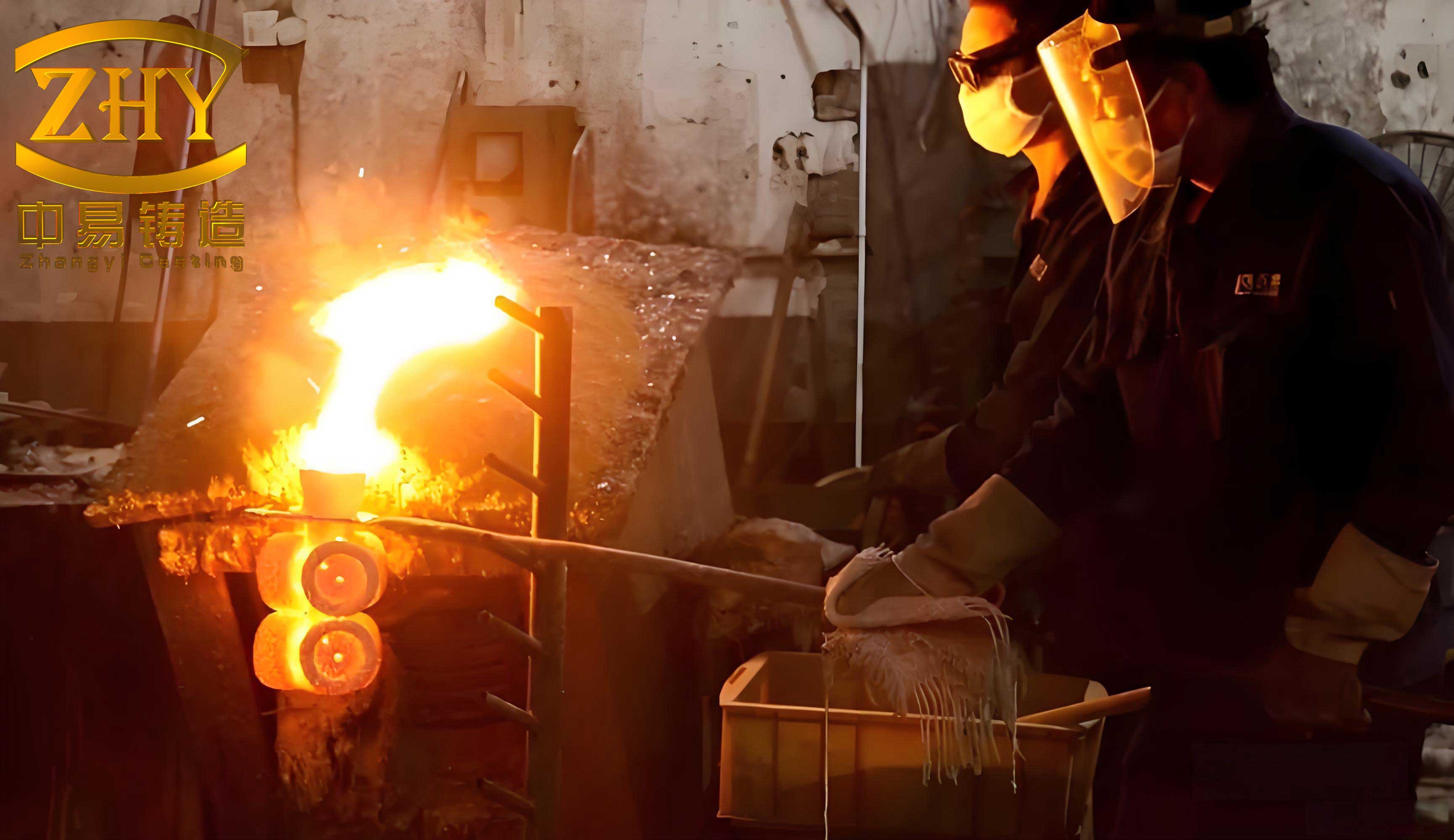
Within the realm of shell systems, those based on colloidal silica (silica sol) binder and fused alumina (Al2O3) refractories are widely employed, particularly for high-integrity castings like directionally solidified (DS) or single-crystal (SX) turbine blades. This system offers excellent chemical inertness against reactive superalloys and good high-temperature stability. However, a persistent challenge in shell engineering for the investment casting process is the inherent trade-off between strength and permeability. High strength, often achieved through dense packing or increased thickness, inevitably compromises gas permeability. This can lead to defects such as mistruns, gas porosity, and inclusions. Conversely, strategies to enhance permeability, like using coarser stucco or creating artificial pores, typically result in reduced mechanical strength. Therefore, developing a shell system that concurrently improves permeability while maintaining or favorably adjusting other key properties like high-temperature strength and thermal shock resistance is a significant research objective.
Our research is motivated by the potential of in-situ phase engineering within the shell matrix to overcome these limitations. We focus on the in-situ generation of mullite (3Al2O3·2SiO2) whiskers within the alumina-silica shell body. Mullite is renowned for its exceptional high-temperature properties: a high melting point (>1850°C), low thermal expansion coefficient (~5.3×10⁻⁶ °C-1), excellent creep resistance, and good thermal shock resistance. More importantly, the whisker or needle-like morphology of mullite can act as a reinforcing agent, potentially modifying the mechanical and thermal properties of the shell composite. Crucially, the formation of such high-aspect-ratio whiskers within the interparticle spaces of the shell can create a connected, micro-porous network, which is hypothesized to significantly enhance gas permeability without drastically compromising structural integrity.
The scientific premise of this work is based on the catalytic role of fluorine-containing compounds, specifically aluminum fluoride trihydrate (AlF3·3H2O), in promoting the reaction between alumina and silica to form mullite at temperatures significantly lower than those required for conventional solid-state reaction. The mechanism involves the formation of volatile aluminum oxyfluoride (AlOF) and silicon tetrafluoride (SiF4) intermediates, which facilitate mass transport and nucleation of mullite in a vapor-phase or vapor-solid reaction. The overall simplified reaction can be represented as:
$$3Al_2O_3 + 2SiO_2 \xrightarrow[AlF_3·3H_2O]{~1200^\circ C~} 3Al_2O_3·2SiO_2 \text{ (Mullite)}$$
In this study, we introduce AlF3·3H2O powder as a catalytic additive specifically into the backup layer slurry of a standard “silica sol + fused alumina” shell system. The backup layers, which constitute the bulk of the shell thickness, are primarily responsible for the shell’s structural strength and overall permeability. By selectively modifying the backup layer microstructure through in-situ mullite whisker growth, we aim to decouple the strength-permeability dependency. We systematically investigate the effects of this additive on the phase evolution, microscopic morphology, and critical shell properties including high-temperature permeability, thermal expansion, high-temperature flexural strength, and deformation resistance. The goal is to develop a shell with superior integrated performance tailored for advanced investment casting process applications such as DS/SX blade production.
Literature Review and Theoretical Background
The pursuit of enhanced ceramic shell performance for the investment casting process has been a continuous endeavor. Traditional approaches have focused on optimizing slurry rheology, stucco size distribution, and drying protocols. More innovative methods involve the incorporation of secondary phases. For instance, the addition of short fibers (e.g., nylon, polypropylene) to the slurry has been explored to create micro-channels that improve green strength and permeability. While effective to a degree, these organic fibers burn out during high-temperature firing, leaving behind pores that may not be optimally interconnected and can sometimes reduce the fired strength disproportionately.
In parallel, the synthesis and application of mullite whiskers have been extensively studied in the field of advanced ceramics for their remarkable reinforcement capabilities. Various synthesis routes exist, including sintering of chemical precursors, sol-gel methods, and vapor-phase reactions. The vapor-phase route, often catalyzed by fluorides like AlF3 or AlF3·3H2O, is particularly interesting as it can produce high-purity, high-aspect-ratio whiskers at relatively moderate temperatures. The seminal work by Okada and Otsuka demonstrated that mullite whiskers could be synthesized from mixtures of Al2O3 and SiO2 with AlF3 at temperatures around 1200°C. The proposed reaction pathway involves the generation of gaseous AlOF and SiF4 species, which subsequently react to deposit mullite:
$$
\begin{aligned}
& Al_2O_3 + 2F_2 (g) \rightarrow 2AlOF (g) + O_2 (g) \\
& SiO_2 + 2F_2 (g) \rightarrow SiF_4 (g) + O_2 (g) \\
& 6AlOF (g) + 2SiF_4 (g) + 4O_2 (g) \rightarrow 3Al_2O_3·2SiO_2 (s) + 7F_2 (g)
\end{aligned}
$$
In reality, the fluorine source (AlF3) decomposes and reacts to provide the active fluorine species. This mechanism suggests that the mullite formation occurs through gas-phase transport, favoring the growth of whiskers with minimal lattice defects.
Despite the rich literature on mullite whisker synthesis, its application within the context of the investment casting process shell as an in-situ modifying agent is scarcely reported. The concept involves leveraging the raw materials already present in the shell—the silica from the colloidal silica binder and the alumina from the flour and stucco—as the Al and Si sources. By adding a controlled amount of a fluoride catalyst, we can potentially transform a portion of the shell’s amorphous silica-alumina matrix into a network of crystalline mullite whiskers during the standard high-temperature firing stage. This in-situ transformation offers several potential advantages over external addition of pre-synthesized whiskers: (1) better integration and bonding with the shell matrix, (2) no concern about whisker dispersion in the slurry, (3) the whiskers grow within the inherent porosity, potentially creating an interconnected network, and (4) it is a more cost-effective and process-integrated solution. This study aims to bridge this gap by investigating the feasibility and effects of such an in-situ approach on the comprehensive properties of a ceramic shell for the investment casting process.
Materials and Experimental Methodology
Shell System Design and Slurry Composition
A multi-layered shell system was designed, comprising a facecoat, a transition layer, and several backup layers. The facecoat, critical for surface finish, was formulated from a fine alumina flour and silica sol binder. The primary modification was made in the backup layer slurry composition. Two groups of shells were fabricated for comparison: a Control Group with a standard backup layer formulation, and an Experimental Group where a specific percentage of the alumina flour was replaced by an equivalent volume of aluminum fluoride trihydrate (AlF3·3H2O) powder, serving as the mullite formation catalyst. The fundamental compositions are summarized in Table 1.
| Layer | Group | Silica Sol | Alumina Flour | Additives (Wetting, Dispersing, Defoamer) | Catalyst (AlF3·3H2O) |
|---|---|---|---|---|---|
| Facecoat | Control & Exp. | Base | ~76 wt.% | ~1.5 wt.% total | 0 |
| Note: Facecoat identical for both groups to ensure consistent surface quality. | |||||
| Backup | Control | Base | ~74 wt.% | ~0.8 wt.% total | 0 |
| Backup | Experimental | Base | ~68 wt.% | ~0.8 wt.% total | ~6 wt.% |
The slurries were prepared under controlled conditions. Silica sol was first placed in a mixer, followed by the gradual addition of alumina flour and other processing aids to achieve desired viscosity and rheology. For the experimental group, the AlF3·3H2O powder was pre-mixed with a portion of the alumina flour to ensure uniform distribution before addition to the sol. The final slurry was de-aired to remove entrapped air bubbles.
Shell Fabrication and Firing Protocol
Standard investment shell-building practices were employed. Wax patterns were repeatedly dipped into the respective slurries and subsequently stuccoed with graded fused alumina sands (progressively coarser from facecoat to backup layers). The Control and Experimental shells were built identically with one facecoat layer, one transition layer, five backup layers, and a final seal coat. After complete drying, the shells were subjected to a dewaxing and firing cycle in a high-temperature furnace. The critical firing stage to activate mullite formation was set at 1200°C with a holding time of 5 hours, based on preliminary thermochemical analysis and literature on fluoride-catalyzed mullitization.
Characterization Techniques
The fired shell samples were comprehensively characterized using the following techniques:
- Phase Analysis: X-ray diffraction (XRD) was performed to identify crystalline phases present, specifically to confirm the formation of mullite.
- Microstructural Analysis: Scanning Electron Microscopy (SEM) coupled with Energy Dispersive Spectroscopy (EDS) was used to examine the morphology, distribution, and size of the in-situ generated mullite whiskers, as well as the general shell microstructure (porosity, crack morphology).
- Permeability Measurement: High-temperature permeability was measured according to a standard test method (analogous to HB 5352.4). The permeability coefficient \( K \) was calculated using the formula:
$$ K = \frac{V}{t \cdot P_e \cdot A} \cdot \delta $$
where \( V/t \) is the volumetric gas flow rate, \( P_e \) is the applied air pressure, \( A \) is the inner surface area of the test shell, and \( \delta \) is the shell wall thickness. Tests were conducted from room temperature up to 1000°C. - Thermal Properties: Thermal diffusivity was measured using a laser flash apparatus (LFA). The coefficient of thermal expansion (CTE) was determined via dilatometry from room temperature to 1500°C.
- Mechanical Properties: Three-point bend tests were conducted to determine the modulus of rupture (MOR) at both room temperature and 1500°C. The MOR (\( \sigma_w \)) was calculated as:
$$ \sigma_w = \frac{3PL}{2bh^2} $$
where \( P \) is the fracture load, \( L \) is the support span, \( b \) is the specimen width, and \( h \) is the thickness. - High-Temperature Deformation Resistance: The shell’s resistance to sagging under its own weight at high temperature (1500°C) was evaluated by measuring the diametral change of a ring-shaped specimen after a fixed dwell time. The deformation (\( \delta_{t-\tau} \)) is expressed as:
$$ \delta_{t-\tau} = \frac{B – C}{B} \times 100\% $$
where \( B \) is the original outer diameter and \( C \) is the diameter after testing at temperature \( t \) for time \( \tau \). - Bulk Density and Apparent Porosity: These were measured using the Archimedes method (water immersion).
Results and Discussion
Phase Composition and Microstructural Evolution
The XRD patterns of the Control and Experimental shell samples fired at 1200°C for 5 hours are distinctly different. The Control sample shows dominant peaks corresponding to alpha-alumina (corundum) from the fused alumina flour and stucco, along with a broad hump indicative of amorphous silica derived from the silica sol binder. Notably, mullite peaks are either absent or extremely weak, confirming that the solid-state reaction between Al2O3 and SiO2 is minimal at this temperature and time under normal conditions.
In stark contrast, the Experimental sample with AlF3·3H2O addition exhibits strong and well-defined diffraction peaks for mullite (3Al2O3·2SiO2), alongside the alumina peaks. This provides definitive evidence that the fluoride catalyst successfully promoted the mullitization reaction at 1200°C. The absence of residual AlF3 or other fluoride-related peaks suggests its complete consumption or volatilization during the firing cycle.
SEM analysis reveals the profound microstructural transformation induced by the catalyst. The Control shell shows a typical microstructure of densely packed, angular alumina grains bonded together by a glassy silica-rich matrix. The porosity appears as isolated, irregularly shaped voids between particles.
The microstructure of the Experimental shell is dramatically different. A network of high-aspect-ratio whiskers is observed growing from the surfaces of alumina particles and into the interstitial spaces. These whiskers are typically 0.5 to 1.5 µm in diameter and 5 to 15 µm in length, resulting in aspect ratios ranging from 5:1 to over 15:1. EDS analysis confirms that these whiskers are composed of Al, Si, and O with an atomic ratio consistent with mullite. The growth appears most prolific in regions where silica binder and alumina are in close proximity to the original sites of the AlF3·3H2O particles, which act as localized sources of fluorine vapor. The formation of these whiskers creates a more open, interconnected pore structure. The whiskers themselves bridge gaps between larger alumina grains, potentially creating a reinforcing framework. This unique microstructure, a composite of large alumina grains, a mullite whisker network, and interconnected porosity, is the key to the modified shell properties.
Permeability and Density
The high-temperature permeability results, as shown in Table 2, demonstrate a significant improvement due to the in-situ mullite whisker formation. The permeability of the Experimental shell is approximately double that of the Control shell across the tested temperature range (800-1000°C). For instance, at 1000°C, the Experimental shell’s permeability is about 20.0 m4/(N·min) compared to 10.5 m4/(N·min) for the Control shell. This ~100% increase is directly attributable to the microstructural changes. The interconnected channels formed around and between the growing whiskers provide low-resistance pathways for gas flow. This enhanced permeability is highly beneficial for the investment casting process, as it facilitates quicker evacuation of air and reaction gases from the mold cavity during molten metal pour, reducing the risk of gas-related defects.
| Property | Control Shell | Experimental Shell (with AlF3·3H2O) | Change |
|---|---|---|---|
| Permeability @ 1000°C [m4/(N·min)] | 10.5 | 20.0 | +90% |
| Bulk Density [g/cm³] | 3.41 | 3.36 | -1.5% |
| Room Temp. MOR [MPa] | 9.05 | 7.91 | -13% |
| High Temp. (1500°C) MOR [MPa] | 21.76 | 13.89 | -36% |
| High Temp. Deformation @ 1500°C [%] | ~0.20 | ~0.19 | Negligible |
| Avg. CTE (25-1500°C) [x10-6 °C-1] | ~13.5 | ~13.3 | Slightly Lower |
Consistent with the increased porosity, the bulk density of the Experimental shell measured slightly lower (3.36 g/cm³) than that of the Control shell (3.41 g/cm³). This marginal decrease further corroborates the creation of additional void space by the whisker network.
Thermal Properties: Diffusivity and Expansion
The thermal diffusivity of the Experimental shell was higher than that of the Control in the lower temperature range (25-500°C). This can be explained by the presence of the interconnected porous network. Air within these pores has a higher thermal diffusivity than the solid ceramic matrix at lower temperatures, leading to an overall increase in the composite’s diffusivity. This effect diminishes at higher temperatures as radiation heat transfer within the pores becomes more complex.
The coefficient of thermal expansion (CTE) is a critical parameter in the investment casting process, as mismatched expansion between shell and metal can cause hot tearing or shape distortion. Both shells exhibited similarly low CTE values, which is desirable. The Experimental shell showed a marginally lower average CTE over the 25-1500°C range. Mullite possesses a lower intrinsic CTE (~5.3 x10⁻⁶ °C-1) than alumina (~8.6 x10⁻⁶ °C-1). The partial conversion of the alumina-silica matrix into mullite, along with the slightly higher porosity (which generally reduces the effective CTE), likely contributes to this slight reduction. A lower shell CTE is advantageous as it reduces thermal stress during heating and cooling cycles.
Mechanical Strength and High-Temperature Behavior
The mechanical strength results reveal a nuanced effect of the whisker network. At room temperature, the MOR of the Experimental shell (7.91 MPa) was about 13% lower than that of the Control shell (9.05 MPa). This is expected because the room-temperature strength of a brittle ceramic is highly sensitive to flaw size and porosity. The increased interconnected porosity from whisker formation acts as stress concentrators, slightly reducing the load-bearing capacity under ambient conditions. However, the strength remains at a perfectly adequate level for handling and standard processing in the investment casting process.
The high-temperature (1500°C) strength presents a more interesting and practically relevant outcome. While the Control shell exhibited a high MOR of 21.76 MPa at 1500°C (strength often increases due to sintering and glassy phase formation), the Experimental shell’s strength was lower at 13.89 MPa. This reduction of about 36% is significant but must be interpreted in context. The strength of the Experimental shell is still sufficient to withstand the metallostatic pressure during pouring of most alloys. More importantly, this moderated high-temperature strength can be highly beneficial. It indicates improved “collapsibility” or “yieldability” at elevated temperatures. During solidification and cooling of the casting, the metal contracts. A shell that is too strong at high temperature can resist this contraction, inducing high stresses in the casting and potentially leading to hot tears or recrystallization defects in DS/SX components. A shell with a slightly lower, yet sufficient, high-temperature strength allows for better accommodation of this metal shrinkage, reducing the risk of such defects. The mullite whisker network, while providing some reinforcement, also creates a more compliant microstructure that can deform slightly without catastrophic failure.
This interpretation is supported by the high-temperature deformation test. Both shells exhibited excellent resistance to sagging under their own weight at 1500°C, with deformation values around 0.2%. The negligible difference indicates that the whisker-reinforced network effectively maintains dimensional stability under load at temperature, despite the lower high-temperature MOR. This combination—good deformation resistance under self-weight but a moderated strength against constraining metal contraction—is ideal for demanding investment casting process applications.
Mechanism of Property Modification and Process Implications
The integrated property profile of the Experimental shell can be rationalized by the synergistic effects of the in-situ generated mullite whisker network. The mechanism is illustrated conceptually below:
- Pore Network Formation: The vapor-phase growth of whiskers pushes apart the existing alumina particles and occupies space within the silica matrix. This process creates elongated, interconnected channels along the whisker lengths, drastically improving permeability.
- Composite Reinforcement: The whiskers act as bridges across pores and between grains. While they increase porosity (reducing room-temperature strength), they provide crack deflection and pull-out mechanisms, preventing the porosity from causing a catastrophic drop in strength. At high temperatures, they contribute to creep resistance.
- Thermal Property Adjustment: The lower intrinsic CTE of mullite and the increased porosity both contribute to a slight reduction in the overall shell expansion. The porous network enhances lower-temperature thermal diffusivity.
- Optimized High-Temperature Mechanics: The microstructure balances reinforcement (from whiskers) and compliance (from interconnected porosity). This results in sufficient strength for handling and pouring, yet reduced constraining force against solidifying metal, coupled with excellent shape retention under its own weight.
For the investment casting process, particularly for directional solidification where thermal management and stress minimization are paramount, this shell system offers tangible benefits:
- Improved Casting Yield: Higher permeability reduces gas-related defects like porosity and mistruns.
- Reduced Hot Tearing: The moderated high-temperature strength decreases the risk of stress-induced cracking in sensitive alloy castings.
- Potential for Thinner Shells: The efficient whisker reinforcement may allow for designing shells with fewer layers (thinner walls) while maintaining necessary strength, further improving permeability and reducing material usage and cleaning effort.
- Maintained Dimensional Fidelity: Excellent high-temperature deformation resistance ensures the cast part retains its intended shape.
The process integration is straightforward, requiring only the modification of the backup layer slurry recipe and no change to the standard shell building or firing cycle.
Conclusions and Future Perspectives
This study successfully demonstrates a novel and effective approach to engineer the microstructure and enhance the performance of ceramic shells for the advanced investment casting process. By incorporating aluminum fluoride trihydrate (AlF3·3H2O) as a catalytic agent into the backup layer slurry of a silica sol-alumina system, we have achieved the in-situ growth of a network of mullite whiskers during high-temperature firing. This microstructural transformation leads to a multifaceted improvement in shell properties:
- A substantial increase (~100%) in high-temperature gas permeability, which is crucial for defect-free mold filling.
- A favorable adjustment in high-temperature mechanical behavior, characterized by sufficient but reduced flexural strength that promotes better collapsibility and reduces hot tearing susceptibility in the casting, while maintaining excellent resistance to deformation under self-weight.
- Slight improvements in thermal properties, including a marginal reduction in the coefficient of thermal expansion and an increase in thermal diffusivity at lower temperatures.
The developed shell system effectively decouples the traditional strength-permeability trade-off. It provides a unique composite structure where the mullite whisker network simultaneously creates pathways for gas escape and offers a tailored reinforcement that optimizes high-temperature performance for the demands of casting high-value components like directionally solidified turbine blades.
Future work will focus on several avenues to further optimize and understand this technology:
- Process Optimization: Systematic investigation of the effects of AlF3·3H2O concentration, firing temperature profile, and holding time on the whisker morphology (density, aspect ratio) and the resulting property balance.
- Mechanistic Studies: In-situ high-temperature microscopy or diffraction studies to elucidate the precise sequence of whisker nucleation and growth within the complex shell environment.
- Property Modeling: Developing micromechanical and permeability models that correlate the whisker network characteristics (volume fraction, orientation, connectivity) with the macroscopic shell properties.
- Full-Scale Casting Trials: Validating the benefits observed in material tests through actual casting trials of complex geometries like turbine blades, measuring final part quality, surface finish, and incidence of defects.
- Environmental and Cost Analysis: Assessing the impact of fluoride use on furnace atmosphere and emissions, and evaluating the overall cost-benefit of the modified shell system.
This research opens a promising direction for performance-driven ceramic shell design in the investment casting process, moving beyond empirical formulation towards targeted microstructural engineering for superior casting outcomes.